
Image to help understand the article
A South Korean Startup’s Digital Push in Laos Highlights a New Model for Technology-Based Development
A South Korean blockchain and fintech startup is expanding its role in Southeast Asia through an education-focused digital transformation project in Laos, reflecting a broader shift in how technology companies are participating in international development efforts.
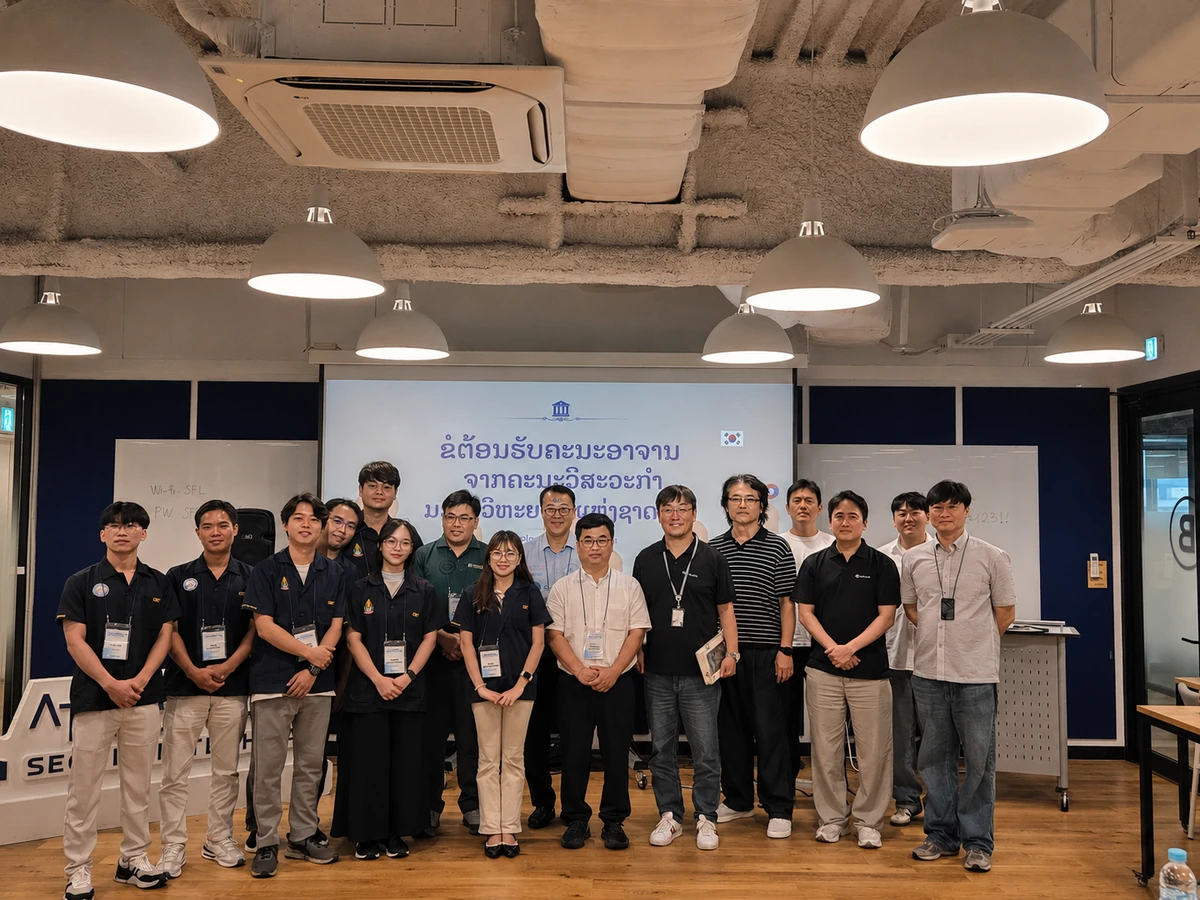
Seoul Labs recently hosted a delegation of professors, researchers and students from the National University of Laos to discuss digital transformation initiatives supported through South Korea’s official development assistance framework. The meeting focused on the company’s ongoing work to introduce digital student identification, integrated academic administration systems and electronic certificate services in Laos.
For American audiences, the project represents a different approach to overseas development compared with traditional infrastructure aid. Instead of focusing only on physical construction or financial assistance, newer development programs increasingly involve digital systems designed to improve access to public services, education records and identity verification.
The initiative is connected to the Korea International Cooperation Agency’s Creative Technology Solution program, known as CTS. The program supports startups and technology companies that apply innovative solutions to development challenges in emerging economies. The Seed2 phase supports technologies that have already been developed and are ready for local commercialization and pilot implementation.
Seoul Labs is applying blockchain-based decentralized identity technology, commonly called DID, to create digital credentials that can verify a student’s identity and academic information. The company says the system could help universities move away from paper-based processes while improving security and reducing the risk of forged documents.
Why Digital Identity Matters in Laos and Other Developing Markets
Digital identity systems have become a major focus in countries seeking faster economic modernization. In many developing economies, government services, education systems and financial access have historically relied on paper documents and manual verification processes.
Laos, a landlocked Southeast Asian nation of about 7.5 million people, has been pursuing broader digital transformation efforts as mobile connectivity expands. The country has been working to modernize administrative systems and recently introduced an electronic identity application connected to national citizen data infrastructure.
Universities can serve as an important testing ground for digital identity technology because students already interact with institutions through enrollment, examinations, certificates and campus services. A digital student card can potentially combine multiple functions, including identification, attendance verification and access to academic records.
The Seoul Labs project uses blockchain technology to create records that are designed to be difficult to alter without authorization. Supporters of blockchain-based identity systems argue that this can make verification faster and more reliable because institutions, employers or other organizations can confirm credentials without depending entirely on paper documents.
Another potential advantage is selective information sharing. Rather than providing a complete collection of personal documents, users can share only the information needed for a specific purpose. For example, a student could verify enrollment status without revealing unrelated personal information.
However, digital identity projects also require careful attention to privacy, cybersecurity and local infrastructure conditions. Successful implementation depends not only on technology but also on user education, institutional cooperation and clear rules for handling personal data.
South Korea’s Startup Diplomacy Expands Beyond Consumer Technology
South Korea is widely recognized in the United States for global entertainment exports such as K-pop, Korean dramas and films. But behind the cultural influence is another aspect of South Korea’s international strategy: exporting technology expertise and startup innovation.
Over the past decade, South Korea has built a reputation as a highly connected digital economy with advanced broadband networks, mobile services and technology-driven industries. Government-backed startup programs have increasingly encouraged young companies to explore overseas markets, particularly in emerging economies where digital infrastructure is still developing.
The Laos project illustrates how Korean startups are positioning themselves not only as technology vendors but also as development partners. Instead of simply selling software, companies are working with universities, governments and international organizations to adapt solutions to local needs.
This approach is part of a broader trend in Asia, where countries with advanced digital industries are seeking new forms of economic cooperation. South Korea, Japan, Singapore and China have all promoted digital infrastructure initiatives across developing regions, though their strategies and partnerships differ.
For South Korean companies, projects in countries such as Laos can provide valuable international experience. Emerging markets often require technology solutions that work under different conditions, including varying levels of connectivity, different regulatory environments and diverse user needs.
Seoul Labs has also been expanding its international network beyond Laos. The company recently participated in global startup programs and received recognition at an international entrepreneurship event. It was also selected for a South Korean government-supported startup program aimed at helping companies enter European markets.
What This Means for the United States: A New Area of U.S.-Korea Technology Cooperation
For the United States, developments like the Laos digital identity project show that the South Korea relationship extends beyond traditional areas such as automobiles, semiconductors, entertainment and defense cooperation.
American companies and institutions have also explored digital identity technologies, including secure credential systems for education, government services and financial applications. The challenge in the United States has often focused on balancing convenience with privacy protection, particularly as digital records become more common.
The Korean approach in Laos may offer lessons for American organizations involved in international development, technology investment and digital infrastructure partnerships. Many developing countries are seeking ways to modernize public services without repeating older technology stages. Mobile-first solutions, secure digital credentials and cloud-based services are becoming increasingly attractive alternatives.
The project also fits into broader U.S.-Korea cooperation in Southeast Asia. Washington and Seoul have both emphasized the importance of supporting digital connectivity and economic development in the Indo-Pacific region. While this specific initiative is led by a South Korean company and Korean development programs, it reflects shared interests in building reliable digital systems and expanding technological capacity.
For American technology companies, the growth of digital identity systems overseas may represent a future market opportunity. Universities, governments and financial institutions worldwide are searching for secure methods to verify people and records as cross-border movement increases.
At the same time, U.S. observers will likely pay attention to how countries manage questions surrounding data protection, surveillance risks and individual control over personal information. Digital identity systems can improve access to services, but public trust remains essential for adoption.
Universities Become Testing Grounds for Digital Transformation
The partnership between Seoul Labs and the National University of Laos reflects a growing global pattern: universities are becoming early adopters of technologies that later expand into broader society.
Campuses manage large amounts of information, including student enrollment, academic performance, graduation records and identification services. Because of this, universities can provide a controlled environment where digital systems can be tested before wider adoption.
In the Laos project, Seoul Labs plans to gather feedback from students and faculty members to improve usability and expand pilot applications. The company says understanding local user experiences is a key part of building sustainable digital services.
This emphasis on local participation is important in international technology projects. Systems designed without considering local habits, language, infrastructure or institutional processes often struggle after initial deployment.
For Laos, partnerships with foreign technology companies may provide opportunities to strengthen digital skills among students and educators. Beyond installing software, successful digital transformation requires people who understand how to operate, maintain and improve these systems over time.
The Future of Blockchain-Based Identity in Emerging Markets
The Laos university initiative represents a small but significant example of how blockchain technology is being repositioned. In earlier years, blockchain was often associated primarily with cryptocurrencies and financial speculation. Increasingly, companies and governments are exploring blockchain for practical applications such as verification, certification and data management.
The success of these systems will depend on real-world adoption rather than technology alone. A digital credential is only valuable if universities, employers, government agencies and users trust and accept it.
For South Korean startups, international development projects may become an important pathway into global markets. Countries modernizing their digital infrastructure are looking for partners that can provide both technology and implementation experience.
The Seoul Labs and Laos collaboration demonstrates a broader transformation in global technology competition. The next generation of digital infrastructure may not only be built in major markets such as the United States, China or South Korea. It may also emerge through partnerships in countries where digital transformation is just beginning.
As nations across Asia continue modernizing their education, identity and public service systems, projects like this will offer a glimpse into how technology partnerships can reshape economic development in the years ahead.


0 Comments