Image to help understand the article
A major sporting trip starts with a routine health check
For international sports fans, the essential travel checklist usually begins with tickets, passports and a place to stay. South Korean health officials are urging people heading to the Asian Games in Japan to add something less glamorous but potentially consequential: a review of their vaccination records.
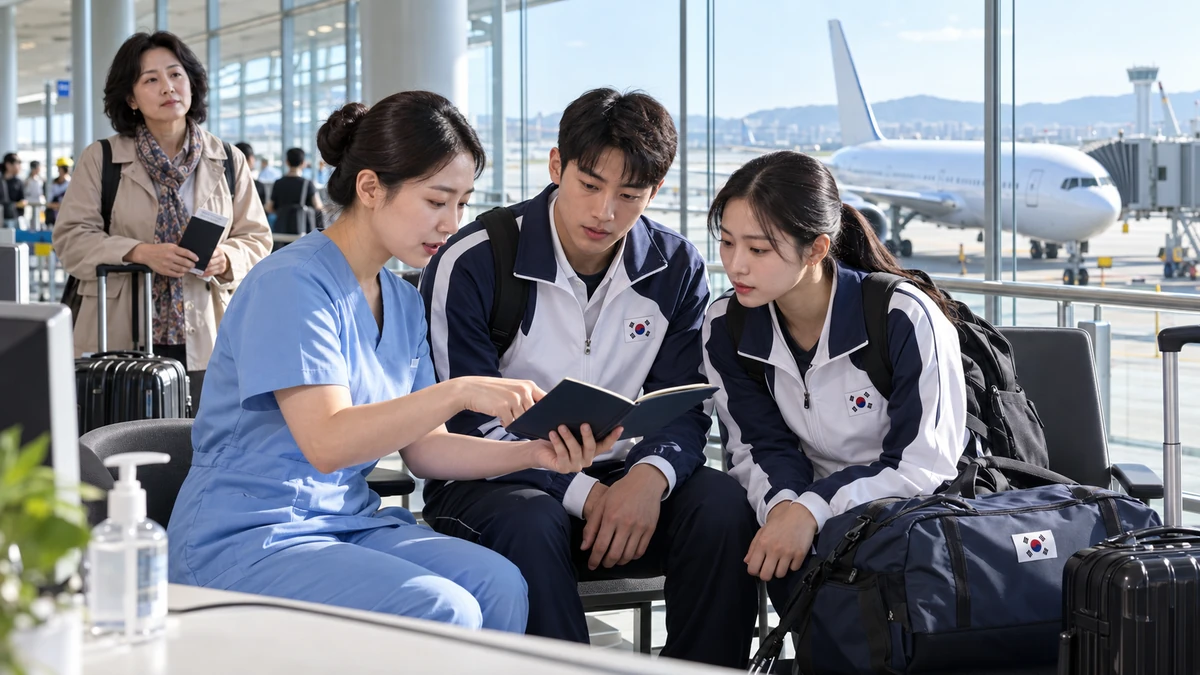
The Korea Disease Control and Prevention Agency, South Korea’s national public health agency, has advised athletes, supporters and other travelers bound for the Aichi-Nagoya competition to check their protection against measles and whooping cough. The agency cited measles cases in Japan, continuing whooping cough transmission and an unusually early influenza season.
Its overall assessment of the infectious disease situation and the potential for cases to enter South Korea remained low risk. That distinction is central to understanding the announcement. Officials were calling for preparation, not declaring that attendance was inherently unsafe.
For Americans who travel internationally for sports, concerts or cultural events, the advisory offers a useful example of how to read public health guidance without either dismissing it or overreacting. A low-risk assessment describes a broader situation. It does not establish that every traveler has adequate protection, and it does not eliminate the need to respond responsibly if someone becomes sick.
What the Asian Games are — and why the audience matters
The Asian Games are a major multisport competition bringing together athletes representing countries and territories across Asia. For an American audience, the closest regional comparison is the Pan American Games: a competition spanning numerous sports, with national delegations and medal standings, rather than a tournament devoted to a single league or sport.
Aichi is a Japanese prefecture, an administrative division roughly comparable to a state, and Nagoya is its capital. The event’s Aichi-Nagoya name reflects its host region and city. The United States does not compete as an Asian Games delegation, but that does not make the competition irrelevant to Americans who follow Asian sports, have family connections in the region or plan travel to Japan.
The Korean advisory extends beyond competitors to organized supporters and ordinary travelers. In Korean sports coverage, a reference to a cheering contingent can mean fans traveling specifically to support their country’s athletes, not simply a team of professional cheerleaders. Those supporters share many of the same travel environments as athletes and other spectators.
International events bring people together in competition venues, transportation systems, restaurants and accommodations. That concentration of visitors is the concern identified by Korean authorities. The advisory does not establish that any particular stadium, hotel or team has experienced an outbreak. Its logic is preventive: review personal protection before entering a setting where large numbers of people will gather.
What the measles count does — and does not — show
According to the Korean agency, Japan had recorded 549 measles cases for the year through the 25th of the month preceding the advisory. Officials described that total as the highest level in the past decade. It was a cumulative count, not 549 newly diagnosed cases on the day the warning was issued.
That distinction matters because a case count can quickly lose its meaning when separated from its reporting period. The supplied account does not specify the calendar month or year of that cutoff, so the figure should not be treated as a current, real-time measure of conditions in Japan. Travelers need updated information when making decisions about an upcoming trip.
The number also cannot establish an individual spectator’s likelihood of becoming infected or predict how many cases might occur during the Games. Those questions require information beyond a national cumulative total, including where transmission is occurring and whether people who encounter the virus are protected.
The advisory illustrates a broader challenge in travel reporting: an increase in reported illness and a low overall risk assessment can both be true. They address different questions. The increase provides a reason to check preventive measures; the risk assessment places the situation in a wider context. Neither justifies turning a vaccination reminder into a claim that Japan is broadly unsafe, nor treating a low rating as permission to ignore symptoms.
For U.S. travelers and companies, a planning issue rather than an alarm
The most direct American connection is practical. U.S. residents traveling to Japan for the Games, accompanying family members or combining sporting events with sightseeing can use the Korean notice as a prompt to review their own preparations. However, it is guidance issued by South Korea, not a U.S. travel alert, and its assessment includes the possibility of infections being brought back to South Korea.
American travelers should consult current Centers for Disease Control and Prevention destination guidance and discuss their records with a health care professional. The Korean advisory does not establish new U.S. entry requirements, airline vaccination rules or conditions for admission to the Games. It also provides no evidence of cancellations by American travelers or changes in demand among U.S. customers.
For American travel agencies, tour operators and employers sending people to international events, the useful takeaway is about communication. A predeparture message can direct travelers to authoritative health guidance, encourage them to locate vaccination records and explain whom to contact if they become ill. That is more actionable than forwarding an alarming headline without its reporting date or risk assessment.
The same planning problem is familiar from Olympics trips, World Cup travel and international concert tours. A ticket purchase creates a fixed date and often a substantial financial commitment, which can make travelers reluctant to change plans when sick. The Korean advisory highlights why health preparation belongs early in that process. Nothing in the source establishes a new U.S.-South Korean health initiative; its relevance lies in a shared challenge of international mobility.
Vaccination records matter more than a vague memory
The Korean agency recommended measles vaccination for people who had not received two doses of the MMR vaccine, which protects against measles, mumps and rubella. Its advice also covered people whose vaccination history was uncertain. The first task, then, is not to assume that everyone needs another shot. It is to establish what protection a traveler already has.
For Americans, that can mean looking for childhood immunization records, contacting a previous medical practice or checking records available through a state immunization system. Remembering that vaccines were required for school is not the same as having a clear record of which doses were received. A travel companion’s complete vaccination history also says nothing about another person’s protection.
The whooping cough recommendation was framed differently. Adolescents and adults were told to check whether they had received Tdap, the vaccine that protects against tetanus, diphtheria and pertussis, the medical name for whooping cough. Those for whom vaccination was recommended were advised to receive it before departure. The notice did not call for every traveler to receive an additional Tdap dose.
U.S. recommendations depend on factors such as age, medical history and evidence of immunity. Travelers with missing records, pregnancy, immune system conditions or other questions should seek individualized advice rather than turn the Korean notice into a universal dosing schedule. The supplied guidance does not provide enough information to calculate a personal vaccination timetable or promise protection by a particular departure date. It likewise does not establish a new influenza vaccination schedule for travelers.
In Japan, everyday precautions meet the reality of crowded events
The Korean guidance asks travelers to wash their hands with soap for at least 30 seconds after going out and before and after meals. It also recommends covering the mouth and nose with a tissue or sleeve when coughing or sneezing, and regularly ventilating indoor spaces when possible.
These are ordinary behaviors, but travel can make them easier to neglect. A day built around transit connections and event start times leaves little room for changes in routine. Treating handwashing and symptom checks as part of the schedule makes the guidance more useful than a general instruction to be careful.
Still, the measures serve different purposes. Measles spreads through the air, so handwashing should not be presented as a substitute for appropriate measles vaccination. The advisory is best understood as a set of complementary precautions: confirm vaccine protection before travel, maintain sensible hygiene during the visit and change behavior if illness develops.
If travelers experience fever, coughing or other respiratory symptoms, the agency advises wearing a mask and reducing contact with other people. That recommendation concerns what to do when sick; it is not evidence of a Games-wide mask mandate. Nor does the supplied account describe venue-specific screening or ventilation requirements. Travelers should distinguish personal health advice from rules issued separately by organizers, transportation providers or Japanese authorities.
The return trip is part of the public health picture
For Korean travelers, the guidance continues through arrival home. People experiencing possible infectious disease symptoms, including fever, rash, cough or diarrhea, are instructed to notify a quarantine officer when entering South Korea. Listing those symptoms does not mean each one establishes a measles or whooping cough diagnosis. It tells travelers what information to disclose so health authorities can assess it.
That border procedure should not be presented as a description of how every American airport handles returning passengers. U.S. travelers should follow the instructions of the authorities responsible for their arrival and seek medical guidance when symptoms warrant it. The transferable principle is that a health problem does not become irrelevant once the vacation ends.
The Korean agency also advises travelers to monitor their health after returning, reduce contact with others if suspicious symptoms develop and tell a medical provider about their visit to Japan. The supplied notice does not specify an exact monitoring period, so it would be misleading to attach a fixed number of days to its recommendation.
For an American patient, telling a clinician about recent international travel can provide important context for evaluating symptoms. Someone who suspects measles should call ahead before arriving at a medical office so the staff can advise on precautions. That practical step helps avoid exposing people in a waiting room while allowing the patient to seek care. Being symptom-free at the airport is not a guarantee that an illness will not become apparent later.
What to watch as travel approaches
The broader significance of the Korean notice is not a forecast of disruption. It shows how international event planning must account for changing disease conditions without assuming that every increase in cases requires people to stay home. The immediate change cited by officials was Japan’s elevated measles count, alongside continuing whooping cough cases and early influenza activity.
For travelers, the next useful information will be updated disease reports, current advice from their own national health authorities and any separately announced event requirements. Those sources answer different questions. Surveillance describes reported illness, medical guidance helps individuals assess protection, and organizer notices establish the rules for attending.
For American companies serving fans of Asian sports and entertainment, the lesson extends beyond this competition. Health information should be dated, attributed and kept separate from unsupported claims about safety or customer demand. A vaccination reminder is not evidence that an event will be canceled, and an overall low-risk assessment is not a guarantee for every customer.
The Korean agency’s message ultimately connects three parts of a trip that are often planned separately: preparation before departure, behavior at the destination and health awareness after returning. For Americans following events across the Pacific, that is a useful framework. Check the records, consult current guidance and know what to do if symptoms appear — without mistaking sensible preparation for a reason to panic.
Comments
Post a Comment