South Korea’s Most Populous Province Is Expanding Its Emergency Care Network. For Americans, the Bigger Story Is How Modern Health Systems Triage Pres
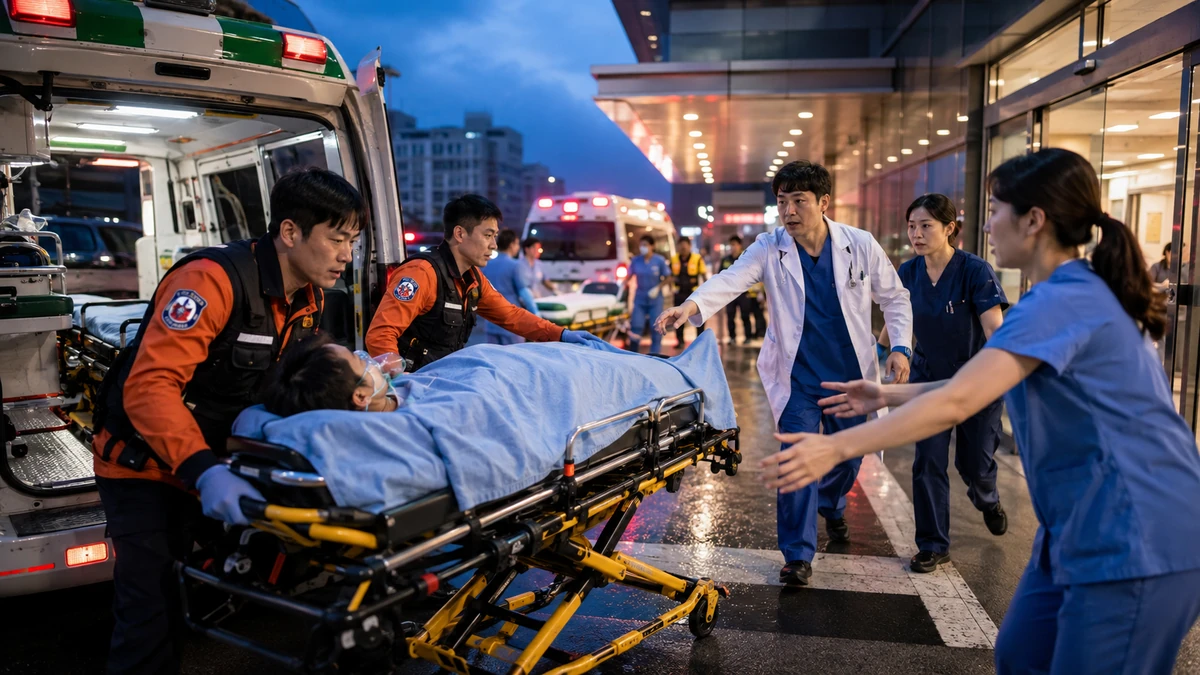
Image to help understand the article
South Korea is adding more emergency hubs in its busiest region
South Korea’s Gyeonggi Province, the densely populated ring that surrounds Seoul, is expanding the number of designated local emergency medical centers to 36, up from 32, with the new system set to run for three years beginning Nov. 1. At the same time, the number of higher-level regional emergency medical centers in the province will rise to 10 from nine after an additional hospital, Inje University Ilsan Paik Hospital, received designation from the national government.
On paper, that may sound like a straightforward bureaucratic adjustment: more hospitals, more capacity, better access. But the change points to something larger taking shape in South Korea’s health system, especially in the greater Seoul metropolitan area, where population density, aging, long ambulance transport concerns and periodic emergency room bottlenecks have made the question of who treats which patient increasingly urgent.
The new local emergency centers include Suwon Deoksan Hospital, Pocheon Woori Hospital, Wills Memorial Hospital and Danwon Hospital, according to reporting by Yonhap News Agency. Gyeonggi officials finalized the designations after review by the provincial emergency medical committee late last month.
What matters more than the names, however, is the structure behind them. South Korea is not merely adding emergency rooms. It is trying to sharpen the division of labor between hospitals that provide the first layer of emergency assessment and stabilization and those expected to deliver the most advanced definitive treatment for the sickest patients. In other words, officials are addressing a problem familiar to anyone who has watched hospital overcrowding debates in the United States: not every emergency patient needs the biggest hospital first, but the whole system fails if the handoff between levels of care breaks down.
That makes this less a one-day local government announcement than a case study in how advanced economies are rethinking emergency medicine under pressure. In Gyeonggi, the issue is not just raw hospital count. It is whether emergency care can operate as a coordinated network rather than a scramble for beds at the most famous institution.
How Korea’s two-tier emergency system works
To American readers, some of the terminology in South Korea’s emergency system may require a bit of translation, not of language but of structure. Korea distinguishes between local emergency medical centers and regional emergency medical centers, each with different roles and, in some cases, different appointing authorities.
Local emergency medical centers are designed to handle what Korean officials describe as moderate emergency cases and to serve as the first receiving point for severe cases that need immediate initial treatment. In practice, that means these hospitals can evaluate a patient, provide urgent stabilization and determine whether the patient can be treated there or should be transferred up the chain.
Regional emergency medical centers, by contrast, are the higher-level institutions designated by the Ministry of Health and Welfare to provide final treatment for severe emergency cases. These are the hospitals expected to have broader specialist coverage, more advanced equipment and greater capacity for the most complex trauma and critical care situations.
Americans might think of the difference loosely as the gap between a capable community hospital emergency department and a top-tier tertiary or quaternary center, though no comparison is exact. The United States has its own layered system, including trauma center levels, stroke centers, pediatric specialty facilities and high-risk obstetric hospitals. The underlying logic is similar: getting the right patient to the right place at the right time matters more than simply sending everyone to the nearest or largest hospital.
That logic becomes especially important in a place like Gyeonggi Province. The area is vast by urban planning standards, woven together by commuter cities, industrial districts and suburban communities that feed into the Seoul capital region. Not every resident lives close to the same level of care. So when Korean officials say the number of centers has increased, they are not talking only about arithmetic. They are also talking about geography, travel time and the everyday reality of where an ambulance can take someone in crisis.
The provincial government’s message is that a stronger network begins with more entry points for emergency patients but must end with clearer routing and better coordination. If those local centers can make faster decisions and transfer patients more effectively to the higher-level regional centers, then the province can use scarce emergency resources more efficiently. If they cannot, the added designations may ease headlines without changing outcomes in a meaningful way.
Why this is really about triage, transfers and the quality of connections
The most important line in the Korean story is not the jump from 32 to 36 local centers. It is the emphasis on clarifying the roles of local and regional institutions based on patient severity and treatment needs. That signals a policy shift from simple expansion to smarter distribution of work.
Emergency medicine is often judged publicly by visible stress points: waiting rooms, ambulance diversions, overcrowded ERs and viral stories of families searching for an available bed. But those are symptoms of a deeper systems problem. The real test is whether hospitals, ambulance services and regulators can sort patients by acuity, begin care quickly and move people up the ladder when necessary without dangerous delay.
Gyeonggi officials appear to be acknowledging exactly that. More local centers widen the “front door” into emergency care for moderate cases and for severe patients who need immediate first-line intervention. More regional centers strengthen the “back end” where final treatment for the most serious cases occurs. The policy bet is that strengthening both ends at once creates a more resilient chain.
That chain is especially important because severe emergency care is not interchangeable. A child in respiratory distress, a trauma patient with internal bleeding, a pregnant patient facing a high-risk delivery and an elderly stroke patient all require different personnel, equipment and response protocols. The province has specifically said it intends to keep improving pediatric emergency care and high-risk obstetric response, a sign that broad ER capacity alone does not solve specialized emergency needs.
For readers in the United States, this may sound familiar. American hospitals have spent years grappling with where to route stroke patients, where to send premature infants, how to prevent emergency departments from becoming de facto primary care clinics and how to balance regional specialty hubs with local access. South Korea’s current push reflects a similar recognition: emergency care works best not when every hospital tries to do everything, but when each one performs a defined role within a larger coordinated system.
That said, no health official can designate their way out of operational problems. The expansion in Gyeonggi will only matter if hospitals share information efficiently, if ambulance crews know where capacity exists, if transfers happen without prolonged negotiation and if the public understands that the best first destination is not always the most prestigious hospital. The Korean summary itself hints at this tension. Simply increasing the number of institutions does not automatically make transport and treatment smoother. The quality of the connections will determine whether the system feels different to patients and families.
What this says about pressure on big-city health systems
One reason this development deserves attention outside Korea is that it illustrates a broader trend in urban health policy. In dense metropolitan regions, the challenge is increasingly not whether care exists somewhere, but whether the system can direct the right patient to the right level of care before time is lost.
Gyeonggi is central to that conversation because it is part of the Seoul capital area, one of the most concentrated urban regions in the world. High density can be an advantage in health care, putting more hospitals and specialists within reach. But it can also magnify strain. Large populations generate high emergency demand, and famous tertiary hospitals often attract more patients than the most complex cases alone would justify. That can create the familiar pattern seen in many countries: smaller facilities underused for some functions, flagship centers overloaded for others.
Korea’s answer, at least in this case, is not to tell residents simply to use the system differently. It is to redesign the institutional map around that goal. By designating more local centers across different living areas, including Suwon, Pocheon and Ansan, the province is trying to create more reliable first-contact nodes close to where people actually live. By adding another top-tier regional center, it is also strengthening the upper end of the referral network where the toughest cases land.
That combination matters because emergency systems are judged under stress, not in theory. A moderate emergency case treated promptly at a local center can keep a higher-level hospital available for someone with major trauma or a life-threatening cardiac event. A critically ill patient stabilized quickly and transferred without delay can avoid the dangerous limbo that occurs when a hospital receives a patient but lacks the capacity or specialty support for definitive care. In both scenarios, sorting matters as much as space.
This is also why pediatric emergency care and high-risk deliveries loom large in the province’s follow-up plans. Those categories expose the limits of one-size-fits-all ER expansion. In the United States, parents know the difference between a general emergency room and a children’s hospital when a case becomes complex. Obstetricians, likewise, distinguish between routine labor and deliveries requiring advanced maternal-fetal medicine. Korea’s officials are sending a similar message: a modern emergency system needs layers of specialization, not just more doors labeled “ER.”
In that sense, the Gyeonggi announcement reflects a maturing policy view. The goal is “timely treatment,” but timely no longer means only getting to a nearby hospital fast. It means rapid assessment, correct triage, immediate early intervention, appropriate transfer and definitive treatment when needed. That is a much harder standard to meet, and a much more realistic one.
What this means for the United States
For American readers, the direct lesson is not that the United States should copy Korea’s hospital designations line for line. The two countries have different insurance systems, payment structures and hospital ownership models. But the underlying challenge is strikingly familiar, and so is the policy direction.
The United States has its own version of the same debate in overcrowded emergency departments from Los Angeles to New York. Hospitals face boarding crises, long wait times and staffing shortages, while patients often flock to marquee medical centers even when a lower-acuity facility might be more appropriate. Trauma systems, stroke networks and neonatal intensive care referral patterns already reflect the idea that care should be tiered. What Gyeonggi is doing adds another example of a wealthy, highly connected society trying to formalize that logic more aggressively across emergency medicine.
There is also a business and institutional angle for the United States. American health systems, hospital consultants, medical device companies, health IT vendors and ambulance technology firms all have an interest in how large overseas markets redesign emergency networks. A policy emphasis on transfer quality and role clarity can increase demand for better bed-tracking software, inter-hospital communication platforms, tele-emergency systems, ambulance coordination tools and data dashboards that show real-time capacity. Those are areas where U.S. companies and researchers are active, and where U.S.-Korea collaboration is plausible without any need to overstate the immediate commercial impact of this specific decision.
For U.S.-Korea ties more broadly, health systems are an underappreciated area of comparison. Americans often think of South Korea in terms of semiconductors, electric vehicles, defense cooperation and K-pop. But the country is also a useful peer case in how a technologically sophisticated democracy handles aging, urban density and the political challenge of maintaining public confidence in essential services. Emergency medicine may not command the global attention that Korean entertainment does, but it is exactly the kind of sector where practical policy learning travels well.
There is a cultural angle, too. Many Americans know South Korea through Seoul’s global image: hyper-connected, fast-moving, medically advanced and tightly networked. The Gyeonggi decision is a reminder that even highly developed systems still wrestle with old problems in modern form. Bigger hospitals are not enough. More ambulances are not enough. Public trust depends on whether the system can guide people through a stressful moment with fewer dead ends and fewer dangerous delays.
For Korean Americans, American fans of Korean culture and U.S. observers who follow Korea closely, this kind of policy shift also matters because it broadens the picture of what the Korean Wave era has made visible. Korea is not only an exporter of music, film and beauty products. It is also a country confronting the same hard governance questions facing other advanced societies, including how to organize lifesaving care in crowded urban corridors. That is a story Americans can recognize immediately, even if the hospital names are unfamiliar.
What to watch before the new system begins in November
The expanded designations take effect Nov. 1, but the key period may be the months before launch and the first year after. That is when the practical details of the network will determine whether the policy produces noticeable change on the ground.
Several questions will matter. First, can the newly designated local emergency centers consistently handle the initial reception and treatment expected of them? A designation carries status, but emergency capability depends on staffing, protocols, equipment and 24-hour readiness. Second, how well will those centers connect to the province’s 10 higher-level regional emergency centers when a severe patient needs transfer? Transfer delays, information gaps and bed shortages can erase the intended benefits of a tiered system.
Third, will the province make progress in the specialized areas it has singled out, particularly pediatric emergencies and high-risk obstetrics? Those fields often expose hidden weaknesses because they require not only emergency medicine but also specialty teams and facilities that are not evenly distributed. Fourth, how will residents respond? Public behavior is part of every emergency system. If families continue to bypass local centers whenever possible and head straight for the most prominent hospitals, policymakers may need to do more public education about what each level of care is supposed to do.
There is also a longer-term question that extends beyond Gyeonggi. If this approach improves patient flow and stabilizes emergency access in the province surrounding Seoul, other jurisdictions in Korea may look to strengthen similar layered networks. If it falls short, the likely next debate will be whether the problem was too few institutions, too little staffing, weak transfer governance or public mistrust of lower-tier facilities. In many countries, those explanations compete. In reality, they often reinforce one another.
Still, the significance of the Gyeonggi move is already clear. Officials are treating emergency care not as a collection of isolated hospitals but as a system of linked responsibilities. That may sound technical, but for patients it is deeply concrete. In a real emergency, the decisive question is rarely whether a hospital exists somewhere in the region. It is whether the first hospital can do what it should, whether the next hospital can take over when needed and whether the path between them is fast, clear and trusted.
That is the promise behind Gyeonggi’s new designations. The province is widening the front gate to emergency care while reinforcing the centers responsible for the most advanced treatment. For Americans watching from a health system that struggles with many of the same pressures, the Korean case is a useful reminder that emergency medicine succeeds not when every patient reaches the biggest hospital first, but when the network knows what to do next.
Comments
Post a Comment