Image to help understand the article
Volkswagen’s Massive Job Adjustment Plan Reflects a Global Automotive Shift
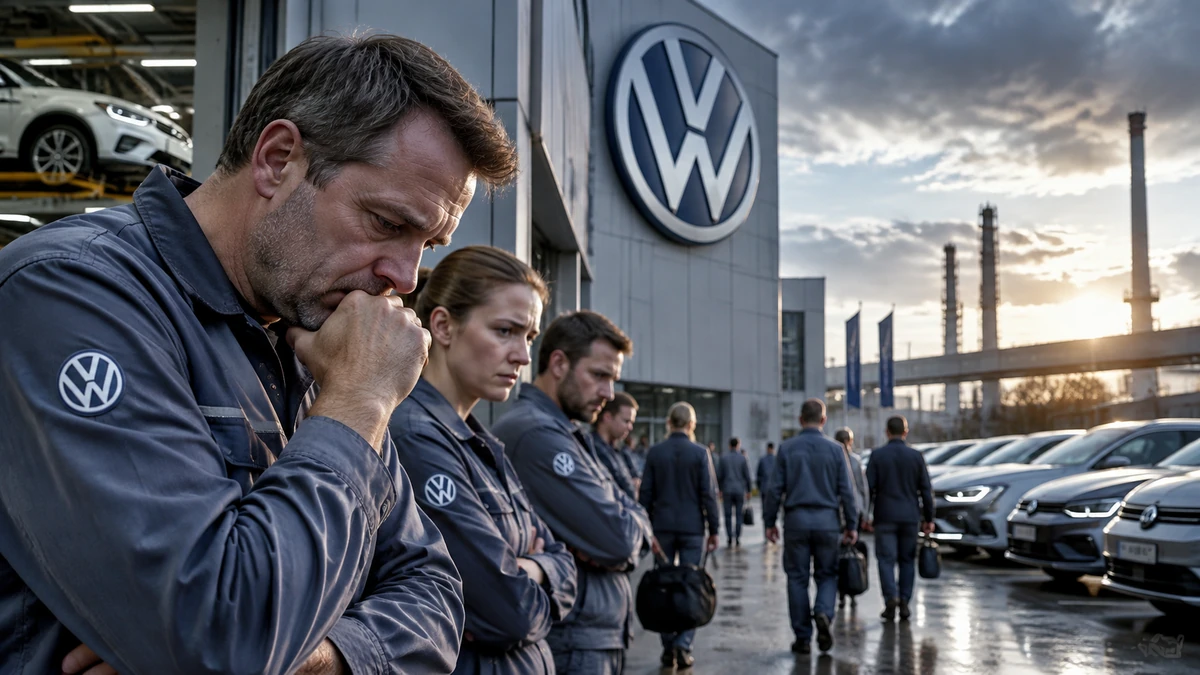
Volkswagen, one of Germany’s most recognizable industrial symbols, has approved a sweeping restructuring plan that could affect around 50,000 jobs as the company attempts to reshape itself for a rapidly changing automotive market. The decision, approved by the company’s supervisory board on Sept. 3, 2026, represents one of the largest adjustments in Volkswagen’s 89-year history and highlights the intense pressure facing traditional automakers worldwide.
For American readers, Volkswagen’s challenge may feel familiar. The auto industry is undergoing a transformation comparable to the shift from landline phones to smartphones or from traditional retail stores to e-commerce. Companies that built their success around decades of manufacturing expertise are now being forced to compete in areas such as electric vehicles, software development, battery technology and more flexible production systems.
The restructuring is not simply about reducing headcount. Volkswagen says it is redesigning its production network, reducing vehicle complexity and preparing its business for a market where efficiency and technology are becoming as important as brand reputation and manufacturing scale.
The company’s “Future Plan 2030” calls for adjustments affecting approximately 50,000 positions, representing about 8% of its workforce based on year-end employment figures. Volkswagen has said the changes are necessary to restore competitiveness as European factories face excess capacity, higher production costs and growing competition from global electric vehicle manufacturers.
A Historic Manufacturer Faces Pressure From Electric Vehicles and Global Competition
Founded in 1937, Volkswagen became a cornerstone of German industrial strength. Its brands, including Volkswagen Passenger Cars, Audi, Porsche, Škoda and others, built a global reputation for engineering, reliability and manufacturing scale. In many ways, Volkswagen has played a role in Germany similar to that of major American industrial names such as General Motors or Ford in the United States.
However, the automotive industry that created Volkswagen’s success has changed dramatically. The transition from gasoline-powered vehicles to electric vehicles has disrupted traditional advantages. Companies that mastered engines and mechanical engineering must now compete in areas where battery technology, software platforms and digital services are increasingly important.
Volkswagen’s supervisory board estimated that European production capacity currently exceeds market demand by more than 500,000 vehicles. The company has warned that some factories face difficult decisions about their future role, including facilities in Emden, Zwickau, Hanover and Neckarsulm.
The company plans to examine alternative uses for these sites and develop a more sustainable production structure for European operations. The timeline for securing the future of these facilities extends into the early 2030s, showing that Volkswagen views the transformation as a long-term industrial restructuring rather than a short-term cost-cutting effort.
For global automakers, Volkswagen’s situation represents a broader question: How can companies built for an era of mass production adapt when consumers, technology and competition are changing faster than traditional manufacturing cycles?
Why Volkswagen Is Reducing Models and Simplifying Production
One major part of Volkswagen’s strategy is reducing product complexity. The company plans to discontinue roughly half of its vehicle models by 2035 and significantly reduce the number of available options and configurations.
This may seem surprising in an era when automakers often compete by offering more choices. However, excessive customization can create significant manufacturing costs. Each additional model variation requires different parts, supply chain management systems and production planning. Simplifying vehicle lineups can help companies reduce expenses and increase factory efficiency.
The move reflects a broader trend across the automotive industry. Automakers are increasingly trying to build fewer platforms that can support multiple vehicle types while sharing software, batteries and other components. The approach resembles strategies used in consumer technology, where companies often rely on common systems to reduce costs and accelerate innovation.
Volkswagen CEO Oliver Blume described the restructuring as an important signal for the company’s future, emphasizing the need to balance competitiveness with responsibility toward employees, suppliers and communities connected to the company.
That balance will be one of Volkswagen’s biggest challenges. Reducing costs may improve financial performance, but large-scale restructuring can also affect workers, regional economies and thousands of supplier companies that depend on automotive production.
Germany’s Labor Model Becomes a Critical Factor in the Restructuring Debate
Unlike some countries where corporations can quickly close facilities or reduce employment, Germany has a strong tradition of worker participation in corporate decisions. Volkswagen’s restructuring is taking place within a system where employee representatives have significant influence through works councils, organizations that represent workers inside companies.
The approved 50,000-job adjustment figure does not necessarily mean that 50,000 workers will immediately lose their jobs. Volkswagen’s works council has said the number represents a planning assumption connected to the company’s goal of achieving a 9% operating profit margin by 2030.
Existing labor agreements also reportedly prevent forced layoffs through the end of 2030. This means the company and employee representatives must negotiate solutions, which could include natural workforce reductions, retirement programs, changes in production structures or reassignment of workers.
The situation illustrates a key difference between European and American approaches to industrial restructuring. In the United States, large corporations have historically had more flexibility to rapidly adjust their workforce, although labor disputes and political debates over manufacturing jobs remain common. Germany’s model places greater emphasis on negotiation and social protections, which can slow changes but may reduce sudden economic disruption.
Volkswagen’s restructuring will therefore serve as a major test of whether Europe’s traditional manufacturing system can adapt to the speed of technological change.
What Volkswagen’s Changes Mean for the United States and American Industry
The Volkswagen restructuring carries significance beyond Germany because the global auto industry is deeply interconnected. American consumers, companies and policymakers are watching the same forces affecting Volkswagen: electric vehicle adoption, competition from Chinese automakers, supply chain changes and the rising importance of automotive software.
The United States has also been navigating a major automotive transition. American automakers have invested heavily in electric vehicles and battery production while facing questions about consumer demand, profitability and the future of traditional manufacturing jobs. The challenges facing Volkswagen show that even companies with nearly a century of experience are not immune to disruption.
For American consumers, Volkswagen’s strategy could influence future vehicle choices. A smaller number of models and fewer configuration options may become more common as automakers seek to lower costs and compete with companies that use highly standardized production systems.
The changes also matter for U.S.-European economic ties. The automotive sector remains one of the most important industrial connections between the two economies. Volkswagen operates globally, and changes in its European strategy can affect suppliers, technology partnerships and investment decisions internationally.
The restructuring also highlights the competitive pressure created by Chinese electric vehicle manufacturers. Companies from China have expanded rapidly in global EV markets by focusing on battery technology, manufacturing scale and cost efficiency. European and American automakers are increasingly responding by reconsidering their own production models.
For the United States, Volkswagen’s transformation offers a reminder that maintaining automotive leadership requires more than preserving existing factories. It requires investment in new technologies, workforce skills and manufacturing systems capable of adapting to changing market conditions.
A Warning Sign for Traditional Automakers Around the World
Volkswagen’s restructuring is part of a larger transformation affecting nearly every major automaker. The traditional formula of building large factories, producing many models and relying on decades of brand loyalty is being challenged by a new competitive environment.
The winners of the next era of transportation may not simply be the companies that sell the most cars. They may be the companies that can develop technology faster, manage production more efficiently and respond quickly to consumer expectations.
Electric vehicles have accelerated this transformation, but the changes extend beyond batteries and motors. Software, autonomous driving technology, connected services and digital manufacturing are becoming central parts of automotive competition.
Volkswagen’s decision shows that even industry leaders must make difficult choices when old systems no longer match new market realities. The company’s future will depend on whether it can successfully combine its manufacturing heritage with the flexibility required in the modern automotive economy.
What to Watch Next as Volkswagen Begins Its Transformation
The next stage of Volkswagen’s restructuring will likely focus on how the company manages factory decisions, labor negotiations and the rollout of its simplified vehicle strategy. The success or failure of these efforts could influence other major manufacturers facing similar pressures.
Investors will watch whether Volkswagen can improve profitability while maintaining its global competitiveness. Workers and communities will watch whether the company can protect employment opportunities during a period of industrial change. Consumers will watch whether fewer models and simpler production systems lead to more affordable and competitive vehicles.
For the global automotive industry, Volkswagen’s restructuring represents more than a corporate decision. It is a sign that the century-long era of traditional car manufacturing is entering a new phase — one where adaptation may determine which companies remain leaders in the decades ahead.
Comments
Post a Comment