Image to help understand the article
A father’s death puts lifelong care in focus
For parents who provide daily support to a child with a developmental disability, planning for the future can mean confronting a question that grows more urgent with age: Who will be there when they no longer can?
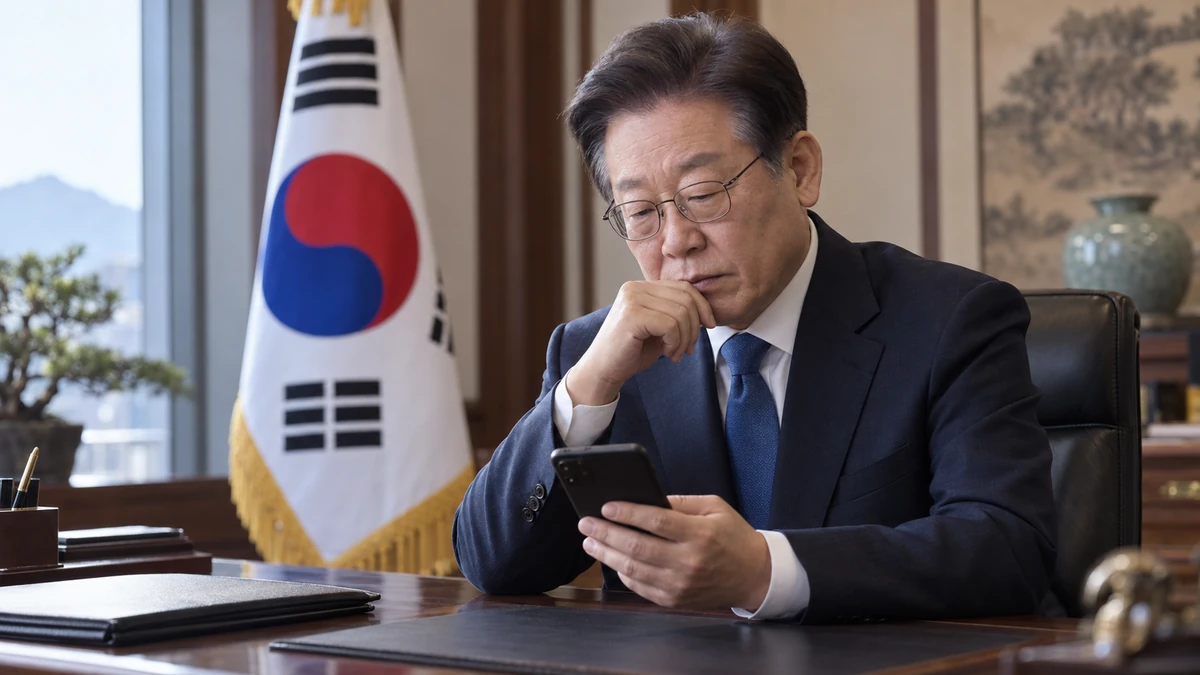
South Korean President Lee Jae-myung has put that question at the center of a pledge to strengthen government support, linking a father’s death to the need for care that does not depend on a parent’s survival. In a post on X, Lee highlighted round-the-clock integrated care for people with the most intensive developmental disability support needs, expanded participation in daytime activities and stronger support through a public guardianship system.
His message paid tribute to Jeon Gyeong-cheol, who raised a son with severe autism on his own for more than 20 years. Jeon, who called his son Peter Pan, died after receiving a terminal liver cancer diagnosis. Lee said he would remember the father’s concern about his son’s future and emphasized that people with developmental disabilities should be able to maintain ordinary daily lives even when their parents are no longer beside them.
The announcement addresses a problem that reaches well beyond South Korea. In the United States, families face their own difficult transitions from parental caregiving to publicly financed services, paid support and other living arrangements. Both countries face a fundamental test: whether help remains dependable when the family member who organizes it becomes ill, grows old or dies.
What the president promised — and what remains unclear
Lee described a governmentwide response rather than a single service. The measures he highlighted cover three different needs: intensive daily care, participation in daytime activities and legal support through public guardianship. Together, those categories acknowledge that continuity requires more than a place to live or someone available during an emergency.
The round-the-clock integrated care commitment specifically concerns people with the highest support needs. That distinction matters. The message does not establish an entitlement to 24-hour services for every person with a developmental disability, nor does it explain precisely how care would be organized across homes, community programs or residential settings.
Expanded daytime participation addresses another part of daily life: what a person can do, where they can go and whom they can spend time with. Public guardianship addresses a separate issue involving legal authority and assistance with decisions. One component cannot automatically substitute for another. Having a guardian does not guarantee that a support worker will arrive, and having daytime services does not resolve overnight care.
The account of Lee’s remarks does not provide a budget, implementation timetable, staffing plan or numerical expansion targets. It also does not establish how many additional people would qualify or how families would apply. Those omissions limit what can be concluded about the scale of the initiative. The president has identified priorities and expressed a commitment; whether those commitments produce reliable services will depend on the operational details.
Understanding the Korean context without reducing it to tradition
American readers may encounter South Korea most often through its technology companies, security relationship with Washington or global entertainment exports. This story concerns a less internationally visible part of the country: the social support systems that shape life for people who need substantial, continuing assistance.
In Korean policy usage, the developmental disability category commonly centers on intellectual disability and autism. American usage can encompass a broader set of conditions, depending on the law or program. Eligibility categories therefore should not be treated as interchangeable across the two countries. Someone described as having particularly intensive needs in a Korean program would not necessarily fit a single equivalent American administrative category.
It would also be misleading to explain Jeon’s story simply as a product of Korean family obligation. Family-centered care is not uniquely Korean. American parents, too, can become the people who arrange appointments, communicate support needs, manage benefits and fill gaps when paid help is unavailable. Cultural expectations matter, but so do eligibility rules, service availability and whether an alternative to unpaid family care actually exists.
The Peter Pan nickname belongs to this family’s story. Although the fictional character is familiar to American audiences as a boy who never grows up, the nickname should not become a general description of autistic people or adults with intellectual disabilities. Adults with developmental disabilities remain adults, with individual preferences, relationships and rights. The policy question is how to support their lives, not how to preserve them indefinitely in the role of children.
Why an ordinary day is a meaningful policy goal
Lee’s emphasis on an ordinary daily life points to a broader way of judging disability services. Preventing abandonment or immediate harm is essential, but it is a minimum standard. A system can keep someone physically safe while still leaving that person isolated, without meaningful activities or with little influence over the shape of the day.
For a person who needs substantial assistance, an ordinary day might involve help getting dressed, reliable transportation, an activity they enjoy and support from someone who understands how they communicate. These are examples of what continuity can require, not a list of benefits specified in Lee’s announcement. Their significance is that daily life depends on services fitting together rather than existing separately on paper.
Families often supply the coordination that makes those pieces work. A parent may recognize signs of distress, know which routines are reassuring and explain preferences that unfamiliar workers might miss. When the parent is suddenly absent, the problem is not only replacing hours of unpaid labor. It can also be preserving knowledge accumulated over decades.
That makes advance planning important. A transition that begins while a parent can still participate offers opportunities to build relationships, document communication needs and establish dependable routines. A transition triggered only by hospitalization or death is more likely to occur under pressure. Lee’s framing makes the period after parental care a public policy concern; the next question is whether support can be arranged before a family reaches that crisis.
What this means for the United States
For American audiences, the clearest connection is domestic rather than commercial or diplomatic. The Korean pledge addresses a challenge already embedded in the U.S. disability system: turning formal access to services into dependable support across a lifetime. It does not announce a U.S.-South Korean care agreement, a business partnership or an opportunity for American companies to provide the services.
In the United States, Medicaid is a major source of financing for long-term services and supports for eligible people with disabilities. Home- and community-based services can help people receive assistance outside institutions, including in their own homes. But the system varies considerably by state and program. Some programs limit enrollment, and families may encounter waiting lists or difficulty finding providers even when a pathway to coverage exists.
The comparison is useful because an insurance card, an eligibility determination and an available worker are three different things. American policymakers considering South Korea’s approach should look beyond the promise of expanded support to questions of staffing, access and continuity. Korean policymakers face the same general distinction between announcing a service and ensuring that someone can actually use it.
U.S. disability policy also supplies an important rights-based reference point. The Americans with Disabilities Act and the Supreme Court’s 1999 Olmstead decision establish a framework against unjustified segregation of people with disabilities. Olmstead does not guarantee every requested service, but it makes clear that the setting in which support is delivered matters. Round-the-clock assistance should not automatically be understood as requiring separation from community life.
For American providers and companies working in disability services, the relevant lesson is about service design rather than a newly announced foreign market. Transportation, workforce reliability, communication support and coordination can determine whether care arrangements hold together. Nothing in the reported pledge establishes procurement plans or a role for U.S. firms. The bilateral value, at this stage, is comparative: two countries can examine how public systems help families plan for a future without parents as the default caregivers.
Guardianship raises a different set of questions
Lee’s inclusion of public guardianship recognizes that some people may need legal support when parents can no longer assist them. But guardianship is not simply another form of caregiving. Depending on the jurisdiction and the court order, it can transfer authority over important decisions to another person. That makes safeguards and the scope of the arrangement central concerns.
American readers may recognize debates about court-appointed decision-makers through the scrutiny of conservatorship, including the case involving Britney Spears. That case is not a parallel to the circumstances of a person with intensive developmental disability support needs. Its relevance is narrower: it brought public attention to how much power legal arrangements can give another person over someone’s life. Terminology and legal powers differ across jurisdictions.
In disability policy, one alternative discussed in the United States is supported decision-making, in which a person receives help understanding and communicating choices while retaining decision-making authority. Its legal recognition and practical availability vary. It should not be presented as an automatic solution for every individual, just as guardianship should not be assumed necessary solely because someone has an autism or intellectual disability diagnosis.
The account of Lee’s message does not explain what changes are planned for South Korea’s public guardianship system. Important questions include who would provide support, how decisions would be reviewed, what conflicts of interest protections would apply and how the individual’s wishes would be identified and respected. Expanding access and protecting autonomy are related responsibilities, not competing reasons to ignore either one.
The workforce will help determine whether the promise holds
Whatever the eventual design, round-the-clock care requires people to deliver it. Continuous coverage involves multiple shifts, backup arrangements and workers prepared to respond to individual needs. Calling a service integrated does not, by itself, resolve the handoffs between daytime programs, overnight support, transportation and health care.
That issue is especially familiar in the United States, where the availability and retention of direct support workers are recurring concerns in community-based disability services. These workers can assist with daily activities and participation in community life. Their role requires more than physical presence, particularly when someone needs individualized communication support or careful attention to changes in behavior and health.
For South Korea, the information provided about the pledge leaves workforce questions unanswered. It does not specify recruitment goals, training requirements, compensation or how continuity would be maintained when workers leave. These are not secondary administrative matters. A program can offer generous coverage in principle yet remain difficult to use if providers cannot sustain staffing.
Daytime expansion also needs to be evaluated by more than available slots. Relevant questions include whether participants can reach the program, whether activities reflect their interests and whether people with the most intensive needs can participate. An expansion that is accessible only to those who need less assistance would not necessarily address the families facing the greatest uncertainty.
What to watch after the tribute
Jeon’s death gave Lee’s message its immediate emotional force. The more lasting significance is the president’s explicit connection between a parent’s absence and the government’s responsibility to support daily life. That is a broader issue than an individual family tragedy, although one announcement is not enough to establish that a lasting policy shift has occurred.
The first measures of progress will be concrete: published eligibility rules, funding commitments, implementation dates and clear explanations of how people obtain services. Another test will be whether families can arrange future support before their existing care arrangement breaks down. Emergency help and long-term planning serve different purposes, and a dependable system needs to account for both.
Evaluation should also include the experiences of people receiving support, not only their relatives or service administrators. Family concerns are essential to understanding the problem, but the person whose housing, activities and decisions are at stake must remain central. Meaningful participation may require communication assistance; it should not be dismissed because someone cannot express preferences in conventional ways.
For readers in both South Korea and the United States, the question is ultimately recognizable without any cultural translation: Can someone continue a safe, connected and self-directed life after the person who has always supported them is gone? Lee has pledged that parental absence should not mean being left alone. The measure of that promise will be the ordinary days that public support makes possible.
Comments
Post a Comment