Image to help understand the article
A celebrity wedding announcement that says more than it first appears
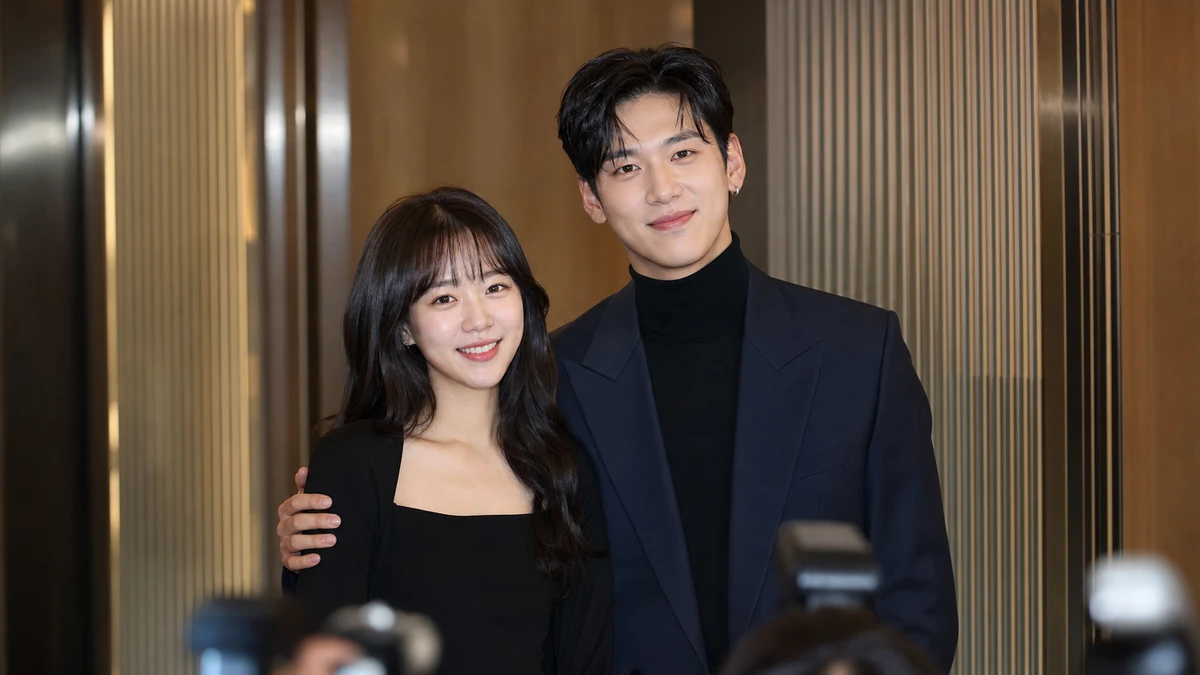
South Korean actress and TV personality Ji Ye-eun and dancer-choreographer Bada said this week that they plan to marry on Dec. 12, turning what might seem like a routine celebrity announcement into a revealing snapshot of how Korean popular culture is changing. According to statements released by their agencies and reported by Yonhap News Agency, the two, both born in 1994, decided to spend their lives together after building what both sides described as a relationship grounded in trust and love.
On one level, this is straightforward entertainment news: a recognizable actress with a growing presence in comedy and variety television is marrying a high-profile choreographer best known to many younger audiences through the dance competition world and K-pop performance culture. But for anyone trying to understand the modern Korean entertainment industry — and why it increasingly matters in the United States — the announcement carries a broader significance.
Ji and Bada occupy different but connected corners of the Korean pop-culture machine. She built her public image through acting, web dramas and Korean variety television, a genre that can blend improv, celebrity banter, sketch comedy and reality-style competition in ways that may feel unfamiliar to American viewers who are more used to neat boundaries between sitcoms, talk shows and unscripted series. He emerged as both performer and creator in the dance world, leading the crew We Dem Boyz and later gaining wider name recognition through Mnet’s “Street Man Fighter,” a male dance competition show that helped turn choreographers and crew leaders into mainstream celebrities.
Their relationship had not been hidden from the public. The two acknowledged they were dating in April and shared photos on social media, making their romance unusually visible by the standards of a Korean celebrity system that has long treated private relationships as sensitive terrain. Now, about five months after confirming they were a couple, they are formalizing the next step in a way their agencies framed not as spectacle but as commitment.
That framing matters. In the statements surrounding the marriage, the repeated emphasis was not glamour, exclusivity or a lavish event. It was faith, trust, love and companionship. In an industry often associated abroad with image management and intense fan scrutiny, those words suggest a carefully chosen message: this is not just a celebrity pairing but a personal decision presented with unusual plainness. For American readers accustomed to celebrity wedding coverage as either tabloid fodder or luxury lifestyle content, the tone is strikingly restrained.
And that restraint may be exactly why this announcement resonates. It captures several converging shifts in Korean culture at once: more openness around celebrity dating, the rising status of performance creators behind the scenes, and the continued merging of entertainment categories in a Korean media ecosystem that increasingly shapes global trends.
Who Ji Ye-eun is, and why Korean viewers know her
Ji Ye-eun debuted in 2017 through the web drama “How To” and gradually expanded beyond acting into comedy and variety shows. That trajectory is important because it reflects how Korean entertainers often build careers differently from many of their American counterparts. In the United States, actors, comedians and reality personalities are usually marketed as distinct types of talent. In South Korea, especially in the streaming and variety era, performers are often expected to move fluidly between scripted acting, panel appearances, comedy segments and personality-driven unscripted programs.
Ji’s growing visibility came in part through “SNL Korea,” the local adaptation of the American “Saturday Night Live” format. For U.S. readers, that offers a useful point of entry, but the comparison only goes so far. “SNL Korea” draws from the same sketch-comedy DNA, yet it exists within a Korean entertainment culture where the crossover between acting and variety performance is especially strong. A performer can gain recognition not just for dramatic range but for quick reactions, comic timing and the ability to establish a distinct on-screen persona in short, memorable appearances.
That has helped Ji become more familiar to viewers through programs including “Running Man,” one of South Korea’s longest-running and most internationally recognized variety franchises. For American readers who have never watched it, “Running Man” is less like a conventional game show than a long-running celebrity playground built around missions, physical comedy, alliances and improvisation. Its appeal lies as much in personality chemistry as in format. Appearing there can turn a rising performer into a recurring presence in people’s weekly media habits.
In Ji’s case, her career illustrates how Korean entertainment increasingly rewards versatility over rigid brand identity. She is not simply “an actress” in the narrow sense. She is a performer who has learned to communicate character, mood and humor across formats. That flexibility is one reason audiences respond strongly to personal milestones like this one. For fans who know her from lighthearted, fast-paced television appearances, marriage news feels less like a distant press release and more like a life update from someone whose persona has become familiar through repeated exposure.
That familiarity, however, also comes with pressure. Korean celebrities — especially women in highly visible entertainment sectors — often face public scrutiny over dating, marriage and the possibility that personal milestones may affect career momentum. The fact that Ji’s marriage announcement is being covered warmly speaks not only to her popularity but also to a cultural atmosphere that may be shifting, however gradually, toward accepting the idea that public-facing entertainers can pursue visible personal lives without it being treated as a professional liability.
Why Bada represents a bigger shift in K-pop than many outsiders realize
If Ji’s career helps explain Korean variety culture, Bada’s helps explain a major transformation in K-pop: the rise of the choreographer as a public-facing creator. For years, global audiences often consumed K-pop through idols — the singers and groups at center stage — while the creative labor behind them remained relatively obscure outside dedicated fan circles. That has changed dramatically.
Bada, leader of the dance crew We Dem Boyz, became more widely known through Mnet’s “Street Man Fighter,” where dance crews competed not just on technical skill but on style, authorship and performance identity. To American readers, a rough analogy might combine elements of “America’s Best Dance Crew,” “So You Think You Can Dance” and reality-competition storytelling, but in a K-pop context where the stakes are broader. On such programs, choreographers are not merely backup talent. They are presented as artistic architects of movement, image and stage language.
His credits, as summarized in Korean coverage, include participation in choreography for hit tracks such as Zico’s “New Thing” and Jennie’s “Like Jennie.” Those examples matter because choreography in K-pop is not secondary packaging. It is often central to how a song travels. A hook is no longer just melodic; it is visual and physical. A track breaks through not only because people stream it, but because they watch it, imitate it, clip it, repost it and turn key moves into social media shorthand.
That helps explain why choreographers like Bada now command public attention in ways that would have been less common a decade ago. K-pop is no longer consumed primarily as audio. It is a hybrid form built from music, fashion, dance, camera work and internet circulation. In that ecosystem, the choreographer becomes a storyteller whose work can shape not only a performance but a song’s global afterlife.
For American audiences, there is a useful parallel in how music-video choreography and TikTok dance culture have elevated movement into a marketing engine. But the Korean system remains distinct in the degree to which performance is integrated into the core identity of an idol release from the outset. The person designing those movements is increasingly treated as part of the narrative. Bada’s public profile is a product of that shift.
That is one reason this marriage news travels beyond the celebrity pages. It links two sectors that symbolize the breadth of the Korean cultural export economy: acting and variety on one side, K-pop performance creation on the other. In earlier eras, a marriage between a screen performer and a behind-the-scenes dance creator may have drawn less international notice. Today, because the creator economy in Korean entertainment is more visible, the pairing feels like the meeting of two recognized worlds.
What their public relationship says about changing norms in Korean celebrity culture
The timeline of this relationship is notable. Ji and Bada reportedly grew close after knowing each other as entertainment-industry colleagues and bonding over a shared religion. They confirmed their relationship in April and did not appear to conceal it from fans, even sharing photos together on social media. Now they have announced marriage roughly five months later.
That sequence might not sound unusual by American standards, where celebrities routinely confirm relationships, post couple photos and issue wedding announcements directly to followers. In South Korea, though, the norms have historically been more complicated. Agencies often denied dating reports until evidence became overwhelming. Fans — particularly in idol fandoms built around intimacy and parasocial attachment — could react intensely to news that a public figure was in a relationship. Even when relationships were eventually acknowledged, the process could feel defensive rather than open.
That landscape is not uniform, and it is still evolving. But the Ji-Bada announcement fits a broader pattern in which some Korean celebrities, especially those outside the strictest idol-management structures, are choosing more direct and less secretive ways of presenting their personal lives. Instead of pretending romance does not exist, they are sometimes introducing it as part of adulthood.
Just as important is the language used in the announcement. Both agencies stressed trust, belief and partnership. There was little emphasis on fantasy, status or spectacle. In the Korean context, that can function as a stabilizing message. It tells fans and the public that the relationship was built carefully and respectfully. It also acknowledges an important expectation in Korea’s celebrity culture: that public figures owe audiences not total access to private life, but reassurance that major life decisions are sincere and considered.
The mention of shared religion is also culturally relevant, though it should not be overstated. In South Korea, religious communities can serve as important social networks, much as they do in the United States, and a shared faith can be understood as a point of common values and trust. That detail helps make the relationship legible to local audiences without turning it into a sensational element.
For journalists and industry watchers, the more revealing trend is not merely that two entertainers are getting married. It is that Korean entertainment increasingly has room for relationships to be narrated publicly in mature terms. That matters because the Korean Wave, or Hallyu, is now a global business whose stars are aging into different life stages in full view of international audiences. The industry cannot remain permanently organized around the fiction of eternal availability. Announcements like this suggest a gradual recalibration.
Why this matters in the United States
For American audiences, it may be tempting to treat this as niche foreign entertainment news. That would miss the larger point. The United States is now deeply entangled with South Korea’s entertainment economy, not only as a consumer market but also as a business and cultural partner. K-pop tours fill arenas in Los Angeles, New York and Chicago. Korean variety clips circulate widely on YouTube and TikTok. Streaming platforms market Korean dramas and unscripted shows to U.S. subscribers as mainstream options rather than specialty imports.
That means the lives and careers of Korean entertainers increasingly have downstream effects in the American media environment. When a choreographer like Bada gains name recognition through K-pop-linked work, that visibility matters in a U.S. market where choreography, fan dance culture and social-video virality increasingly shape music promotion. When a performer like Ji builds a hybrid career across acting and variety, that matters in a U.S. market where streamers and digital platforms are also blurring lines between scripted and personality-driven content.
There is also a lesson here for American companies that do business with Korean talent. The Korean entertainment system has long excelled at converting multidisciplinary skill into exportable star power. A figure like Ji is marketable not because she fits one category but because she can move across categories. A creator like Bada matters not only because he choreographs but because his authorship itself has brand value. U.S. studios, labels and platforms already collaborate with Korean partners in music, television and live events. As those relationships deepen, understanding the Korean model of talent development becomes more than cultural literacy; it becomes commercial necessity.
For American fans, meanwhile, the significance is emotional as much as industrial. U.S.-based K-pop fans have grown used to following not just songs and dramas but the wider ecosystem of personalities, crews, competition shows and social media narratives that power Korean celebrity. In that sense, the audience for this news is no longer confined to Seoul. It includes diaspora viewers, international fans of “Running Man,” K-pop dance followers on social media, and younger Americans for whom Korean pop culture is simply part of everyday entertainment consumption.
The comparison to the U.S. industry is instructive. American celebrity culture has, over time, become relatively normalized around public relationships, marriages and blended professional-personal branding. Korean entertainment is not identical, and the pressures on artists can be more restrictive. But as Korean stars and creators become global public figures, the expectation that they remain perpetually opaque about their private lives becomes harder to sustain. International fandom rewards authenticity, or at least a credible version of it. Publicly acknowledged relationships can become less of a crisis and more of a normal career chapter.
That does not mean American norms will simply replace Korean ones. Rather, the U.S. connection adds pressure and visibility. Korean agencies now communicate to a world audience, not just a domestic fan base. A marriage announcement today lands in a transnational media environment, where fans expect context, tone and a coherent story. Ji and Bada’s announcement, centered on trust and mutual support, is exactly the kind of language that travels well across cultures.
A trend story, not just a wedding story
The most interesting way to read this announcement is not as isolated celebrity news but as part of a broader trend line in Korean entertainment. Three shifts stand out.
First, the boundaries between entertainment roles continue to soften. Ji’s career spans acting and variety; Bada’s spans dance performance and creative direction. Korean pop culture now rewards people who can function across formats and who build reputations in multiple lanes at once. That creates richer public identities and, in turn, more durable audience interest.
Second, the people behind the scenes are moving toward center stage. Choreographers, producers and creative directors used to be visible mainly to insiders and devoted fans. In the current media ecosystem, they can become stars in their own right. This mirrors a wider global trend in creator culture, where audiences increasingly want to know who made the thing they love, not just who performed it.
Third, public narratives around romance appear to be changing, at least for some segments of the Korean entertainment world. Instead of approaching dating news as damage control, agencies can now sometimes frame it as a calm, adult progression from trust to partnership. That does not erase the intense scrutiny Korean celebrities still face, but it does suggest a more flexible playbook.
These shifts matter because the Korean Wave is no longer in a novelty phase. It is an established part of the global entertainment order. As that happens, the human realities of the people who sustain it become harder to separate from the brand. Stars date. Creators marry. Careers evolve. Fans adjust. Industries mature.
What to watch next is not whether Ji and Bada’s marriage becomes a media spectacle; the available facts suggest the opposite, a deliberately grounded announcement. The more important question is whether this kind of public openness continues to normalize for Korean entertainers whose careers unfold under global scrutiny. If it does, we may see more relationships presented not as scandals to survive but as milestones to acknowledge.
For American observers, that is worth tracking because Korean entertainment is now woven into U.S. cultural life deeply enough that its internal shifts no longer stay internal. The marriage of Ji Ye-eun and Bada will matter most to their fans, of course. But it also serves as a small, telling marker of where one of the world’s most influential entertainment industries is heading: toward a future in which the people who power Korean pop culture are seen not only as polished products, but as adults building visible lives in public.
The bigger picture for Hallyu’s next phase
In the end, this announcement lands as a warm personal story, but it also reveals the current shape of Hallyu. The Korean Wave is no longer driven solely by idols and scripted dramas. It is powered by a much wider creative field that includes comedians, variety regulars, choreographers, dance crews, social-media personalities and the professionals who translate songs into visual events. Ji and Bada each come from different parts of that field, and their marriage brings those worlds together in a way fans can easily understand.
That is why the news has a resonance beyond romance. Ji represents a screen culture where performers must be adaptable, funny and emotionally legible across platforms. Bada represents a performance culture where movement is not an accessory to music but one of its central languages. Together, they embody the interdisciplinary nature of Korean entertainment in 2024.
For American readers, the takeaway is less about celebrity fascination than about media literacy. To understand why Korean culture has become so globally influential, it helps to notice stories like this one. They show how fame is produced, how careers are structured, how fan relationships are managed, and how an entertainment industry learns to tell more adult stories about the people inside it.
Nothing in the available reporting suggests a dramatic reinvention of either person’s career after the wedding. Their agencies emphasized partnership, not retirement or withdrawal from public life. That too is telling. The announcement is framed around continuing forward, each in their own profession, while starting a marriage. In a culture industry that has often treated personal milestones as potentially destabilizing, that is a quietly modern message.
So yes, this is a celebrity wedding story. But it is also a story about the maturity of Korean entertainment, the growing visibility of its creators, and the increasingly global audience — including in the United States — that now follows these developments with the same fluency once reserved for Hollywood. Ji Ye-eun and Bada are beginning a new chapter together. The industry around them may be entering one as well.
Comments
Post a Comment