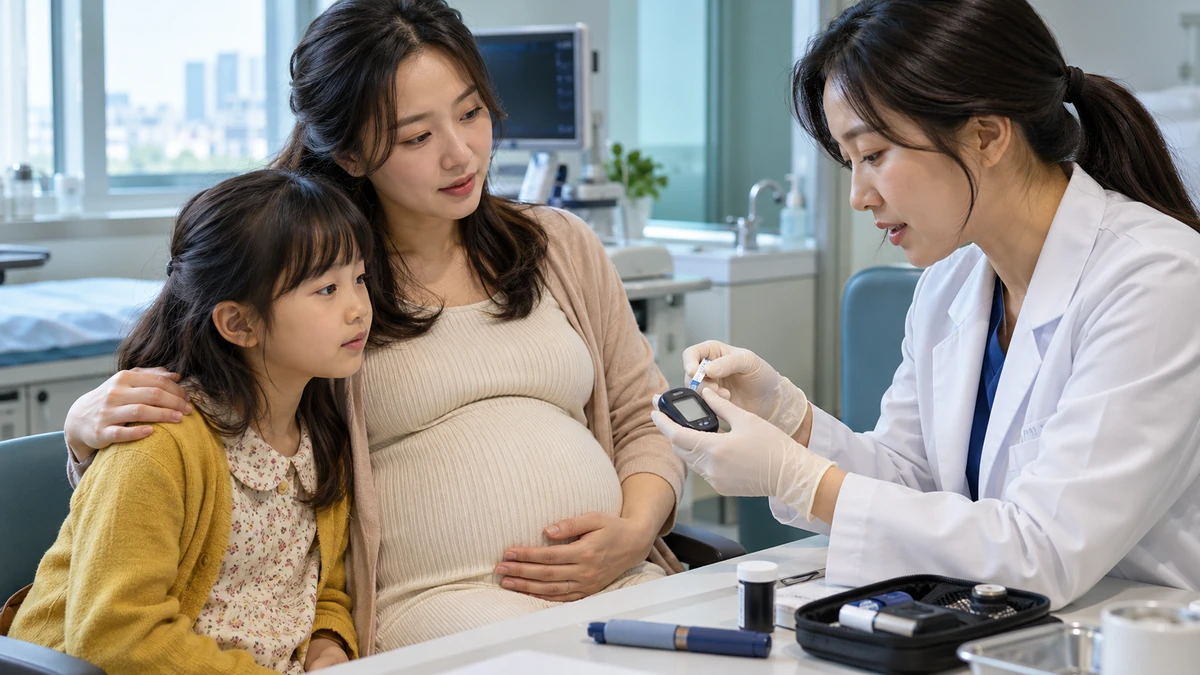
Image to help understand the article
Study tracks nearly 3.5 million families
Children born to mothers who developed diabetes during pregnancy face a greater risk of developing diabetes as they grow, according to a large South Korean study released by the Korea National Institute of Health.
Researchers analyzed National Health Insurance Service records covering 3,491,680 mother-child pairs. The children were born from 2009 through 2018 and followed through the end of 2022, for as long as 14 years. The median follow-up period was 9.5 years. Women who had been diagnosed with diabetes before pregnancy were excluded.
The findings were published online March 6, 2026, in the peer-reviewed journal BMC Medicine. The project was commissioned by the national research institute.
Insulin treatment linked to highest risk
The researchers divided mothers into three groups: those without gestational diabetes, those who managed the condition without insulin and those who required insulin treatment. They then compared rates of Type 1 and Type 2 diabetes among the children.
Compared with children whose mothers did not have gestational diabetes, the risk of Type 2 diabetes was 28% higher among children whose mothers managed the condition without insulin. The risk was 4.3 times higher when mothers required insulin during pregnancy.
For Type 1 diabetes, researchers found no clear association among children whose mothers managed gestational diabetes without insulin. Children whose mothers required insulin, however, had 1.9 times the risk of developing Type 1 diabetes.
The institute described the research as the largest study of an Asian population to separately examine the risks of Type 1 and Type 2 diabetes in children exposed to gestational diabetes. Earlier research often did not distinguish between the two forms or relied on smaller, retrospective studies.
Long-term monitoring urged
Gestational diabetes is high blood sugar first detected during pregnancy in a woman who did not previously have diabetes. It affects more than 1 in 10 pregnancies worldwide. The condition is initially managed through diet and physical activity, with insulin or other medication used when those measures are not enough.
Blood sugar returns to normal after delivery for most mothers, but they remain at increased risk of developing Type 2 diabetes. Pregnancy and delivery complications — including premature birth, cesarean delivery and unusually high birth weight — are well established, while evidence about children’s longer-term health has been more limited.
Kim Won-ho, who leads the institute’s chronic disease research division, said blood sugar management during pregnancy affects not only the mother’s health but also the child’s lifelong health. He said children whose mothers needed insulin for gestational diabetes should receive individualized, continuing care, including regular monitoring of weight and blood sugar as they grow.
Comments
Post a Comment