Image to help understand the article
Calories vary widely across bulgogi dishes
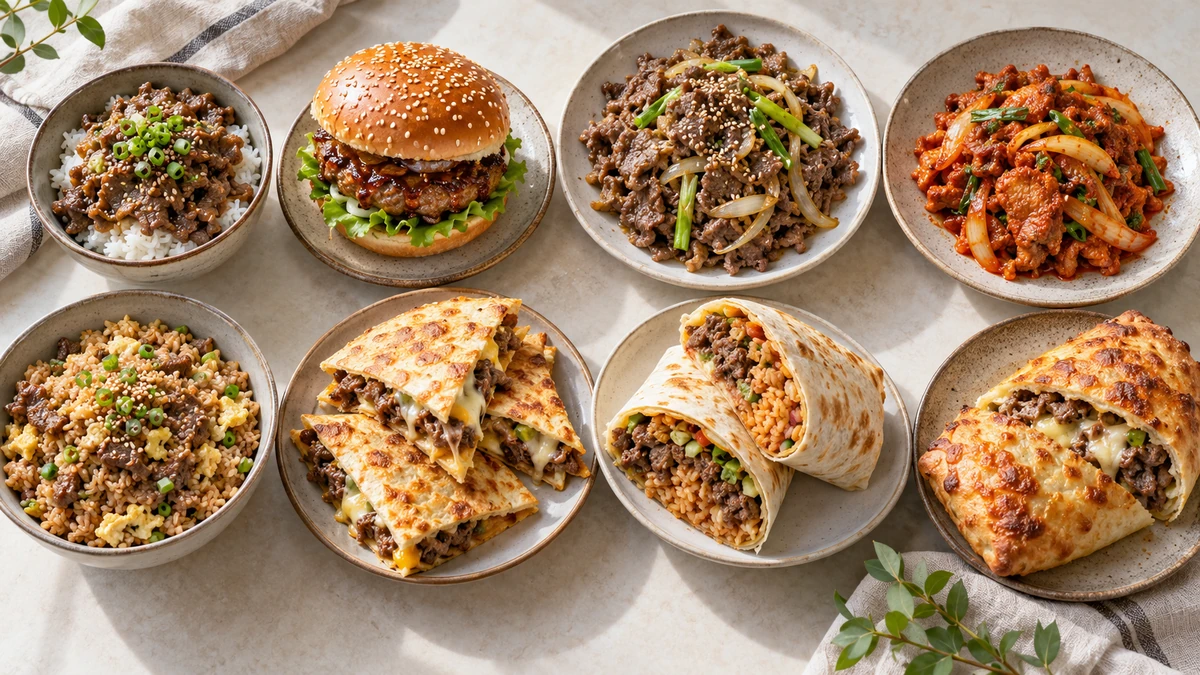
Bulgogi, a Korean dish typically made with marinated meat, appears in everything from rice bowls to burgers and burritos. Data from South Korea’s Ministry of Food and Drug Safety show substantial nutritional differences among eight bulgogi-based foods when compared in 100-gram servings.
Duck bulgogi had the fewest calories at 145, followed by beef bulgogi at 170 and bulgogi fried rice at 175. A bulgogi rice bowl contained 182 calories, while a bulgogi bake had 196. A crispy bulgogi and triple-cheese chicken quesadilla contained 218 calories, and a bulgogi burger had 250. The bulgogi burrito ranked highest at 299 calories.
Beef bulgogi leads in protein
Beef bulgogi contained the most protein, at 16.41 grams per 100 grams. The quesadilla and bulgogi burger followed closely, with 13.89 grams and 13.88 grams, respectively. The bulgogi bake contained 10.33 grams, while the burrito had 9.29 grams. Duck bulgogi provided 6.75 grams, the rice bowl 6.6 grams and bulgogi fried rice 3.8 grams.
The highest-calorie item has the least sodium
The bulgogi bake had the most sodium, at 601 milligrams per 100 grams. It was followed by the quesadilla at 497 milligrams, bulgogi fried rice at 470, duck bulgogi at 467 and beef bulgogi at 418. The bulgogi burger contained 338 milligrams, and the rice bowl had 253.
The burrito, despite having the most calories, contained the least sodium at 173 milligrams. That means the item with the most protein and the one with the least sodium were not the same: Beef bulgogi led in protein, while the burrito ranked lowest in sodium. The figures come from the ministry’s Food Nutrition Database and reflect 100-gram portions rather than full serving sizes.
Comments
Post a Comment