Image to help understand the article
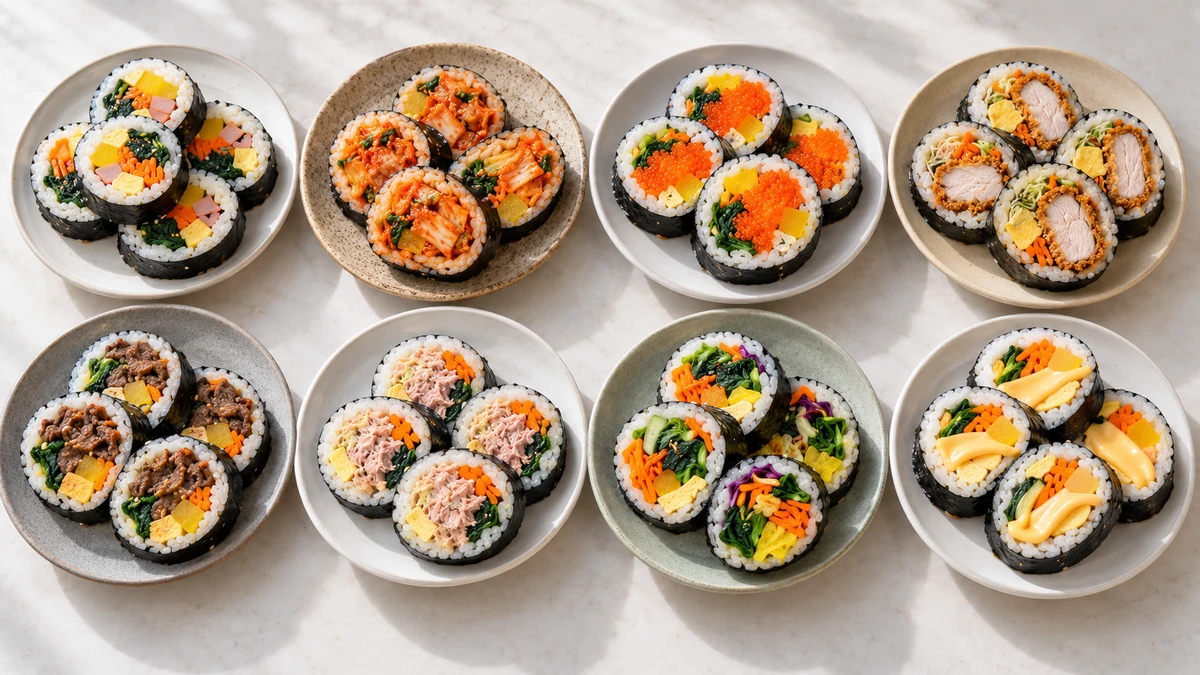
Gimbap, a Korean staple made by rolling rice and assorted fillings in dried seaweed, can vary considerably in nutritional content depending on what goes inside. Data from South Korea’s Ministry of Food and Drug Safety compare eight common varieties in 100-gram servings.
Calories vary by filling
Kimchi gimbap had the fewest calories at 130 per 100 grams, followed by standard gimbap at 140 and vegetable gimbap at 158. Tuna gimbap contained 174 calories, while flying fish roe and cheese varieties each had 177. Beef gimbap had 179 calories, and pork cutlet gimbap ranked highest at 202.
Cheese has the least sodium
Cheese gimbap had the lowest sodium level at 169 milligrams per 100 grams. Pork cutlet gimbap contained 241 milligrams, beef 267 and flying fish roe 299. Standard gimbap had 307 milligrams, vegetable 309, tuna 335 and kimchi 349, the highest among the eight varieties.
Tuna leads in protein
Tuna gimbap provided the most protein at 7 grams per 100 grams. It was followed by beef at 6.46 grams, cheese at 6.24 and flying fish roe at 6.1. Pork cutlet gimbap contained 5.77 grams, standard gimbap 4.84, vegetable 4.6 and kimchi 4.3.
Among the options studied, cheese gimbap combined the lowest sodium level with at least 6 grams of protein. The figures come from the ministry’s Food Nutrition Database and are standardized by weight, rather than by roll or serving.
Comments
Post a Comment