Image to help understand the article
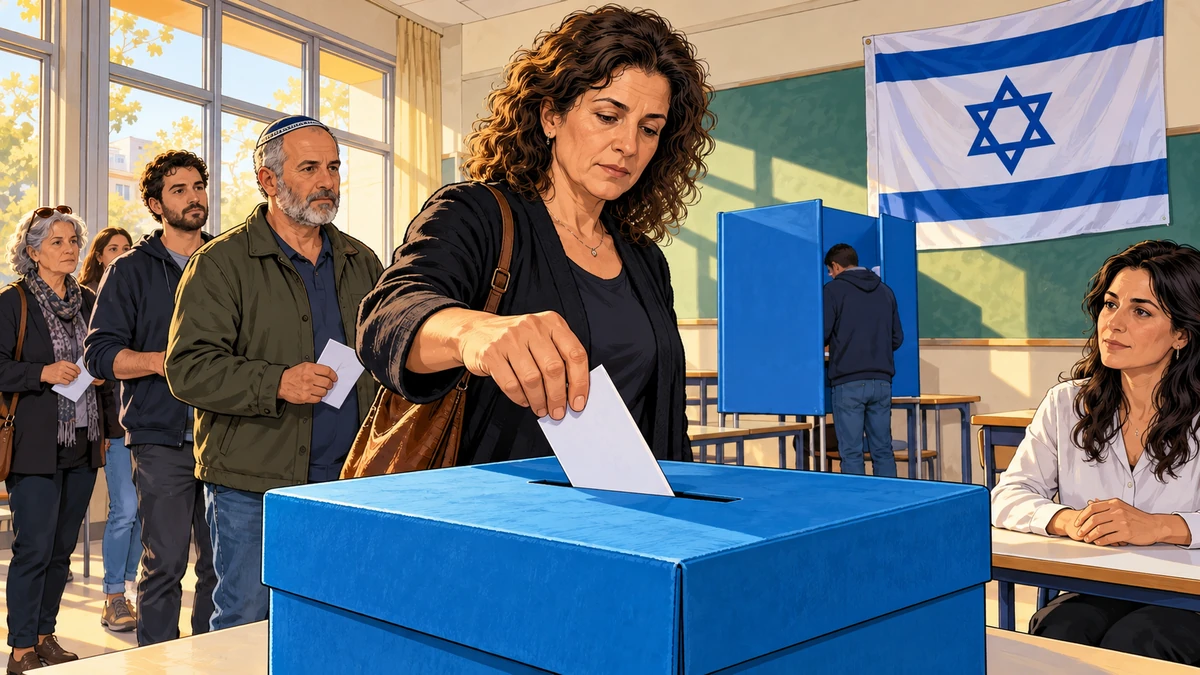
Israelis began voting at 7 a.m. on the 27th in the country’s first general election since the war in Gaza began, with Prime Minister Benjamin Netanyahu’s political future at the center of a closely divided contest.
The election is widely viewed as a referendum on Netanyahu, who has served as prime minister for a total of 19 years. He faces public anger over divisions fueled by legislation aimed at weakening judicial authority and criticism that his government failed to prevent Hamas’ Oct. 7, 2023, surprise attack.
A Coalition Will Decide the Next Prime Minister
About 7.3 million eligible voters are casting ballots for party lists in a nationwide constituency. The 120 seats in Israel’s parliament, the Knesset, are distributed according to each party’s share of the vote.
Parties must receive at least 3.25% of the vote, equivalent to a minimum of four seats, to enter parliament. Votes for parties or alliances that fail to reach the threshold are excluded from the allocation of seats.
No party is expected to win a majority on its own. After the election, Israel’s president will ask the party leader considered most likely to form a governing coalition to try to assemble one. A candidate needs the support of at least 61 lawmakers to become prime minister.
Netanyahu Faces a Former Military Chief
Netanyahu’s main challenger is Gadi Eisenkot, a former military chief of staff who leads the new centrist Yashar party. Eisenkot joined the wartime unity government after the Hamas attack but later resigned, accusing Netanyahu of prolonging the war and putting hostages at risk. Eisenkot’s youngest son was killed in fighting in Gaza.
Netanyahu’s Likud party and Yashar are each projected to win about 20 seats. Polls released on the 23rd showed the opposition narrowly ahead of Netanyahu’s governing bloc. Israel’s Kan public broadcaster projected 52 seats for the opposition and 50 for the governing camp, while Channel 12 forecast a 56-50 split and Channel 13 predicted 54-50.
Kan projected 18 seats for Arab and other parties aligned with neither bloc. Either side could potentially secure a majority with support from Arab parties, but both Netanyahu and Eisenkot have rejected such an alliance.
Eisenkot also opposes a two-state solution establishing sovereign Israeli and Palestinian states. However, he has expressed skepticism about fully occupying Gaza and opposes civilian-led expansion of settlements in the occupied West Bank.
Iran Tensions Surface in Final Campaign Days
The New York Times reported, citing three senior Israeli military officials and three other people briefed on the matter, that Netanyahu had pushed in recent weeks for additional strikes on Iran but faced opposition from military chief Eyal Zamir.
Near the end of the campaign, Netanyahu posted an artificial intelligence-generated image on social media depicting a nuclear mushroom cloud over Tel Aviv. He said the election would determine Israel’s “existence.”
Voting is scheduled to end at 10 p.m. local time, with television exit polls expected immediately afterward. A broad picture of the results could emerge by the afternoon of the 28th, although determining the largest party may take several days.
The president typically gives the party leader with the most recommendations from lawmakers 28 days to form a government, with a possible 14-day extension. If coalition negotiations fail, Israel could hold another election early next year, with Netanyahu remaining as caretaker prime minister until then.
Comments
Post a Comment