Image to help understand the article
From Interpreter to Reform Official
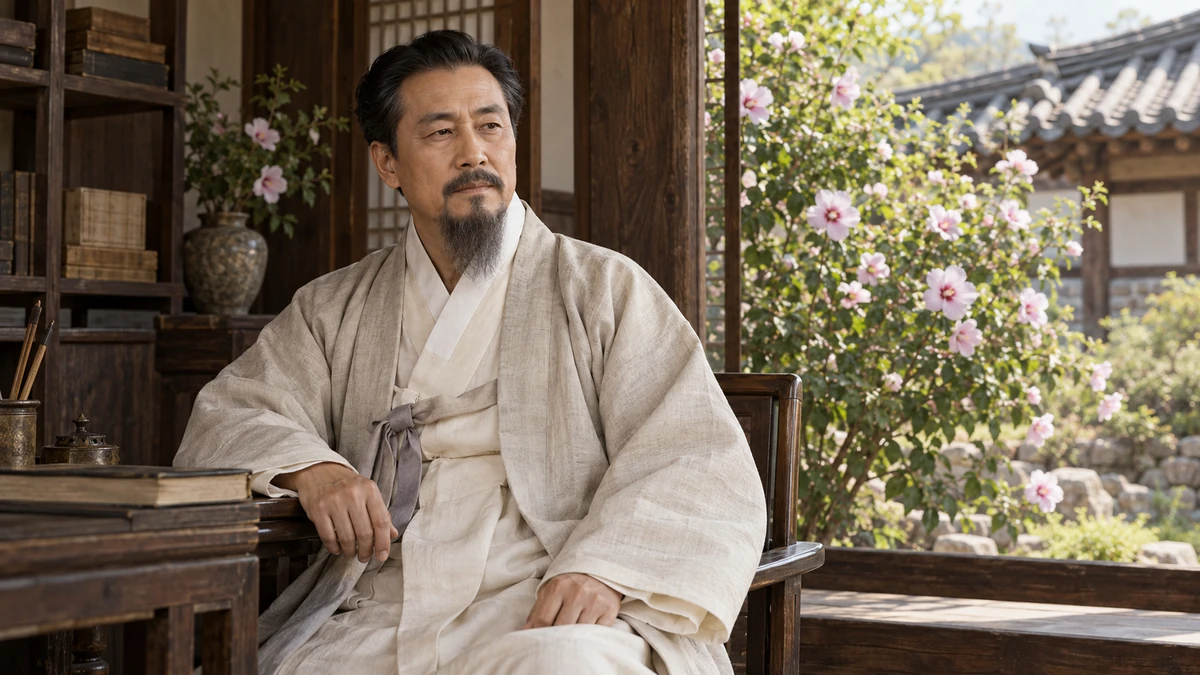
Namgung Eok, a journalist, educator and independence activist who lived through the final decades of Korea’s monarchy and much of Japanese colonial rule, used newspapers, schools, songs and the mugunghwa flower to promote Korean national identity.
Born Dec. 27, 1863, in Seoul’s Jeong-dong neighborhood, Namgung studied classical Chinese before enrolling in an American-run English school in 1883. After completing his studies, he worked as a customs trainee and entered government service. In early 1887, he became an interpreter for King Gojong.
That year, Namgung accompanied a Korean diplomatic mission bound for Britain, Russia and Germany, but Chinese interference left the delegation stranded in Hong Kong for two years before it was recalled. After returning, he held several government posts and served as a county magistrate.
During the Gabo Reform period beginning in 1894, when Korean officials sought to modernize the state, Namgung headed a civil engineering bureau. He oversaw road improvements in central Seoul and helped establish Pagoda Park. He also taught English grammar and Korean history before resigning from government in 1896 amid political upheaval surrounding King Gojong.
Journalism and Political Reform
In 1896, Namgung joined Seo Jae-pil and Yun Chi-ho in launching The Independent, an influential newspaper associated with Korea’s modernization movement. He also helped establish the Independence Club, which advocated transforming the Korean Empire’s absolute monarchy into a constitutional monarchy and creating a representative assembly.
Authorities arrested Namgung and 17 other leaders in November 1898 as the movement came under government pressure. Two months earlier, he had helped found the Hwangseong Sinmun and became its president. The daily newspaper used a mixture of Korean and Chinese characters, sought to educate the public and supported the Independence Club’s activities.
His reporting repeatedly brought him into conflict with authorities. He was detained in 1900 after publishing a foreign report about a possible Russian-Japanese partition of Korea and warning of the two powers’ expansionist intentions. In 1902, he and fellow journalist Na Su-yeon were arrested over an editorial criticizing Japanese encroachment and the nature of agreements between Russia and Japan. Namgung was severely tortured and released four months later.
He was jailed again in 1903 after being falsely accused of planning an armed uprising with reformist politician Park Yeong-hyo. Authorities released him after four months when the allegation proved unfounded, and he subsequently stepped down as newspaper president.
Education as a Form of Resistance
Namgung returned briefly to public service in 1905 at King Gojong’s request, but resigned after the Eulsa Treaty stripped Korea of much of its diplomatic sovereignty and made the country a Japanese protectorate. As magistrate of Yangyang the following year, he promoted modern schools, roads and medical services. In 1907, he founded Hyeonsan School to provide education aimed at strengthening the country.
He again left office after Japan forced Gojong to abdicate and imposed another treaty tightening its control over Korea. Later that year, Namgung became president of the Korean Association, which pursued a patriotic public education campaign through its publications. He also led a regional educational organization in Gangwon province and published a magazine devoted to education as a means of national preservation.
After Japan annexed Korea in 1910, Namgung focused on teaching a new generation. At BaeWha School, he taught the Korean language, history and domestic studies. He converted to Christianity in 1911 and later led Sangdong Youth Academy. He wrote textbooks, promoted patriotic lyrics and independence-minded teachings, and worked to develop and spread a Korean handwriting style.
The Mugunghwa Movement
In poor health, Namgung moved in 1918 to Boriul, a village in Hongcheon County, Gangwon province, where his ancestors had lived. He founded a Methodist church and served as a lay preacher. In 1919, he established Mogok School alongside the church.
Believing literacy was essential, Namgung admitted not only students in their 20s but also people in their 30s and 40s. He taught during the day, served as a community leader at night and preached on weekends.
At the school, he created a nursery for mugunghwa, the flowering shrub closely associated with Korean identity, and distributed saplings across the country. He also wrote hymns, poems and songs linking labor, faith and patriotism, circulating them through churches and Christian schools. Among the best known was “Three Thousand Ri of Splendid Rivers and Mountains,” which opens with a call to go to work. His other widely sung compositions included “Mugunghwa Garden,” “Song of the Wild Geese” and “Song of Joseon.”
According to accounts of his life, Namgung climbed Mount Yuri in Hongcheon each day and prayed for Japan to be driven from Korea and for Koreans to gain the strength not to submit to injustice. Japanese authorities burned 80,000 mugunghwa plants from his nursery and forced his school to merge into the public education system.
Arrest, Death and Legacy
In November 1933, Japanese police arrested Namgung over his involvement in Sipjadang, a clandestine Christian independence organization. He was imprisoned for eight months, resisted efforts by the colonial government’s police and education authorities to win his cooperation, and was tortured.
Released in consideration of his advanced age, Namgung recuperated at Yun Chi-ho’s home in Kaesong before returning to Hongcheon. After his wife, Yang Hye-deok, died in 1937, he told students and friends not to build him a tomb after his death but to bury him beneath a fruit tree so that his body could serve as fertilizer.
Namgung died April 5, 1939, from the lingering effects of torture, according to the account. The South Korean government awarded him a presidential commendation in 1962 and posthumously granted him the Order of Merit for National Foundation, Independence Medal, in 1977. A memorial hall bearing his name stands in Mogok village in Hongcheon.
His career reflected the many fronts of Korea’s independence movement: As an official, he helped modernize Seoul’s roads and public spaces; as a journalist, he warned of foreign encroachment; and as an educator, he built schools, wrote textbooks and spread both patriotic songs and mugunghwa saplings across the country.
Comments
Post a Comment