Image to help understand the article
AI growth expected to sustain memory demand
BERLIN — Nvidia CEO Jensen Huang said he sees little chance of a memory chip oversupply through 2029, arguing that expanding artificial intelligence workloads will continue to drive demand across the industry.
In an interview with CNBC at the U.S. chipmaker’s GTC Berlin developer conference, Huang rejected concerns that production could outpace demand. “I don’t think so,” he said when asked about the possibility of a glut by 2029.
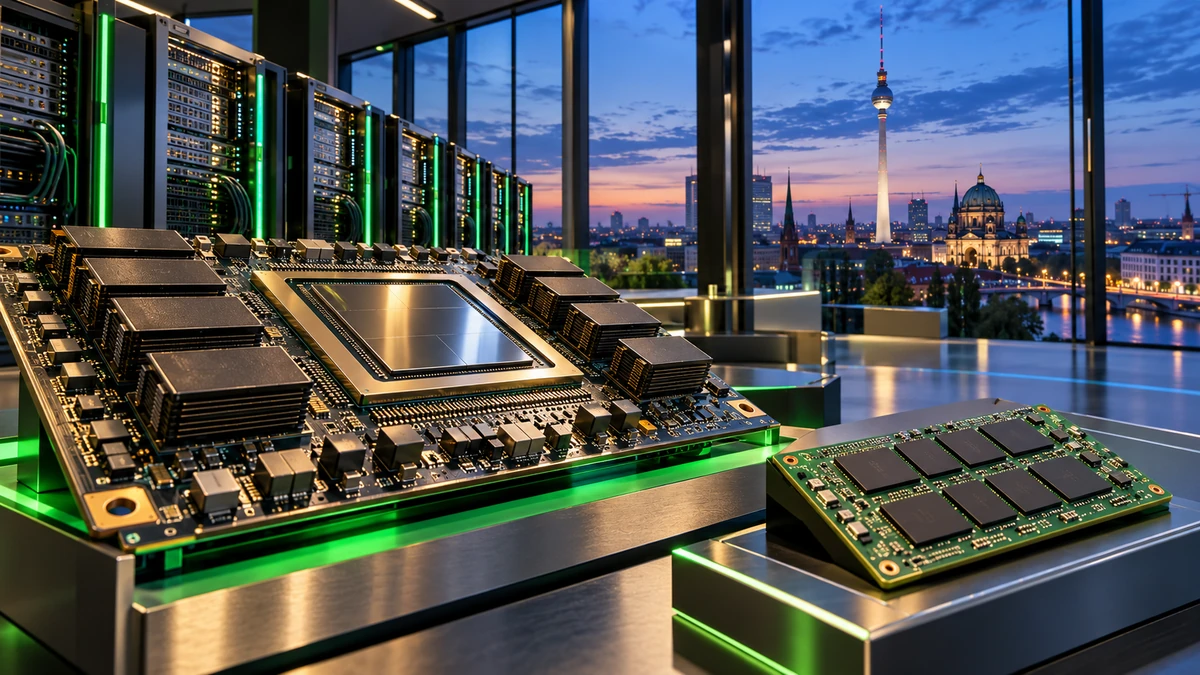
Huang said AI systems will require growing amounts of high-bandwidth memory, or HBM, which supports the rapid movement of data in advanced computing, as well as low-power memory known as LPDDR. “One of the really great things about memory is that you can always use more,” he said, adding that Nvidia expects to keep using memory in large quantities.
HBM will remain in use for years, Huang said. He also highlighted Nvidia’s adoption of LPDDR — commonly used in smartphones — in data centers, saying the company was the first to deploy it there and achieved twice the energy efficiency of any other product currently available.
China’s growing role in the chip industry
Huang’s comments followed investor concerns about slowing demand and excess supply that contributed to a stock market decline last week. Tesla CEO Elon Musk had previously said China would produce an enormous amount of RAM in 2028, while Chinese memory maker CXMT has unveiled a new design architecture as it seeks to narrow the gap with established competitors.
Asked whether Nvidia could use CXMT products or work with the company, Huang said Nvidia was “open-minded.” He noted that Chinese companies already participate broadly in global supply chains and praised China’s capabilities in foundational technology and manufacturing.
“There is no country better than China in the combined capability of the entire nation in manufacturing,” Huang said, adding that its abilities should be taken seriously.
U.S. export controls and cloud computing demand
Huang said U.S. restrictions on technology exports to China have accelerated Beijing’s efforts to build domestic semiconductor manufacturing capacity and support its chip industry. At the same time, he said American technology companies remain strong and ready to compete with any rival.
Huang also defended newer cloud computing providers including CoreWeave, Nebius and Iren, which have faced increased investor scrutiny. Demand for their services is growing at an extraordinary pace, he said, while access to working capital — rather than a shortage of customers — is constraining expansion. Huang said those financing challenges would ultimately be resolved because of the value the companies provide.
His outlook pushes back against forecasts in South Korea that the memory market could become saturated by 2029, bringing the industry’s current boom cycle to an end.
Comments
Post a Comment