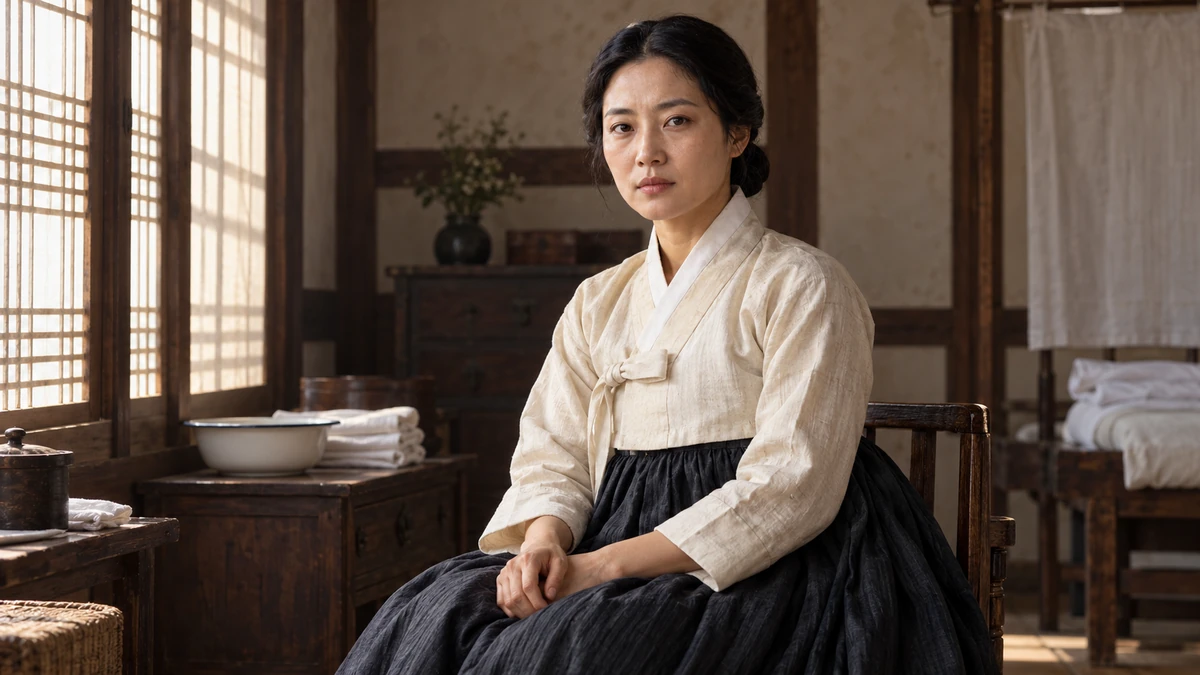
Image to help understand the article
From Palace Attendant to Nurse
Park Ja-hye, a nurse who organized medical workers during Korea’s 1919 uprising against Japanese colonial rule, spent much of her life supporting the independence movement while raising a family in poverty and under police surveillance.
Park was born Dec. 11, 1895, in Yangju, in what is now Gyeonggi Province. She grew up in Seoul and entered the royal palace at a young age as a trainee attendant. After Japan’s takeover brought the Joseon monarchy to an end, she left the palace and pursued a modern education and career.
She graduated from the vocational department of Sookmyung Girls’ Higher Common School in 1914 and completed nursing training at the government-run hospital of colonial Korea in 1916. Seeking financial independence, she began working there as a nurse in 1917.
Nurses Join the March First Movement
When the March First Movement erupted in 1919, Koreans across the country took part in mass demonstrations demanding independence from Japan. Injured protesters streamed into Park’s hospital, where treating them prompted her to confront her position as an employee of the colonial government.
Park organized fellow nurses into a group called Ganuhoe, or the Nurses’ Association, and joined independence demonstrations. She also built ties with doctors at the hospital and urged nurses to take part in a coordinated strike.
Japanese colonial police arrested her, but she was released into the custody of the hospital director. With further activity in Korea becoming difficult, Park left for Beijing and enrolled in a premedical program at Yenching University.
Marriage, Poverty and Resistance
In Beijing, Park met prominent independence activist and historian Shin Chae-ho, who was 15 years her senior. They married in 1920, and Park left university. Their first son, Shin Su-beom, was born the following year.
Pregnant again and facing severe financial hardship, Park returned to Korea with her son in 1922. She opened a midwifery practice in Seoul’s Insadong neighborhood, but few women at the time hired midwives to assist with childbirth. She also sold grass and melons on the street to support her children while maintaining contact with Shin and assisting his work in China.
Park continued helping independence activists inside Korea and those who secretly entered the country from abroad. In 1924, she connected an agent seeking military funds for the Jeonguibu independence organization with Han Gyu-suk, an official in the Bocheongyo movement. In 1926, she helped activist Na Seok-ju navigate Seoul before his bombing attack on the Oriental Development Co., a Japanese colonial institution associated with land seizures.
Park reunited with Shin in Beijing in 1927 and later gave birth to their second son. After Japanese police arrested Shin in 1928, she sent him books and clothing in prison while continuing to provide for their children.
A Life Cut Short Before Liberation
Shin rejected an offer of early release in exchange for renouncing his beliefs and died in Lüshun Prison in 1936. The couple’s older son later left Korea after graduating from Hansung Commercial School, while their younger son, Shin Du-beom, died of malnutrition in 1942.
Park lived alone in a rented room during her final years. She died after an illness on Oct. 16, 1943, less than two years before Korea’s liberation from Japanese rule.
South Korea posthumously awarded Park the Order of Merit for National Foundation, Patriotic Medal, in 1990. Her legacy centers on both her public resistance — particularly organizing nurses during the March First Movement — and the less visible work of sustaining activists, families and underground networks despite poverty, surveillance and violence.
Comments
Post a Comment