Image to help understand the article
Lee Chang-dong’s First Feature
Before becoming one of South Korea’s most acclaimed filmmakers, Lee Chang-dong made his feature directing debut with “Green Fish,” a bleak neo-noir crime drama released in South Korea on Feb. 7, 1997.
The 114-minute film follows Mak-dong, a 26-year-old man recently discharged from mandatory military service who returns home to find his family scattered and his neighborhood transformed by rapid development. With few prospects, he joins a criminal organization in Seoul’s Yeongdeungpo district and is drawn into a spiral of violence, loyalty and betrayal.
Lee, then known as a novelist and former high school teacher, co-wrote the screenplay with Oh Seung-uk. The film was produced by East Film and Cinema Service and distributed by Cinema Service. East Film was founded by film figures including Myung Gye-nam, Yeo Kyun-dong and Moon Sung-keun. The movie received an adults-only rating in South Korea and ranked eighth in admissions among Korean films released that year.
Han Suk-kyu stars as Mak-dong in one of his early major film roles. Shim Hye-jin plays nightclub singer Mi-ae, while Moon Sung-keun portrays Bae Tae-gon, a gang leader and Mi-ae’s lover. The cast also includes Song Kang-ho as Pan-su, Jung Jin-young as Mak-dong’s third-oldest brother, Oh Ji-hye as Soon-ok, Lee Byung-chul as Executive Yang and Jung Jae-young.
A Home Transformed
Mak-dong first meets Mi-ae on a train to his hometown of Ilsan when her pink scarf blows toward him. After he becomes involved in a fight with men harassing her, he continues home and discovers that the rice paddies, fields and acacia trees he remembers have been replaced by high-rise apartment buildings. His relatives now live apart as they struggle to make ends meet.
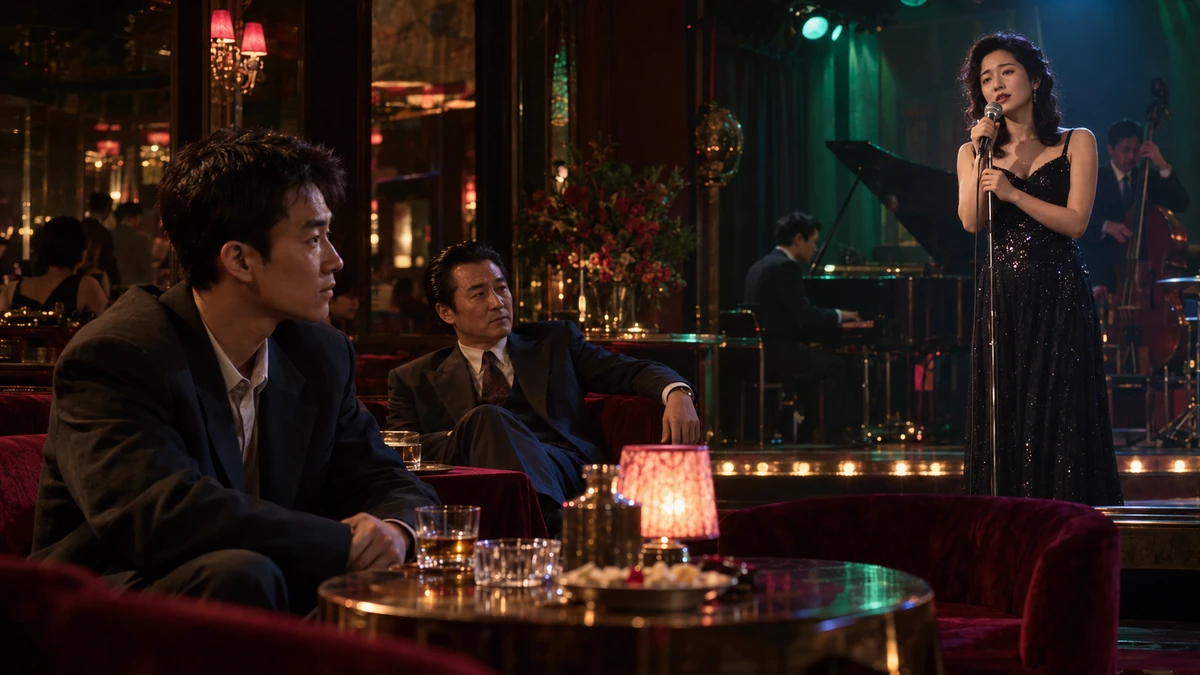
Mak-dong dreams of bringing the family back together to run a business, but he has no specialized skills or stable employment. While searching for work in Yeongdeungpo, he encounters Mi-ae again, this time performing at a nightclub. At her request, Bae gives Mak-dong a parking job.
Mak-dong soon proves willing to take greater risks. Assigned to provoke a fight with a lawmaker obstructing Bae’s construction permit, he deliberately breaks his own finger in a door to make the confrontation appear convincing. Impressed, Bae tells Mak-dong to address him as “hyungnim,” an honorific used for an older brother or senior male that also signals hierarchy and loyalty within Korean criminal organizations, and accepts him as a full member.
Mak-dong and Mi-ae become attracted to each other through their shared despair. He gives her a photograph of a large green tree standing in front of his family home. Later, after witnessing Bae strike Mi-ae, Mak-dong takes her home.
Loyalty and Betrayal
The gang’s position becomes unstable when Bae’s former boss, Kim Yang-gil, is released after years in prison and attempts to seize the organization Bae built. Repeated confrontations leave Bae humiliated in front of his men.
Seeking to prove his loyalty, Mak-dong kills Kim in a men’s restroom. Immediately afterward, he calls home from a phone booth and asks his eldest brother about a childhood memory: losing his shoes while trying to catch a green fish in a river.
Bae then takes Mak-dong to an empty building and shoots him. Mak-dong falls across the windshield of Bae’s car and dies as Mi-ae screams.
Sometime later, Bae and Mi-ae are living in the newly developed city of Ilsan. Mi-ae, who appears to be pregnant, visits a restaurant operated by a family in an old house. She recognizes the tree from Mak-dong’s photograph, realizes she is at his childhood home and begins to cry.
Festival and Awards Recognition
“Green Fish” received a special mention from the Network for the Promotion of Asian Cinema, known as NETPAC, at the 27th International Film Festival Rotterdam.
In South Korea, it won best film, best actor and best screenplay from the Korean Association of Film Critics. At the 33rd Baeksang Arts Awards, it received honors for best film, screenplay, new director, leading actor and leading actress.
The film also won seven prizes at the 35th Grand Bell Awards, including the jury’s special award, music, screenplay, leading actor and leading actress. At the 18th Blue Dragon Film Awards, it took best film, director, technical achievement, leading actor and a popularity award. It additionally received cinematography and acting popularity honors at the 20th Golden Cinematography Awards.
A Lasting Influence
Han improvised Mak-dong’s extended phone booth monologue, creating one of the film’s defining scenes. The sequence was later parodied in director Jang Kyu-sung’s 2002 movie “Fun Movie” and in the 2007 MBC television comedy “Kimchi Cheese Smile.”
Kim Yang-gil, the rival gang boss played by Myung Gye-nam, was also parodied with an expanded backstory in the 2006 black comedy “The Customer Is Always Right.” Director Yoo Ha has said the pivotal men’s restroom sequence served as a basis for a similar scene in his film “A Dirty Carnival.”
Comments
Post a Comment