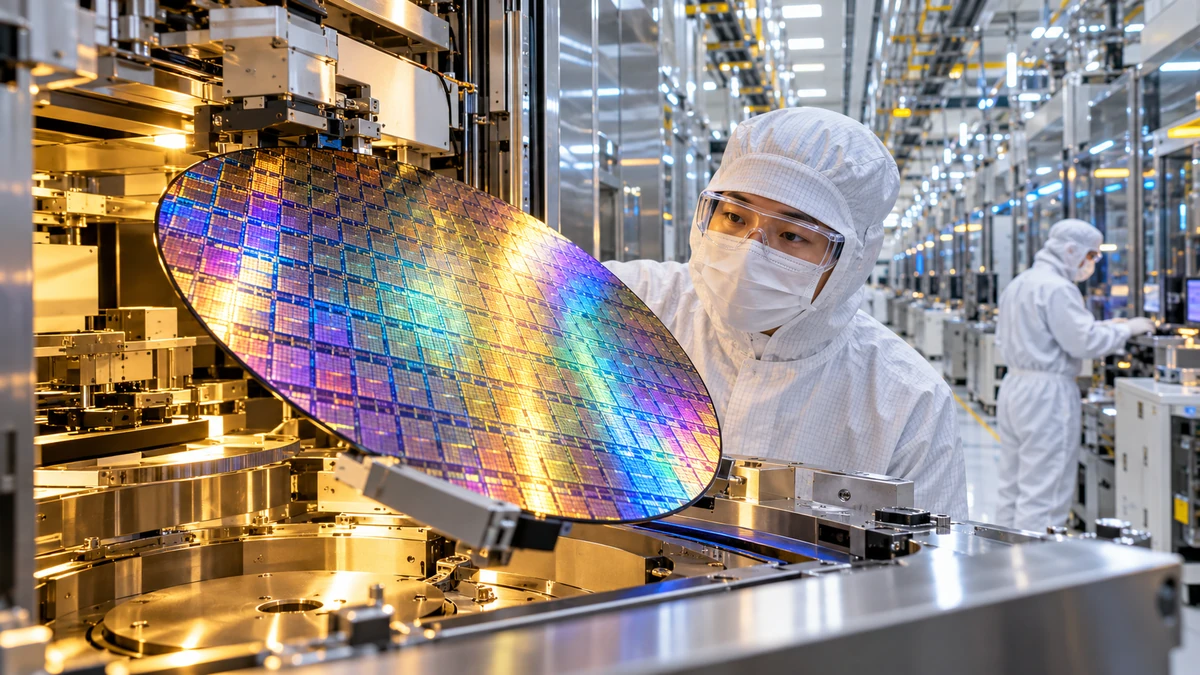
Image to help understand the article
Semiconductors drive fourth straight quarterly record
Samsung Electronics reported record preliminary third-quarter results Wednesday, with consolidated operating profit of 107.44 trillion won and revenue of 195.25 trillion won. Semiconductor operations generated 106.5 trillion won in operating profit, accounting for about 99.2% of the South Korean technology giant’s total.
Revenue rose 126.9% from a year earlier, while operating profit increased 783.1%. Net income climbed 514.6% to 75.14 trillion won. Compared with the previous quarter, revenue increased 13.85% and operating profit rose 20.06%. Both revenue and operating profit reached quarterly records for the fourth consecutive quarter.
Samsung said this was the first time its chip business had surpassed 100 trillion won in quarterly operating profit. The company also said it was the first global technology company to report quarterly profit above that threshold. Falling exchange rates for major currencies, including the dollar and euro, reduced profit by about 10 trillion won from the previous quarter, mainly in the components business. Samsung spent 14.4 trillion won on research and development during the quarter.
AI memory and data centers lift chip sales
Samsung’s Device Solutions division, which oversees semiconductors, reported 147.1 trillion won in revenue. The company sharply increased sales of HBM4, its sixth-generation high-bandwidth memory. HBM chips are designed to move large amounts of data quickly and have become central to artificial intelligence computing systems.
Strong demand for server solid-state drives also helped Samsung’s memory business post its best quarterly performance. Its System LSI operation increased sales by supplying systems-on-a-chip and image sensors for new products released in the second half of the year, while advancing custom chip projects with new customers.
Samsung’s contract chipmaking, or foundry, business improved as sales of HBM base dies and advanced-process products increased. Orders also continued from hyperscalers, the large data center operators that support cloud and AI services.
Consumer products remain under pressure
The Device Experience division, which includes smartphones, televisions and home appliances, recorded 52.1 trillion won in revenue and an operating loss of 800 billion won. It remained in the red for a second consecutive quarter as prices for semiconductors and other components rose.
Samsung’s mobile business increased sales from both the previous quarter and a year earlier after introducing premium devices including the Galaxy Z Fold8. A larger share of higher-priced products raised the average selling price and narrowed the division’s loss.
Television demand weakened after major global sporting events ended, but stronger premium-product sales and cost controls limited the decline in profitability. Home appliance sales were solid, though higher raw material and logistics costs reduced profit. Samsung-owned Harman reported 4.3 trillion won in revenue and 600 billion won in operating profit, while Samsung Display posted 8 trillion won in revenue and 1.1 trillion won in operating profit.
Samsung plans 30 trillion won dividend
Samsung approved a third-quarter cash dividend of 4,601 won per share for both common and preferred shares, for a total payout of about 30 trillion won. The dividend yield is 1.7% for common shares and 2.2% for preferred shares. Investors registered as of Sept. 30 are scheduled to receive the payment on the 27th of next month.
Under its shareholder return policy for 2024 through 2026, Samsung plans to distribute 50% of free cash flow. The company has set this year’s total shareholder returns at 90 trillion won to 110 trillion won. After 35 trillion won in confirmed distributions, 55 trillion won to 75 trillion won remains available.
Samsung said it plans to use a substantial portion of those funds to buy back and cancel shares. It may adjust the proportion of preferred shares purchased based on the price gap with common shares. Details are expected to be finalized in late January.
Investment centers on future AI demand
Samsung expects companywide results to continue growing in the fourth quarter, led by semiconductors. It also forecasts further improvement next year as chip prices rise and plans continued infrastructure investment to capture AI demand.
The company expects capital spending of 84.4 trillion won this year, including 76.8 trillion won for its semiconductor division. Kim Jae-june, a vice president in Samsung’s memory business, said during an earnings call that supply shortages were expected to continue into 2028. He said the company was nearing its goal of securing long-term supply agreements covering 60% to 70% of its expected 2030 production capacity.
Comments
Post a Comment