Image to help understand the article
A Scholar Shaped by Agricultural Learning
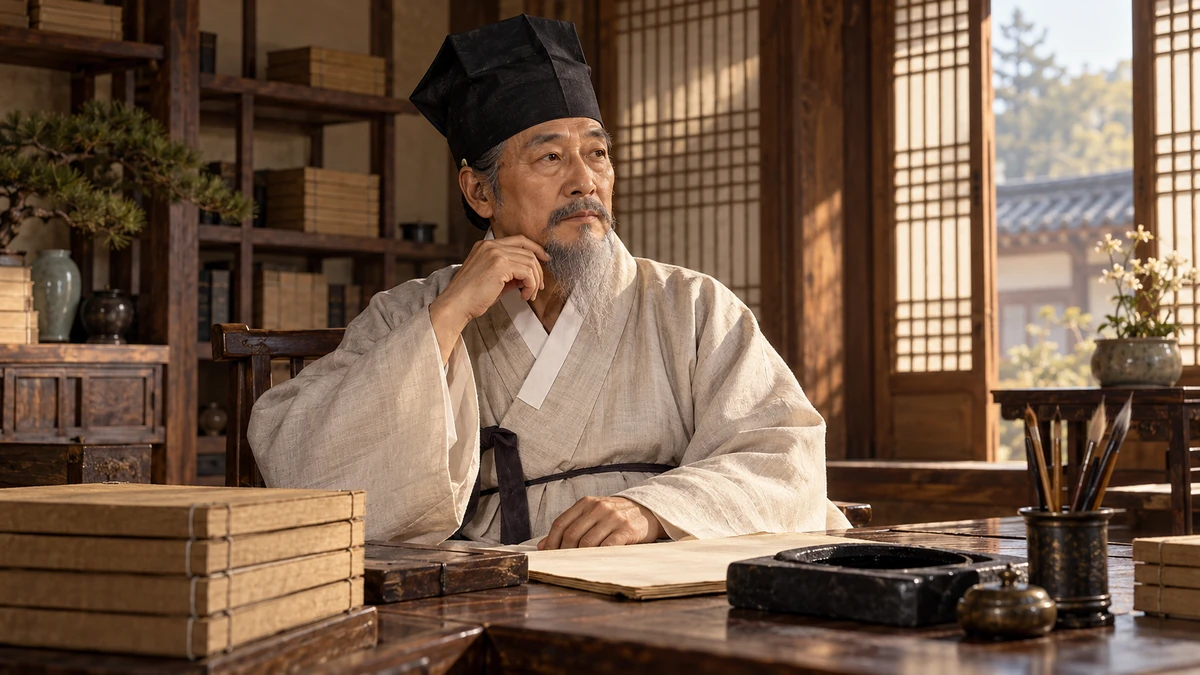
Seo Yu-gu, a government official and practical scholar of Korea’s late Joseon period, devoted more than three decades to compiling one of the era’s most ambitious works on agriculture and rural life. Born in 1764, Seo inherited a family tradition of agricultural scholarship and eventually completed the 113-volume “Imwon Gyeongjeji,” an encyclopedia designed to gather knowledge that people could use in daily life.
Seo came from a prominent scholarly family. His grandfather, Seo Myeong-eung, and his father, Seo Ho-su, both wrote about farming and related subjects. After passing Joseon’s civil service examination in 1790, Seo held posts in the royal court and in provincial government. In 1797, he edited a work on regional rites by royal order.
While serving as magistrate of Sunchang, Seo responded to King Jeongjo’s call for agricultural texts by proposing a nationwide system in which specialists would investigate farming methods in each province and the royal government would combine the findings into a comprehensive manual. The plan was not adopted, but the initiative helped convince Seo that Korea’s agricultural knowledge needed to be systematically organized.
Three Decades of Research
After Jeongjo died in 1800, Seo’s family became entangled in political turmoil. Seo resigned from government service in 1806 and returned to the countryside, where he began assembling information about farming, production and household life.
Working with his son, Seo U-bo, he consulted earlier Korean agricultural works written by members of his family and other scholars, as well as roughly 800 Korean and Chinese sources. He built on Hong Man-seon’s “Sallim Gyeongje,” an earlier guide to rural household management, while greatly expanding its scope.
Seo returned to public office in his 60s and served in a succession of senior provincial and central government posts, including governor of Jeolla province and minister in each of Joseon’s six main government departments. After retiring again, he completed “Imwon Gyeongjeji” late in life. He lacked the money to publish the enormous manuscript. Seo died in 1845 at age 82.
Putting Agricultural Policy Into Practice
Seo’s scholarship was closely connected to conditions he witnessed as an official. During a tour of the Honam region as Jeolla governor in 1834, he saw farmers struggling through a poor harvest. He asked a diplomatic mission traveling to Japan to obtain sweet potato seed stock, then distributed it to local communities and encouraged cultivation.
To make the crop easier to grow, Seo studied Korean, Chinese and Japanese agricultural texts and wrote “Jongjeobo,” a practical guide to sweet potato cultivation. In other writings and petitions, he repeatedly called for reforms in farming methods and agricultural policy.
An Encyclopedia of the Joseon Countryside
“Imwon Gyeongjeji” contains 113 volumes, about 28,000 entries and 2.52 million Chinese characters, the writing system used by educated Koreans of the period. Organized into 16 divisions, it covers agriculture and the rural lives of the yangban, Joseon’s scholar-official elite. It also includes illustrations, diagrams and records of market days around the country.
The encyclopedia ranges from land systems, irrigation, soils, weather, fertilizer and grain cultivation to vegetables, herbs, flowers, fruit and forestry. It explains silk and cotton production, weaving and dyeing, as well as livestock care, animal diseases, hunting, fishing and fishing equipment.
Other sections address food, medicinal properties, seasoning and alcohol production. Seo compared Chinese and Korean approaches to architecture, measurements, tools, clothing, interior decoration and transportation. He also compiled guidance on diet, child care, seasonal health practices and mental discipline.
A 28-volume medical section includes emergency food measures for times of scarcity and identifies 260 edible resources that could help people survive a famine. Additional divisions discuss family and community ceremonies, reading and other skills expected of scholars, leisure pursuits, Korean geography, household budgeting, saving, trade and property management.
Practical Learning for Better Lives
Seo belonged to the tradition known as silhak, or “practical learning,” which emphasized useful knowledge over abstract scholarly debate. He criticized scholars who remained absorbed in Neo-Confucian theory, comparing their work to soup made from dirt and rice cakes made from paper.
Modern assessments often contrast Seo with Jeong Yak-yong, another leading silhak thinker. Jeong sought to improve the country through legal and institutional reform, while Seo envisioned a more prosperous society built on detailed knowledge that could improve ordinary people’s lives.
Interest in “Imwon Gyeongjeji” revived alongside Korean studies in the 1930s, but its size and difficult classical Chinese made translation challenging. Scholars established the Imwon Economic Research Institute in 2008 to undertake a systematic translation. The Pungseok Cultural Foundation, founded in 2015 and named for Seo’s pen name, later supported translation, academic conferences and culinary research.
Seo tried to include every piece of information he believed might prove useful. The result is more than an agricultural manual: It is a record detailed enough to help reconstruct the year-round routines, work and material world of rural life in Joseon Korea.
Comments
Post a Comment