Shin Ik-hee: The Korean Independence Activist Who Helped Shape the Nation’s First Constitution and Parliament
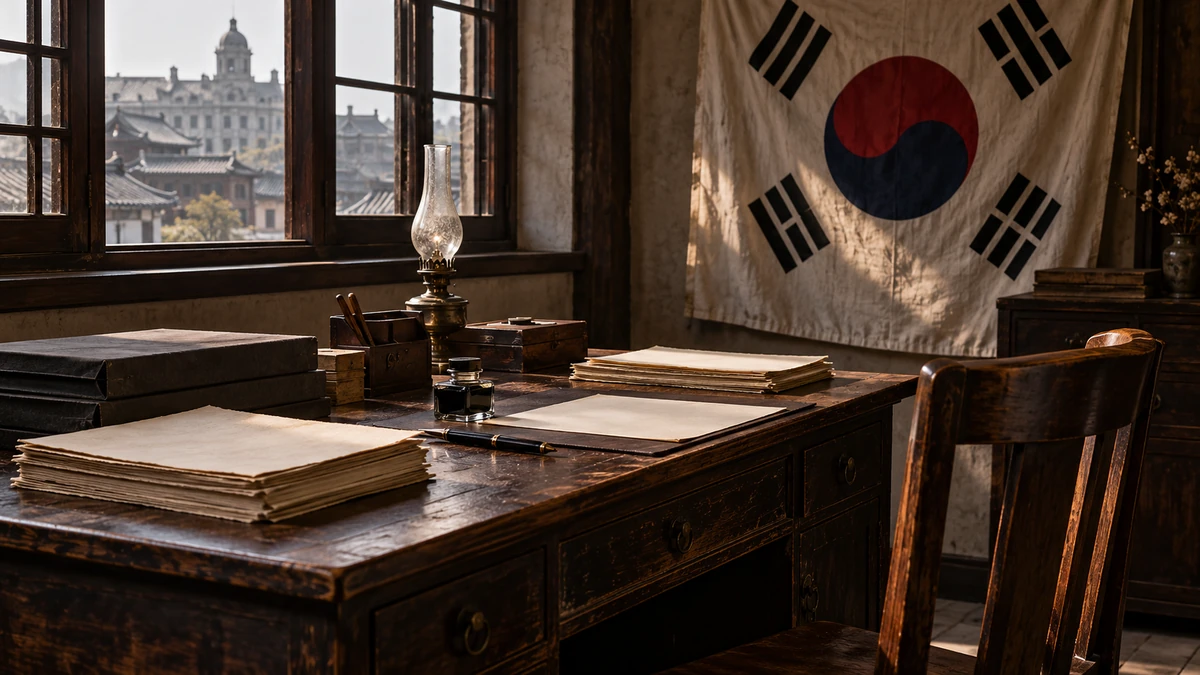
Image to help understand the article
From Educator to Independence Activist
Shin Ik-hee, known by his pen name Haegong, was a Korean independence activist and politician who played a major role in the formation of Korea’s provisional government and later became the first speaker of South Korea’s National Assembly. Born in 1894 in Gwangju, Gyeonggi Province, Shin studied traditional Confucian texts before graduating from Hansung Foreign Language School in 1908 and later studying political science and economics at Waseda University in Japan.
While studying abroad, Shin became involved with Korean student organizations and helped publish the magazine “Hakjigwang,” which promoted ideas among Korean students. After returning to Korea, he worked as an educator, teaching subjects including comparative constitutional law, international public law and finance. He was known for explaining difficult concepts in accessible language, attracting many students and listeners.
Role in the March 1 Independence Movement and Shanghai Provisional Government
After U.S. President Woodrow Wilson announced the principle of national self-determination in 1918, Shin became more deeply involved in the Korean independence movement. During the March 1 Movement of 1919, a nationwide protest against Japanese colonial rule, he helped coordinate overseas contacts and supported the distribution of the Korean Declaration of Independence.
After authorities discovered his involvement, Shin left his teaching positions and fled to Shanghai. There, he joined other Korean independence leaders in establishing the Korean Provisional Government, formed in April 1919. As a member of the provisional legislature, he contributed to drafting key documents including the Provisional Government’s laws and constitution.
Building the Independence Movement Overseas
Shin held multiple leadership roles within the provisional government, including positions connected to domestic affairs, justice, foreign affairs and education. He worked alongside figures such as Kim Gu and Lee Dong-nyeong to maintain the government during internal disputes over the future direction of the independence movement.
He also believed that independence efforts needed military support. In the 1920s, Shin attempted to develop cooperation between Korean independence activists and Chinese military forces, seeking to organize special units involving Korean, Chinese and Russian youths. The effort did not achieve its larger goals, and he eventually left the Chinese military after rejecting demands that conflicted with his principles.
Shin continued political organizing abroad, joining groups that sought to unite Korean independence forces against Japan. During World War II, he remained involved with the provisional government and served in important administrative and diplomatic roles.
From Liberation to South Korea’s National Assembly
After Korea was liberated from Japanese rule in 1945, Shin returned to Korea and entered politics during the turbulent period before the establishment of the South Korean government. He became involved in legislative organizations and supported the creation of a separate government in the South rather than negotiations aimed at a unified government with North Korea.
In 1948, Shin was elected to the first National Assembly after South Korea’s founding elections. He became the assembly’s first deputy speaker and later its speaker after President Syngman Rhee left the legislature to assume the presidency. He also played a role in opposition politics, eventually helping establish the Democratic Party in 1955.
Education Legacy and Final Presidential Campaign
Beyond politics, Shin helped establish an educational institution that later became Kookmin University. Founded in 1946 with approval from the U.S. military government administration in Korea, the school began as an institution for adult education before expanding into a broader university.
In 1956, Shin became the Democratic Party’s presidential candidate. During the campaign, he suffered a fatal heart attack while traveling by train to a campaign event and died on May 5, before the election took place. His death led to more than 1.85 million commemorative invalid votes being cast in the election.
Shin was later awarded the Order of Merit for National Foundation in 1962 for his contributions to Korea’s independence movement and national development. His legacy remains debated, with supporters highlighting his role in building democratic institutions and critics pointing to political shifts during his career. He is remembered as a major figure who bridged Korea’s independence struggle, education movement and early parliamentary politics.
Comments
Post a Comment