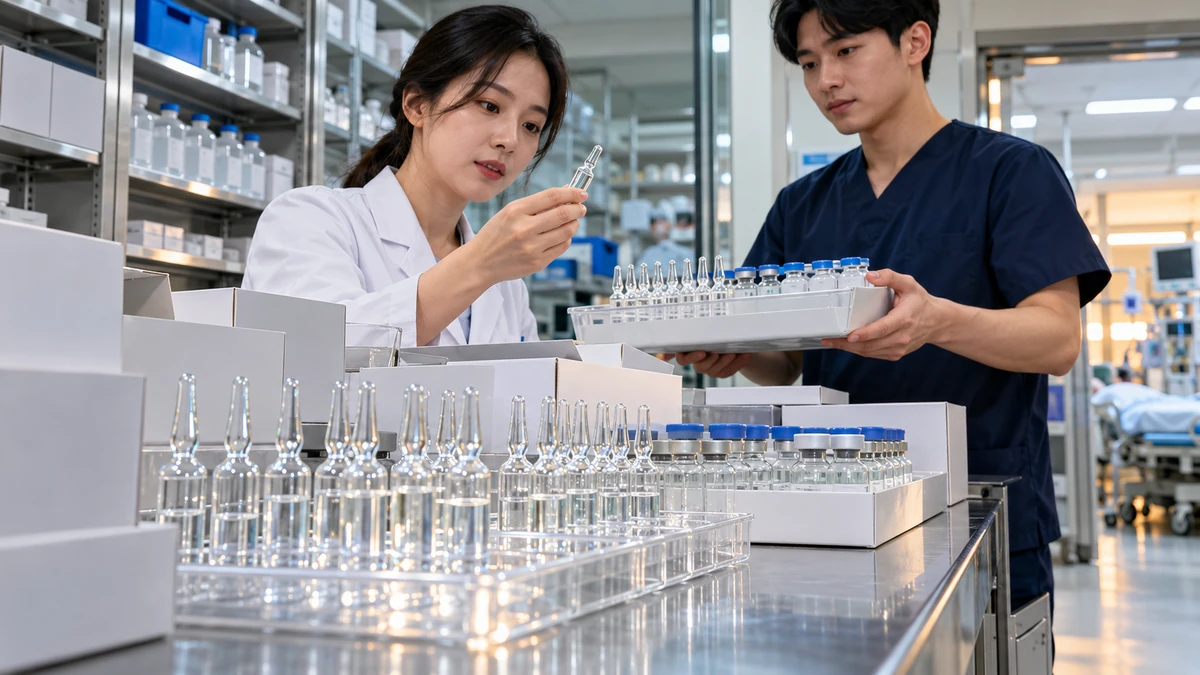
Image to help understand the article
Government adjusts drug prices to prevent shortages
South Korea will adjust prices for 14 essential medicines starting Nov. 1, including drugs used in emergency pediatric care and cancer treatment, as the government moves to prevent supply disruptions involving low-cost medications that manufacturers have little financial incentive to produce.
The Ministry of Health and Welfare announced Oct. 30 that the measures will include Lorazepam Injection and Holoxan Injection, among other products. The medicines fall under South Korea's designation system for essential drugs at risk of being withdrawn from the market because their production or importation is not sufficiently profitable. The government supports these medicines through official designation and reimbursement of appropriate production costs.
Pediatric seizure medication receives new protection
Samjin Lorazepam Injection will receive the designation for the first time on Nov. 1, making it eligible for government-backed cost compensation. The injectable medication is used in pediatric care, including the treatment of seizures and status epilepticus, a medical emergency involving prolonged or repeated seizures.
South Korea had faced the prospect of a supply shortage because the drug was manufactured at only one domestic facility. That facility had announced plans to leave the market last year, raising concerns among medical providers about continued availability.
Working with the Ministry of Food and Drug Safety and other agencies, the health ministry helped secure a new pharmaceutical manufacturer, transfer product rights and support regulatory approval in May 2026. National health insurance coverage followed in July.
Government projects annual savings of 20 billion won
The government estimates that maintaining domestic production through cost compensation will require approximately 3.5 billion won ($2.4 million) annually. If South Korea lost its domestic manufacturing capacity and had to import the entire supply, the estimated annual cost would rise to 23.5 billion won.
The ministry says preserving domestic production could therefore save approximately 20 billion won a year while helping ensure a reliable supply for pediatric and emergency medical services.
Imported cancer drugs also receive price adjustments
South Korea will also revise reimbursement prices for Holoxan and Endoxan, two established chemotherapy drugs used to treat conditions including malignant lymphoma, multiple myeloma, leukemia and breast cancer.
Both medicines are entirely dependent on overseas imports. Rising costs for raw materials and transportation have created supply concerns, prompting the government to move quickly to provide additional cost compensation.
Broader reforms to essential drug support
The latest measures build on reforms to South Korea's national health insurance drug-pricing system announced in March. An expanded support framework took effect Aug. 1, raising the reference prices used for essential-drug designation by 10% and prioritizing medicines classified as nationally essential.
The revised system also allows current-year cost increases and facility investment expenses to be included in production-cost calculations. It introduces additional price increases of up to 10% relative to appropriate profit levels and expands preferential pricing for companies making significant contributions to domestic production from 45% to 50%.
Yoo Ju-heon, director general of health insurance policy at the ministry, said essential medicines must be prioritized to protect public health and save lives. He said the government would continue working to stabilize supplies of medicines facing potential shortages through its expanded support program.
Comments
Post a Comment