Image to help understand the article
South Korea orders recalls after food safety tests
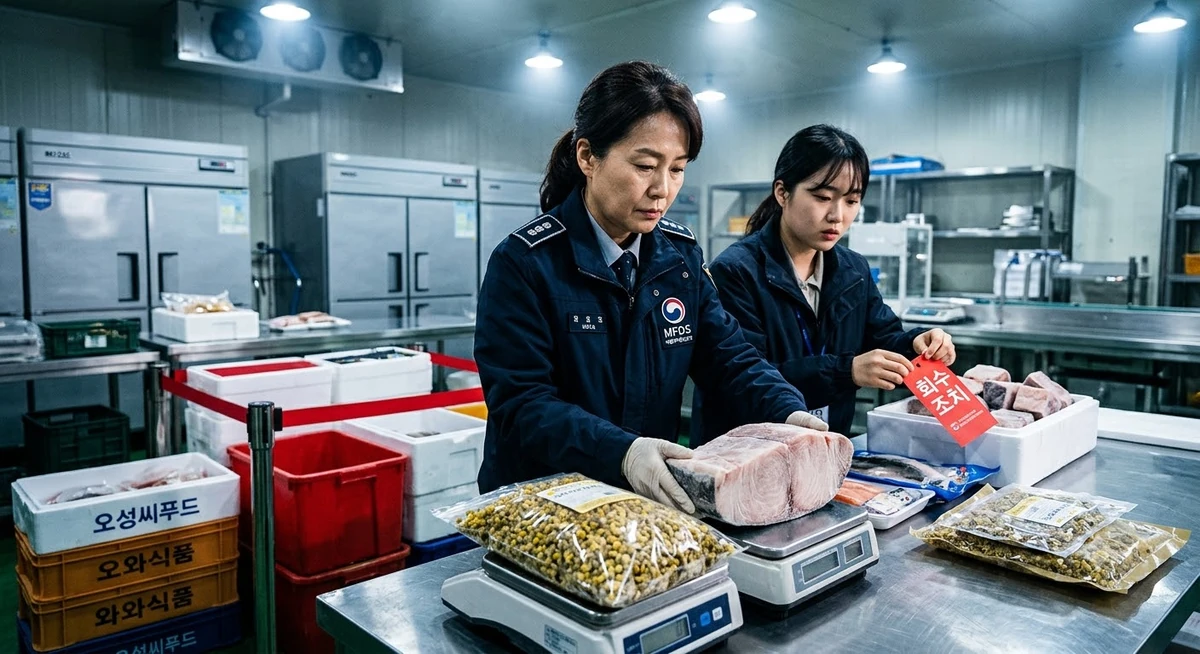
South Korea’s Ministry of Food and Drug Safety has ordered recalls for several food products after inspections found excessive levels of methylmercury in processed seafood and pesticide residues above legal limits in imported chamomile.
The ministry said on Oct. 8 that two seafood products and one imported herbal product were subject to recall measures. Consumers who purchased the affected items were advised not to eat or use them and to return them to the places of purchase.
Processed swordfish and shark products found with high methylmercury levels
The seafood products were classified in South Korea as “other processed seafood products.” A swordfish product called “Swordfish S/T No. 2,” produced by Osung Seafood Co. in Gimpo, Gyeonggi Province, was found to contain 2.2 milligrams of methylmercury per kilogram, exceeding the permitted level of 1.0 milligram per kilogram.
The recalled swordfish product was manufactured on Jan. 15, 2026, with a total production volume of 84.8 kilograms. Its listed shelf life was 24 months from the manufacturing date.
A shark product made by Wawa Food Co. in Saha District, Busan, was also recalled. Two production batches were affected: a July 15, 2026 batch containing 184.1 kilograms showed 1.4 milligrams of methylmercury per kilogram, while a July 28 batch containing 111.6 kilograms showed 1.3 milligrams per kilogram. Both products were packaged in 20-kilogram units.
Imported Egyptian chamomile recalled over pesticide residues
The ministry also halted sales of imported chamomile sold by Shinyoung Herb Co., a food import and distribution company based in Seoul’s Dongdaemun District. The product was imported from Egypt, with HERBSOO FOR IMP & EXP listed as the exporter.
Testing found two fungicide ingredients above South Korea’s permitted limit of 0.01 milligrams per kilogram. Difenoconazole was detected at 0.05 milligrams per kilogram, while propiconazole was detected at 0.09 milligrams per kilogram.
The ministry said the two chemicals are pesticides used to prevent fungal diseases in crops such as fruits and vegetables. The recalled chamomile shipment totaled 2,710 kilograms and was packaged in 10-kilogram and 100-gram units, with a listed expiration date of Feb. 1, 2028.
Food safety reporting channels
South Korea’s food safety agency said consumers can report suspected illegal food-related activity through the national food safety reporting hotline 1399 or the “Naesonean” food safety information smartphone application.
Comments
Post a Comment