Image to help understand the article
Hospitals tapped for highest-level trauma care
South Korea has selected Ajou University Hospital and Yonsei University Wonju Severance Christian Hospital to serve as advanced trauma hubs, expanding the country’s capacity to treat patients with the most severe and complex injuries.
The Ministry of Health and Welfare chose the two hospitals from among the country’s 17 regional trauma centers. Ajou University Hospital received final approval, while Wonju Severance was selected on the condition that it recruits additional medical staff.
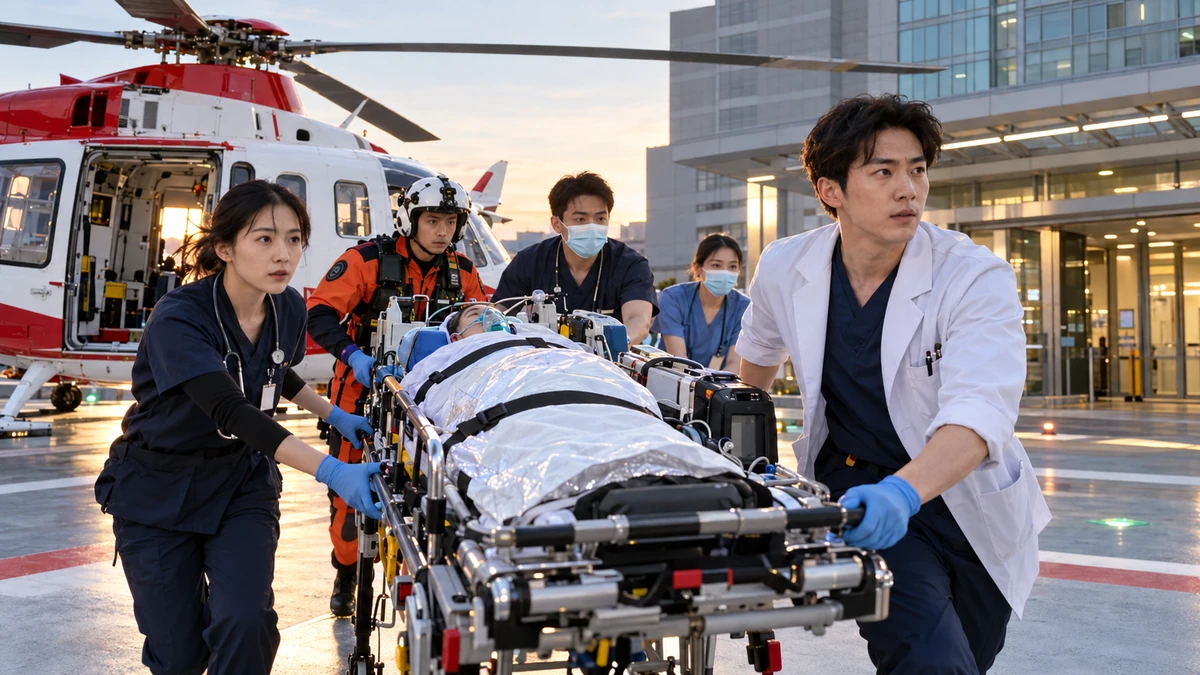
The hubs will handle complex surgeries and specialized cases involving children and injuries to the face, eyes, hands and other areas. They will also accept critically injured patients from outside their regions when nearby trauma centers cannot provide treatment. Patients may be transported by doctor-staffed medical helicopters, mobile intensive care units or fire department helicopters.
National emergency network
Each hospital will operate a helicopter landing area and coordinate a broader network involving regional trauma centers, emergency medical facilities and South Korea’s 119 ambulance service, the country’s equivalent of 911. The hubs will also provide training and conduct research for trauma care professionals.
To qualify, a center must treat at least 1,300 trauma patients annually, including at least 400 with severe injuries. Limits on accepting trauma patients cannot exceed a total of 500 hours per year. Surgery or thoracic surgery, neurosurgery and anesthesiology must maintain dedicated on-call coverage, while radiology and orthopedic surgery specialists must be available when summoned.
Funding and staffing conditions
Each selected hospital may receive up to 7.71 billion won in government support. That includes 5.46 billion won for facilities and equipment and an additional 2.25 billion won for establishing and operating a helicopter landing area.
Six hospitals applied during the ministry’s application period from July 20 through Aug. 31. Officials evaluated their medical infrastructure, treatment capabilities and operating plans before a selection committee made the final decision.
Wonju Severance must strengthen its round-the-clock staffing system and revise its annual recruitment plan. It must fulfill this year’s staffing commitment by Dec. 31, 2026. Failure to meet the requirement would cancel its subsidy award and require the hospital to return any government funds already received.
The ministry said the new system is intended to ensure that critically injured patients can receive specialized treatment regardless of regional boundaries, particularly when local trauma and emergency centers are full or unable to manage highly complex cases.
Comments
Post a Comment