Image to help understand the article
Major changes to health care reimbursement set for January 2027
South Korea will begin its largest overhaul of health care reimbursement rates since the current payment system was introduced in 2001, with changes scheduled to take effect in January 2027, the Ministry of Health and Welfare said Oct. 28.
The government has finalized implementation plans for 2.7 trillion won ($1.9 billion) of an annual 3.6 trillion won investment aimed at strengthening essential medical services and reducing regional disparities in access to care. The remaining 900 billion won will be discussed by the National Health Insurance Policy Deliberation Committee later this year.
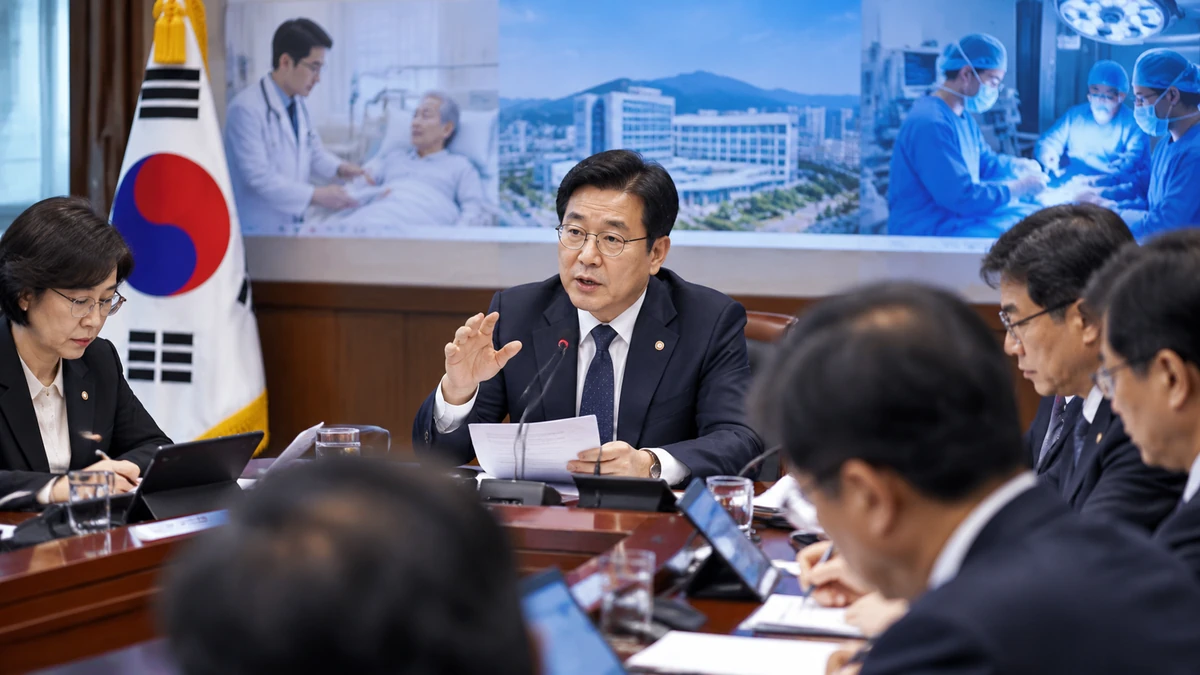
The committee, chaired by Second Vice Health and Welfare Minister Lee Hyoung-hoon, approved measures linking reimbursement adjustments to the existing payment structure, as well as plans to revise payments for laboratory testing and the arrangements between laboratories that outsource and perform tests. Some additional initiatives, including pilot programs supporting patients with substance-use disorders and evaluating designated pediatric rehabilitation facilities, were discussed.
Higher payments for regional hospitals and critical care
A central part of the reform is a regional payment premium designed to encourage hospitals to provide essential services outside Seoul and in medically underserved parts of the capital region. The government plans to increase annual reimbursement by 400 billion won for qualifying services, initially applying 300 billion won, with the remaining 100 billion won subject to further review.
The first phase will prioritize surgery and medical procedures at general hospitals and higher-level institutions in noncapital regions and designated underserved areas, including emergency operations at night and on holidays. High-risk deliveries, neonatal intensive care and treatment for critically ill children are also included.
Starting in January 2027, the premiums will first cover childbirth and neonatal intensive care admissions for which patients do not pay out-of-pocket costs. Broader coverage for surgery and procedures is scheduled to begin in March.
From March 2027, eligible hospitals will receive a 10% reimbursement increase for 2,740 types of surgery and medical procedures. Qualifying nighttime, holiday and emergency operations will also receive an additional 10% premium. For severe emergency surgeries performed at regional emergency medical centers at night or on holidays, the maximum premium will rise from 350% to 450% of the applicable base rate. Additional regional and time-based premiums could bring the maximum increase to 470% in designated areas.
High-risk deliveries at maternal and child health centers will receive a 100% regional premium, while neonatal intensive care admissions and procedures will receive a 50% premium beginning in January 2027. Treatment for critically ill children at designated advanced general hospitals and general hospitals with pediatric intensive care units will receive an additional 50% regional premium on top of a 50% base premium starting in March.
In 86 municipalities and districts designated as population-decline areas as of October 2026, consultation fees at general hospitals, hospitals and clinics will receive a 5% increase. Inpatient fees at eligible hospitals will also rise by 5%, beginning in March 2027.
Higher compensation for basic consultations, emergency surgery and pediatric care
The reform also targets routine medical services that the government says need stronger financial support. Consultation fees for first visits to clinics and dental clinics will increase, while injection fees and hospital meal allowances will also rise. Consultation and inpatient reimbursement improvements are expected to total 1.5 trillion won annually, alongside a broader expansion of in-depth medical consultations.
Enhanced payments will cover more than 1,600 types of major surgeries and procedures. Compensation for emergency care delivered at night or on public holidays will increase by a factor of 5.5, with annual spending of 900 billion won allocated to improving reimbursement for severe and emergency surgery, procedures and anesthesia. Another 900 billion won annually will support hospitals' capacity to provide definitive treatment.
The government plans to allocate 100 billion won annually to safer deliveries for high-risk pregnancies through maternal and child health centers. Including regional premiums and compensation for pregnancy-related and delivery surgery and anesthesia, support for maternal care will total about 200 billion won. Pediatric consultations, hospital admissions and major surgery will receive 200 billion won annually, bringing combined annual support for pediatric and maternity care to 400 billion won.
Another 500 billion won annually will support improvements in the supply and use of acute and recovery-phase medical services.
Laboratory testing and imaging payments to be reduced
To help finance the changes, the ministry plans to cut reimbursement rates for laboratory tests, including blood tests, by 28% and for CT and MRI scans by 25%. It estimates that adjustments to laboratory testing and medical imaging payments will reduce excessive spending by 2.6 trillion won annually.
The government will also revise arrangements between institutions that collect or process laboratory samples and those that perform outsourced tests. The changes are intended to clarify compensation and strengthen quality controls, including conditional payments tied to improvements in testing quality.
The overhaul is intended to redirect health insurance spending toward services considered essential, particularly in areas where access to emergency, maternal and pediatric care is more limited. The timing and scope of the remaining 900 billion won in planned annual investment have yet to be finalized.
Comments
Post a Comment