Image to help understand the article
Lee calls for fact-based political discussion
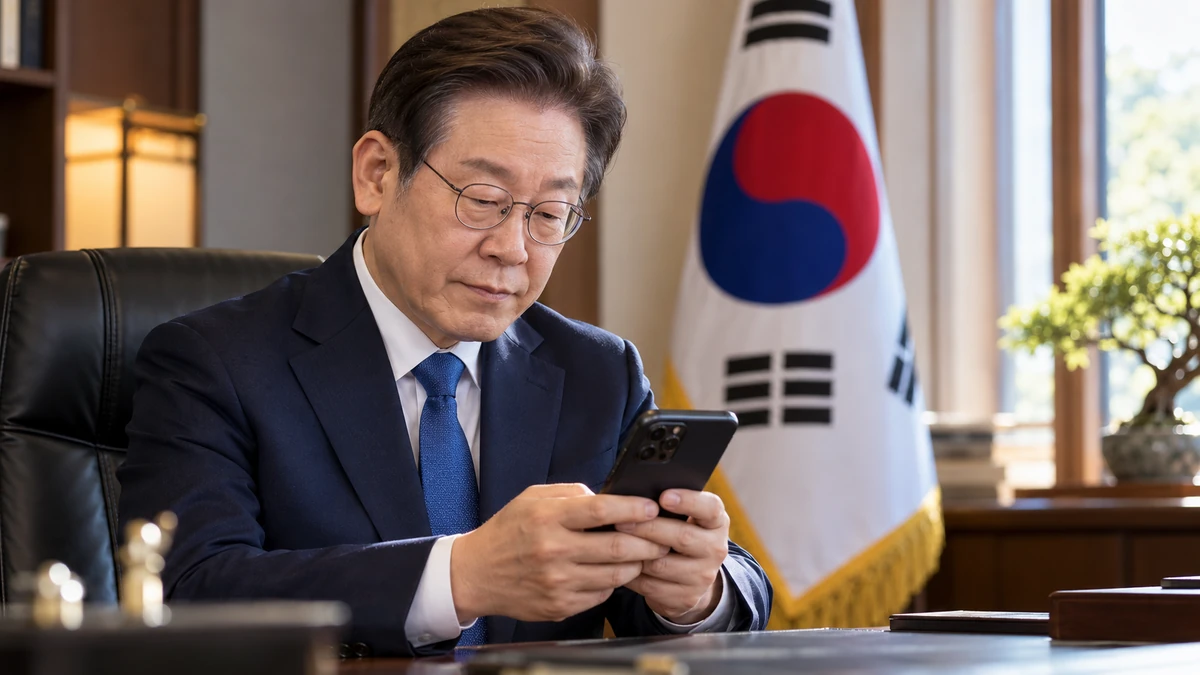
South Korean President Lee Jae-myung urged his supporters Wednesday to engage in reasoned debate and civil persuasion, warning that abusive behavior on social media can undermine democracy.
Writing on X, formerly Twitter, Lee said democratic debate becomes dangerous when rational, fact-based discussion disappears. He argued that politics is ultimately about earning the understanding and consent of more citizens, not simply defeating an opponent in an argument.
Lee said insults, profanity, mockery, demeaning labels and misinformation may provide momentary satisfaction but amount to defeat in the eyes of voters watching the exchange. He asked supporters to defend South Korea’s democratic public sphere by making their case truthfully, respectfully and with dignity.
He also described his supporters as people who had overcome what he called the “Dec. 3 insurrection” and achieved a “revolution of light,” language referring to the political turmoil surrounding the Dec. 3 crisis.
A political pun draws criticism
Lee used the expression “jwa-ahage,” an online pun that replaces the first syllable of the Korean word for “elegantly” with a character meaning “left.” The phrase has prompted criticism from conservative opposition figures, while some critics have associated it with slang used by Ilbe, a controversial right-wing online community.
Lee previously rejected that characterization, saying the expression was wordplay used by the democratic reform camp since the presidency of Moon Jae-in and did not originate in a particular online community. He asked the public to take it as humor and cautioned against treating playful language with excessive seriousness.
President voices caution on nuclear power contracts
In a separate post, Lee shared a news report saying the government opposed introducing direct power purchase agreements, known as PPAs, for nuclear-generated electricity. The proposal has been discussed as part of efforts to decarbonize strategic industries, including hydrogen-based steel production.
Lee said the government should be cautious about an arrangement in which the public bears the risks and social costs of nuclear power while a small number of large corporations receive the benefits. He also questioned whether granting such access to one steelmaker would lead other companies and industries to demand the same treatment.
South Korea’s steel industry has argued for dedicated PPAs, saying access to nuclear-generated electricity could reduce the cost of purchasing renewable energy certificates and help companies secure carbon-free energy certification.
Comments
Post a Comment