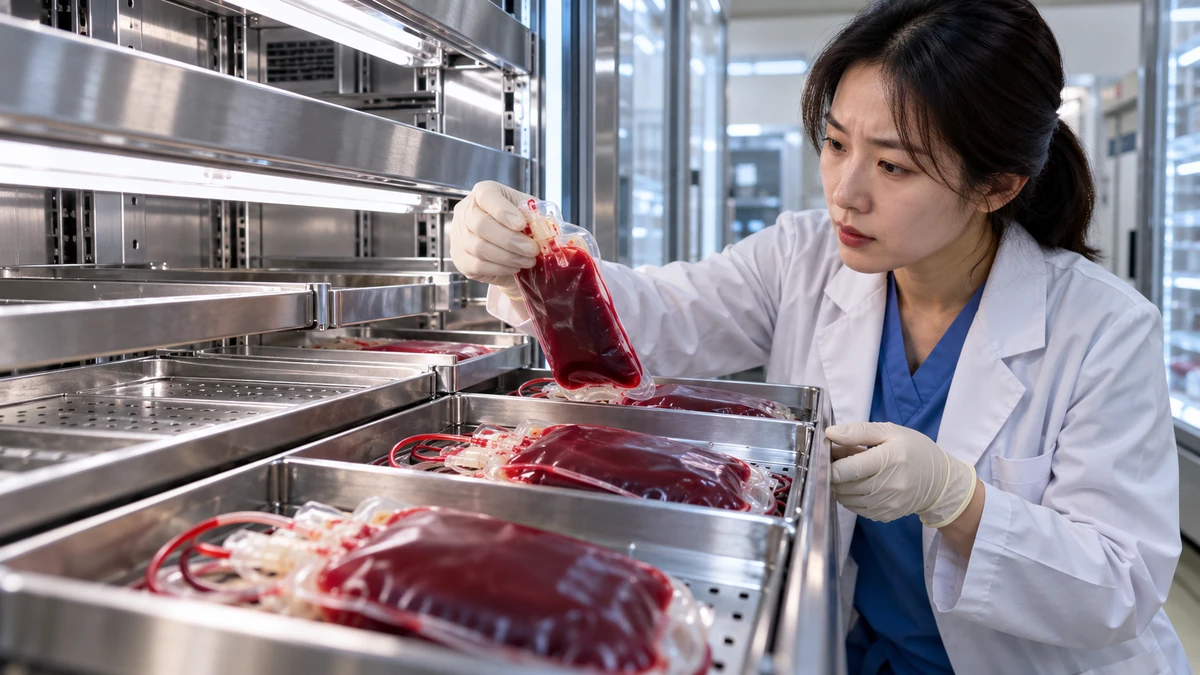
Image to help understand the article
National blood reserves drop below three days
South Korea’s blood supply fell to about 2.8 days’ worth as of Oct. 16, placing the country at the “caution” level under the Korean Red Cross’ four-tier blood supply alert system.
The Red Cross’ Blood Services division reported 13,981 units of red blood cells nationwide, compared with average daily demand of 5,052 units. Authorities consider supplies below five days a sign of a shortage. Reserves below three days trigger the caution level, indicating partial supply problems.
Type A blood was in the shortest supply, with only 1.9 days available. That placed it at the more serious “alert” level, which applies when reserves fall below two days. Type O stood at 2.7 days and type AB at 2.9 days. Type B had the largest reserve at 3.8 days, though it also remained below the five-day target.
Supplies improved by Oct. 18 to 17,792 units, or 3.5 days’ worth. Reserves then stood at 2.8 days for type A, 4.5 days for type B, 3.5 days for type O and 3.6 days for type AB.
Donations fall for eight consecutive months
Total blood donations, including those collected outside the Red Cross, declined 7.9% over a decade, from 3,082,918 in 2015 to 2,839,632 in 2025.
Donor numbers rose 17.5% year over year in January 2026, reaching 221,632. But from February through September, monthly donations were lower than a year earlier for eight consecutive months.
An unusually early flu season may have contributed to the decline. South Korea issued an influenza advisory Sept. 11. The timing of Chuseok, the Korean harvest holiday that often prompts widespread travel and family gatherings, also was cited as a possible factor.
The Korean Red Cross has sought to attract donors with limited-edition merchandise popular among younger people and blood drive partnerships with companies. A Blood Services official said participation by young people is particularly important as the number of first-time donors declines, and called for sustained public interest in donating blood.
An aging population strains the donor system
About 5.6% of South Korea’s population donates blood, and people in their teens and 20s account for roughly 55% of all donations. That concentration among younger donors has become a structural concern as the youth population shrinks while demand for transfusions among people 50 and older rises.
The government’s blood management plan for 2026 through 2030 calls for reviewing the upper age limit for donors. People ages 16 to 69 currently may donate, but those 65 and older must have donated previously. Officials are considering eliminating the upper limit or raising it gradually in five-year increments.
The plan also calls for regularly deploying blood donation buses to communities without permanent donation centers, encouraging appointments through an app and website, setting annual donation targets and introducing round-the-clock monitoring of the national blood information system. It also includes eliminating ALT testing, which measures an enzyme associated with liver health.
Comments
Post a Comment