Image to help understand the article
Banaba leaf extract is sold in South Korea as a health supplement that may help limit increases in blood sugar after meals. The country’s Ministry of Food and Drug Safety, or MFDS, recognizes only that specific potential benefit and recommends a daily intake providing 0.45 to 1.3 milligrams of corosolic acid.
Children and people who are pregnant or breastfeeding should not take banaba leaf extract, according to the ministry. People using diabetes medication or insulin should consult a medical professional before taking it because the combination could increase the risk of low blood sugar.
What Is Banaba?
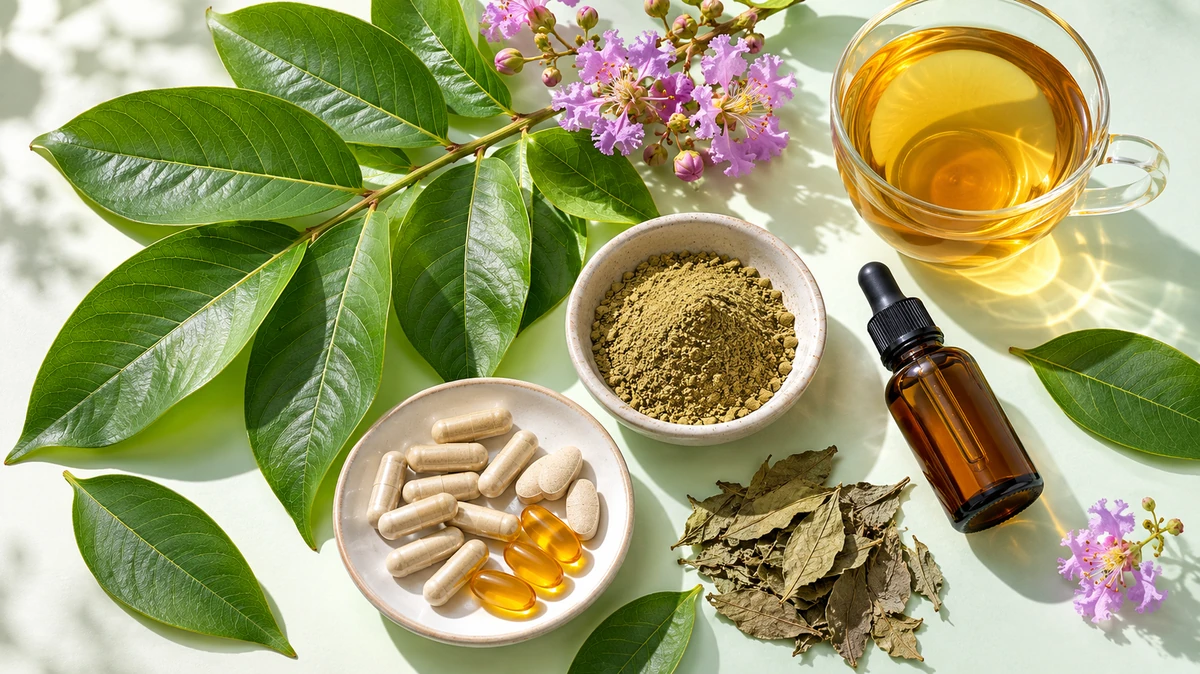
Banaba, known scientifically as Lagerstroemia speciosa, is a deciduous tree native to tropical parts of South and Southeast Asia and Melanesia. It can grow to about 49 feet and produces flowers ranging from pink to pale purple. Its leaves have long been brewed as tea in places including the Philippines, Taiwan and Japan.
The leaves contain several compounds, including corosolic acid, lagerstroemin, flosin B and reginin A. Corosolic acid, a plant chemical in the triterpenoid family, is the marker compound used to standardize banaba leaf extract in supplements.
Products and Approved Claims
Banaba is available in capsules, tablets, teas, powders and liquid extracts. The amount of active compounds can vary depending on where the plant was grown and how it was processed. One product listed in South Korea’s Food Safety Korea database directs consumers to take two capsules with water once a day, though instructions can differ by product.
The MFDS-approved wording says banaba leaf extract “may help suppress the rise in blood sugar after meals.” The agency does not recognize other health claims for the ingredient. Consumers should check whether a product’s recommended daily serving supplies 0.45 to 1.3 milligrams of corosolic acid.
Safety and Drug Interactions
The MFDS requires reevaluated functional ingredients to carry instructions telling consumers to stop taking them and consult a professional if an adverse reaction occurs. Product labels may also advise caution for patients before or after surgery, people taking anticoagulants and those with allergies or unusual sensitivities.
Anyone allergic to banaba, banaba leaf extract, corosolic acid or other plants in the crape myrtle genus should avoid it. Allergic reactions reported after banaba consumption have included shortness of breath, throat swelling, hives and gastrointestinal symptoms.
Because banaba may lower blood sugar, it could contribute to hypoglycemia, with possible symptoms including headache, confusion and sweating. People taking blood sugar-lowering treatments such as glimepiride, glipizide, insulin or metformin should seek medical advice before using it. The combined effects of the supplement and medication could push blood sugar too low.
The effects of banaba during pregnancy or breastfeeding, including any potential impact on a fetus or breast milk, are not known. Consumers should review ingredient lists and dosage information before choosing a product, particularly if they have allergies or take prescription medication.
Comments
Post a Comment