Woo Deok-sun: A Partner in Ahn Jung-geun’s Historic Assassination of Ito Hirobumi, and a Contested Legacy
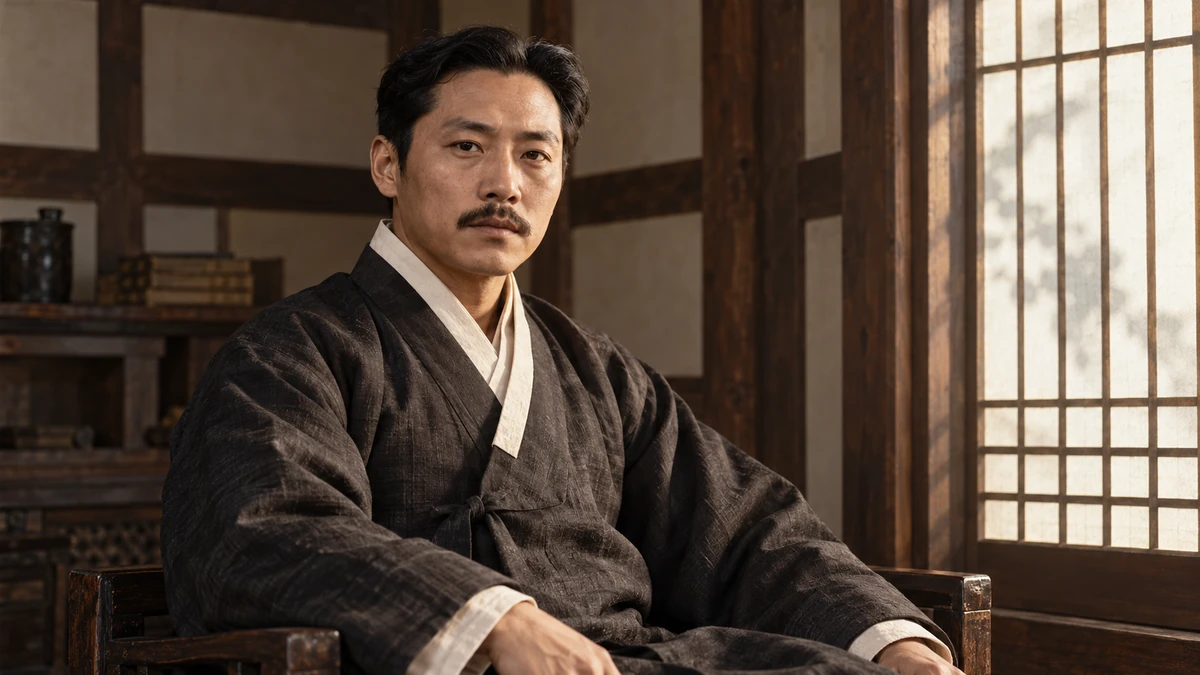
Image to help understand the article
A revolutionary from Korea’s independence movement
Woo Deok-sun, a Korean independence activist who helped prepare the 1909 assassination of Japanese statesman Ito Hirobumi alongside Ahn Jung-geun, remains the subject of a historical dispute over whether he later collaborated with Japanese authorities.
Born in 1880 in Jecheon, in what is now South Korea’s North Chungcheong province, Woo also used the name Woo Yeon-jun and the pen name Danun. He initially ran a general goods shop near Dongdaemun in Seoul before moving to Vladivostok, Russia, in 1904. There, he sold tobacco to support himself and connected with Ahn and independence leader Lee Beom-yun.
Woo raised funds for the Korean-language newspaper Daedong Gongbo, helped establish a school for young Koreans and supported efforts to organize armed resistance against Japanese rule. In 1908, he crossed the Tumen River with Ahn and other fighters to attack Japanese military positions in the Korean border region, killing Japanese soldiers and seizing weapons.
The operation against Ito Hirobumi
In the spring of 1909, Woo joined Ahn and other activists in a pledge known as the Finger-Cutting Alliance, a solemn commitment to sacrifice their lives for Korea’s independence. Later that year, the group planned to kill Ito, a leading architect of Japan’s expansion into Korea.
Woo met Ahn in Vladivostok in October 1909 and agreed to take part in the operation. Their group traveled to Harbin, in northeastern China, and divided responsibilities between two railway stations in case Ito appeared at either location. Ahn was assigned to Harbin Station, while Woo took responsibility for nearby Caigou Station.
On Oct. 26, 1909, Ito’s train passed through Caigou and stopped at Harbin, where Ahn shot and killed him. Woo and other members of the group were detained by Russian police, transferred to Japanese custody and tried alongside Ahn in Lushun, then known as Port Arthur. In February 1910, Woo was sentenced to three years in prison. His sentence was later extended by two years in connection with an attempted prison escape in Hamhung, and he was released in 1915.
Exile, repatriation and posthumous recognition
After his release, Woo resumed educational and religious activities among Korean communities in Manchuria, including Harbin, Qiqihar and Manzhouli. He also worked with Korean nationalist organizations and groups associated with armed resistance.
After Korea was liberated from Japanese colonial rule in 1945, Woo became chairman of a Korean community organization in Heilongjiang province, China. He helped arrange transportation for displaced Koreans seeking to return to their homeland, working alongside his son, Daeyoung. Woo eventually returned to Korea and participated in the founding of the Korean Nationalist Party.
His life ended violently during the Korean War. On Sept. 26, 1950, he was killed by North Korean forces, according to the historical account. The South Korean government posthumously awarded him the Order of Merit for National Foundation, Independence Medal, in 1962 in recognition of his contribution to the independence movement.
A 2019 investigation raises collaboration allegations
Woo’s reputation came under renewed scrutiny in 2019, when South Korean broadcaster KBS aired a two-part investigative documentary titled “Mildjeong,” or “The Informants,” examining allegations that some people associated with the independence movement had secretly provided information to Japanese authorities.
The investigation, broadcast on Aug. 13 and 20, said its journalists had spent eight months examining 50,000 documents, including classified records from Japan’s foreign and defense ministries and Chinese government documents. They identified 895 people suspected of acting as informants and included Woo among them.
The allegations focused partly on Japanese records showing that Woo held a senior position, reportedly chairman, in the Korean People's Association in Harbin and other locations during the 1920s and 1930s. The organization was described as a pro-Japanese body established to monitor Korean communities and collect information. KBS also said it had obtained material suggesting ties between Woo and Japanese intelligence organizations.
Kim Ju-yong, a professor at Wonkwang University, argued that informants working through the association monitored independence activists and that their reports were concentrated in the hands of Woo, who led the Harbin branch. A KBS investigative reporter said the association had been characterized in a 2009 government report on Japanese collaboration as an openly pro-Japanese organization whose core function was gathering information.
Historical records fuel competing interpretations
Other evidence has complicated the accusations. A 1934 list compiled by the police bureau of Japan’s colonial government described Woo as having strong anti-Japanese sentiments and identified him as someone who required monitoring. A record showing that he received 6,175 yen from the Japanese consulate-general on April 30, 1925, had also been uncovered before the KBS broadcast.
Shin Un-yong, a researcher at the Ahn Jung-geun Research Institute of the Ahn Jung-geun Memorial Association, initially raised the possibility of Woo’s collaboration in 2010 but later withdrew that assessment after studying Japanese colonial-era documents. Contemporary reports indicated that Woo remained imprisoned in Qiqihar until Japan’s defeat in World War II. He also chaired an organization representing Koreans returning from Manchuria, and no documents have been identified showing that independence activists of the period condemned him in that role.
In a subsequent academic paper, Shin concluded that these circumstances did not support the claim that Woo had shifted toward collaboration with Japan. The question also remains whether leadership of the Korean People's Association alone establishes complicity. A government report on pro-Japanese collaborators listed more than 141 people who had chaired the organization, but only six met the report’s criteria for classification as collaborators on the basis of their leadership roles. The report did not classify the association’s chairmen as informants.
KBS did not separately contact the Ahn Jung-geun Memorial Association, which had published research on Woo. South Korea’s then-veterans affairs agency responded to the broadcaster’s inquiry by saying it was examining independence honorees more broadly in connection with the centennial of the March 1, 1919, independence movement and the establishment of Korea’s provisional government.
Woo’s post-1915 activities in Manchuria therefore remain contested. The available accounts present both the allegations of cooperation with Japanese intelligence and documentary evidence cited by researchers who dispute that interpretation.
His story in Korean film and theater
Woo has also appeared in Korean works about Ahn Jung-geun and the Harbin assassination. Actor Kang Hyun-joong portrayed him in the 2004 film “Doma Ahn Jung-geun,” while Park Jeong-min played him in the 2024 film “Harbin.” He has also been portrayed by several actors in the musical “Hero,” which debuted in 2009 and depicts the independence activist and the operation against Ito.
Comments
Post a Comment