Yun Hui-sun, Korea’s First Female Righteous Army Leader, Fought Japanese Rule With Songs, Supplies and Schools
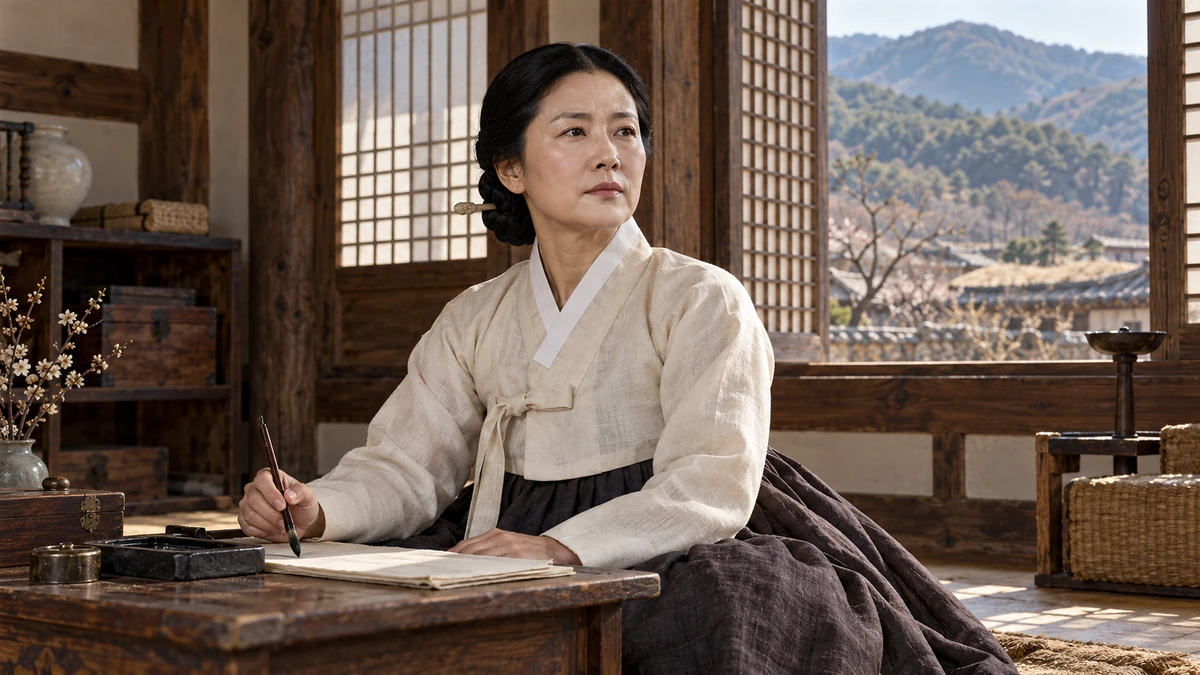
Image to help understand the article
A resistance leader emerges
Yun Hui-sun, remembered as Korea’s first female leader of a righteous army movement, helped organize resistance to Japan through protest songs, fundraising, weapons production and education. Though she did not fight on the battlefield, she mobilized women and sustained anti-Japanese forces in Korea and later in Manchuria.
Born in 1860 to a Confucian scholarly family, Yun married Yu Je-won at age 16 and entered a family deeply involved in the righteous armies, locally organized militias that fought foreign encroachment during the final years of Korea’s monarchy. Her father-in-law, Yu Hong-seok, was a militia commander in Chuncheon, east of Seoul, and influenced her commitment to the movement.
After the 1895 assassination of Queen Min, also known as Empress Myeongseong, and a government order requiring Korean men to cut their traditional topknots, armed resistance spread. As militia forces operated around Chuncheon and Gapyeong, Yun wrote dozens of resistance songs, including “The Righteous Army Song of Women” and “The Soldier’s Song.” Her lyrics encouraged opposition to Japan, raised morale and argued that women should stand at the center of efforts to save the country.
Organizing women and supplying fighters
Yun worked with village women to cook, wash clothes and care for fighters arriving from other regions. Her role expanded as Korea’s sovereignty deteriorated. After the 1905 treaty that made Korea a Japanese protectorate, Emperor Gojong’s forced abdication and the 1907 dissolution of the Korean military, a new wave of armed resistance broke out.
When Yun’s father-in-law and other commanders led about 600 fighters in the Gapyeong area, the force faced shortages of money, ammunition and food. Yun collected funds from local residents, purchased brass and copper for weapons and bullets, and operated a facility that made gunpowder for matchlock firearms.
She also assembled a group of about 30 women who supported the militia and participated in training. Yun used resistance songs during their exercises, confronted informants who aided government and Japanese troops, and left behind eight militia songs and four written warnings. The works are regarded as the earliest Korean-language songs of the righteous army movement and as poetry of national resistance.
Resistance continues in Manchuria
After Japan formally annexed Korea in 1910, Yun’s family followed Yu Hong-seok into Manchuria in 1911 to seek another base for resistance. Yun cultivated rice paddies to raise funds and established a school called Nohakdang to train anti-Japanese activists. The school educated more than 50 people, including Kim Gyeong-do and Park Jong-su, and Yun taught patriotic resistance songs to both Koreans and Chinese residents.
Her years in exile were marked by repeated family losses. Her father-in-law died in 1913, senior resistance figure Yu In-seok died in early 1915, and her husband died later that year. Japanese repression eventually forced Nohakdang to close, but Yun relocated and continued organizing.
In Fushun, she worked with Chinese residents to establish the Joseon Independence Corps. In 1926, she founded a family unit and a school connected to the organization, later opening a branch school in Xinbin. She also participated in militia training and placed hopes in her sons and other descendants involved in the independence struggle.
Her eldest son, Yu Don-sang, was arrested with his father-in-law by Japanese police and died in July 1935 after being tortured. Yun had continued moving among bases in Manchuria after a planned anti-Japanese operation in Fushun was exposed and failed in 1932.
A legacy preserved in songs and records
Yun died Aug. 1, 1935, in Manchuria at age 74 by modern age-counting conventions, though Korean records describe her as 76 under the traditional system. She was buried there, and her remains have not been returned to her homeland.
South Korea posthumously honored Yun with a presidential commendation in 1983 and the Order of Merit for National Foundation, Patriotic Medal, in 1990. Kangwon National University erected a monument recognizing her family’s resistance activities in 1982.
Her surviving writings, including instructions to her descendants and an account of her life, are preserved in a collection of righteous army lyrics that has been designated as a registered cultural heritage item. Together, those records document how Yun expanded the meaning of resistance beyond combat — organizing women, supplying fighters, preserving morale and educating a new generation of independence activists.
Comments
Post a Comment