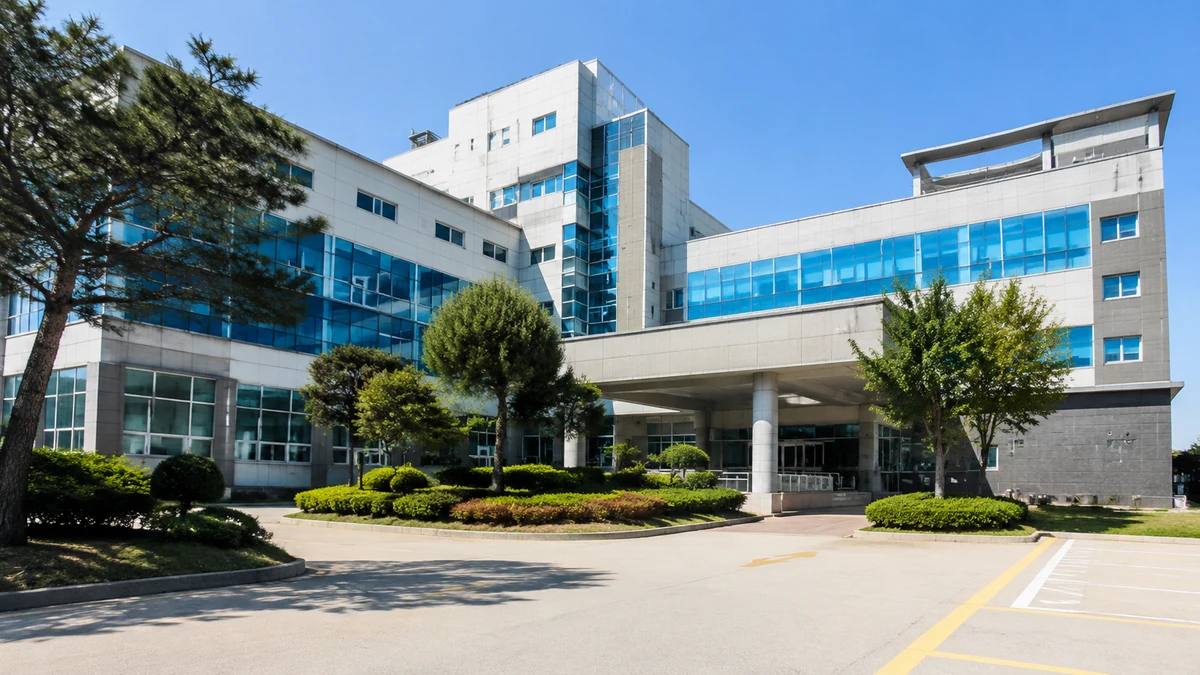
A mountain county best known to Americans for the Olympics is preparing for a different kind of summer test
PYEONGCHANG, South Korea — In the United States, the name Pyeongchang may still ring a bell because of the 2018 Winter Olympics, when this mountainous county in South Korea introduced itself to a global audience through ski slopes, curling venues and subzero temperatures. This week, however, local officials are focused on the opposite extreme: dangerous summer heat.
The Pyeongchang County Health Center said it will operate a heat illness emergency room surveillance system through Sept. 30, a seasonal public health measure designed to track patients who come to emergency rooms with heat-related conditions and quickly share that information with national disease-control authorities. The move may sound administrative, but it points to a larger shift in how South Korea is treating extreme heat — not as an inconvenience of summer, but as a medical threat that demands real-time monitoring.
That distinction matters. In many places, including in the U.S., heat is still often discussed in lifestyle terms: stay hydrated, avoid the midday sun, check the forecast. Those warnings are important, but Pyeongchang’s response goes a step further. By building its response around emergency room visits, the county is effectively saying that heat is not just weather. It is a health hazard with symptoms, patterns and consequences that can and should be tracked as they happen.
The system is scheduled to run during the hottest months of the year, when rising temperatures can push vulnerable people — older adults, outdoor workers, children and people with chronic illness — into medical distress quickly. It also reflects a growing public health reality in South Korea and elsewhere: Heat can become dangerous before it looks dramatic on television. Sometimes the first visible signs are not melting roads or wildfire smoke, but headaches, dizziness, muscle cramps, fatigue and, in severe cases, changes in consciousness that send someone to an emergency room.
For readers in the U.S., where cities from Phoenix to Philadelphia have been rethinking heat response plans, Pyeongchang’s move will feel familiar in one sense and noteworthy in another. Familiar because governments everywhere are being forced to treat heat more seriously. Noteworthy because even a rural county in South Korea is using emergency medical data as an early warning tool, tying local hospital visits directly into the national public health system.
Heat illness is being framed as a medical event, not just a miserable day outside
At the center of the announcement is the phrase “heat illness,” a public health category that includes health problems caused by prolonged exposure to high temperatures. The symptoms listed by local officials are straightforward but important: headache, dizziness, muscle cramps, fatigue and reduced consciousness. Those are not abstract risks. They are the kind of symptoms many people might be tempted to dismiss as simple exhaustion, lack of sleep or a rough day in the sun.
That is part of the danger. Heat-related illness often begins with symptoms that look ordinary. Someone may feel lightheaded after working outside, cramped after a long walk or unusually tired after being in a hot room. In a culture where people are used to pushing through discomfort — and that is true in both Korea and the United States — the first instinct is often to endure it. Pyeongchang’s public message pushes in the opposite direction: Do not assume heat is something the body will simply tolerate if you wait it out.
When officials mention reduced consciousness, they are underscoring that heat illness can escalate rapidly. This is no longer about sweat and discomfort. It is about a condition that can impair the body’s ability to regulate temperature and, in serious cases, threaten life. That is why emergency rooms matter so much in this system. The emergency department is where the vague danger of “too hot outside” turns into measurable health events involving real patients, real symptoms and, sometimes, urgent intervention.
In American terms, it is the difference between a weather advisory and a hospital dashboard. One tells the public to be careful. The other tells public health authorities what is already happening on the ground.
That framing also reflects a broader evolution in how modern governments talk about heat. Not long ago, public discussion in many countries treated summer heat as mostly a quality-of-life issue. It was unpleasant, expensive for air conditioning and occasionally dangerous for people with obvious risk factors. But as extreme heat becomes more frequent and more disruptive, health agencies are increasingly presenting it the way they would present other seasonal threats: something to monitor, quantify and respond to before it becomes overwhelming.
What the surveillance system actually does — and why timing matters
The emergency room surveillance system in Pyeongchang is meant to identify cases of heat illness in real time and quickly share relevant information with the Korea Disease Control and Prevention Agency, or KDCA, South Korea’s national disease-control body. That may sound bureaucratic, but the concept is simple. Instead of waiting until the end of the season to count how many people got sick, health authorities watch for cases as they appear.
That timing can make an enormous difference. Heat illness is not like some disasters that announce themselves all at once. It often builds in scattered, individual incidents — one older resident becomes disoriented, one farm worker develops cramps and dizziness, one person arrives at the emergency room after spending too long in a hot environment. Seen one by one, those cases may look isolated. Seen together in real time, they can signal a broader public health problem that requires immediate attention.
That is the larger significance of surveillance. It is not simply record-keeping. It is a way to detect a moving threat while it is still unfolding.
The KDCA is best known internationally for its infectious disease work, especially after the COVID-19 pandemic, but in South Korea its role extends beyond outbreaks. It also tracks seasonal and environmental health risks, including heat. That makes Pyeongchang’s reporting structure important. A case that first appears in a local emergency room does not remain only local; it can become part of a wider national picture that helps officials understand trends, issue warnings and coordinate response.
For American readers, the closest comparison may be state and federal systems that track ER visits during heat waves or other emergencies, feeding data upward so public health agencies can spot spikes. The principle is the same: Local hospitals are often the first place where a climate-related health problem becomes visible in concrete human terms.
Pyeongchang’s decision to run the system through Sept. 30 also sends a message about duration. This is not a one-week campaign tied to a specific forecast. It assumes that heat risk stretches across the entire warm season. That kind of seasonal planning reflects a growing recognition that dangerous heat is not a one-off anomaly but part of the annual public health calendar.
Why this matters in South Korea now
The timing is not accidental. South Korea, like many countries in East Asia, is entering the part of the year when heat and humidity can become punishing, especially for people who work outdoors or live without consistent cooling. Summers on the Korean Peninsula are often humid, and the physical burden of heat can build quickly even when temperatures do not look as extreme as those in the American Southwest.
That point is worth stressing for readers who associate heat danger mainly with desert climates. Humidity changes the equation. When the air is already saturated with moisture, sweat does not evaporate as efficiently, which means the body has a harder time cooling itself. In practical terms, a muggy day in Korea can be medically dangerous even if the raw temperature does not seem record-breaking by Las Vegas standards.
The article’s emphasis on reducing summer health damage suggests that South Korean local governments are increasingly institutionalizing their heat response. This is no longer just about telling people to wear hats or carry water bottles. It is about putting heat into the same operational category as other recurring public health risks that require systems, reporting and interagency coordination.
There are also signs that the season’s early heat is already affecting everyday life in Korea. Separate reporting this month noted that GS25, one of the country’s biggest convenience store chains, moved up the release of some summer “health food” products by about three weeks because of early heat and increased demand. That detail may sound trivial next to emergency room surveillance, but together the two developments paint a broader picture: The heat is not only influencing hospital preparedness, but also consumer behavior, retail timing and daily routines.
For Americans unfamiliar with Korean food culture, the convenience-store reference also hints at a local seasonal pattern. In Korea, summer often brings renewed interest in “boyang” foods, a term that broadly refers to nourishing dishes believed to help restore stamina. One classic example is samgyetang, a ginseng chicken soup traditionally associated with the hottest stretch of the season. Americans might compare it loosely to the way some people turn to chicken soup when they feel run down, though the Korean cultural context is more closely tied to enduring seasonal heat and rebuilding energy.
That does not mean soup or special foods can substitute for medical care, and local officials are clearly not suggesting that. If anything, Pyeongchang’s surveillance system underscores the opposite point: Heat illness is not something to romanticize or power through with seasonal rituals. Cultural habits may shape how people talk about summer fatigue, but the public health message is increasingly blunt. Recognize the symptoms. Act early. Get help if needed.
The symptoms officials want the public to take seriously
The most practical part of the county’s message may be the symptom list itself. Headache and dizziness are common enough that people often wave them off. Muscle cramps can be blamed on exercise or dehydration. Fatigue is so ordinary in modern life that many people barely register it as a warning sign. But in the context of prolonged heat exposure, those symptoms can indicate that the body is struggling.
That is why the public health lesson here is less about memorizing a long checklist and more about changing the mental frame. If you have been in a hot environment for an extended period — whether outdoors under direct sun, in a poorly ventilated workplace or even indoors without effective cooling — symptoms that might otherwise seem minor should be reevaluated.
This is especially important because severe heat illness can progress fast. Someone may begin by feeling weak or dizzy and then deteriorate over a relatively short period. Reduced consciousness, the most serious symptom specifically cited by local officials, is a red flag that demands urgent attention. It also highlights a practical problem: By the time a person becomes confused or less responsive, they may no longer be in a good position to judge their own condition.
That is one reason community awareness matters so much. Family members, co-workers, neighbors and bystanders may be the first to notice that someone is not making sense, is moving unusually slowly or appears disoriented in the heat. In a workplace, on a farm, at a bus stop or during a local outdoor event, those observations can make the difference between prompt medical care and dangerous delay.
American readers will recognize this dynamic from public messaging around extreme heat at home. The people at highest risk are not always the ones posting about the weather online. They may be older residents living alone, laborers working through the afternoon, delivery workers, people with disabilities or individuals without reliable access to air conditioning. In that sense, the story from Pyeongchang is not especially foreign. It reflects a global reality that heat risk often falls hardest on people with the fewest buffers against it.
The bigger message: heat policy is becoming everyday health policy
On its face, this is a local South Korean story about a county health center and an emergency room reporting system. But it also speaks to something larger: Extreme heat is being absorbed into the routine machinery of public health.
That shift is significant because it changes what counts as preparedness. Preparedness is no longer only about big, visible infrastructure or one-time declarations during a severe weather event. It is also about information flow — knowing which patients are showing up, with what symptoms, in what numbers and how quickly that information can move from a local hospital to national authorities.
In many ways, those behind-the-scenes systems are the most telling sign of how seriously a government treats a threat. A press conference can draw attention. A surveillance network can save time, and in medicine time can save lives.
Pyeongchang’s action also illustrates how local health policy can carry lessons beyond its own borders. Americans may think of South Korea mainly through K-pop, Korean dramas, cutting-edge technology or its tense relationship with North Korea. But public health administration is another area where the country often operates with a high degree of coordination and speed. The emergency room surveillance system for heat illness fits that pattern: local data, national reporting, seasonal readiness.
It is easy to overlook such a measure because it lacks the drama of a major national announcement. Yet this is exactly how many public health gains are made — through small, disciplined systems that catch trouble early. For residents, the practical takeaway is immediate: Heat is not a test of toughness. It is a health risk that should be read through symptoms and responded to quickly.
That may be the clearest lesson for readers on either side of the Pacific. Whether in a South Korean mountain county or an American city sweltering through July, the dangerous mistake is the same: treating heat as something to endure until it passes. Pyeongchang’s response suggests a more modern approach, one grounded in medicine rather than stoicism.
As summer deepens, that approach may become less an exception than a model. The weather may be seasonal. The response increasingly is not. It is organized, clinical and alert to the idea that the first sign of a heat emergency is often not in the forecast, but in a person’s body.
For readers, the takeaway is simple: do not wait for heat illness to look dramatic
What makes this story resonate beyond South Korea is how ordinary the warning signs can be. A headache after being outdoors. Dizziness after walking in heavy humidity. Muscle cramps that seem annoying but manageable. Deep fatigue that feels like something a nap might fix. Those are exactly the kinds of symptoms people talk themselves out of taking seriously.
Pyeongchang’s surveillance effort is built on the understanding that these early signs matter. Emergency rooms become the reporting point not because every case begins as an obvious crisis, but because some cases worsen when people delay care or underestimate what heat can do.
For an American audience, the broader context is hard to miss. Across the U.S., heat has become one of the deadliest forms of weather, even though it rarely produces the spectacle of a hurricane or tornado. Public health experts have spent years trying to convince the public that heat deserves the same seriousness as more visually dramatic disasters. South Korea’s local response in Pyeongchang points in the same direction.
There is a cultural message embedded in that policy choice. In many societies, including Korea and the United States, endurance is often admired. People are praised for pushing through discomfort, showing up for work and not making a fuss. But heat illness does not reward toughness. It punishes delay. By putting emergency-room surveillance at the center of its summer response, Pyeongchang is effectively telling residents that the smart move is not to tough it out, but to recognize the warning signs before they become catastrophic.
That is a message with broad relevance as hotter seasons become more common and more unpredictable. You do not need to live in South Korea to understand it. You just need to live through summer.
Comments
Post a Comment