BTS’ ‘Life Goes On’ tops 600 million YouTube views, turning a pandemic-era comfort song into a lasting global touchstone
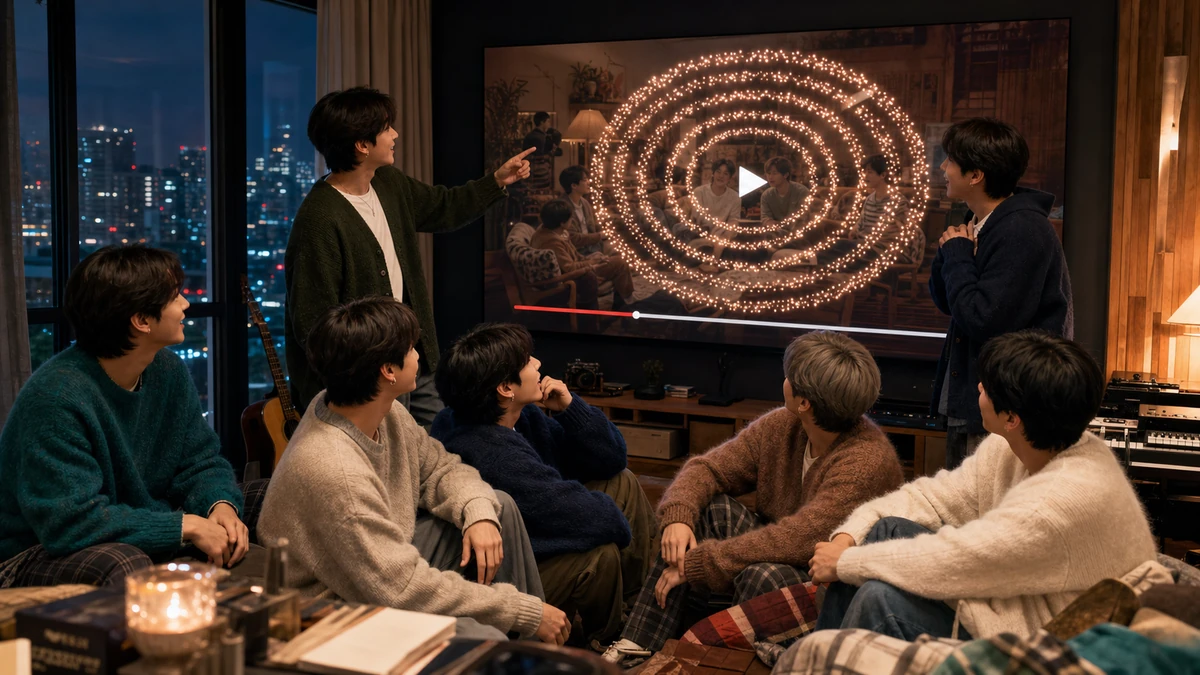
A pandemic-era song finds a second life
BTS’ music video for “Life Goes On,” a subdued, deeply personal single released at one of the bleakest stretches of the COVID-19 pandemic, has surpassed 600 million views on YouTube, according to BigHit Music. The milestone was reached early July 12 in South Korea, nearly five years and eight months after the video first debuted in November 2020.
In an internet culture built around speed, novelty and constant churn, that timeline matters as much as the number itself. Viral moments often flare and fade in days. A song tied so closely to one historical moment — the loneliness, uncertainty and suspended normalcy of late 2020 — might have been expected to remain a time capsule. Instead, “Life Goes On” has kept drawing viewers back, long after lockdowns ended and the world moved into a new phase.
That staying power says something important not just about BTS, but about how K-pop travels and endures. For American audiences used to blockbuster pop videos packed with spectacle, celebrity cameos and carefully engineered online buzz, “Life Goes On” stands out because it aims somewhere quieter. It is not a performance piece in the traditional sense. It is not built around explosive choreography or a cinematic plot twist. Its emotional center is restraint: faces, pauses, empty spaces and the ache of separation.
The song appeared on BTS’ album “BE (Deluxe Edition),” a record shaped by the emotional fallout of the pandemic. Even the album’s title — “BE” — signals a focus on existence in the present tense, on simply continuing to live through disruption. “Life Goes On” took that theme and turned it into one of the group’s most direct statements of reassurance. Its message was simple enough to travel across language barriers: daily life has changed, grief is real, but life continues.
That may sound modest compared with the maximalism often associated with K-pop. But modesty is part of why the song has lasted. It documented a feeling shared by millions, from Seoul to Seattle: the shock of watching ordinary routines disappear almost overnight, and the effort to find meaning in the spaces left behind.
Why this video resonated beyond the fan base
For those outside the K-pop world, view counts can sometimes feel abstract, even inflated — another giant number in a digital ecosystem full of giant numbers. But 600 million views accumulated over more than five years tells a different story from a one-week streaming frenzy. It suggests not just initial curiosity, but repeat engagement. People came back.
That distinction matters. In music, especially online, there is a difference between a hit that dominates a release weekend and a work that becomes part of people’s emotional routine. “Life Goes On” appears to fall into the second category. Fans revisited it, new listeners discovered it, and the video kept circulating as a piece of comfort media rather than just promotional content.
In American terms, it is closer to the long shelf life of a beloved ballad or a deeply associated cultural artifact than to a fleeting TikTok spike. Think of the songs that become tethered to a national mood — tracks that get replayed not because they are new, but because they help explain a period people lived through. “Life Goes On” served that role for many BTS listeners around the world.
The song’s durability also reflects how K-pop fans consume media. Unlike more passive listening models, K-pop fandom often involves active, repeated viewing. Fans do not only stream songs; they study visual details, revisit performances, parse symbolism and return to videos because the images themselves carry emotional weight. In that sense, the music video is not secondary to the song. It is part of the text.
For “Life Goes On,” that visual dimension proved especially important. The video’s meaning is inseparable from the world in which it arrived: concert halls gone quiet, travel frozen, public gatherings canceled and artists cut off from the in-person fan energy that powers live performance. Even for viewers who did not follow BTS closely, the imagery was immediately legible. Empty seats. Distance. Waiting. Hope held in suspension.
Jungkook’s role behind the camera gave the project unusual intimacy
One reason “Life Goes On” has remained meaningful to fans is that BTS member Jungkook participated in directing the music video. In the world of global pop, artists often market authenticity; in this case, fans saw one of the group’s own members help shape the perspective through which the song would be seen.
That is a significant detail for audiences unfamiliar with the internal dynamics of K-pop. The industry is known for its rigorous production systems, where agencies, stylists, choreographers, directors and creative teams all play major roles in building an artist’s image. BTS, while very much part of that system, has also cultivated a public identity rooted in self-expression, personal storytelling and unusually visible artistic participation. Jungkook’s directing credit reinforced that image.
It also changed the emotional logic of the video. “Life Goes On” did not feel like a top-down corporate response to the pandemic. It felt closer to a dispatch from inside the experience — from performers suddenly separated from the crowds that ordinarily complete the ritual of pop stardom.
That perspective comes through in the video’s tone. Rather than dramatizing the pandemic with overt references to sickness, fear or catastrophe, it narrows its gaze to what was absent. A venue without fans. Members singing in a space designed for communal energy, now stripped of its most important element. The choice is subtle, but powerful. Instead of explaining loss, the video shows the shape of it.
There is an old newsroom principle that concrete details often reveal more than sweeping declarations. “Life Goes On” works in much the same way. The empty auditorium does more emotional work than a speech could. The members’ expressions carry more than an elaborate plotline might. The result is a video that feels personal without becoming sentimental, and mournful without giving up on warmth.
That warmth has always been central to BTS’ appeal. At their peak in the U.S., the group was often framed through market metrics: chart records, sold-out stadiums, social media dominance and the intensity of the ARMY fan base. Those achievements were real, but they did not fully explain the bond fans formed with the group. Songs like “Life Goes On” help fill in that gap. They show how BTS built loyalty not only through spectacle, but through emotional legibility.
The empty concert hall became a universal image
At the heart of the video is one of its clearest and most affecting images: BTS performing in a venue with no audience present. For American readers, the symbolism may recall the strange, disorienting months when sports arenas, Broadway theaters, churches, schools and music venues all stood empty. It was the period when live culture itself seemed paused.
In K-pop, that image carries extra weight. The relationship between idol groups and fans is unusually participatory. Concerts are not just places where songs are performed; they are sites of call-and-response, coordinated fan chants, light sticks synchronized across arenas and a shared emotional script between artist and audience. In other words, the crowd is not background noise. It is part of the performance.
That is why the vacant venue in “Life Goes On” feels so stark. The stage remains, the lights remain, the performers remain — but the reciprocal energy that gives the event its meaning is missing. By choosing not to hide that absence, the video captures something that many artists across genres felt during the pandemic: performance without communion is fundamentally altered.
The image also helped viewers project their own experiences onto the song. You did not need to understand Korean lyrics fluently to understand what an empty place can signify. Whether someone had missed weddings, graduations, family dinners, church services or live concerts, the emotional logic translated. The video’s accessibility came not from dumbing down its message, but from grounding it in shared human experience.
This is one reason K-pop’s global rise cannot be explained solely through choreography, production budgets or social media efficiency. Those elements matter, but so does visual storytelling that crosses borders with very little explanation. “Life Goes On” offered that kind of storytelling. Before subtitles, before lyric translations, before fan analysis threads, its basic feeling was already available.
That is often how cultural exchange works at its most effective. A work remains specifically Korean in its origin and context, yet becomes legible far beyond that context because it is built on images and emotions people elsewhere recognize immediately. The empty hall in “Life Goes On” belongs to the pandemic, but it also belongs to a much older emotional language: separation, endurance and the hope of reunion.
A softer side of BTS in a genre known for scale
For casual American consumers, BTS is often associated with high-energy precision: stadium-level production, exacting choreography, polished visual concepts and the kind of fan mobilization that can make every release feel like a global event. “Life Goes On” revealed a different mode.
It was not an abandonment of K-pop style so much as a recalibration of it. K-pop music videos are typically major delivery systems for a group’s identity. They do not merely accompany songs; they package performance, fashion, narrative and branding into one high-impact release. In that environment, a quieter, more everyday visual approach can be its own statement.
“Life Goes On” leaned into familiar, lived-in moments rather than oversized fantasy. Its emotional force comes from normalcy under pressure, not escapism. That gave fans another angle on BTS — one less about superhuman polish and more about vulnerability. The group members were still stars, but they were also young men processing the same rupture the rest of the world was facing.
That balance has long been part of BTS’ cultural significance. The group became global not only because it mastered the mechanics of modern pop, but because it often paired those mechanics with themes that felt unusually open: self-doubt, mental health, youth anxiety, ambition, burnout and social isolation. “Life Goes On” fits that tradition. Its comfort is not generic positivity. It begins from the acknowledgment that something precious has been interrupted.
For U.S. audiences who first encountered BTS through chart headlines or high-profile TV performances, this song helps explain why the group’s appeal has proven more durable than a novelty crossover. It is one thing to command attention; it is another to remain emotionally relevant years later. “Life Goes On” suggests BTS can do both.
The milestone also arrives at a moment when the group’s legacy is increasingly being assessed over time, not just in real-time fan response. Records matter, of course, but endurance matters more. A song that remains part of listeners’ emotional vocabulary years after release tells a fuller story than release-week rankings alone ever could.
What 600 million views really says about fan culture
The 600 million mark is not simply a measure of reach. It is also evidence of rewatch culture — the habit of returning to a piece of media repeatedly because it continues to offer meaning, comfort or connection. In fan communities, especially K-pop ones, this kind of repetition is not unusual. But with “Life Goes On,” the repetition appears to have been sustained by feeling as much as by fandom discipline.
That distinction is important when discussing large K-pop numbers with skeptical Western audiences. Yes, organized fan bases often mobilize around streams, views and digital goals. But it would be too reductive to dismiss every long-term milestone as mere coordination. Some videos last because they become ritual objects. People revisit them after hard days, during anniversaries, or when they want to reconnect with a specific version of themselves and the world they remember.
“Life Goes On” lends itself to that kind of use. It is not overloaded with information. It leaves room for reflection. Its title functions almost like a mantra, and its imagery records a collective pause in history that many viewers are still processing in hindsight.
There is also a fascinating tension at the center of the achievement. The video emerged from a period defined by physical absence: no tours, no direct contact, no full concert arenas. Yet online, it continued to generate presence. The real-world venue was empty; the digital one remained full. Fans who could not gather in person maintained a shared relationship through platforms like YouTube, where replay itself became a kind of participation.
That dynamic captures something essential about pandemic-era fandom. When live events disappeared, online media did more than fill time. It preserved community. It gave artists a way to keep speaking and fans a way to keep answering back. “Life Goes On” now stands as a particularly clear record of that exchange — an artifact of distance that paradoxically helped close it.
The milestone also illustrates how older content can be renewed in the streaming era. In traditional music industry cycles, a release date often defines a song’s commercial life. Digital platforms complicate that logic. A video released in 2020 can acquire new relevance in 2026 through sharing, rediscovery and emotional recontextualization. For younger audiences especially, catalog and current release often live side by side in the same feed, the same playlist, the same recommendation chain.
Another K-pop milestone shows the breadth of the market
The BTS news arrived alongside another marker of K-pop’s global reach: NewJeans’ “Right Now,” a track from the group’s Japanese debut single “Supernatural,” surpassed 100 million streams on Spotify, according to figures cited in South Korean media. The song, released in June 2024, became the group’s 16th track to cross that threshold on the platform.
The comparison is useful, though not because the two achievements are directly equivalent. They measure different forms of audience behavior. Spotify tracks repeat listening in an audio environment; YouTube captures a visual and musical experience combined. One reflects how often people return to a song in playlists, commutes and background listening. The other reflects how often they return to a specific audiovisual object.
Taken together, the two milestones show how K-pop operates across multiple digital ecosystems at once. Fans do not consume these artists in a single lane. They stream songs, watch videos, share clips, revisit performances and keep works alive through layered, platform-specific habits. In the American music business, where album sales, radio, streams, social engagement and touring often tell different parts of the same story, K-pop may be the clearest example of a truly multimedia pop economy.
That matters because it helps explain why genre influence can look larger than any one metric. BTS reaching 600 million YouTube views for “Life Goes On” tells us something about emotional longevity and visual resonance. NewJeans crossing 100 million Spotify streams for “Right Now” says something about playlist durability and repeat listening. Neither number alone defines K-pop’s power. Together, they show a fan culture skilled at extending a song’s life long after release day.
For Americans who still think of K-pop mainly as a trend, these kinds of records argue for a different understanding. This is not just about breakout moments or novelty imports. It is about an entertainment ecosystem that has built lasting, repeatable habits of engagement across the globe.
From the grief of 2020 to the celebration of 2026
Perhaps the most compelling part of the “Life Goes On” story is the emotional reversal embedded in the milestone itself. The song began as a response to separation — specifically, the painful inability of artists and fans to meet in person during a once-in-a-century global crisis. Nearly six years later, the same work is being celebrated as a triumph of connection.
There is something fitting about that arc. A video built around absence has become proof of presence. A song that tried to comfort listeners through a period of interruption has itself endured, accumulating hundreds of millions of views as the world moved on. The phrase “life goes on” could have landed as cliché in lesser hands. Instead, for BTS and for many listeners, it became a record of survival.
That does not mean the video’s importance lies only in nostalgia. Its continued resonance suggests that people are still looking for art that remembers what those years felt like without sensationalizing them. Much pandemic art aged quickly because it leaned too hard on topical references or on dramatic declarations. “Life Goes On” took another route. It centered ordinary emotional truth, and that has made it more durable.
It also remains significant within BTS’ own catalog. This was not one of the group’s flashiest statements, but it may be one of its most humane. Jungkook’s involvement behind the camera, the members’ understated performances and the visual language of empty-yet-hopeful space all contributed to a project that fans could continue to inhabit over time.
For an American audience, the takeaway is broader than one view-count headline. “Life Goes On” shows how global pop can function as a shared archive of feeling. A Korean group made a song for a painful moment in modern history; millions of people elsewhere recognized themselves in it; and years later, they are still pressing play. In an era when digital culture often feels disposable, that kind of endurance is newsworthy in its own right.
Six hundred million views is, on paper, just a number. In context, it is something more like a map of return visits — a record of how often people chose, again and again, to spend a few minutes inside a work that helped them feel less alone. That may be the most lasting measure of “Life Goes On”: not simply that it was watched, but that it remained worth returning to.
Comments
Post a Comment