BABYMONSTER launches its second world tour in Seoul, betting that dance can carry K-pop across every border
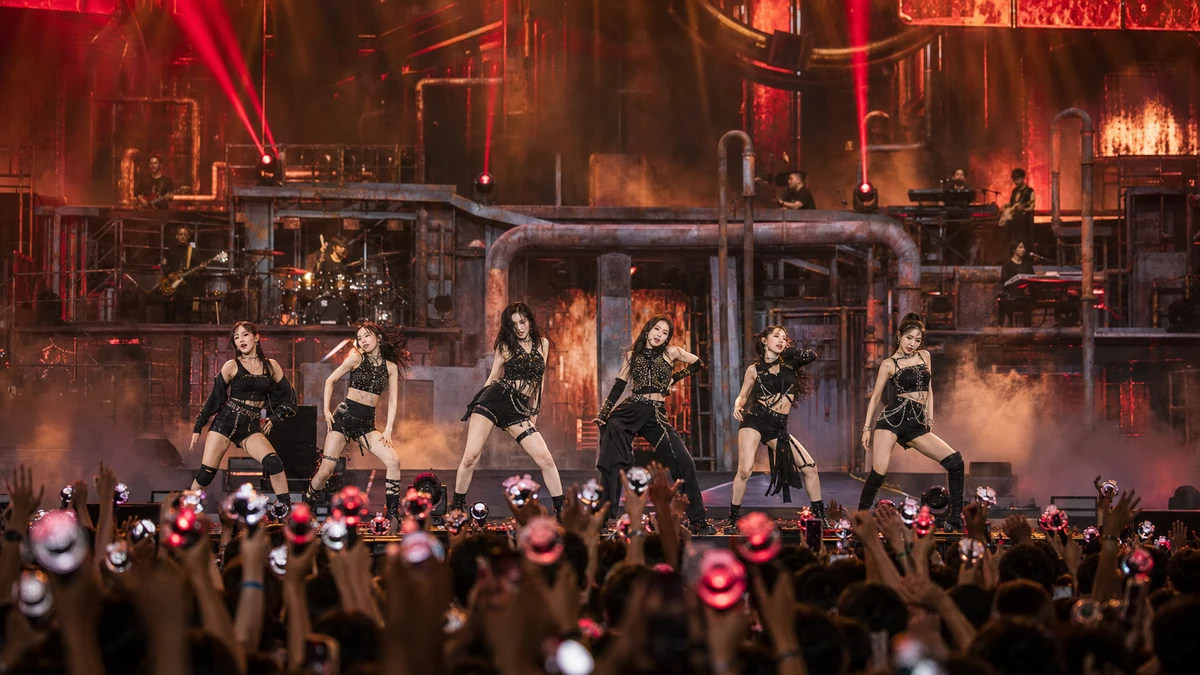
A Seoul kickoff built for heat, spectacle and ambition
In a city deep in midsummer humidity, BABYMONSTER opened the second world tour of its young career with a message that was bigger than a single song title. The six-member girl group launched the tour, called CHOOM, at Jamsil Indoor Stadium in Seoul, one of South Korea’s best-known venues for major pop concerts, in a three-night run that ended Monday. According to Yonhap News Agency, the show turned a sweltering summer evening into something even hotter inside the arena: a tightly designed performance built around movement, volume and the kind of visual precision that has become one of K-pop’s most recognizable signatures.
For American readers who may not follow Korean pop closely, Jamsil Indoor Stadium occupies a familiar place in Seoul’s entertainment geography. It is not unlike the kind of arena where a rising U.S. pop act proves it can command more than streams and social media clips. It is a room where artists are asked to fill space, sustain energy and turn a catalog into an event. That matters for BABYMONSTER, a group still early in its career but already carrying the weight of unusually high expectations.
The concert’s title, CHOOM, comes from the Korean word for dance. But the point here was not simply to name a tour after choreography. Onstage, the group and its creative team treated “dance” as a manifesto. The set, the lighting, the live band arrangement and the pacing of the performance all pushed in the same direction: to present BABYMONSTER not just as another carefully assembled idol act, but as a performance-centered group trying to make its identity unmistakable before a global audience.
The result, based on accounts from the Seoul show, was less about delicacy than force. A giant stage installation evoked an abandoned factory. Rough-textured pipelines cut across the arena space. Red lighting sharpened the outlines of the members’ movements. The aesthetic leaned industrial rather than glossy, which is significant in a genre often stereotyped abroad as polished to the point of softness. BABYMONSTER’s opening statement in Seoul appears to have been the opposite: hard edges, live energy and dance as impact.
What “choom” means in K-pop, and why it travels
Laura, one of the group’s members, reportedly described CHOOM as an album and concept carrying BABYMONSTER’s “strong ambition to turn the whole world into one dance floor.” That phrase is worth lingering on, because it helps explain how K-pop often speaks across language barriers. The Korean expression behind it can suggest a scene of communal dancing, a lively gathering or a place where people are drawn into the same rhythm. It is more vivid than a corporate slogan, and more communal than a simple call to “party.”
For an American audience, the easiest comparison may be to the way a concert can feel when a room locks into a beat together — somewhere between a stadium singalong, a club floor at its peak and the ritual of fans reproducing moves they have seen online a thousand times. In K-pop, choreography is not just decoration attached to the song after the fact. It is often the fastest, most shareable language the music has. Fans learn it, imitate it, clip it, rank it and circulate it across TikTok, YouTube Shorts and fan forums. A hook may catch your ear, but a move can capture an entire online ecosystem.
That makes CHOOM an especially legible concept for international fans, even if they do not speak Korean. A title in Korean can still communicate clearly when the central promise is embodied onstage. You do not need subtitles to understand synchronized movement, a beat drop or the difference between a performance that feels cautious and one that feels aggressive. In that sense, BABYMONSTER’s concept is a pragmatic one as well as an artistic one. It translates visually.
This is one reason K-pop continues to travel so well in the United States and beyond. Its global reach is not based on audio alone. It depends on a full package: styling, choreography, camera-ready formations, fan participation and a culture of close reading in which audiences compare every expression, every costume choice and every shift in stage design. When Laura asked the crowd, “Wasn’t it cool?” after discussing the title track, the remark did more than invite applause. It reflected a distinctly K-pop understanding of performance as something completed in dialogue with the audience.
An industrial stage and a live band reshape the group’s image
One of the more revealing details from the Seoul concert is the decision to frame the opening with the heavy sound of a live band, something that reportedly gave the start of the show the feel of a rock concert. BABYMONSTER entered with “WE GO UP,” immediately signaling that this would not be a purely digital, track-driven presentation. In the K-pop world, where backing tracks and tightly controlled production are standard parts of the format, a prominent live band can serve a strategic purpose. It emphasizes muscle. It changes texture. It tells the audience the act wants to be felt, not just watched.
That choice seems especially important for BABYMONSTER because the group is still defining itself in the long shadow of its company, YG Entertainment, one of the best-known agencies in Korean pop. YG has a history of promoting acts that lean into swagger, performance authority and a sense of scale, and BABYMONSTER arrived with inevitable comparisons. It is the company’s first new girl group in years after the global success of BLACKPINK, which means every stage becomes, fairly or unfairly, part of a broader conversation about succession, expectation and brand identity.
The industrial set described by Korean media appears to have been one answer to that pressure. Rather than leaning into sweetness or fantasy, the Seoul concert built a harder frame around the group. The abandoned-factory imagery, pipework and red wash lighting created friction and tension, giving the members’ choreography a more forceful visual outline. It is the kind of design choice that says something before a note is sung: this is a group that wants to be read as powerful.
There is also a savvy theatrical logic to it. Dance looks different depending on the world built around it. Put the same choreography against pastel visuals and it may read as playful. Put it inside a severe, industrial environment with live instrumentation pressing underneath it, and it begins to feel combative, even rebellious. The Seoul production suggests BABYMONSTER understands that world-building is part of the performance grammar now expected from top-tier K-pop acts.
For American audiences more used to thinking in terms of pop tours by artists like Beyoncé, Taylor Swift or Olivia Rodrigo, the comparison is not about scale but about coherence. The most memorable arena shows are the ones where sound, staging and persona all reinforce each other. That seems to be what BABYMONSTER aimed for in Seoul. The point was not simply to perform songs. It was to make the audience see a unified identity.
A rookie group moving beyond the “rookie” label
BABYMONSTER officially debuted in April 2024 with its first mini-album, BABYMONS7ER, and has since promoted songs including “SHEESH,” “WE GO UP” and “DRIP.” On paper, that is a relatively short runway. In practice, though, K-pop groups often spend years training before debut and then move quickly once the public introduction arrives. The question for any new act is how long it remains defined by potential rather than proof.
The Seoul concerts appear to mark an important step in that transition. A group can have a strong debut, viral clips and a devoted online following, but a headlining concert asks for something different. It asks whether songs can be sequenced into narrative momentum. It asks whether an audience’s excitement can be sustained over the course of a full night. It asks whether members can project individual charisma while still functioning as a unit. In other words, it asks whether a promising act can create its own stage language.
That phrase — stage language — matters here. The reporting from Seoul suggests BABYMONSTER’s recent material has begun to condense into a recognizable concert identity built around brisk live delivery and sharply disciplined performance. This is how groups stop feeling like introductions and start feeling established. The “rookie” tag may still be technically true, but it no longer fully describes what audiences are seeing.
The setting of the world tour’s opening chapter reinforces that shift. Starting in Seoul carries obvious symbolic weight. It allows the group to begin at home, in the center of the industry that produced it, before projecting outward. For K-pop acts, domestic stages are not merely local stops; they are proving grounds, places where image and execution are measured against some of the most attentive fan expectations in the world. Launching there says the group wants to confirm its base even as it addresses the broader international market.
It also reflects a larger reality of contemporary Korean pop: domestic success and global success are no longer separate tracks. They feed each other constantly. A moment in Seoul can become global within minutes through fancams, translated posts, reaction videos and social media clips. In that environment, the opening night of a world tour is never just for the people in the building.
Why K-pop concerts are built to spread far beyond the arena
One of the most important pieces of context for U.S. readers is that a K-pop concert today exists simultaneously in at least two places: the physical venue and the digital afterlife that begins the moment fans start posting. What happens onstage is quickly broken down into images, short videos, fan commentary and meme-ready moments that travel across time zones. A striking lighting scheme, a costume reveal, a difficult dance break or a playful line to the audience can become the defining memory of a show for people who were never there.
That helps explain why the Seoul concert’s reported details are so specific and so revealing. The red lighting. The factory-like set. The live band. The force of the choreography. These are not incidental production notes. They are the raw materials from which fandom reconstructs a concert for the rest of the world. They are what allow international fans to imagine the event vividly, discuss it in detail and fold it into the larger story they are telling about the group.
American pop has its own version of this, of course. Fans of major touring acts also circulate clips obsessively and parse every staging decision. But K-pop fandom often operates with an especially high level of participatory intensity. Choreography is learned and reproduced. Styling choices are cataloged. Individual members’ expressions and performance choices are compared across dates. The audience is not just consuming the event; it is documenting, annotating and redistributing it in near real time.
That is why the tour’s concept matters beyond branding. “Turning the world into one dance floor” is not merely a line for the merchandise. It is a description of how K-pop fandom already behaves when it is functioning at full speed. Fans in Los Angeles, Manila, Bangkok, London and São Paulo may not share a language, but they can share clips, imitate the same choreography and argue about the same moments. Dance becomes a common vocabulary.
It is also why a concept like CHOOM may be more exportable than something rooted primarily in lyrical nuance. Pop music has always moved across borders, but K-pop has become particularly adept at building experiences that remain legible even when words do not. The body, the camera and the crowd do a great deal of the storytelling.
More than hype: a test of whether BABYMONSTER can define itself
Every new group from a major Korean agency arrives with some degree of built-in attention. The challenge is converting attention into identity. That process is especially delicate when the company behind the act is as prominent as YG Entertainment. Hype can open doors, but it can also flatten a group into a comparison point for whatever came before. The Seoul launch of CHOOM seems designed to push back against that flattening by making BABYMONSTER’s own characteristics feel concrete.
Part of that identity is already visible in the group’s name. “Baby” suggests youth, freshness and the sense of a beginning. “Monster” implies force, appetite and a willingness to dominate space. In Seoul, those dual ideas reportedly found a convincing stage form. The members’ youthful energy and playful confidence were present, but so were the harsher aesthetic choices: the red light, the industrial textures, the heavy band-backed opening. Together, those elements created a performance argument that the contradiction in the name is not a contradiction at all. It is the concept.
Laura’s brief onstage remark — asking the audience if the performance was cool — is a small moment, but a revealing one. K-pop concerts often thrive on these flashes of directness, where highly controlled production gives way to something quick, warm and personal. The point is not informality for its own sake. It is to shorten the distance between the stage and the crowd, to make fans feel not just addressed but enlisted. When that works, a performance stops being something delivered to an audience and starts feeling like something completed with them.
That may be the clearest takeaway from BABYMONSTER’s Seoul kickoff. The most interesting thing here is not the size of the promise — plenty of pop acts promise to conquer the world — but the degree to which the group appears to have grounded that promise in execution. According to the available reporting, CHOOM was not presented as an abstract slogan. It was built into the concert’s physical environment, its sound and its choreography-centered structure.
There is still much that cannot be claimed from the limited facts available. The full routing of the tour was not detailed in the source summary, and broader judgments about long-term impact will depend on what happens next. But one conclusion is already clear enough to stand: at the starting line of its second world tour, BABYMONSTER used a Seoul arena to make a focused case for itself as a stage group first and foremost.
For American readers trying to understand why Korean pop continues to command so much attention worldwide, this concert offers a useful case study. The genre’s appeal is not only about catchy songs or celebrity magnetism, though both matter. It is about the way performance is engineered to survive translation. In Seoul, BABYMONSTER appears to have leaned into that advantage with confidence. A Korean word became a global proposition. A local concert became an international message. And in an industry built on relentless competition for attention, that may be exactly the point.
Comments
Post a Comment