Battery Blast Suspected While Electric Wheelchair Charged in South Korean Apartment, Injuring Man in His 70s
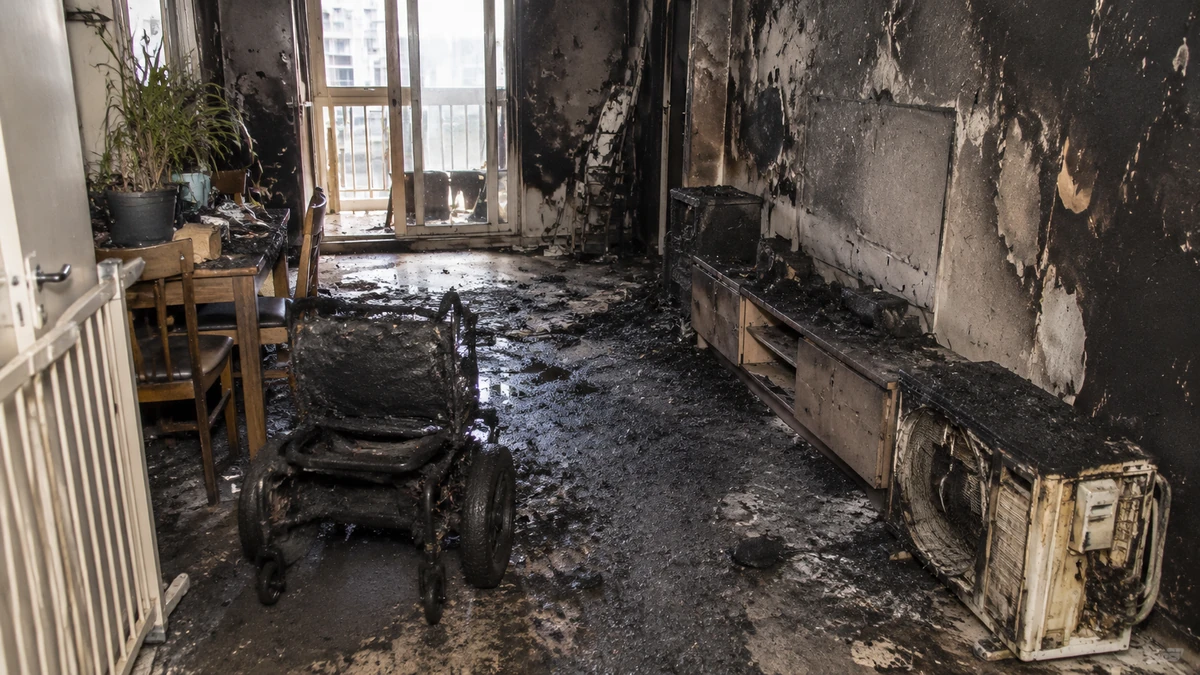
A jolt inside one of South Korea’s most ordinary homes
A man in his 70s was hospitalized with second-degree burns after what authorities suspect was an electric wheelchair battery explosion inside an apartment in Ulsan, a major industrial city in southeastern South Korea, according to local fire officials and South Korean media reports.
The accident happened at about 1:47 p.m. Thursday in the Maegok neighborhood of Ulsan’s Buk-gu district, an area of dense apartment living that would feel familiar to Americans who have spent time in high-rise housing developments in cities such as New York, Chicago or Los Angeles. In South Korea, however, apartment complexes are not just one housing option among many. They are the dominant form of urban middle-class life, home to millions of residents and a central feature of the country’s modern landscape.
That is part of what makes the incident more significant than a routine injury report. The fire itself did not grow into a major blaze, and officials said it had already gone out by the time firefighters arrived. But the fact that a battery-related accident apparently unfolded inside a private apartment, in a building shared by many households, has stirred broader concerns about safety in the very places people assume are most secure.
The injured resident suffered second-degree burns to his knees and hands and was taken to a hospital for treatment. Authorities are still investigating exactly what caused the accident and have not publicly confirmed whether the battery, the charging process, the device’s condition or another factor triggered the blast.
That distinction matters. In an era when stories about lithium-ion batteries can spread quickly and spark instant assumptions, the facts known so far are relatively limited: an electric wheelchair was reportedly being charged inside the apartment, an explosion was suspected, one resident was hurt badly enough to require hospital care, and officials have opened an investigation. Anything beyond that remains preliminary.
Why a small fire can still be a major public safety story
For American readers, this may sound at first like a local accident brief, the kind of story that might appear in a metro roundup unless it escalates into a larger fire. But in South Korea, incidents inside apartment buildings often carry broader social implications because of how people live. A problem contained to one unit can quickly become a concern for an entire building, especially in towers where neighbors live above, below and across a hallway from one another.
That shared vulnerability is one reason even a fire that extinguishes quickly can generate outsized public concern. In many Korean apartment complexes, families live in close quarters with elderly relatives, children and pets, and residents rely heavily on elevators, enclosed corridors and common escape routes. A fire that does not spread is unquestionably better than one that does. Still, an explosion inside a residence is alarming on its own, particularly when it involves a device used for mobility and daily living.
The episode also highlights a point that public safety experts in many countries have been making for years: the seriousness of an accident cannot be measured only by how far flames travel. A fire that burns an entire floor is obviously catastrophic, but an isolated battery incident can still inflict severe injuries within seconds. Burns to the hands and knees suggest the victim may have been close to the device when the incident occurred, though authorities have not released details about the exact circumstances inside the apartment.
In that sense, the Ulsan case fits a pattern that is becoming increasingly familiar worldwide. As modern homes fill with rechargeable technology, from phones and laptops to e-bikes, scooters, power banks, medical devices and mobility aids, battery safety has become a domestic issue, not just a consumer electronics issue. The ordinary act of plugging something in has become one of the defining rituals of 21st-century life. Most of the time it is uneventful. When it goes wrong, it can go wrong fast.
Electric wheelchairs sit at the intersection of independence and risk
What sets this story apart from the many battery incidents that now make headlines globally is the type of device involved. An electric wheelchair is not a luxury gadget or a trendy commuter vehicle. It is an assistive device, often essential to a person’s independence, mobility and dignity. For many users, it is as indispensable as a car is to an American suburban commuter, perhaps even more so.
That reality adds a layer of social importance to the Ulsan accident. A device meant to help an older adult move safely through daily life appears to have become the source of a painful injury inside his home. That irony is hard to ignore in a country that is aging rapidly and grappling with how to adapt housing, health systems and neighborhood infrastructure to an older population.
South Korea has one of the fastest-aging populations in the developed world. Like Japan, Italy and increasingly the United States, it is facing a demographic shift that is transforming questions once treated as niche concerns into mainstream policy issues. How should older adults age safely at home? What standards should govern assistive technology? How should apartment buildings account for the growing number of residents who depend on powered mobility devices, medical equipment and in-home charging setups?
The publicly available information in this case does not explain why the injured man used an electric wheelchair, how old the device was, what kind of battery it contained or whether it had shown any prior problems. Those details may emerge later, or they may not. But the broader issue is already visible: devices designed to extend independence are increasingly woven into residential life, and that means residential safety rules, building practices and public awareness may need to evolve alongside them.
In the United States, similar debates have surfaced around e-bike batteries in apartment buildings, oxygen equipment in senior housing and backup battery systems used with medical devices. The specifics differ, but the underlying tension is familiar. Technology expands freedom, especially for older adults and people with disabilities, yet that same technology can introduce new hazards if maintenance, charging conditions, product quality or emergency response planning do not keep pace.
Understanding the Korean apartment context
To understand why this incident resonates beyond one injured resident, it helps to understand what an apartment means in South Korea. In the United States, the word can suggest a broad range of housing, from walk-up rentals to luxury condos. In South Korea, large apartment complexes are often the defining architecture of urban life. They can function almost like self-contained neighborhoods, with controlled entrances, parking garages, playgrounds, security offices and dense clusters of near-identical residential towers.
These complexes are central to the country’s housing market and deeply tied to class, education and family life. They are where many South Koreans raise children, care for parents and build wealth. Because so many people live in these settings, accidents that occur inside an individual unit can quickly take on a public dimension. When something goes wrong in one apartment, residents do not just think about the household involved. They think about what could happen next door, upstairs or in their own living room.
That is especially true when the cause may involve charging equipment. Charging is not viewed as unusual or risky behavior in itself. It is routine, repetitive and deeply normalized. Phones charge overnight. Robot vacuums sit on docks. Power banks, tablets, scooters and a growing array of battery-powered products cycle through daily recharging. In other words, the activity at the center of this incident was not exotic. It was ordinary.
That ordinariness may be what makes the story unsettling. Public anxiety is often shaped less by dramatic, improbable dangers than by the sudden failure of familiar routines. A gas leak, an elevator malfunction, a short circuit in a kitchen appliance, a battery incident during charging: these events can provoke a particularly sharp reaction because they puncture the idea that home is fundamentally insulated from modern technological risk.
In South Korea, where apartment safety has long been a matter of public attention, stories like this can feed wider conversations about building management, emergency readiness and the hidden vulnerabilities of tightly packed urban living. The question is not only whether this particular device malfunctioned. It is whether current systems are adequate for a society in which the boundary between personal electronics, medical support tools and household infrastructure keeps getting blurrier.
What is known, and what is not
The most responsible way to read the Ulsan case is also the least sensational one. Authorities have said the accident is believed to have occurred while the electric wheelchair was being charged. They are investigating the exact cause and the extent of the damage. That means the core suspected circumstance, charging, has been identified, but the precise mechanism of failure has not.
That may sound like a technical distinction, but it is a critical journalistic one. Battery incidents tend to invite instant narratives: defective product, user error, overheating, cheap charger, poor ventilation. Sometimes one of those turns out to be correct. Often, the truth is more complicated and may involve several contributing factors. Until investigators finish their work, firm conclusions would go beyond the evidence available.
This is particularly important because the subject is a mobility aid used by people who may already face social barriers. A rush to judgment can easily slide into stigma, either toward users of powered wheelchairs, older adults living independently, or battery-powered assistive devices in general. None of those generalizations would be justified by the facts currently on the record.
At the same time, refusing to speculate does not mean treating the story as trivial. One resident was hospitalized with second-degree burns, which are medically significant injuries that can require substantial treatment and recovery time, especially for older patients. The fire may not have engulfed the building, but the event was serious enough to turn an ordinary afternoon at home into an emergency.
That balance, between caution and concern, is often missing in the social media version of breaking news. A story like this becomes either a panic trigger or an afterthought. In reality, it is neither. It is a reminder that a modest-seeming incident can reveal a larger structural issue while still requiring patience before broader lessons are drawn.
An aging society forces new safety questions
If there is a larger frame for this story, it is aging. South Korea is moving rapidly into a super-aged era, a term used when at least 20% of a country’s population is 65 or older. The United States is not as far along that curve, but it is moving in the same direction. In both countries, more people are trying to remain in their own homes longer, relying on mobility aids, powered medical devices and smart home technologies to do so.
That shift is widely seen as positive. Aging in place generally offers greater comfort and autonomy than institutional care. But it also means the home increasingly functions as a semi-medical space, a charging station and a support hub for technologies that once might have been used mostly in clinics, specialized facilities or public settings.
The Ulsan incident exposes the complicated edge of that transition. An electric wheelchair is part of daily life, not a dramatic symbol of industrial risk. Yet once it is brought indoors and plugged in, questions arise that many societies are only beginning to confront systematically. Are residents given clear guidance on where and how to charge these devices? Are batteries inspected regularly? Do apartment managers have building-specific protocols? Are older adults and caregivers receiving enough practical safety information that is easy to follow?
These are not uniquely Korean questions. New York City, for example, has wrestled with battery-related fires linked to e-bikes and other devices, prompting debates about charger quality, storage locations and enforcement. Senior housing providers across the United States have had to think through evacuation challenges, equipment dependence and the risks of concentrating vulnerable populations in dense settings. South Korea’s apartment-centered urban life gives these issues a somewhat different shape, but the core dilemma is global.
The fact that the victim in Ulsan was in his 70s also matters in a more personal sense. Older adults can face longer recovery periods and greater complications from burns and smoke exposure than younger people. Even when an incident affects just one person, its aftershocks can ripple through a household and community, especially if the injured person depends on the damaged device for everyday mobility.
A private accident with public meaning
In the end, this is the kind of story that sits squarely between the personal and the structural. On one level, it is about one man, one apartment and one frightening moment during an otherwise normal part of the day. On another, it is about how densely populated societies manage the risks that come with battery-powered living, aging populations and homes that now contain more technology than ever before.
It is also a reminder of something easy to overlook in conversations about safety. The most consequential risks are not always the ones that look dramatic on television. Sometimes they are the ones embedded in routine: charging a device, storing a battery, using equipment that has become part of the furniture of daily life. When that routine breaks, it can expose how much public policy, product design and community preparedness still lag behind the realities of modern living.
For now, investigators in Ulsan are still working to determine what exactly happened inside the apartment. Their findings will matter, not only for assigning cause but for shaping any public discussion that follows. If the incident stems from a battery defect, that points in one direction. If it involves charging conditions, maintenance issues or another factor entirely, it points in another.
Until then, the most solid conclusion is also the simplest. A home, especially in a crowded apartment building, is not automatically safe just because it is familiar. An assistive device, however necessary, is not risk-free simply because it serves a vital purpose. And a small fire is not a small story when it reveals the pressure points of a society growing older, denser and more dependent on rechargeable technology.
That is why this incident in Ulsan matters beyond one city block in South Korea. It speaks to a challenge many countries now share: how to make everyday life safer in a world where convenience, necessity and hidden hazard increasingly plug into the same wall outlet.
Comments
Post a Comment