Heavy Rain and Thunderstorms Are Set to Sweep South Korea, Disrupting a Summer Weekend Across the Country
A weekend forecast with nationwide reach
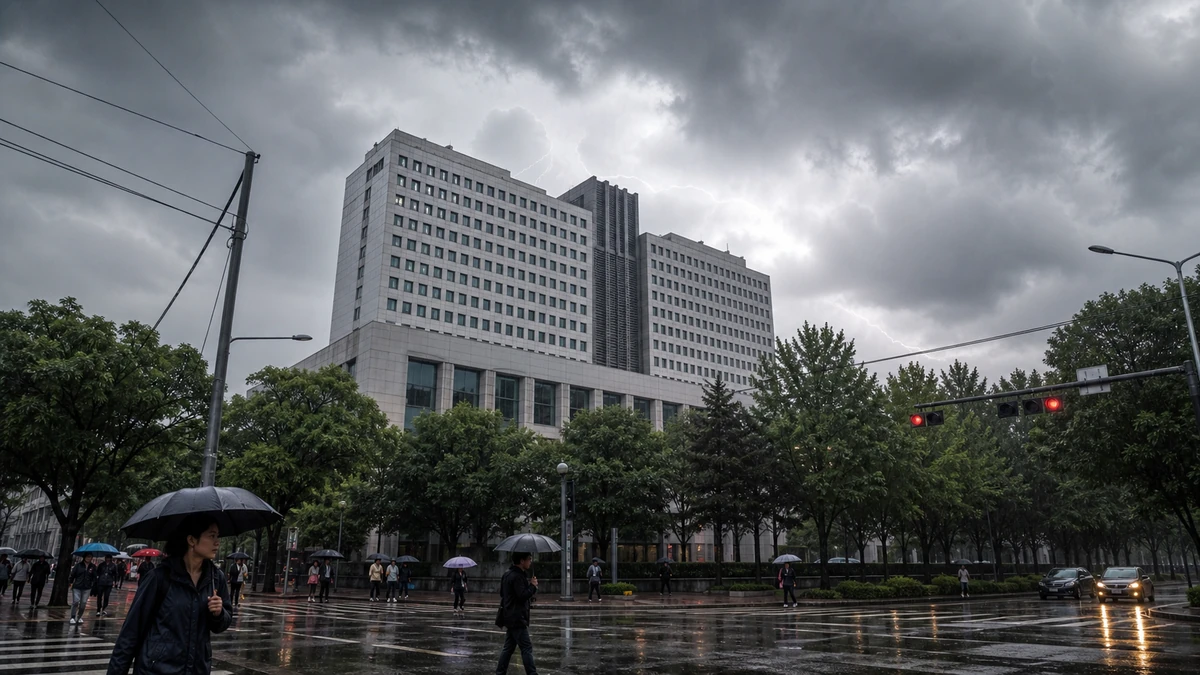
South Korea is bracing for a wet and potentially disruptive Saturday, with forecasters warning that strong rain accompanied by thunder and lightning is expected to affect most of the country on June 20. The rain, which began Friday, is forecast to continue through Saturday evening across broad swaths of the country, turning what would ordinarily be one of the busiest windows of the Korean week into a day of changed plans, delayed trips and a shift indoors.
For American readers, the significance of that forecast goes beyond the simple question of whether to pack an umbrella. In South Korea, Saturday is not just a leisure day in the abstract. It is when city neighborhoods fill with shoppers, families and couples; when traditional markets and department stores see heavy foot traffic; when people leave dense urban centers for beaches, mountain towns and regional festivals; and when a society built around public transit and walking feels weather changes immediately and collectively.
According to the forecast, Seoul, Incheon and Gyeonggi Province — the densely populated capital region surrounding Seoul — along with northern South Chungcheong Province, could receive 30 to 100 millimeters of rain over Friday and Saturday. That is roughly 1.2 to 3.9 inches, enough in some places to turn a routine weekend into a logistical challenge. Other regions, including inland Gangwon, Daejeon, Sejong, southern parts of Chungcheong, North Chungcheong, North Jeolla, and much of the southeast including Busan, Ulsan, South Gyeongsang, Daegu and North Gyeongsang, are forecast to receive 30 to 80 millimeters, or about 1.2 to 3.1 inches. The West Sea islands are expected to receive 20 to 60 millimeters.
In a country about the size of Indiana, that geographic spread matters. This is not a storm system isolated to one coastline or one metro area. It is a weather event likely to touch the capital, industrial hubs, inland administrative cities, tourist corridors and coastal destinations all at once. In practical terms, that means the rain could reshape daily life at a national scale, even without rising to the level of a major natural disaster.
The rain’s duration is also a key part of the story. Because it began Friday and is expected to continue into Saturday evening, its impact is not limited to one short downpour. It stretches across the full arc of a summer weekend in South Korea, interfering with everything from overnight travel and morning commutes for service workers to lunch outings, afternoon shopping and evening returns home.
Why a rainy Saturday matters in South Korea
To understand why this forecast has drawn attention, it helps to understand how weekends work in South Korea. In the United States, people often drive directly from suburban homes to big-box stores, ballfields or backyard gatherings. In South Korea, especially in major cities, weekend life is more concentrated in public space. People often move by subway, bus, taxi and foot, sometimes making several stops in a single outing: a cafe, a shopping street, a market, a restaurant, then perhaps a movie or karaoke room.
That urban pattern makes rain especially disruptive. Heavy rainfall and gusty winds do not just dampen an outdoor plan in the abstract; they can complicate nearly every stage of getting around. A short walk from a subway station to a restaurant can become unpleasant or even difficult. Bus stops become crowded. Side streets flood more easily. Umbrellas collide in packed pedestrian corridors. And when thunder and lightning are in the forecast, people are more likely to cancel or postpone outdoor plans entirely.
Saturday in South Korea also overlaps with a deeply social consumer rhythm. Traditional markets, known for produce, street food and household goods, are often busy on weekends. So are urban shopping districts, riverfront walking paths, mountain trailheads and intercity train stations. Domestic tourism is woven into the calendar, particularly in late June, when early summer travel picks up before the hottest part of the year and before the monsoon season reaches its peak.
That is why a forecast like this becomes more than a lifestyle item. It is public information with economic and social weight. Retail traffic shifts. Restaurants with outdoor seating lose business. Theme parks, street festivals and coastal attractions see cancellations. Indoor venues such as underground shopping centers, large malls and chain coffee shops may benefit from a weather-driven surge. In a highly networked, densely populated society, the weather does not merely affect the mood of the day; it can reroute the day itself.
There is also a cultural factor that may be less familiar to readers outside Korea. Much of Korean urban life is lived at a brisk pace in relatively compact areas. A neighborhood like Myeongdong in central Seoul, for example, can compress shopping, dining, tourism and transit into a few blocks. That density creates vibrancy under normal conditions, but it also means bad weather is felt immediately and collectively, in a very visible way.
From Seoul to Busan, a broad swath of the country is affected
The forecast covers a strikingly wide range of regions, from the Seoul metropolitan area in the northwest to Busan and Ulsan in the southeast. For Americans unfamiliar with Korean geography, the list may read like a string of unfamiliar place names. But in functional terms, this includes much of the country’s population base and several of its most important economic and travel corridors.
Seoul, Incheon and Gyeonggi together form the capital region, home to more than half of South Korea’s population. Any weather event there has immediate national visibility. Daejeon and Sejong are key administrative and transportation centers in the central part of the country. Busan, South Korea’s second-largest city, is a major port and a popular summer destination. Gangwon includes mountain and coastal areas that draw weekend travelers year-round, much the way Americans might head to the Poconos, the Rockies or a favorite beach town depending on where they live.
The areas expected to see prolonged rain deserve special attention. Forecasters say some parts of eastern Gyeonggi, Gangwon, North Chungcheong and central and northern North Gyeongsang could continue seeing rain late into Saturday night. In the mountains of Gangwon and along the East Sea coast, rain may linger into Sunday morning.
That matters because those areas are closely linked to leisure travel. Gangwon’s mountain regions and east coast are among South Korea’s best-known weekend getaways, offering beaches, scenic drives, seafood towns and hiking destinations. When rain extends into Sunday morning, it does not just spoil one day’s outing. It can complicate overnight stays, checkouts, return traffic and plans for what in the United States would be called a quick weekend road trip.
It also raises practical concerns in exposed areas. Mountain roads, coastal walks and outdoor observation points can become less safe or less accessible in heavy rain and wind. In urban centers, disruptions may be more about discomfort and delay. In travel zones, the same weather can have a more direct impact on safety and scheduling.
Even where rainfall totals are moderate by seasonal standards, the combination of geographic breadth and prolonged timing gives this event unusual reach. In effect, South Korea’s weather map for the weekend mirrors the map of its everyday mobility: a country tied together by trains, buses, roads and dense pedestrian networks, all of which are sensitive to strong rain.
Myeongdong and the image of a rain-soaked city
Rain had already begun falling in parts of Seoul on Friday, including near Myeongdong, one of the capital’s best-known commercial districts. For many international visitors, Myeongdong is among the first names they learn in Seoul — a shopping-heavy neighborhood known for beauty stores, chain retailers, street snacks and a steady flow of both tourists and locals. If Times Square suggests one kind of American urban spectacle and a pedestrian-heavy part of Manhattan suggests another, Myeongdong occupies its own Korean version of highly concentrated, highly visible city life.
In the rain, the neighborhood takes on a distinct visual mood. Narrow walkways shine with reflected light from storefront signs. Cafe windows fill with people waiting out the weather. Umbrellas crowd intersections. The pace slows, though never fully stops. In a place where street-level commerce is central to the neighborhood’s identity, the weather becomes part of the scene.
There is a temptation, especially in travel writing and social media, to romanticize that image: neon in the rain, busy sidewalks, the cinematic atmosphere of a summer shower in Seoul. But the current forecast calls for something more serious than a postcard drizzle. Thunder, lightning, heavy rain and wind can quickly transform a picturesque city scene into a frustrating and occasionally hazardous one, particularly in crowded commercial areas where people cluster near subway exits, awnings and curbside crossings.
For local businesses, that distinction matters. A light rain may nudge people indoors while keeping them in the area. A hard rain with gusty wind can push people to cut outings short, cancel meetups or avoid shopping districts altogether. Restaurants may see changes in reservation patterns. Street vendors may pack up early. Retailers in covered or underground areas may benefit while open-front businesses lose foot traffic.
Myeongdong is only one neighborhood, but it illustrates a broader truth about South Korean cities: weather is not background scenery. It is an active force that changes the rhythm of public life in real time. In a dense city with heavy reliance on walking, transit and street-level consumption, the atmosphere on the sidewalk can have immediate consequences for commerce and mobility.
The business of weather: shopping, dining and domestic travel
One of the clearest effects of a forecast like this is on consumer behavior. South Korean weekend spending is highly sensitive to weather, especially when rain is both heavy and widespread. Outdoor plans tend to give way to indoor ones. People reroute to basement arcades, department stores, cinemas, cafes and large mixed-use shopping complexes that offer shelter and convenience under one roof.
That pattern may sound familiar to Americans who have watched shoppers abandon open-air downtown districts for enclosed malls during storms. But in Korea, where commercial clusters are often directly integrated with subway stations and underground passageways, that shift can happen with unusual speed and efficiency. A family or group of friends that had planned to browse a market or walk a riverside park may instead spend the afternoon inside a shopping complex without traveling far at all.
The breadth of the forecast suggests that this shift may not be confined to Seoul. With rain expected across parts of the capital region, the central provinces, Jeolla and the southeast, businesses in multiple regions could see similar behavior on the same day. Coastal tourism operators, local cafes in scenic areas, open-air markets and festival vendors may all feel the impact.
This is one reason weather coverage in South Korea often carries a stronger civic dimension than American readers might expect from a standard weekend forecast. It is not merely advice about what to wear. It informs decisions by small business owners, transit riders, tourists, event organizers and families trying to make the most of limited time off. In that sense, a nationwide rain forecast becomes a social story, one that reveals how ordinary life is organized and how quickly it can be reorganized.
The effect on dining can be particularly noticeable. Korean food culture is deeply social and often tied to movement — meeting friends after shopping, walking to a barbecue spot, lining up at a popular noodle shop, browsing snack stalls in a market. Heavy rain can collapse those chains of movement. Some businesses may benefit from delivery demand, while destination restaurants in exposed areas may see reservations drop. Casual spending becomes more localized and more weather-conscious.
Domestic travel, meanwhile, faces a more complicated calculation. Many Koreans take short, tightly scheduled trips on weekends, sometimes leaving one city in the morning and returning the next day. When rain spreads nationwide, there are fewer obvious escape options. If the coast, the mountains and the capital are all wet at once, travel does not simply shift location; it may shrink altogether.
Wind, duration and the public safety message
Forecasters are also warning people to pay attention not only to rainfall but to strong winds. That combination can magnify the day’s disruptions. Anyone who has tried to cross a busy street with an umbrella in gusty conditions knows how quickly a minor inconvenience becomes a genuine obstacle. In Korean cities, where many trips involve short walks between transit points and destinations, wind can make those short segments the hardest part of the day.
In practical terms, the trouble spots are easy to picture: crowded crosswalks, bus stops with limited cover, stairways at subway entrances, slick sidewalks and curb lanes where water collects. In exposed tourist areas — especially beaches, clifftop walks, mountain roads and open observation decks — wind can become a safety factor in its own right.
What makes this forecast notable is that it blends ordinary inconvenience with the possibility of more serious hazards. Much of the coverage centers on everyday disruption: delayed plans, altered shopping patterns, fewer outdoor activities. But thunder and lightning always raise the stakes, especially for hikers, beachgoers, delivery workers and anyone spending extended time outside.
The timing matters here as well. Rain continuing into late Saturday night in some regions and into Sunday morning in parts of Gangwon and the east coast means the caution window extends beyond daylight hours. Wet roads after dark, reduced visibility and fatigue from travel can compound the risks for drivers and passengers returning from weekend trips.
For South Korean authorities and media outlets, this is exactly why broad-based weather alerts are treated as meaningful public information. The value lies not only in describing the atmosphere but in helping residents compare the forecast with their own plans and geography. A rainfall range of 30 to 100 millimeters means one thing in a central Seoul neighborhood with easy subway access and another in a mountain lodge area or a coastal destination where exposure and travel time are greater concerns.
A small weather story that says something larger about Korean life
On one level, this is a straightforward forecast story: heavy rain, thunderstorms, wind and a wet Saturday across most of South Korea. On another level, it offers a revealing glimpse into how the country works on an ordinary weekend. South Korea’s public life is compact, fast-moving and highly shared. People often move through the same spaces at the same times, whether they are shopping in central Seoul, boarding a train in Daejeon, heading to the beach in Gangwon or meeting friends in Busan.
That shared rhythm is one reason weather stories carry such resonance. A single stretch of rain can touch urban tourism in Myeongdong, family outings in suburban Gyeonggi, seafood trips on the east coast and local commerce in inland provincial cities. It can slow the tempo of the capital while also affecting hotel bookings, restaurant traffic and return travel hundreds of miles away.
For international readers, especially those interested in the Korean Wave, there is value in paying attention to these everyday stories. Korea is often presented abroad through the lens of K-pop, TV dramas, beauty trends and high-tech exports. Those are real parts of the country’s global image. But so is the texture of ordinary public life: how people spend a Saturday, how city neighborhoods function, how travel patterns link mountains to megacities, and how a weather system can reset the country’s plans almost in unison.
In that sense, the coming rain is not just a forecast. It is a snapshot of a society whose daily rhythms are unusually visible. The changing weather will likely redirect foot traffic, crowd indoor spaces, postpone some trips and thin out others. It may leave Myeongdong glistening and quieter than usual, push tourists off coastal promenades, and send families toward shopping centers and cafes instead of parks and markets.
By Sunday, many of those routines will resume. But for one weekend in late June, the rain is expected to redraw the map of movement across South Korea — from the capital region to the southern cities, from commercial streets to mountain roads — and in doing so, reveal just how much of modern Korean life still turns on the oldest public variable of all: the weather.
Comments
Post a Comment