A local government event with national meaning
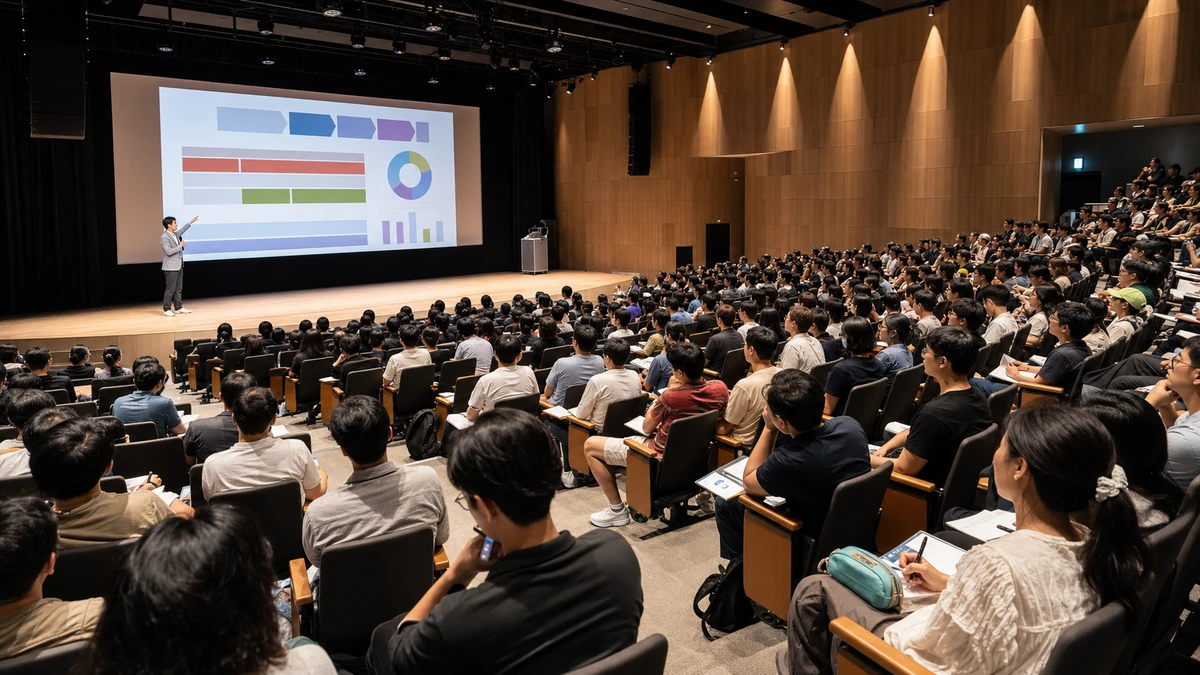
In the United States, a school district hosting a college night for parents and seniors would be familiar territory: a practical event in an auditorium, a few counselors, maybe a presentation on FAFSA deadlines, essay strategy and state university admissions. In South Korea, a similar-looking event can carry far more emotional and cultural weight. That is the backdrop for a new college admissions briefing announced by Seoul’s Gangseo District, a local government in the western part of the capital, which says it will hold a seminar July 9 for students and parents preparing for the 2027 university admissions cycle.
On its face, the announcement is straightforward. Gangseo District said it will host a college admissions information session at 3 p.m. on July 9 at the Gangseo Arts Center for 200 attendees, including exam-taking students and parents who either live in the district or attend schools there. The district also plans to follow up with one-on-one customized college admissions counseling from Aug. 6 to Aug. 8 for 108 students, including current high school seniors and repeat test takers.
But in South Korea, where university admission is often treated not only as an academic milestone but as a family-wide project, the significance of such an event extends beyond its modest size. A district office auditorium briefing can become a crucial stop in a household’s summer schedule. A published registration time can set off the equivalent of a digital ticket rush. And a local government’s decision to offer admissions guidance is not merely a bureaucratic service; it reflects the degree to which education anxiety and competition have become part of everyday civic life.
For American readers unfamiliar with the rhythms of Korean education, the story offers a window into how deeply the college admissions process shapes communities. This is not a national policy overhaul or a dramatic political education debate. It is, instead, an ordinary administrative notice that reveals something bigger: in South Korea, college admissions support is increasingly treated as a form of public infrastructure, as routine and necessary as neighborhood health services or public transit information.
The Gangseo program, according to the district, is designed around what Koreans call “susi,” a major pathway into college that differs in important ways from the one-day, all-or-nothing exam image many outsiders associate with Korean education. Understanding that term is key to understanding why a local seminar like this matters so much.
What “susi” means in South Korea’s admissions system
South Korea’s admissions system can be difficult for foreign audiences to decode because it combines centralized testing with university-specific review processes, school records and a calendar that puts intense pressure on families well before the school year ends. The term “susi” refers to the early or rolling-style admissions track, though that shorthand does not fully capture how consequential it is. Unlike the regular admissions route, which is more heavily tied to the national college entrance exam taken later in the year, susi places greater emphasis on a student’s high school performance, school records, extracurricular profile and the evaluation criteria set by individual universities.
To an American audience, the closest comparison might be a hybrid of early action, holistic review and counselor-driven strategy sessions, but with higher stakes and less room for improvisation. Students applying through susi are not simply filling out forms early. They are often making finely calculated decisions based on grade trends, school activity records, recommendations, admissions formulas and shifting signals from universities about what kinds of applicants they want. Families scrutinize not just where a student might want to go, but where the student appears statistically and strategically viable.
That is why the July 9 event is more than a generic informational meeting. A seminar focused on the 2027 susi admissions cycle is aimed at one of the most consequential decision-making periods in a Korean student’s senior-year timeline. Summer is when many students and parents move from broad aspirations to concrete plans: which universities to target, which admissions track to prioritize, what documents need attention and what weaknesses need to be addressed before applications are due.
In American terms, imagine compressing the stress of SAT strategy, Common App positioning, early decision timing and high school transcript analysis into a narrower window, while also placing those choices inside a society that views educational attainment as a central measure of future stability. That helps explain why local governments, not just schools and private academies, are stepping in to provide admissions guidance.
The summary released by the district does not list specific universities or spell out the exact materials that will be provided. What it does make clear is the central purpose: to give families a broad analysis of the current admissions landscape and practical guidance on how to respond successfully to the susi process. For families trying to reduce uncertainty, that alone can be a powerful draw.
Why a district office is stepping into education counseling
Gangseo District’s role in this process may surprise readers from countries where college counseling is largely handled by high schools, private consultants or nonprofit organizations. In South Korea, however, local governments increasingly function as service hubs for the pressures residents face in daily life, and college admissions is one of the most important of those pressures. The district’s decision to host both a public seminar and individualized counseling suggests a broader understanding of education support as a local public service.
Gangseo is one of Seoul’s 25 autonomous districts, each with its own local administrative responsibilities. While these districts do not control national education policy, they often operate programs that support residents in practical ways, from child care to elder services to youth programming. College admissions guidance fits into that ecosystem because the demand for reliable information is so strong, and because families often feel that schools alone cannot answer every strategic question.
That sense of information scarcity, whether real or perceived, is a defining feature of South Korea’s admissions culture. Students and parents worry constantly about whether they are missing a key trend, misreading a university’s criteria or acting too late. In a system where even small differences in positioning can feel decisive, credible information becomes valuable currency. A district-sponsored event can therefore serve two purposes at once: it delivers guidance, and it signals trustworthiness.
There is also a geographic and economic dimension. Not every family has equal access to expensive private admissions consultants, known in Korea as part of the broader private education sector. By holding the event at a neighborhood cultural venue and using the district government’s online reservation system, Gangseo is effectively bringing admissions help closer to home. Families do not have to travel across Seoul or rely entirely on private networks to get basic orientation.
That matters in a city where educational opportunity can feel closely linked to money, mobility and social capital. Publicly offered information sessions cannot eliminate those inequalities, but they can modestly narrow the gap. For a family that needs a credible overview of the admissions season, a free local seminar may be the difference between moving into summer with a plan or with panic.
The district’s approach also underscores a distinctly Korean feature of public life: the idea that government should respond to residents’ immediate, lived burdens, even when those burdens are tied to national systems beyond local control. Gangseo cannot redesign the admissions process, but it can help residents navigate it. In a society where education stress is part of the household routine, that kind of intervention can be politically and socially meaningful.
The numbers tell a story: 200 seats, 108 counseling slots
The details in the announcement are striking not because they are dramatic, but because they are so precise. The seminar will accommodate 200 students and parents. The one-on-one counseling sessions, scheduled for Aug. 6 through Aug. 8, will be limited to 108 applicants. Registration for the seminar opens at 10 a.m. on June 22 through the district’s integrated reservation system. Registration for individualized counseling opens at 10 a.m. on July 21, also on a first-come, first-served basis.
Those numbers reveal the structure of the program. The seminar is designed as the broad front door: a large enough gathering to give many families a common briefing on trends, timing and strategy. The counseling sessions are something different: a narrower, more personalized intervention for students who need individual guidance based on their specific grades, school records or application plans.
In the United States, this might resemble a public college-planning night followed by a limited number of private appointments with counselors. But the Korean version carries a sharper sense of urgency because access itself can feel competitive. The fact that registration opens at an exact hour and proceeds on a first-come basis is not an administrative footnote. It is part of the story.
In South Korea, families are accustomed to systems where speed matters: class registrations, sought-after after-school programs and educational consultations often fill quickly. Publishing the sign-up time gives families a chance to prepare, but it also puts them on notice that hesitation could mean losing out. The rush for slots can mirror, in miniature, the larger admissions environment the program is meant to help families navigate.
There is also a layered logic to the calendar. The July seminar comes first, at a point in the summer when students are refining their admissions direction. The Aug. 6-8 counseling sessions follow later, allowing participants to absorb general guidance and then pursue more targeted advice if needed. That sequence suggests an effort to move families from broad awareness to individualized planning in stages, rather than overwhelming them with information all at once.
Whether 108 counseling slots are enough is another question. In a densely populated Seoul district, demand could easily exceed supply. The district has not claimed that the program can serve every student who wants help. What it has offered is a structured, public-access channel for some families to get support without depending exclusively on private education markets. Even if limited, that is significant in a system where access to tailored information often feels unevenly distributed.
Why the EBSi connection matters
Gangseo District said the seminar will feature Yoon Yoon-gu, identified as a leading college admissions instructor from EBSi. For readers outside Korea, that institutional affiliation deserves explanation. EBSi is the online educational platform tied to EBS, South Korea’s public educational broadcasting system. It is a familiar and influential name for students preparing for major exams, somewhat akin to a trusted public study resource, though embedded in a more exam-centered culture than anything most American public media organizations provide.
That association matters because credibility is essential in the Korean admissions world. Families are often flooded with advice from private academies, online communities, former admissions officers and education influencers. Some of that guidance is useful; some of it is marketing. A local government hosting a seminar needs a speaker whose background signals reliability, and a well-known EBSi instructor does that.
The district’s announcement says Yoon will analyze the latest admissions trends and explain successful strategies for responding to the susi system. It does not say exactly which universities or which admissions categories will be covered, and that limitation is worth noting. The public information available so far supports a practical but cautious conclusion: the event appears intended to provide credible, high-level guidance rather than detailed promises about admissions outcomes.
Still, in a culture where families frequently spend significant money on private educational services, the presence of a public-facing expert can reassure attendees that the seminar is not merely ceremonial. It suggests the district understands what residents want: not slogans about supporting youth, but usable intelligence about how the admissions field is changing.
That distinction is important. Korean parents and students are often highly sophisticated consumers of admissions information. They are not simply looking for encouragement. They want interpretation. They want someone who can explain how this year differs from last year, what kinds of applicants may be more competitive and how to position a student without making costly strategic mistakes. An EBSi-branded speaker helps meet that expectation.
A summer afternoon that reflects a national obsession
Seen from afar, a July 9 seminar at a district arts venue may sound like a small civic event. In the Korean context, it reflects something much larger: the way college admissions has become woven into family schedules, public administration and neighborhood life. The story’s real significance lies in its ordinariness. This is not crisis news. It is normal news, and that is precisely why it says so much.
South Korea’s education culture is often described through its most dramatic images: late-night cram schools, the nationwide college entrance exam known as the CSAT, airplanes grounded during listening-test sections and a fierce social emphasis on academic success. Those images are real, but they can flatten the day-to-day reality. What often gets missed is how admissions pressure is managed through countless smaller routines: district office registrations, parent seminars, counseling slots, summer planning calendars and neighborhood-level support systems.
The Gangseo announcement captures that ecosystem in miniature. It includes a date, a time, a venue, eligibility rules, registration procedures, a named lecturer and attendance caps. In other words, it shows how an abstract national competition is translated into practical local administration. A family does not experience the admissions system only through headlines or exam rankings. It experiences it through events like this one, where a mother or father logs onto a district website at exactly 10 a.m., secures a seat if they are lucky and adjusts the family’s summer around what comes next.
For an American audience, this is perhaps the most revealing point. In the United States, anxiety about elite college admissions certainly exists, especially in affluent suburbs and among families chasing selective schools. But the burden is distributed differently, with more variation across states, districts and institutions. In South Korea, the intensity is more systemwide and more publicly legible. Local governments recognize it because they live in it, too.
That does not mean a district seminar solves the deeper problems of educational competition or information inequality. The available summary offers no evidence yet about outcomes, participant satisfaction or whether the counseling sessions materially improve students’ options. It would be too much to claim that from a single event notice. What can be said with confidence is narrower and, in some ways, more telling: Gangseo District has formally created a public pathway for local students and parents to seek admissions guidance at a crucial point in the year.
For families in western Seoul, that may mean a practical chance to hear a trusted speaker, ask questions and prepare for the susi process without leaving the neighborhood. For outside observers, it provides a useful glimpse into modern Korean life. The pulse of the country’s education culture is not found only in national exam halls or top university gates. It is also found in local arts centers on summer afternoons, in municipal websites counting down to registration and in families treating admissions information as an essential part of everyday survival.
That is what makes this seemingly modest announcement newsworthy. It shows how South Korea’s education fervor is not just a matter of ambition. It is organized, scheduled, administered and lived at the neighborhood level. And in a country where the path to college can shape the emotional climate of an entire household, even a district-run seminar becomes more than a calendar item. It becomes a civic response to one of the most powerful forces in Korean society.
Comments
Post a Comment