Seoul turns a global education idea into a live experiment
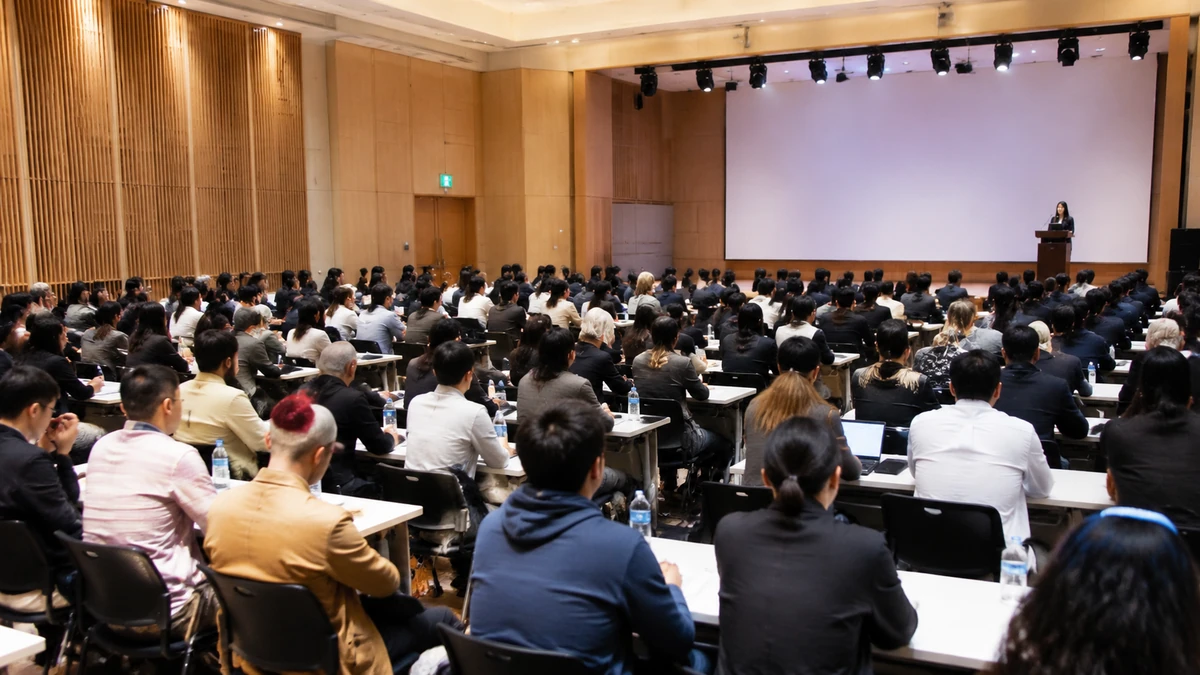
SEOUL — South Korea this week is hosting a small but unusually competitive international program that says a great deal about how the country wants to be seen on the world stage. From Tuesday through Saturday, South Korea’s Education Ministry and the Asia-Pacific Centre of Education for International Understanding, a UNESCO-affiliated institute based in Seoul, are holding the 2026 Global Citizenship Education Youth Leadership Workshop.
On paper, the program is modest: 40 young leaders from 30 countries, gathered in Seoul for several days of discussion, training and hands-on exercises. But the numbers behind the event tell a bigger story. Organizers said 2,181 applicants from 117 countries sought a place in the workshop, making the final cohort not only highly selective but broadly international in a way many youth programs aspire to and few achieve.
That matters beyond the mechanics of admissions. In an era when global cooperation can feel abstract, frayed or hostage to political polarization, demand for this program suggests that the idea of “global citizenship education” still resonates with young people across borders. The phrase may sound like policy jargon to some Americans, but at its core it refers to teaching people to understand how their lives connect to others around the world — across issues such as inequality, conflict, migration, climate change, media literacy and human rights — and to act responsibly within those shared systems.
In the United States, a reader might compare it loosely to a blend of civic education, international studies, conflict resolution training and leadership development. But South Korea’s version, at least in this workshop, comes with a notable twist: It is not built only around lectures or academic theory. Instead, organizers are asking participants to think through peacebuilding and social change using media, storytelling and the arts as practical tools.
That framing is significant in Seoul, a city already familiar to global audiences as a capital of K-pop, film, fashion and digital culture. South Korea is no stranger to exporting culture. What is different here is the effort to convert cultural fluency into a public-facing educational model — one that treats creative expression not merely as entertainment, but as a method for dialogue, empathy and civic engagement.
The result is that a workshop that might otherwise have passed as a niche education event now serves as something larger: a test case for whether South Korea can move from being a country consumed globally for its cultural products to one recognized as a place where new models of international learning are being built.
Why this small workshop is drawing outsized attention
The headline numbers are hard to ignore. More than 2,100 applicants from 117 countries competed for 40 spots. That kind of demand gives the program a level of legitimacy that official statements alone cannot manufacture. In international education, broad interest often says more than attendance itself. A room of 40 people can still represent a much larger hunger for exchange, training and cross-border problem-solving.
For American readers, it may help to think of the workshop the way elite global fellowships or leadership institutes are often understood in the United States: their influence comes not from crowd size, but from selectivity, network effects and the possibility that participants carry the experience back into their own communities. The point is less the event itself than the multiplying effect after it ends.
South Korean officials appear to understand that dynamic. By highlighting both the number of countries represented and the small number of finalists, they are underscoring that Seoul has become a destination not just for tourism or pop culture fandom, but for values-based international learning. That is a different kind of soft power.
Soft power, a term popularized by the late American political scientist Joseph Nye, describes the ability of a country to shape preferences and perceptions through attraction rather than coercion. South Korea has spent years building that influence through music, television dramas, cinema, beauty brands and technology. Groups like BTS and BLACKPINK, films such as “Parasite,” and series like “Squid Game” helped introduce millions of people to Korean language, fashion and social themes. But governments and institutions increasingly seem interested in broadening that appeal beyond cultural consumption.
This workshop is one example of that shift. It presents South Korea not merely as the source of globally marketable culture, but as a host and organizer of civic-minded international exchange. The distinction matters. One is about what the world buys, streams or watches from Korea. The other is about whether the world comes to Korea to learn, debate and build collaborative frameworks for public life.
That may sound like a subtle difference, but in diplomatic terms it is substantial. Countries are often judged not only by their products and politics, but by whether they can convene people around shared problems. By gathering young leaders in Seoul to discuss peace and social change, South Korea is trying to show that it can do that too.
What “global citizenship education” means in practice
Outside education circles, “global citizenship education” can sound lofty, vague or idealistic. In plain terms, it is an approach that asks how schools and public institutions can prepare people to navigate an interconnected world responsibly. UNESCO has promoted the concept for years as a way to encourage critical thinking, respect for diversity, human rights awareness and participation in solving transnational problems.
In the American context, the idea overlaps with familiar debates over civics, media literacy and what kind of public education best prepares students for democracy. But it also pushes beyond national boundaries. It asks students not only what obligations they have within a city, state or nation, but what responsibilities come with living in a world where a war, a misinformation campaign, a climate event or a migration crisis in one region can ripple across many others.
That framework has particular relevance for younger generations, who are growing up in a digital environment where identity, politics and public discourse routinely cross borders. A teenager in Chicago, Nairobi, Manila or São Paulo may be shaped by many of the same social platforms, online narratives and visual languages, even if their institutions and daily realities differ sharply. Programs like the one in Seoul are designed around that fact.
The workshop’s organizers say this year’s training is focused on helping participants use media and the arts to drive peace and social change. That is more than a stylistic choice. It reflects an understanding that in the 21st century, persuasion does not happen only in classrooms, legislatures or diplomatic chambers. It also happens through video, imagery, performance, music, narrative framing and public storytelling.
For many young people, especially those active in civic or advocacy spaces, culture is not separate from politics. A documentary short can shift attitudes. A social media campaign can mobilize support. A mural, performance or digital artwork can make social conflict legible in ways policy papers cannot. Organizers in Seoul appear to be building the workshop around that reality: If young leaders are going to work on peace, justice or social cohesion, they need tools that speak to contemporary public life.
That emphasis also aligns with South Korea’s own strengths. Few countries have developed such a globally recognizable cultural ecosystem in so short a period. By rooting leadership training in media and artistic expression, the workshop connects international education to an area where Korea has both experience and credibility.
From lectures to role-play: training for conflict as it actually feels
One of the clearest signs that the Seoul program is aiming for something more practical than ceremonial exchange is its reliance on role-play activities centered on social conflict and possible solutions. That may seem like a small curricular detail, but it is arguably one of the most important parts of the workshop.
Role-play pushes participants beyond abstract agreement. It forces them to inhabit positions, negotiate tensions and confront the messy reality that social problems rarely come with clean moral lines or easy consensus. In that sense, it resembles the kind of simulation exercises used in law schools, diplomatic training programs and conflict-resolution workshops in the United States and elsewhere.
For global citizenship education, that matters. It is relatively easy to say young people should care about peace, inclusion or dialogue. It is much harder to train them in the emotional and rhetorical skills required when values collide, when communities are divided or when people bring unequal power and competing narratives into the same room. Role-play offers a way to rehearse those situations before participants face them in real institutions or movements.
The choice also reflects a sobering reality about the modern world: Many of today’s most urgent challenges are not just disputes between countries. They are also conflicts within societies — over identity, memory, race, migration, gender, religion, class and information itself. In that environment, a youth leader needs more than idealism. They need the ability to interpret competing claims, communicate across difference and imagine alternatives without pretending that conflict can simply be wished away.
In practical terms, that means learning how to listen without surrendering critical judgment, how to frame arguments for different audiences, and how to recognize when symbolic expression can open a conversation that direct political language might shut down. These are not flashy skills, but they are foundational ones for anyone trying to lead in a fractured civic landscape.
There is also a deeper symbolic point here. A workshop built around participation rather than passive listening sends a message about what international cooperation should look like. Too often, youth summits and leadership forums become little more than networking stages, heavy on branding and light on substance. By requiring participants to engage directly in scenarios involving conflict and alternatives, the Seoul program suggests that meaningful international learning requires more than attendance. It requires agency.
That may be one reason the workshop has attracted such interest. Younger generations are often invited to speak about change, but less often given structured opportunities to practice how change is negotiated.
Seoul’s role in the changing map of global influence
The location itself is part of the story. International workshops can be held almost anywhere. But where they are held sends a message about who gets to convene the conversation and what kinds of places are seen as credible sites of global problem-solving.
Seoul already occupies a distinctive place in the American imagination. For some, it is associated with K-pop concerts, Korean dramas, beauty trends and a hyperconnected urban culture. For others, it is understood through geopolitics: a democratic ally living under the shadow of North Korea, balancing ties with Washington, Beijing and Tokyo while managing its own domestic pressures. Increasingly, it is also recognized as a center of technological innovation and design.
This workshop adds another layer to that picture. It suggests Seoul is trying to position itself as a meeting ground for international civic education — a place where young people do not just consume Korean culture, but participate in a Korean-hosted framework for discussing public values. That is a meaningful evolution.
It also complicates a common American habit of viewing Asian countries through narrow lenses: Japan as technology and tradition, China as economic and strategic rival, South Korea as entertainment powerhouse and security partner. Events like this resist those shortcuts. They point to an Asia in which educational institutions, cultural platforms and public-interest organizations are increasingly shaping international discourse alongside governments and corporations.
For South Korea, this is strategically useful. The country’s global profile has grown dramatically over the past decade, but much of that attention still clusters around a few familiar storylines: music, film, consumer brands and North Korea-related tensions. A youth leadership workshop on peace and social change does not have the instant celebrity appeal of a chart-topping band, but it broadens the narrative of what Korea contributes to the world.
That may prove especially important as countries compete not just for markets and military influence, but for legitimacy in setting agendas around education, ethics and the future of democratic life. If Seoul can become known as a place where global youth gather to work through those issues, it gains a form of influence that is quieter than pop culture but potentially more durable.
There is a domestic dimension to this too. South Korea has its own intense debates over education, inequality, generational strain and social cohesion. Hosting a workshop on global citizenship does not place the country above those challenges. But it does show an ambition to engage them within a broader international framework rather than retreat into purely national terms.
A Korean model of cooperation, scaled through youth
The program also highlights a particular style of international cooperation that South Korea has increasingly tried to project: practical, institutional and partnership-driven rather than grandiose. The workshop is being run jointly by the Education Ministry and the Asia-Pacific Centre of Education for International Understanding, which works in association with UNESCO. That combination matters because it joins state backing with an organization explicitly oriented toward cross-border understanding.
In other words, this is not simply a government public-relations event, nor is it an isolated nonprofit gathering with limited institutional reach. It sits at the intersection of public authority, international educational norms and youth-led practice. That makes it a useful snapshot of how middle powers like South Korea often operate internationally: by building platforms, convening networks and offering workable formats for collaboration.
For Americans used to seeing international affairs framed through summit diplomacy, military alliances or trade negotiations, this kind of cooperation can look small. But in many ways it is the connective tissue that larger relationships depend on. Programs that bring together younger leaders across countries often become pipelines for future educators, civil society figures, public servants, journalists and community organizers.
The workshop’s design reinforces that practical orientation. Participants are not simply sitting through speeches from senior officials. They are being asked to create, respond, perform and problem-solve. That structure reflects an understanding that international cooperation works best when people are given a role in shaping it rather than just witnessing it.
There is also something distinctly contemporary about the workshop’s focus on media and art. Traditional diplomacy often privileges formal language, technical expertise and institutional hierarchy. Young people, by contrast, frequently organize through visual culture, networked storytelling and collaborative performance. By taking those forms seriously, organizers are acknowledging that the grammar of public life has changed.
South Korea is particularly well positioned to make that case because its own global rise has been inseparable from mastery of media ecosystems. Yet the workshop seems to argue that cultural power can do more than sell songs or series. It can be channeled toward peace education, public dialogue and social imagination. Whether that model can be replicated elsewhere remains an open question, but Seoul is making an argument for it now.
What American readers should take from this moment
For readers in the United States, the immediate temptation may be to file this under the broad category of international youth exchange and move on. But that would miss the larger significance. What is happening in Seoul is part of a broader contest over who gets to define the values, methods and meeting places of the next generation’s public life.
At a time when civic trust is under strain in many democracies, when online platforms reward outrage more easily than understanding, and when global problems routinely outpace the institutions meant to address them, workshops like this can seem either hopeful or insufficient. In truth, they are both. A five-day training session will not solve geopolitical conflict or heal social division. But it can reveal where energy is building, what younger leaders want to learn and which countries are stepping forward to host those conversations.
In this case, South Korea is doing more than opening a venue. It is presenting a proposition: that media and art are not secondary to civic life, but central to how peace and social change are imagined; that youth leadership must be practiced, not just praised; and that Seoul can serve as a credible crossroads for those efforts.
There is a lesson here for American institutions as well. The United States has long invested in exchange programs, leadership fellowships and civic education initiatives, yet it too is grappling with polarization, disinformation and disengagement among younger citizens. The Seoul workshop’s emphasis on role-play, creativity and transnational responsibility suggests one possible path forward: treat civic learning less as rote instruction and more as lived rehearsal for a complex, mediated world.
That does not mean importing another country’s model wholesale. Context matters, and every society brings its own political culture, educational traditions and social pressures. But it does mean recognizing that useful ideas about democratic practice and public education are emerging from many directions, including places Americans may still think of primarily through pop culture or security headlines.
By the end of this week, the 40 participants in Seoul will return home carrying whatever insights, relationships and methods the workshop gave them. The event itself will be brief. Its afterlife may be longer. If even a fraction of those participants use what they learned to shape classrooms, media projects, community initiatives or cross-border collaborations, then this small gathering will have functioned as something more than a conference. It will have been an incubator.
And for South Korea, that may be the point. The country that has already shown it can capture the world’s attention through entertainment is now testing whether it can also help organize the world’s conversations about coexistence, conflict and common purpose. In Seoul this week, that ambition is taking form not on a concert stage or a movie screen, but in a classroom — one filled with young people trying to imagine how to lead across borders.
Comments
Post a Comment