Kang Min-ji posts season-best finish in Michigan, offering a timely boost for South Korea’s LPGA pipeline
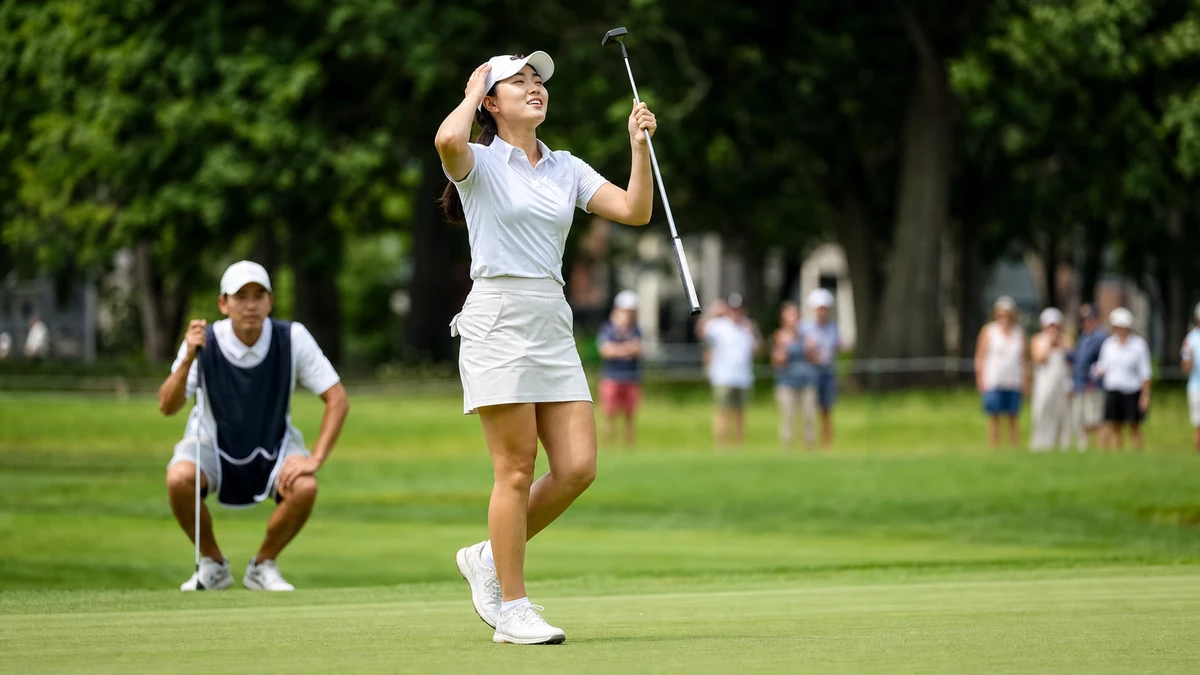
A strong week in Michigan becomes a turning point
For much of the LPGA season, results can blur together: a top-25 here, a made cut there, a leaderboard cameo that disappears by Sunday afternoon. Then there are the weeks that feel different, the ones that suggest a player may be shifting from simply hanging around to becoming a factor. South Korea’s Kang Min-ji delivered one of those weeks at the Meijer LPGA Classic in Belmont, Michigan, finishing tied for fifth with a 14-under-par total of 274 and recording her best result of the season.
On paper, tied for fifth is not a victory, and in a sport that often reserves the brightest spotlight for the player holding the trophy, it can be easy to overlook. But context matters. Kang entered the tournament with her best finish this season being a tie for ninth at the Riviera Maya Open in April. Her climb in Michigan, punctuated by a final-round surge, represented more than a statistical improvement. It offered a clear signal that her game is moving in the right direction at a time when the LPGA calendar is turning toward bigger stages and heavier scrutiny.
That matters in South Korea, where women’s golf is not a niche pursuit but a deeply followed sport with a long track record of producing world-class players. To many American fans, the Korean presence on LPGA leaderboards may already feel familiar because of stars such as Inbee Park, Ko Jin-young and Kim Sei-young, along with earlier trailblazers like Pak Se-ri, whose influence on Korean golf is often compared to the cultural force of a pioneer who changes what a generation believes is possible. When another Korean player begins to build momentum, it is not viewed simply as one athlete having a good week. It is often seen as part of a broader tradition of excellence in one of the most competitive talent pipelines in women’s sports.
Kang’s performance in Michigan fit squarely into that tradition. At Blythefield Country Club, a venue that annually produces low scores but rarely gives away anything without sustained precision, she put together four rounds of controlled golf and then saved her most dynamic stretch for Sunday. In a tournament decided by narrow margins, that late push did not get her into a playoff. It did, however, place her firmly in the conversation entering the next major and gave both Korean fans and international observers a reason to pay closer attention.
A Sunday charge that changed the look of the leaderboard
The most eye-catching part of Kang’s week came in the final round, when she posted a 6-under 66 built on one eagle, five birdies and just one bogey. In golf terms, that is the kind of closing burst that can transform a solid tournament into a memorable one. It also says something about temperament. Sunday on tour is not only a test of ball-striking and putting; it is a test of nerve, rhythm and decision-making when the leaderboard is moving in real time and every aggressive play carries consequences.
Kang handled that environment well. The eagle gave her round immediate force, and the five birdies suggested a player willing to attack rather than simply protect position. That distinction is important. Plenty of golfers play carefully on the final day, especially if a top-10 finish is already within reach. Kang did the opposite. She chased opportunities, made up ground and showed the kind of late-round conviction that coaches and caddies tend to value because it travels well from one event to the next.
Her lone bogey did little to disrupt the larger rhythm of the day. That, too, matters. On a Sunday round with so much movement, mistakes can multiply quickly if a player starts pressing after a dropped shot. Kang avoided that spiral. Instead, she offset the mistake with enough scoring to maintain momentum, which is often the difference between a good finish and a genuinely noteworthy one.
For American golf audiences used to following charge-filled Sundays at events like the U.S. Women’s Open or the majors on the men’s side, Kang’s closing 66 fits a familiar pattern: the player who may not begin the day as the central story but forces her way onto television graphics and into post-round analysis by going low when the pressure is highest. She did not win the tournament, but her round changed the conversation around her week. Rather than leaving Michigan with a respectable but quiet finish, she left with a performance that raised the obvious question of what might come next.
Why a top-five finish carries extra weight for a Korean player
To understand why Kang’s result resonated beyond a single tournament, it helps to understand the place women’s golf occupies in South Korea. The country has spent decades building one of the strongest development systems in the sport. Junior competition is intense. Technical standards are high. Success on international tours is followed closely by fans and media alike. When Korean players contend in the United States, they are carrying not only personal ambitions but also the expectations of an audience that has seen many predecessors thrive on the same stage.
That cultural backdrop can be difficult for American readers to fully appreciate because the sports ecosystem is different. In the United States, women’s golf competes for attention with the NFL, NBA, college football, baseball and a packed calendar of other events. In South Korea, LPGA storylines involving Korean players often land with a different kind of intensity. A strong finish is news. A late-round surge is dissected. Signs of confidence ahead of a major are treated as meaningful clues about form and trajectory.
Kang’s tie for fifth therefore was not simply another entry on a crowded tour results page. It was evidence that a Korean player had found a stronger gear in the middle of the season on perhaps the deepest women’s golf circuit in the world. The LPGA remains one of the most international tours in sports, with contenders arriving from Asia, Europe, Australia and North America each week. To rise near the top in that environment requires more than name recognition. It demands consistency over four rounds, comfort on American courses, effective travel management and enough mental resilience to withstand constant comparison against elite peers.
Kang’s finish alongside England’s Cassie Porter also underscored the global nature of the leaderboard. Ahead of them were players from Japan, England, Taiwan and China. For viewers in the United States, where major sports conversations are often filtered through domestic rivalries, the LPGA offers something more expansive: a genuinely international weekly competition in which national development systems, coaching philosophies and playing styles meet in direct comparison. Kang’s showing was a reminder that South Korea remains one of the tour’s defining forces, even as the competitive map continues to broaden.
That message carries weight because Korean women’s golf is no longer judged solely by whether it produces one transcendent superstar at a time. It is judged by depth. By that standard, Kang’s week was significant. A player posting a season-best top-five finish in June suggests not only individual progress, but continued health in a broader Korean pipeline that has helped shape the modern LPGA.
The winner was Miyu Yamashita, but the leaderboard told a larger story
The tournament itself delivered the kind of finish that makes the Meijer LPGA Classic a useful tuneup before a major. Japan’s Miyu Yamashita won after reaching 17 under and then defeating Lottie Woad in a playoff on the par-5 18th, where Yamashita made birdie and Woad settled for par. It was a tightly packed event in which small swings decided big outcomes, and Kang finished only three shots behind the winner.
That gap is important to frame correctly. Three shots over 72 holes is real distance; it is not the same as losing by one stroke because of a lip-out on the last green. But in professional golf, three shots can also feel very close, especially when a player closes with a 66 and demonstrates the ability to produce birdies in bunches. Kang was not an afterthought on the final leaderboard. She was within range of the leaders in a tournament where one or two different moments could have reshuffled the top positions dramatically.
The final standings reflected just how compressed the race was. Yamashita and Woad finished at 17 under. Hsu Wei-ling and Yin Ruoning followed at 15 under. Kang and Porter were one more shot back at 14 under. That is not a leaderboard with a runaway winner and a distant supporting cast. It is a leaderboard that highlights how thin the margin can be between lifting a trophy and walking away with a strong but quieter accomplishment.
For Kang, the significance of the week lies in that proximity. She was not merely the beneficiary of others fading. She played her way into the upper tier of a competitive field and did so by accelerating on the final day. In other words, the result was active rather than accidental. In sports coverage, especially in golf, that distinction matters because it shapes how sustainable a performance looks. A player who backs into a finish may not be signaling much. A player who goes 6 under on Sunday and finishes close to the winner is usually telling you something about her current form.
And in this case, that message extends beyond Kang herself. Yamashita’s victory and Kang’s top-five finish together reinforced a broader truth about women’s golf in 2024 and beyond: Asian players remain central to the sport’s balance of power. That has long been true, but each tournament offers a fresh version of the same story, one in which excellence is geographically diverse and increasingly difficult for any single country to monopolize.
Confidence, in golf, often shows up before it can be measured
After the round, Kang said she gained confidence from her strong showing at the U.S. Women’s Open, where she tied for 19th, and that she is satisfied with her current play. It was a restrained comment, the kind professional golfers often make when trying to avoid sweeping declarations after one good week. But understated remarks can still reveal a lot.
Confidence in golf is a slippery concept. It is not visible in the way speed is visible in track or power is visible in baseball. Yet players talk about it constantly because they feel its effects everywhere: on the tee when choosing between caution and aggression, on approach shots when deciding whether to attack a tucked pin, and on the greens when committing to a read instead of steering the ball defensively. When confidence is present, decisions tend to come faster and swings often look freer. When it is absent, even simple shots can feel crowded with doubt.
Kang’s recent results suggest that her confidence is becoming operational rather than theoretical. A tie for 19th at a major is not merely respectable; it is earned against one of the strongest and most pressure-filled fields in women’s golf. Following that with a season-best tie for fifth at the Meijer LPGA Classic gives substance to her post-round comments. She is not claiming momentum out of thin air. She has results to support the feeling.
For American readers, a useful comparison may be how athletes in other sports talk about rhythm or seeing the game slow down. A quarterback says reads are becoming clearer. A baseball hitter says the ball looks bigger. Golfers rarely phrase it that way, but the idea is similar. Kang’s closing round in Michigan suggested a player whose choices were sharp and whose trust in her game held up under Sunday pressure.
There is still reason for caution, of course. Golf resists linear storytelling. One strong week does not guarantee another. Courses change, weather shifts, putting surfaces vary and a player who feels comfortable in Michigan may face an entirely different challenge at the next stop. But the combination of a top-20 finish at the U.S. Women’s Open and a top-five finish at the Meijer LPGA Classic is enough to justify a new level of attention. For Kang, confidence is no longer just an interview theme. It is beginning to appear in the results.
A timely signal before the KPMG Women’s PGA Championship
The timing of Kang’s performance may be as important as the finish itself. The LPGA now turns toward the KPMG Women’s PGA Championship, one of the five majors in women’s golf and an event that places every part of a player’s game under harsher examination. Kang said she plans to prepare the way she always does, by practicing and monitoring her condition rather than making oversized public promises. That answer may sound routine, but it reflects a professional approach familiar to anyone who follows elite golf closely. Players often lean on repetition and process because the stakes of major week can distort everything else.
In Korean sports culture, public comments like these are often closely read for signs of confidence, humility and discipline. American audiences may recognize a similar dynamic in the way star athletes are judged not only by what they do, but by how they frame expectations before a high-profile event. Kang’s remarks were measured, and that restraint fits the moment. She has reason to feel optimistic, but not enough reason to become reckless in her outlook.
From a performance standpoint, the encouraging sign is obvious: scoring. A player coming off a final-round eagle and five birdies enters the next week with tangible proof that low numbers are available when opportunities appear. That does not mean the same formula will translate directly to a major championship setup, which is typically more demanding and less forgiving than a regular tour stop. Still, entering a major after a season-best finish is far preferable to arriving while searching for answers.
The mental benefit may be just as valuable. Major championships can magnify uncertainty. Players who are struggling often spend practice rounds searching for technical fixes when what they really need is reassurance. Kang appears to have that reassurance now. Her recent run does not guarantee contention, but it does suggest that she will arrive with evidence that her game can hold up against elite fields on big stages.
For Korean fans, that makes the next week especially intriguing. The nation’s relationship with women’s golf has been built on moments exactly like this: a player catches form, confidence builds, and suddenly another name joins the cluster of contenders Americans are told to watch on a major weekend. Kang is not yet at the level where casual U.S. sports fans would instantly recognize her name. A performance like this is how that begins to change.
What Kang’s rise says about the state of women’s golf
If there is a larger takeaway from Kang’s week in Michigan, it is that women’s golf continues to reward depth, patience and international excellence. The sport does not always produce easy narratives. Sometimes the biggest story is a victory. Sometimes it is the player who did not win but left with more momentum than anyone else near the top of the leaderboard. Kang may fit the second category this week.
Her tie for fifth was meaningful because it combined consistency across four rounds with visible late aggression, because it improved on her previous season-best result, and because it arrived after a strong showing at the U.S. Women’s Open. Those are the building blocks of a midseason shift from promise to relevance. In a tour environment packed with proven champions and rising talents, that is no small achievement.
It also served as a reminder that South Korea remains deeply woven into the story of the LPGA. Even as the tour grows more geographically diverse, Korean players continue to shape leaderboards, influence competitive standards and draw passionate followings at home and abroad. To American audiences, that legacy can sometimes seem abstract if they encounter it only in flashes on weekend broadcasts. Results like Kang’s make it more concrete. They show how the system keeps producing athletes capable of making noise on one of the sport’s toughest stages.
None of this means Kang’s season has been transformed into a certainty. Golf rarely allows such clean conclusions. But the evidence from Michigan is difficult to dismiss. She finished just three shots out of first place. She closed with 66. She said her confidence has grown. And she heads into a major with the best finish of her year on her resume.
For a player trying to carve out a bigger place in the LPGA conversation, that is a substantial development. For Korean golf fans, it is a welcome sign that another player may be finding her stride. And for American readers watching the increasingly global landscape of women’s golf, it is a useful reminder that some of the most interesting stories on tour are not only about who won, but about who is coming fast.
Comments
Post a Comment