LG’s latest TV launch is about more than a prettier screen
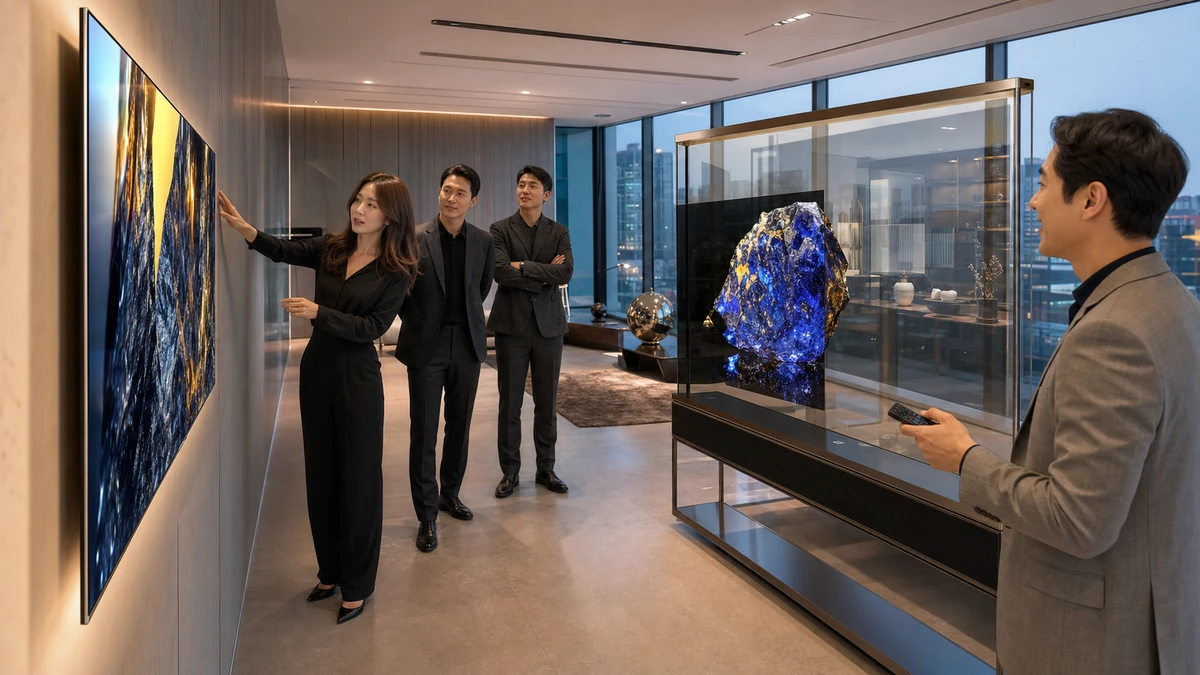
LG Electronics is rolling out a new pair of ultra-premium televisions that say a lot about where the high-end TV market is headed — and about how South Korea’s consumer tech giants are trying to stay ahead in a business they helped define. The company said it will begin launching the new models in South Korea before expanding to global markets, putting the spotlight on two marquee products: the LG Signature OLED W, an ultra-thin “wallpaper” TV that sits nearly flush against a wall, and the LG Signature OLED T, a transparent television that can switch between a conventional black screen and a see-through display.
For American consumers, the timing is notable. In the United States, the TV business has increasingly become a contest not just over screen size, but over what a television is supposed to be inside the home. For years, manufacturers sold bigger panels, sharper resolution and brighter images. Those battles are not over, but the category is clearly evolving. A television is now also pitched as a design object, a gaming monitor, a smart-home hub and, increasingly, an AI-powered media processor. LG’s latest announcement is a clear attempt to widen the definition of “premium” beyond raw picture quality.
That matters because LG is not a niche player experimenting from the sidelines. It is one of South Korea’s flagship electronics companies and a central force in the global OLED business. In South Korea, conglomerates such as LG, Samsung and Hyundai are often described as “chaebol,” a term Americans may not hear often but can think of as family-influenced industrial giants with sprawling influence across the national economy. When a company like LG puts its prestige behind a product line, it is rarely just about one gadget. It is a statement about where the company believes the next phase of consumer technology is going.
According to the company, these new televisions combine several threads that have been building in premium home entertainment: exceptionally thin hardware, wireless transmission for high-resolution content, AI-based image and sound processing, anti-reflective display technology and, in the case of the transparent model, a more radical rethink of what a screen should look like when it is not in active use. Seen together, the products amount to a strategic message: after years of dominating OLED, LG wants to remind buyers, investors and rivals that it still intends to set the terms of the market.
A TV as thin as a notebook, built to disappear into the room
The more immediately practical of the two new sets may be the LG Signature OLED W. LG says the television is about 0.9 centimeters thick — roughly a third of an inch, or about the thickness of a standard wooden pencil. That number alone helps explain the product’s appeal. Flat-screen TVs have been slim for years, but most still read visually as appliances: black rectangles that hang on the wall or sit on a console, surrounded by visible depth, ports, brackets and hardware. LG’s design goal here is different. The company wants the television to look less like a device placed in the room and more like part of the wall itself.
To achieve that, LG says it slimmed down not only the panel but also key components including the power board, main board and speakers. The effect is what the industry has long called a wallpaper TV — a screen that lies close enough to the wall that it softens the boundary between furniture, architecture and display. In American terms, this is a little like the logic behind built-in kitchen appliances or flush-mounted fireplaces: the product becomes easier to live with because it recedes visually, even while remaining a focal point.
That design choice responds to a familiar tension in the U.S. market. Large televisions are widely popular, but not everyone wants the living room dominated by what amounts to a giant dark slab. The bigger the screen gets, the more it can overwhelm the space, especially in urban apartments, open-plan homes or design-conscious interiors. An ultra-thin set does not make a 77-inch or 83-inch television physically small, but it can make that same screen feel less bulky and less intrusive. In that sense, LG is not just selling a panel; it is selling a version of domestic life in which technology feels more integrated and less cluttered.
This kind of pitch has particular resonance in South Korea, where apartment living, compact floor plans and carefully curated interiors shape how electronics are used and displayed. Korean consumer tech companies often design products with these constraints in mind, then export those ideas globally. American buyers may know the aesthetic from luxury condos, boutique hotels or minimalist home-renovation shows: clean walls, hidden wiring, multifunctional rooms and devices that blend in until they are needed. The OLED W fits squarely into that vision.
The real competition now includes wireless performance and invisible computing
If the ultra-thin design is the most visible change, the less visible engineering may be just as important. LG says the OLED W has received a certification from the German testing and certification organization TUV Rheinland for “wireless low latency vision.” In practical terms, the company says the television can transmit 4K video at a 165Hz refresh rate in real time without quality loss or delay.
That specification speaks directly to a shift underway in premium televisions. Consumers once judged high-end sets mostly on the panel itself: black levels, color, brightness and resolution. Those still matter, especially in OLED, which has built its reputation on rich contrast and deep blacks. But as TVs become central devices for streaming, sports, console gaming and home theater, signal transmission has become part of the product experience. Lag, compression artifacts, sync issues and cable-management headaches can all undermine the value of an expensive set.
For American buyers, the 165Hz figure will stand out most to gamers and sports fans. A higher refresh rate can help fast-moving content look smoother and more responsive, especially on next-generation gaming hardware or PC setups pushing high frame rates. Whether most households need 4K at 165Hz is another question. Many do not. But in the top tier of the market, performance ceilings matter because they signal headroom. Luxury buyers are often purchasing not just for current use, but for assurance that the product will keep up with future content formats and use cases.
The AI processor is another major part of the pitch. LG says the new models use its third-generation Alpha 11 processor, with a neural processing unit, or NPU, that is 5.6 times more powerful than before. For everyday viewers, “NPU” may sound like one more acronym in a sea of Silicon Valley jargon, but the basic concept is straightforward. It is a specialized chip component designed to handle AI-related calculations more efficiently. In a television, that means analyzing incoming picture and audio data and adjusting it in ways meant to improve sharpness, tone, contrast, motion and sound based on the scene and viewing environment.
What is striking here is that LG is emphasizing not a flashy AI assistant or chatbot-style feature, but the hidden computing power inside the set. That is a subtle but important distinction. In the U.S. consumer market, “AI” is often attached to voice tools, recommendation systems or splashy marketing language. LG’s message is somewhat different: the future of the TV may depend less on a talking interface and more on the quiet processing work happening under the hood. In other words, the screen is becoming a computing platform in its own right.
LG also says it has cut light reflection by about half through an ultra-low-reflection display technology. That may sound less glamorous than a transparent screen or an AI chip, but it addresses one of the most common real-world frustrations with premium televisions. A gorgeous picture in a dim showroom can look far less impressive in a bright living room with windows, lamps and overhead lighting. Reducing glare is one of those improvements consumers notice immediately, even if they never mention it by name. In the battle for high-end buyers, these kinds of quality-of-life upgrades can be as important as headline specs.
The transparent TV is expensive, impractical and exactly the point
The more provocative product is the LG Signature OLED T, a transparent television that can switch by remote control between a black screen mode and a transparent screen mode. In black screen mode, LG says the set displays content in 4K. In transparent mode, viewers can see the space behind the screen, turning the display into something closer to a glass-like architectural feature than a conventional TV.
Its price makes clear that this is not a mass-market product, at least not now. LG says the set will be priced at 100 million won, or roughly tens of thousands of U.S. dollars depending on exchange rates — well beyond the reach of ordinary households. That places the OLED T in a category Americans would recognize from exotic concept cars, luxury kitchen suites or boutique audio systems: products meant to demonstrate what is technologically possible and to elevate brand prestige, even if unit sales remain limited.
Still, that does not make the transparent TV irrelevant. Quite the opposite. High-priced experimental products often serve as signals for where design and engineering may be heading. Flat-panel TVs themselves were once extravagantly expensive. So were OLED sets. Features that begin as prestige proofs can gradually work their way down into broader product lines over time. Whether transparent displays do that is still uncertain, but the possibility is part of the commercial logic.
More immediately, the transparent television raises an interesting design question: Does a screen always have to block the room? For decades, the default television has been a black rectangle, even when turned off. That black rectangle shapes furniture placement, wall design and how people imagine a living room. A transparent display suggests a different model. Instead of interrupting the space, the TV can, at least part of the time, blend into it. That could have implications far beyond luxury homes. Hotels, retail spaces, lobbies, museums and upscale commercial interiors may be more natural settings for a transparent display than a suburban den.
In that sense, the OLED T is less a direct successor to the family TV and more an argument about the future of display surfaces. It imagines a world in which screens no longer behave like opaque boxes inserted into rooms, but like flexible visual layers that can appear and recede as needed. Americans may have seen versions of this idea in science-fiction films, high-end trade-show demos or concept homes at events like CES. LG is trying to move that vision, at least partially, from spectacle to shipping product.
That said, the company is careful not to overstate what has been proven. The transparent TV is a technological and branding milestone, but it is not yet evidence of a mass shift in consumer behavior. The question is not whether the product is impressive. It is whether the use cases become compelling enough, and the pricing comes down enough, to turn novelty into a category. For now, the set functions as a halo product — the kind that tells the market a company is capable of doing what competitors cannot, or at least have not done at scale.
Why LG is making this move now
The launch also needs to be understood in the context of market leadership and competitive pressure. According to market research firm Omdia, LG led the global OLED TV market in the first quarter with a 50.5% share by shipments and a 47.7% share by revenue. In North America, the company said its share topped half the market on both measures, reaching 52.8% by shipments and 50.1% by revenue.
Those are strong numbers, but leadership creates its own anxieties. The company that already holds the lead has the most to lose if the market begins to see OLED as mature or interchangeable. Once that happens, premium pricing gets harder to defend. Buyers start asking a dangerous question: if every high-end TV looks broadly similar on paper, why pay more? That is especially true in a global market where Chinese manufacturers are increasingly aggressive on price and where Korean rival Samsung continues to press its own premium display strategy.
So LG’s new product lineup reads partly as a defense of its turf. By stressing thickness, wireless transmission, anti-reflection, AI processing and transparency all at once, the company is making the case that the next stage of premium TV competition cannot be reduced to one specification. It is trying to shift the conversation from panel quality alone to a broader ecosystem of experience: installation, interior design, glare reduction, gaming responsiveness, signal stability and computational enhancement.
That strategy mirrors what has happened in other mature tech categories. Smartphones, for instance, are no longer sold only on processor speed or camera megapixels. They are sold on ecosystem, design, AI tools, battery management and lifestyle fit. The TV business appears to be moving in a similar direction. In that environment, companies need a story that explains not just why their picture is better, but why their version of the living room is better.
LG executive Park Hyoung-sei said the company would continue its leadership in the premium TV market through technology innovation only LG can deliver. Corporate language aside, the broader point is clear: this launch is meant as a reaffirmation of authority. It is LG telling the market that even after 13 consecutive years atop the OLED category, it does not plan to coast.
Why South Korea’s display industry still matters to the rest of the world
There is also a bigger international story here. For many Americans, South Korea is most visible globally through K-pop, Korean film and television, skincare and smartphones. But the country’s industrial influence runs much deeper. South Korea remains one of the world’s most consequential technology manufacturing powers, and display technology is one of the areas where it has long punched above its size. The global appeal of Korean consumer electronics is not just that they are stylish or trendy. It is that they often compress advances in semiconductors, software, manufacturing and design into products people use every day.
OLED televisions sit at the center of that strength. They are not just screens. They combine advanced panel manufacturing, image-processing chips, product engineering, industrial design and premium branding. That is why a TV launch from LG matters as more than a retail announcement. It offers a glimpse of how a Korean company sees the future of digital living spaces — and how it intends to compete with rivals from the U.S., Japan, China and elsewhere.
There is a familiar pattern in global consumer tech: expensive flagship products debut first, and the most practical innovations eventually spread outward. Early flat-screen TVs, smartphones and electric vehicles all followed some version of that path. Not every premium feature survives that journey. Some remain forever niche. But thin industrial design, better signal handling, glare reduction and smarter on-device processing all have a plausible route into broader adoption. Even the transparent-display concept, while still speculative for mainstream homes, could find a more immediate foothold in commercial architecture and luxury hospitality.
For American readers, then, the LG announcement is worth watching not because most households are about to buy a transparent television, but because it shows how the definition of the television itself is changing. In the past, the central question was how to make the best possible screen. Now it is also how to make the screen disappear when it should, dominate when it must and adapt intelligently to everything from ambient light to gaming demands. That is a more ambitious vision, and a more complicated one.
Whether consumers embrace all of it remains to be seen. Price will keep these specific products in rarefied territory for now. The OLED W is positioned for affluent buyers who care as much about installation and aesthetics as they do about image quality. The OLED T is closer to a technological statement piece. But together, they reveal the direction of travel. LG is betting that the future of premium television will be judged not only by what appears on the screen, but by how the screen behaves in space, how invisibly it processes information and how fully it integrates into modern life.
That may sound like a luxury-market concern, and for the moment it is. But the history of consumer electronics suggests otherwise. Today’s extravagance often becomes tomorrow’s expectation. A television that hangs like wallpaper, cuts glare in bright rooms, processes content more intelligently and maybe one day fades into transparency when not in use would once have sounded fanciful. LG’s wager is that such ideas are no longer science fiction or showroom theater. They are the next front in a battle for the living room — and South Korea intends to remain at the center of it.
Comments
Post a Comment