Prostate Cancer Becomes the Most Common Cancer Among Men in South Korea, Reflecting a Broader Shift in Aging and Prevention
A major change in South Korea’s cancer landscape
South Korea has a new leading cancer among men, and it is not one that has traditionally dominated public attention there. Prostate cancer, long discussed more prominently in countries such as the United States, overtook lung and stomach cancer in 2023 to become the most commonly diagnosed cancer among Korean men, according to newly released data cited by Yonhap News and compiled in a prostate cancer fact sheet by the Korean Urological Oncology Society.
The numbers are striking. South Korea recorded 23,928 new prostate cancer cases in 2023, accounting for 15 percent of all cancers diagnosed in men. That put it ahead of lung cancer at 14.5 percent and stomach cancer at 12.8 percent. Overall, prostate cancer ranked sixth among all cancers diagnosed in the country, not just among men.
For American readers, the shift may sound familiar. In the United States, prostate cancer has long been one of the most common cancers affecting men, and public awareness campaigns around PSA testing, treatment decisions and survivorship have been part of the health conversation for years. In South Korea, however, the rise of prostate cancer to the top of the men’s cancer list marks a more visible turning point in how the country is likely to think about male aging, screening and cancer prevention.
It also signals something bigger than a change in rankings. South Korea, like many advanced economies, is getting older. It is also living longer, expanding access to medical care and detecting more disease through screening and advanced imaging. Those trends can transform the cancer profile of a country. Illnesses once seen as secondary can become central public health concerns, especially when they are tied to age and can progress quietly before symptoms appear.
That is what makes this development important beyond South Korea. It is a case study in what happens when an aging society begins to confront a disease that often develops slowly, may be highly treatable when caught early, and requires both public awareness and health system capacity to manage well.
A decade of rapid growth raises new questions
The trend did not happen overnight. According to the fact sheet, South Korea had 11,095 newly diagnosed prostate cancer cases in 2014. By 2023, that figure had climbed to 23,928, an increase of roughly 2.2 times over 10 years.
That kind of increase matters even before experts debate all the reasons behind it. A sharp rise in diagnoses means more patients moving through every stage of care: initial testing, specialist consultations, biopsies, imaging, treatment decisions, follow-up appointments and monitoring for recurrence. For families, it means more conversations that many had not expected to have. For hospitals and clinics, it means more demand for physicians trained to interpret prostate cancer risk and guide patients through increasingly complex choices.
The Korean data cited in the summary do not assign a single cause for the increase, and responsible reporting requires caution here. A rise in cases can reflect several factors at once, including population aging, increased detection, changing screening habits, environmental factors, diet, smoking history and improved reporting. It does not automatically mean the disease has suddenly become more aggressive or that Korean men are uniquely vulnerable.
Still, the growth is significant enough to alter health priorities. In practical terms, prostate cancer is no longer a niche issue affecting a limited group of older men in South Korea. It is moving into the center of the country’s men’s health agenda. That can change how doctors talk to patients, how families think about preventive care and how policymakers weigh cancer screening access.
Americans have seen versions of this story before. Health issues once considered private, awkward or confined to old age often gain public urgency when the numbers reach a certain threshold. Colon cancer screening became a mainstream expectation over time. Breast cancer awareness moved from limited discussion to broad public engagement. Prostate cancer, with its mix of stigma, uncertainty and survivability, may now be reaching a similar moment in South Korea.
That shift is especially notable because the cancers prostate cancer overtook, lung and stomach cancer, carry their own deep public health history in Korea. Stomach cancer has long been closely watched in East Asia, where rates have historically been higher than in the United States. Lung cancer, meanwhile, has been a major concern in nearly every industrialized country. For prostate cancer to move ahead of both suggests a meaningful reordering of what male cancer risk looks like in contemporary Korea.
Why early screening matters, especially when there are no symptoms
One of the clearest messages in the new Korean data is that prostate cancer often must be confronted before a patient feels sick. The head of the Korean Urological Oncology Society, Jung Byung-chang, said regular screening during the symptom-free stage is a key factor that can determine the success of early detection and treatment.
That point is familiar to many American physicians and patients, but it can still be hard to act on anywhere in the world. People tend to seek medical help when something hurts, disrupts daily life or becomes impossible to ignore. Prostate cancer can defy that instinct. In some cases, there may be no obvious warning signs in the early stage. By the time symptoms appear, the disease may be further along.
That is why the Korean discussion is not simply about cancer counts. It is about a screening culture. It is about whether men are willing to discuss urinary symptoms, family history, age-related risk and blood tests with their doctors before they believe anything is wrong. It is also about whether a health system makes those conversations easy, affordable and routine.
In the United States, screening for prostate cancer has long involved debate, especially around the prostate-specific antigen, or PSA, blood test. Some doctors emphasize the lifesaving potential of early detection. Others caution that aggressive screening can lead to overdiagnosis, anxiety and unnecessary treatment for slow-growing cancers that might never have become life-threatening. Those debates have shaped U.S. medical guidelines for years.
South Korea may increasingly face similar questions, but the immediate signal from the new figures is simpler: more men are being diagnosed, and more attention to regular checkups is likely to follow. That does not mean every man needs the same test on the same schedule. It does mean symptom-free men, particularly as they age or if they have additional risk factors, may need earlier and more informed conversations with physicians.
The emphasis on “symptom-free stage” is especially important in a Korean context, where national health checkups are already a familiar part of adult life. South Korea has one of the more organized health screening cultures in the world. Many office workers undergo periodic examinations, and preventive care is often tied to broader public health systems. The new prostate cancer figures suggest that men’s cancer screening priorities within that culture may be shifting.
For readers outside Korea, the takeaway is straightforward: the rise in prostate cancer is not just a matter of disease burden. It is also a test of whether prevention systems can adapt quickly enough to meet a changing reality.
Smoking’s role broadens the conversation beyond lung disease
Another detail in the Korean data stands out because it complicates a common assumption. According to the summary, men with a smoking history of 30 years or more showed a prostate cancer incidence rate 5.3 times higher than that of early-stage smokers.
The figure, as presented, should be read carefully. It compares long-term smokers with people described as early smokers, and it does not, at least in the material summarized, provide all the additional context that epidemiologists would want before drawing broader conclusions. But even with that caution, the message is hard to miss: smoking may matter in prostate cancer risk discussions more than many people realize.
In the United States, anti-smoking campaigns have spent decades tying tobacco use to lung cancer, heart disease, stroke and chronic respiratory illness. Those links are well established in the public imagination. Prostate cancer usually does not sit at the center of that messaging. The Korean figures suggest that, at minimum, long-term smoking history should not be separated too neatly from men’s broader cancer risk profile.
That may be particularly relevant in a country where older generations of men historically had high smoking rates. South Korea has made significant progress in reducing smoking overall, especially through stronger regulations and public health campaigns. But as in many societies, the health consequences of long-term smoking can persist well after behavior changes at the population level.
For patients, this is the kind of information that can turn an abstract risk into a practical reason to talk with a doctor. A man who has smoked for decades may already understand he faces elevated risks for lung and cardiovascular disease. He may be less likely to connect that history to prostate health. The Korean data suggest that such a connection deserves attention.
At the same time, the summary appropriately avoids overgeneralizing. Risk is personal. Smoking is one factor, not the only factor, and no single statistic can substitute for individualized medical advice. But in journalism, numbers can still illuminate a shift in thinking. Here, the shift is from seeing prostate cancer as a narrowly age-related condition to seeing it as part of a broader men’s health picture shaped by life habits, access to care and preventive awareness.
Diagnosis is not just about screening; it is about capacity
If more men are being flagged for possible prostate cancer, what happens next becomes just as important as the initial screening itself. That is why a separate medical development mentioned alongside the cancer data offers useful context. A regional Korean medical institution, the Dongnam Institute of Radiological and Medical Sciences, said it ranked second nationally in PET/CT utilization by certain internal measures based on 2025 nuclear medicine statistics, taking into account hospital bed counts and equipment levels.
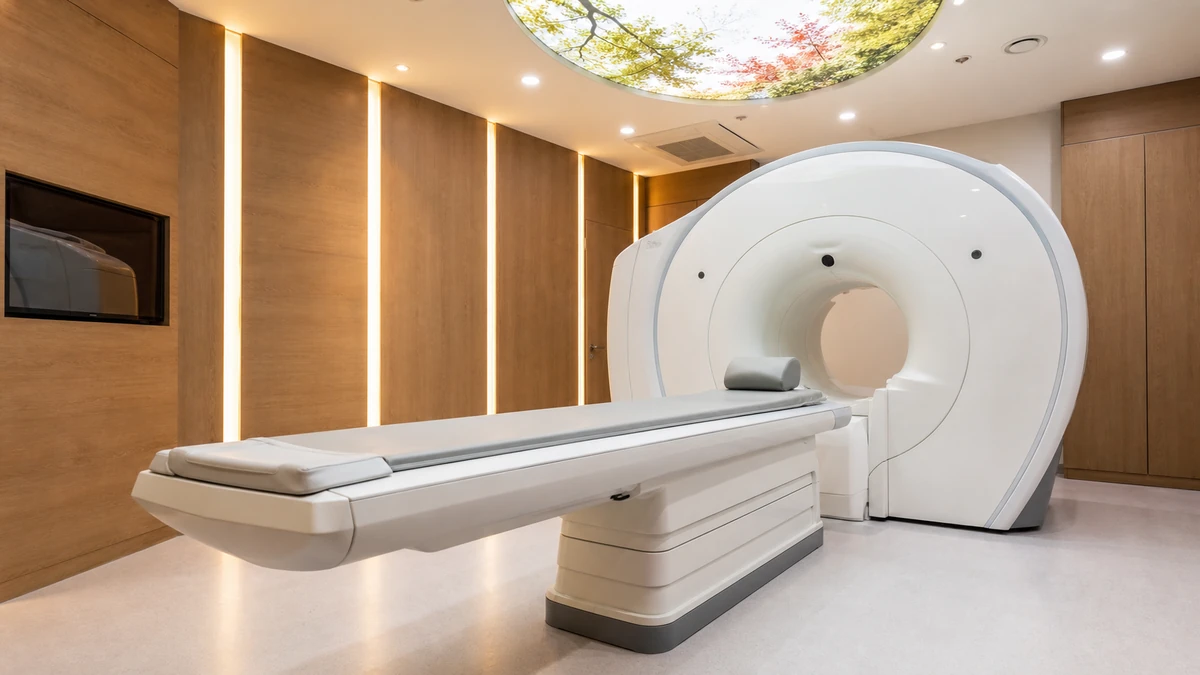
For many readers, PET/CT may sound like one more piece of medical jargon, but it points to a deeper issue: modern cancer care depends heavily on diagnostic infrastructure. PET/CT, which combines positron emission tomography and computed tomography, helps physicians visualize metabolic activity in the body and is used in cancer diagnosis, staging, treatment assessment and recurrence monitoring.
Not every prostate cancer patient will follow the same diagnostic path, and not every case requires the same imaging tools. But the broader point is clear. A country can encourage screening, yet still struggle if follow-up capacity is uneven or concentrated in a few urban centers. Early detection only helps if patients can move efficiently from suspicion to confirmation, from confirmation to staging, and from staging to treatment planning.
That is where health policy enters the story. Jung, the urological oncology society leader, said policy support and discussion are needed so people can receive proper testing at the right time regardless of where they live or their economic circumstances. That concern will resonate well beyond Korea. In the United States, access to specialists, cancer centers and advanced imaging can vary widely by geography, insurance status and income. Rural hospitals often face staffing and equipment limitations. Large academic centers are not equally reachable for everyone.
South Korea’s health system differs in important ways from the American one, including its national insurance framework. But disparities in access can still emerge through regional concentration of resources, wait times, cost burdens outside core coverage, or the simple challenge of navigating specialty care. As prostate cancer diagnoses increase, those gaps matter more.
This is one reason the Korean story deserves attention from global readers. Cancer care is not just about whether a disease is common. It is about whether a society has the screening pathways, imaging capacity, trained specialists and policy coordination to respond when a disease becomes common.
What this means for Korean society and for other aging countries
In one sense, South Korea’s new ranking is a domestic health story. In another, it is a preview of what many aging societies must confront. Prostate cancer tends to become more prominent as populations live longer and health systems improve their ability to detect disease. That means the Korean experience may hold lessons not only for East Asia, but also for Europe, North America and other parts of the world grappling with demographic change.
South Korea is often discussed internationally for its technology, export economy, pop culture and rapidly aging population. The country has one of the world’s lowest birthrates and one of the fastest-aging societies. Public debate frequently focuses on pensions, elder care and the economic consequences of demographic decline. The rise in prostate cancer adds another dimension: how aging reshapes the disease profile of a nation and forces institutions to adjust.
There is also a cultural dimension worth noting. Men’s health can be difficult to discuss in any country, but especially when symptoms involve urination, sexual function or organs associated with masculinity and aging. Those conversations may be delayed by embarrassment, generational attitudes or a tendency to downplay discomfort. That is not unique to Korea; Americans will recognize it immediately. But when a cancer becomes the most common one among men, silence grows more costly.
The Korean data do not call for panic. They call for attention. Prostate cancer becoming the most commonly diagnosed cancer among Korean men does not necessarily mean outcomes will worsen. In some respects, increased diagnosis may reflect better awareness and improved detection. The more urgent question is whether public behavior and medical systems adapt fast enough to turn that awareness into earlier care and better survival.
For policymakers, that could mean reviewing screening recommendations, strengthening patient education and reducing barriers tied to income or location. For hospitals, it may mean expanding diagnostic and treatment coordination. For families, it may mean encouraging fathers, husbands and grandfathers to have the conversations they would rather postpone.
For American readers, the story also serves as a reminder that health transitions in other countries are rarely remote. South Korea’s medical trends increasingly mirror those of other affluent democracies, even when cultural context differs. As countries age, the diseases that dominate public concern can change, and prevention strategies have to change with them.
A warning sign, but also an opportunity
The most practical takeaway from South Korea’s new numbers is not that men should fear the worst. It is that they should not mistake the absence of symptoms for the absence of risk. That may sound basic, but in preventive medicine it is often the hardest message to absorb.
Prostate cancer’s rise to the top of the men’s cancer list in South Korea marks a new baseline for public health planning. Over 10 years, the number of newly diagnosed cases more than doubled. The disease has moved past lung and stomach cancer among men. Long-term smoking appears to be an important warning factor in the data provided. And medical leaders are openly calling for wider, more equitable access to timely testing.
Those developments make prostate cancer a defining men’s health issue in South Korea, not a secondary concern. They also highlight how modern cancer care depends on a chain of decisions and institutions: personal vigilance, physician guidance, organized screening, diagnostic technology and public policy.
In the United States, where conversations about prostate cancer are already deeply woven into the health system, the Korean story may feel less surprising than instructive. It shows how quickly a country’s cancer profile can evolve and how important it is to prepare not only for treatment, but for awareness. Health systems are often judged by how they respond to dramatic emergencies. But many of the most consequential public health shifts happen more quietly, in the slow rise of a disease that asks people to act before they feel sick.
That appears to be where South Korea is now. Prostate cancer is no longer a condition on the margins of national concern. It is at the center of the conversation, and its rise may shape how Korean men, doctors and health officials think about aging for years to come.
Comments
Post a Comment