Saudi Arabia’s Esports World Cup Gets the Documentary Treatment, Signaling Gaming’s New Place in Global Pop Culture
From tournament broadcast to prestige streaming documentary
Saudi Arabia’s Esports World Cup Foundation says it will release a second season of its documentary series, “Esports World Cup: Level Up,” ahead of this year’s Esports World Cup, a move that underscores how competitive gaming is increasingly being packaged not just as sport, but as mainstream entertainment for a global audience.
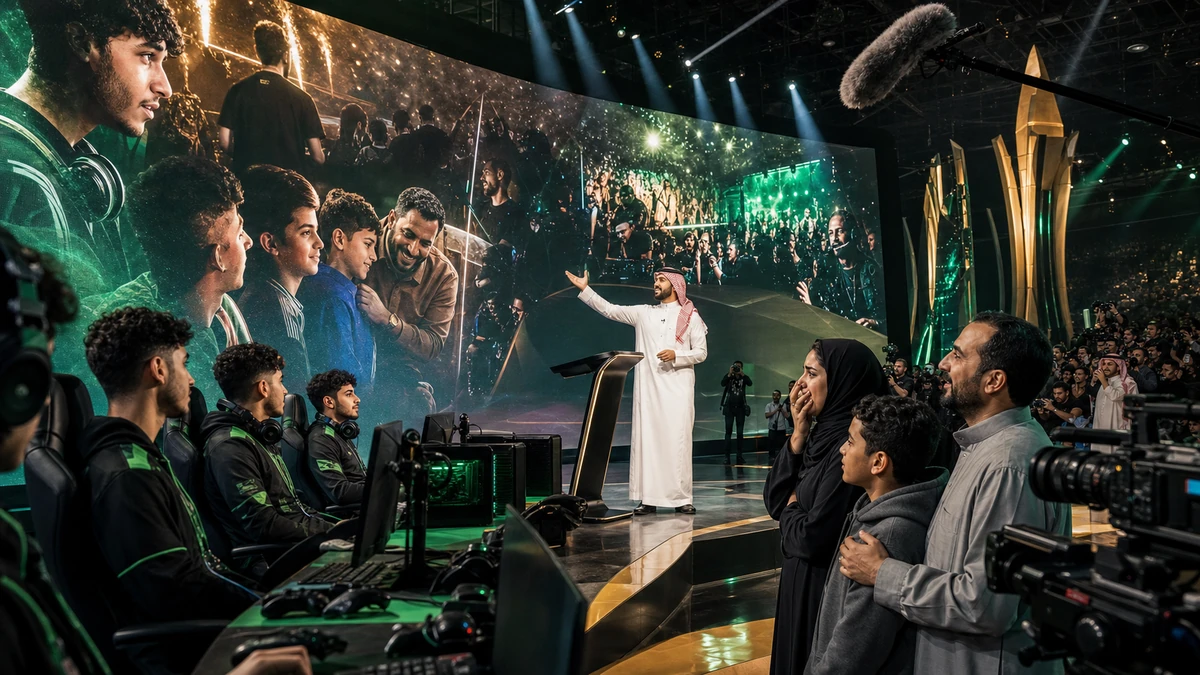
According to the foundation’s announcement, the new season will be a five-part documentary distributed through Amazon Prime Video. Rather than focusing only on match results and highlight reels, it will follow players, clubs and their families connected to the 2025 Esports World Cup, emphasizing the human story behind the bright lights, giant arenas and high-stakes competition.
That framing matters. In the United States, sports documentaries have become a cultural category of their own, often reaching far beyond hardcore fans. Viewers who may never watch a full Formula One race know “Drive to Survive.” Basketball fans and nonfans alike have watched “The Last Dance.” The point of those shows is not simply to explain the scoreboard. It is to turn athletes, teams and pivotal seasons into stories about ambition, pressure, sacrifice and fame.
The Saudi-backed series appears to be aiming for something similar in esports. The message in the announcement is clear: a single match can change a career, a single season can reshape a club’s future, and a single moment can turn a player into a star. That is familiar language in traditional sports, but it is increasingly how the gaming world wants to present itself too.
For American audiences who may still think of esports as niche or youth-oriented entertainment, the documentary push is another sign that competitive gaming now operates inside the same broader attention economy as streaming television, celebrity culture and global fandom. Fans are no longer expected to care only about who won. They are being invited to care about how a player got there, what a family risked and what emotional toll comes with competing on an international stage.
That shift helps explain why a documentary like this can matter even to people who do not know the rules of a particular game. Just as viewers do not need to understand every technical aspect of football to follow a story about a quarterback under pressure, they do not need to know the details of a multiplayer title to understand anxiety, expectation or the burden of representing a team on a world stage.
Why this story resonates beyond gaming
One reason this announcement drew attention in Korea, as described in local coverage, is that today’s fan culture does not respect neat boundaries between music, television, sports and games. That observation travels well to the United States too. The same digital platforms that turned pop stars into global brands have also helped make athletes, streamers and gamers into personality-driven franchises.
In other words, fandom has become cross-platform. A teenager who follows a K-pop group on social media may also watch esports clips on TikTok, stream a documentary on Prime Video and follow a favorite player’s training routine on YouTube. The emotional grammar is similar across all of it: fans want backstage access, origin stories, team chemistry and emotionally charged turning points. They want to witness not just performance, but becoming.
That is especially relevant when thinking about Korean popular culture, or the Korean Wave, often referred to by the Korean term “Hallyu.” For years, Korea has exported music, dramas and reality formats that taught global audiences how powerful a well-managed star narrative can be. Fans do not merely consume a final product. They follow the process: years of training, internal group dynamics, moments of doubt, family backstories and the breakthrough that changes everything.
Esports, particularly in Asia, has long shared some of those traits. Elite players often develop fan bases that resemble those around entertainers. Teams market not just competitive success, but identity. Supporters track roster changes, interpersonal bonds, redemption arcs and the psychological pressure of constant public scrutiny. In that sense, a documentary about an esports tournament is not an odd side project. It is a logical extension of how modern fandom works.
For American readers, perhaps the easiest comparison is the way sports and celebrity media have merged over the past decade. Quarterbacks host podcasts. Basketball players anchor fashion campaigns. Formula One drivers become streaming-era celebrities. In gaming, that process may look newer to some audiences, but the underlying mechanics are the same. A player is no longer just a competitor. He or she is a character in an ongoing global narrative.
The new “Level Up” season appears designed for that reality. By spotlighting the emotional lives of players and the people around them, it attempts to make esports legible to viewers who may be less interested in technical gameplay than in the universal appeal of pressure, family expectation and career-defining moments.
What the documentary says about esports growing up
The significance of the Amazon Prime Video release is hard to miss. Streaming distribution on a major global platform suggests esports documentary content is being treated as a stand-alone entertainment product, not merely as bonus material for dedicated fans who already follow tournament broadcasts.
That is an important distinction. For years, esports content often lived in fragmented digital spaces: livestream platforms, game publisher channels, team-produced videos and fan communities. Those spaces built loyal audiences, but they also reinforced the perception that esports was culturally siloed. A polished five-part documentary on a mainstream streaming service sends a different message. It suggests esports is ready to be consumed like any other prestige nonfiction series built around elite competition and personal stakes.
There is also a structural advantage to the format. A documentary series can do what live competition often cannot. It can slow the action down. It can revisit moments after the fact. It can place a player’s onstage performance beside a family conversation, a team meeting or a private expression of fear. In sports storytelling, that kind of editing turns isolated events into meaningful arcs.
That matters because one of esports’ biggest barriers to mass understanding has always been accessibility. Many games are visually busy. Their rules can be difficult for outsiders to absorb quickly. For someone unfamiliar with the genre, a live broadcast can feel like being dropped into the middle of a foreign language conversation. A documentary changes the terms. It can explain the stakes without overexplaining the mechanics. It can invite viewers in through emotion first.
That is not to say the competition itself becomes irrelevant. Quite the opposite. The point is that the match becomes more compelling once viewers understand who stands to gain or lose. Traditional sports have used that formula for decades. A Super Bowl is more gripping when audiences know the quarterback’s history, the coach’s gamble or the family sacrifices that shaped the season. Esports is increasingly adopting the same storytelling approach because it works.
Based on the summary of the announcement, the second season is centered on players, clubs and families tied to the 2025 Esports World Cup. What has not been specified, at least in the information provided, are the names of specific players, detailed scenes from the series, individual club performances or the full release scope by market. That is worth noting because the larger claim here is not about any one star. It is about the ecosystem: esports now sees its own stories as globally marketable drama.
The family angle is not incidental
One of the more revealing details in the announcement is the emphasis on families. That may sound like a standard documentary move, but in esports it carries particular weight. Competitive gaming has often been framed in public debate, especially in older generations, as something solitary, screen-bound or socially detached. A documentary that foregrounds parents, relatives and emotional support systems pushes back against that stereotype.
It reframes the player not as a kid in front of a monitor, but as a professional navigating career risk, public expectations and intensely compressed timelines with the people closest to them along for the ride. In many cases, esports careers begin early and peak young, which can make family support, or family doubt, especially consequential. Even without details about which families appear in the series, the creative choice itself is telling.
For audiences familiar with Korean entertainment, this is also a recognizable storytelling language. K-pop documentaries and reality programs often rely on exactly this combination: performance, training, team tension and the emotional role of family or quasi-family bonds. Fans respond because those elements humanize polished public figures and make success feel earned rather than abstract.
American viewers have seen versions of the same formula in documentaries about Olympic athletes, tennis stars and NFL prospects. What makes it newly significant in esports is that the genre is being given the same emotional and institutional treatment as legacy sports. Families are not peripheral characters. They help authenticate the journey. They provide a lens through which casual viewers can understand what is at stake.
There is also a broader business logic at work. Stories that include family, vulnerability and personal history tend to widen the audience. They allow a series to reach spouses, parents and general-interest viewers who might not click on a competition-only program. The more esports aims to enter mainstream entertainment pipelines, the more it will lean on universal themes that make specialized worlds feel emotionally familiar.
That helps explain why the documentary description highlights the scenes behind the arena lights. Spectacle can attract attention, but intimacy creates attachment. Fans may come for the event, but they stay for the people.
Saudi Arabia’s role in the global esports push
The documentary announcement also arrives in the context of Saudi Arabia’s wider effort to position itself as a major force in gaming, esports and global entertainment. In recent years, the kingdom has invested heavily in sports and event infrastructure as part of a broader strategy to diversify its economy and expand its cultural influence. Esports has become a visible part of that push.
For American readers, the comparison might be to how cities or countries use marquee events to announce themselves on the global stage. Hosting matters, but so does controlling the surrounding media narrative. A documentary series helps extend the life of an event beyond the competition calendar. It turns a tournament into intellectual property, into a replayable story, into something that can travel long after the arena empties.
That does not erase the larger political and ethical debates that often accompany Saudi Arabia’s investment in sports and entertainment. Those debates exist in golf, soccer, boxing and now esports. But from a media strategy standpoint, the move is coherent. If you want to build a world-class event brand, you do not rely solely on live attendance and broadcast rights. You create documentary content, social media narratives and personality-driven storytelling that deepen fan loyalty.
In that sense, “Level Up” is not just a documentary. It is part of brand architecture. It helps define what the Esports World Cup means, who its stars are and why viewers should care between tournaments. This is the same playbook used across modern sports and entertainment. The event itself is only one node in a much larger network of attention.
The foundation’s language about career-changing matches and star-making moments fits that strategy neatly. It casts the Esports World Cup not merely as another tournament, but as a place where global reputations are made. Whether the series succeeds artistically is something viewers will decide later. But as a statement of intent, it is unmistakable: esports is being framed as a premium storytelling arena with global commercial potential.
That positioning may resonate especially strongly in Asia, where professional gaming has a longer and more visible history than in much of the United States. But it is increasingly relevant to American media too, where streaming platforms are always searching for the next scalable genre that can unite youth culture, international audiences and recurring franchise value.
A familiar playbook for a new generation of stars
The most striking idea in the documentary’s setup is not that esports players can become stars. That is already true. The more important point is that the machinery used to create and sustain those stars now looks very familiar. It is the machinery of modern entertainment.
That means tightly edited docuseries, emotional confessionals, behind-the-scenes footage, team narratives and a focus on pivotal moments that can be clipped, shared and replayed across platforms. A player’s career is no longer defined only by tournament placements. It is also shaped by storytelling: how audiences interpret resilience, pressure, charisma and transformation.
In American terms, think about how a quarterback’s legacy can be reframed by a documentary, or how a basketball player’s public image can deepen through candid long-form interviews. Esports is following the same path. It is not abandoning competition. It is surrounding competition with narrative scaffolding that makes viewers feel they know the people on screen.
That is why this kind of series can appeal to those who do not identify as gamers. The central drama is not game-specific. It is about what happens when a young person enters a global performance economy where milliseconds matter, fame can come quickly and failure is public. It is about the modern condition of being talented, visible and under constant pressure.
For younger audiences in particular, esports players can seem more relatable than traditional athletes. They often emerge from digital-native environments, build communities online and communicate in the same media ecosystems their fans inhabit. A documentary series can amplify that connection by translating competitive intensity into the language of coming-of-age, work, ambition and emotional risk.
The Korean summary of the announcement points to an important broader truth: global audiences increasingly want more than the winner’s name. They want the process, the relationships and the exact moment when possibility turns into identity. That is the language K-pop used to conquer streaming-era fandom. It is also the language sports documentaries used to reach viewers who do not care about every game. Esports, it seems, wants in fully on that formula.
What audiences should watch for next
For now, the confirmed facts are relatively narrow. The Esports World Cup Foundation has announced the second season of “Esports World Cup: Level Up.” It is described as a five-part documentary to be released on Amazon Prime Video. It focuses on players, clubs and families associated with the 2025 Esports World Cup and promises a more human-centered view of the competition.
What remains unknown, based on the available summary, includes which individual players and organizations will receive the most attention, what regions will get access first, and how deeply the series will engage with the emotional and structural pressures of elite gaming. It is also too early to say how audiences will respond or whether the documentary will break through beyond existing esports circles.
Still, the broader takeaway is already clear. Competitive gaming is moving further into the mainstream entertainment model, where documentaries are not an afterthought but a key part of how stars are built and international events are sold to the world. In that environment, a tournament does not end when the final match does. Its afterlife continues through streaming, social clips, fan discussion and the carefully edited stories that help casual viewers become invested followers.
That may be the most consequential part of this announcement. The documentary is not simply about explaining esports. It is about declaring that esports belongs in the same narrative universe as major sports, reality competition and global pop culture. For American audiences, that means the question is no longer whether gaming can produce stars and emotionally resonant stories. It already can. The question is how quickly the broader culture will catch up.
If “Level Up” succeeds, it may do for esports what other sports docuseries have done for racing, basketball and football: make the stakes legible to outsiders, deepen loyalty among insiders and prove that one decisive moment under bright lights can travel far beyond the arena where it first happened.
Comments
Post a Comment