South Korea’s World Cup Loss Still Won the Night on TV, Showing How Sports Broadcasting Has Become Its Own Star
A World Cup defeat that still drew a big audience
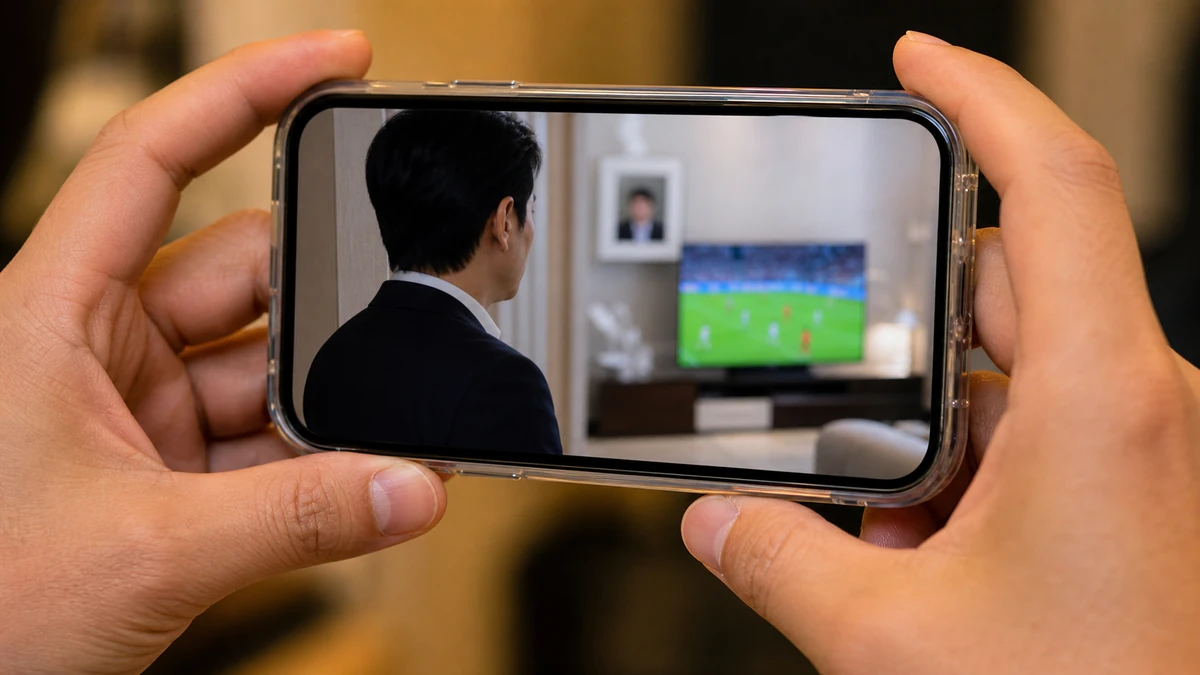
South Korea’s 0-1 loss to Mexico in the 2026 FIFA World Cup group stage was a disappointment on the field, but it was still a major television event at home. According to figures reported by Yonhap News Agency, citing ratings tracker Nielsen Korea, the match drew a combined nationwide television rating of 17.7% across two major broadcasters. Public broadcaster KBS 2TV accounted for 10.9%, while cable and general-programming network JTBC posted 6.8%.
For American readers, that number is best understood not simply as a measurement of how many people watched a soccer game, but as a window into how South Koreans consume big live events. In the United States, a World Cup match involving the national team is certainly a major sports broadcast. But in South Korea, national-team soccer often operates as something bigger and slightly different: a hybrid of sports, national ritual, celebrity television and live entertainment. Viewers are not only watching the match. They are also choosing a storytelling style, an emotional tone and a group of on-air personalities they trust to guide them through the night.
That helps explain why a narrow loss can still produce a meaningful television story. The game, played June 19 at a stadium in Guadalajara, Mexico, ended with South Korea falling by a single goal under coach Hong Myung-bo. On paper, it was a frustrating result. In television terms, though, it became another test of which broadcaster could best package tension, analysis and national emotion around one of the biggest global sports events.
The result of that contest, at least for now, was clear. KBS 2TV beat JTBC for the second straight South Korea match of the tournament, suggesting that viewers are responding not just to the team, but to a particular broadcast formula. That formula includes expert analysis, familiar play-by-play voices and, in one notable case, the presence of a celebrity host better known in South Korea for variety entertainment than for hard-core sports commentary.
Why ratings matter so much in South Korea’s World Cup coverage
Television ratings stories may sound unusually inside-baseball to readers outside Korea, but they play a larger role there than many Americans might expect. South Korea has one of the world’s most intense and competitive media markets, where broadcasters have long battled for attention through a mix of news, drama, variety shows and live event programming. The World Cup, because it combines patriotic interest with appointment viewing, is one of the rare broadcasts that can still cut through fragmented media habits.
That matters in a global media landscape where streaming, on-demand viewing and social platforms have eroded the idea of everyone watching the same thing at the same time. In the United States, the NFL remains one of the few reliable engines of mass live viewership. In South Korea, World Cup matches featuring the national team can serve a similar role. They still bring people together in real time and create the kind of shared emotional experience that broadcasters crave.
But there is a Korean twist. The audience is often highly aware of the people behind the microphones. Viewers know the commentators. They know the announcers. They know the celebrity guests. And they tend to evaluate the full package, not merely the camera feed from the stadium. A World Cup telecast in South Korea is not treated as a neutral utility, like simply turning on a public feed of the game. It is consumed as a distinct media product, with each channel offering its own flavor.
That may be more familiar to American audiences if they think of the way some viewers choose a sports studio show or a particular NFL broadcast crew because they like the chemistry, humor or insight. But in Korea, that choice can be even more central. Broadcast teams are sometimes discussed almost the way a cast is discussed for a drama series. Their credibility, rhythm and emotional register can shape how a match is experienced and remembered.
So when Nielsen Korea reports that KBS 2TV reached 10.9% and JTBC 6.8%, the figures are about more than channel distribution. They also suggest that one presentation style is currently outperforming another in the competition for the country’s collective attention.
KBS takes an early lead in the tournament’s broadcast rivalry
The Mexico game was not a one-off victory for KBS 2TV. The same network also led in South Korea’s earlier group-stage match against the Czech Republic. In that game, held June 12, KBS 2TV drew 8.5%, compared with JTBC’s 5.7%. Put together, the two matches show KBS building an early advantage in one of the more closely watched media side stories of the tournament.
That trend is significant because it suggests habit formation. Once viewers find a World Cup crew they like, they may stick with it. Broadcasters understand that dynamic well. The opening rounds of a tournament are not only about covering the match in front of them; they are also about creating a relationship with viewers that can carry through the rest of the event.
In the U.S., viewers often become attached to a particular sports booth because they know what they are going to get: perhaps authoritative breakdowns, perhaps understated play-calling, perhaps a louder, more dramatic style. South Korean viewers make similar calculations, but the decision can also involve broader celebrity familiarity. The line between sports broadcaster and entertainment personality is often more porous in Korea than in many American sports settings.
KBS appears to be benefiting from that overlap. Its performance across two matches suggests the network has found a combination that appeals to both committed soccer fans and more casual viewers who tune in because the national team is playing. That broader reach matters especially in a tournament setting, where audiences may include people who do not regularly follow club soccer but do care deeply about the World Cup.
Ratings alone do not explain why viewers make their choices, and it would be too simplistic to credit any single host or commentator for the gap. But the repeated edge for KBS points to a broader conclusion: South Korean audiences are not simply watching the World Cup; they are curating the version of the World Cup they want to experience.
The broadcast booth is part of the show
KBS 2TV’s coverage of the Mexico match featured commentator Lee Young-pyo, announcer Nam Hyun-jong and special caster Jun Hyun-moo. For readers outside Korea, those names occupy different kinds of cultural space. Lee is a respected former soccer player whose analysis carries technical authority. Nam provides the conventional play-by-play structure. Jun, meanwhile, is a well-known television personality associated more with mainstream entertainment and variety programming than with elite sports analysis.
That last piece is important. To American audiences, it may seem unusual to place a celebrity entertainment figure in a prominent role during a World Cup telecast. But in South Korea, the move makes cultural sense. Major live broadcasts often seek to balance expertise with accessibility. A familiar personality can lower the barrier for viewers who might find purely technical commentary intimidating or dry. The approach signals that the broadcast is for everyone, not just die-hard soccer tacticians.
JTBC countered with a strong lineup of its own: former star player Park Ji-sung and commentator Kim Hwan, along with veteran sportscaster Bae Sung-jae. Park in particular is one of the most recognizable figures in modern Korean soccer. For many international fans, he remains the face of South Korea’s rise on the global stage, thanks in large part to his years with Manchester United and his reputation as one of Asia’s most accomplished players in European football.
That makes JTBC’s lower rating all the more notable. It did not lose because it lacked star power or soccer legitimacy. If anything, the matchup between the two networks illustrates just how competitive the Korean sports media landscape can be. Both channels offered credible, high-profile teams. Yet KBS still came out ahead.
The likely explanation is cumulative rather than singular. Channel identity matters. Viewer habit matters. Pre-game and post-game framing matter. So does the emotional cadence of the call during key moments. In a close, tense match decided by one goal, small differences in tone and pacing can shape whether viewers feel a broadcast is helping them understand the game or merely narrating it.
That is one reason Korean coverage of national-team matches often feels closer to event television than to ordinary sports programming. The booth is not background. It is part of the attraction.
Lee Young-pyo’s analysis helped become part of the storyline
Among the most talked-about on-air figures around this early stretch of the tournament has been Lee Young-pyo. The former defender reportedly drew attention after accurately predicting South Korea’s 2-1 win over the Czech Republic in the previous match. That kind of public forecast can boost a commentator’s profile quickly, especially during a major tournament, when audiences are primed to search for authority and insight.
It also changes how viewers listen. Once a broadcaster is seen as someone who “called it” correctly, his analysis carries additional weight, whether deserved or not. American sports media offers plenty of parallels: a former player who nails a playoff prediction, a studio analyst whose tactical breakdown goes viral, or a broadcaster who develops a reputation for seeing a game a step ahead. The phenomenon is hardly unique to South Korea. But in Korea’s celebrity-conscious media environment, it can become especially potent.
After the loss to Mexico, Lee’s on-air reaction was also notable. He said that, aside from the one sequence that led to the goal conceded, everything had been good, which made the result even more frustrating. The phrasing resonated because it gave structure to a particular kind of disappointment familiar to sports fans everywhere: the pain of losing not because a team was clearly outclassed, but because one moment tilted an otherwise competitive performance.
That distinction matters in television storytelling. A blowout invites one kind of narrative. A narrow defeat demands another. In a one-goal loss, viewers often look to commentators to help them process whether the team was unlucky, wasteful, tactically flawed or quietly promising despite the result. The best analysts do more than assign blame. They turn emotion into interpretation.
Lee’s comment appears to have done exactly that. Rather than reducing the match to failure, he identified the fine margin that decided it. For viewers, especially those already inclined to trust him, that offered a more nuanced way to understand the night. The team lost, yes. But the performance, in this telling, was not a collapse. It was a game that turned on one costly lapse.
That sort of framing is one reason commentators matter so much in South Korea’s World Cup ecosystem. Their words do not just accompany the event. They help define what the event means.
How Korean sports TV blends expertise with entertainment
To understand why this ratings race matters, it helps to step back and consider a broader feature of Korean media culture. South Korea has built a global reputation on highly produced, emotionally calibrated entertainment, from K-dramas to competition shows to polished variety programs. Live sports coverage, especially around the national team, increasingly draws from that same grammar.
The game itself remains central, of course. But the surrounding presentation is carefully shaped to heighten emotional investment. There is anticipation before kickoff, dramatic framing during the match and a strong emphasis on reaction and interpretation afterward. The experience can feel episodic, almost like prestige television, even though the outcome is unscripted.
This is where foreign readers can miss what is distinctive if they view the story only as a ratings note. What Korean broadcasters are really competing over is not merely possession of rights or access to a feed. They are competing over how to stage a national emotional moment. Do they lean into technical insight? Do they use a familiar celebrity to broaden the tent? Do they foreground a beloved former player? Do they create a tone that feels sober, energetic, reassuring or dramatic?
Those choices reflect a larger truth about Korean broadcasting: presentation is rarely incidental. In an intensely developed television culture, audiences are trained to notice style, chemistry and delivery. The same instinct that leads viewers to compare actors’ performances in a drama or hosts’ banter on a variety show can carry into sports coverage.
For American audiences, one rough comparison might be the way major events such as the Super Bowl become part sports contest, part media spectacle. Viewers care about announcers, halftime programming, sideline features and pre-game coverage. South Korea’s World Cup broadcasts work in a similarly layered way, though with a stronger emphasis on the specific personalities in the commentary booth as a driver of loyalty.
That is why a celebrity like Jun Hyun-moo can be meaningful in this context. His presence signals that the telecast is not only for soccer purists. It is also for the broad national audience that wants companionship, familiarity and a sense that the event belongs to everyone.
A narrow loss, a wider lesson about live television
The clearest facts from the Mexico match are straightforward. South Korea lost 0-1. The game drew a combined nationwide rating of 17.7%. KBS 2TV led with 10.9%, ahead of JTBC’s 6.8%. KBS also led in the previous match against the Czech Republic, making it two straight wins in the early tournament broadcast battle.
But the larger lesson extends beyond a single game or even a single World Cup. Live sports remains one of the few forms of programming that can still reliably command real-time national attention. That is true in the United States, and it is true in South Korea. Yet Korea adds an extra layer: the broadcasters themselves become characters in the experience.
That dynamic also reflects the enduring symbolic power of the national team. In South Korea, matches involving the men’s soccer team often carry meaning beyond the scoreboard. They can serve as moments of collective identity, generational memory and shared emotional release. For many Koreans, the World Cup is tied to memories of earlier national runs, public street cheering and the sense that global sport offers a stage on which the country can be seen and judged.
Because those stakes feel large, the mediation of the event feels large, too. Viewers want analysts who can explain what happened without talking down to them. They want announcers who can capture urgency without sounding forced. They want, in many cases, a familiar face who can make a high-pressure moment feel communal rather than clinical.
That is why even after a painful result, the television side of the story remains compelling. The defeat to Mexico did not end the conversation. If anything, it highlighted how much the viewing experience itself matters. Korean audiences were not passively consuming a soccer game. They were actively choosing the voices they wanted to accompany a difficult night.
For global readers, especially those interested in the Korean Wave and the wider export of Korean media culture, this is a revealing moment. The same instincts that have helped make Korean entertainment resonate across borders, attention to tone, strong personality-driven formats and a polished blend of emotion and structure, are also shaping something as ostensibly straightforward as a World Cup telecast.
In that sense, the Mexico match was not just about one missed result in Group A. It was also a reminder that in South Korea, major sports broadcasts are never only about sports. They are live national narratives, packaged with the precision of entertainment and judged by audiences who know exactly what kind of performance they expect from the people on screen.
And at least through two matches, those viewers are telling broadcasters that KBS 2TV has the edge in delivering it.
Comments
Post a Comment