A Dragon, a Diplomat and the Next Big K-Drama Bet: tvN Unveils Fantasy Romance ‘Embassy of Foreign Nations in Korea’
A high-concept K-drama with a familiar hook
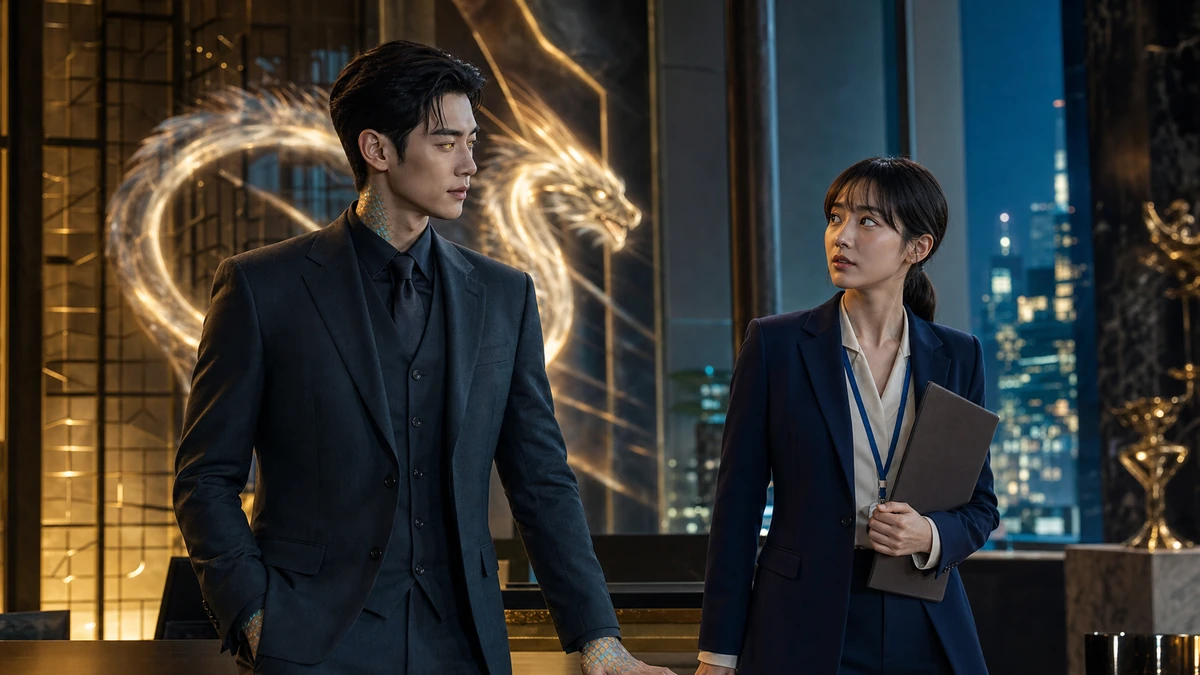
South Korean cable network tvN has cast actor-singer Lee Jun-ho and actress Hong Hwa-yeon to lead a new fantasy romantic comedy with one of the more unusual premises in recent Korean television: an embassy in Seoul that manages nonhuman beings living in Korea.
The series, tentatively introduced under the Korean title “Embassy of Foreign Nations in Korea,” is slated for 2026 and is already drawing attention for a setup that blends two genres Korean TV has become especially adept at exporting: office romance and mythology-driven fantasy. According to details released by the network, Lee will play Cha Yeon, the head of the mysterious embassy and a dragon in human form. Hong will play Go Mi-woo, a rookie human diplomat who is accidentally assigned there and suddenly finds herself navigating a workplace populated not just by difficult co-workers, but by beings pulled from legend.
For American viewers, the pitch may sound like a mash-up of workplace comedy, supernatural romance and immigration satire, with a little bit of “Men in Black” bureaucracy and the slow-burn emotional architecture familiar to fans of Korean dramas. That is part of what makes the project notable even before a premiere date has been announced. In a crowded entertainment market, the series is offering something K-drama has repeatedly turned into a global strength: taking a recognizable emotional framework, in this case a mismatched workplace romance, and relocating it into a world that feels fresh, local and culturally specific.
What has been publicly confirmed so far is limited. tvN has announced the two leads, the broad setting, and the creative team. A specific broadcast date has not been set, and detailed plot points, supporting cast and visual approach remain under wraps. Still, even at this early stage, the project stands out because it turns the embassy, ordinarily a symbol of formal state-to-state relations, into a meeting point between the human world and a hidden society of mythical beings.
That twist gives the drama a built-in metaphor American audiences can easily recognize. Embassies are places where laws, cultures and expectations collide in carefully managed ways. Moving that idea from international diplomacy to supernatural coexistence creates a structure that can support comedy, romance and world-building all at once. It is a clever premise, and in the current K-drama landscape, clever premises travel well.
Why Lee Jun-ho’s casting matters
Lee Jun-ho’s involvement is likely to be one of the main reasons the project is attracting immediate buzz. Known to many international fans simply as Junho, he first rose to fame as a member of the K-pop group 2PM before building a substantial acting career. In recent years, he has become one of the more bankable names in Korean scripted television, particularly after high-profile performances that showcased both charisma and emotional precision.
That matters because Cha Yeon, the dragon-led embassy chief he will play here, appears to require exactly that mix. On paper, the character has two potentially competing identities. He is a supernatural being with authority, history and mystery. At the same time, he is the boss in a romantic comedy, a genre that usually depends on awkward timing, emotional misreadings and gradual vulnerability. If the role leans too heavily into grandeur, the romance risks becoming cold. If it leans too far into charm, the fantasy mythology could lose its weight. The appeal of casting Lee is that he has the star presence to carry both.
For audiences in the United States who may not follow Korean entertainment closely, there is an easy comparison to actors who successfully move between idol status and serious screen work, proving they are not merely pop stars dabbling in acting. In South Korea, that crossover has become a well-established pipeline, but it still invites scrutiny. Viewers do not simply reward fame; they expect a performer to justify the casting. Lee’s recent track record suggests he can do that, especially in stories where romantic chemistry and a strong central persona are crucial.
His role here also taps into a long tradition in East Asian storytelling in which dragons are not always monsters in the Western fantasy sense. In much American pop culture, dragons are often framed as adversaries, treasure-hoarders or apocalyptic threats. In Korean and broader East Asian traditions, dragon imagery can carry different associations, including authority, protection, water, power and nobility. That cultural distinction could shape the emotional tone of the character. Cha Yeon may be otherworldly, but he is unlikely to be presented as a beast to be conquered. He is more likely to be an ancient presence embedded in social order, which makes his turn toward human intimacy all the more interesting.
The newcomer’s point of view, and why Hong Hwa-yeon’s role is key
If Lee’s character represents the drama’s supernatural authority, Hong Hwa-yeon’s Go Mi-woo appears designed to function as the audience’s entry point. She is the human rookie diplomat, and crucially, she is said to be assigned to this embassy by mistake. That detail may sound small, but it is structurally important. In fantasy storytelling, one of the hardest tasks is explaining the rules of an unfamiliar world without slowing the story down. The classic solution is to introduce a character who does not understand the world either. As Mi-woo learns, the audience learns with her.
That setup is familiar to anyone who has watched fish-out-of-water comedies, from newsroom stories to legal dramas to supernatural procedurals. The junior employee arrives, breaks protocol, asks obvious questions and reveals hidden tensions within the institution. Here, the institution just happens to be managing beings from myth. That should allow the series to deliver exposition through comic mishaps rather than lectures.
Hong’s role may also prove to be the emotional engine of the series. In many Korean romantic comedies, especially those with fantasy elements, the human lead serves as the force that destabilizes a carefully ordered supernatural world. The character is not powerful in the conventional sense. Instead, she is disruptive because she reacts like a normal person in circumstances where everyone else has accepted the impossible. That contrast can be funny, but it can also create the moral center of the show. Humans ask why rules exist. Humans question cold hierarchy. Humans insist on individual feeling where institutions prefer order.
That is where the romance is likely to take root. Cha Yeon knows the system. Mi-woo does not. He governs the embassy; she has barely arrived. He belongs to the hidden world; she belongs to the visible one. In screenwriting terms, those contrasts are not obstacles to the love story. They are the machinery that drives it. Viewers can reasonably expect early clashes over procedure, secrecy and trust, followed by the gradual recognition that each protagonist sees something the other cannot.
Whether Hong becomes a breakout star for international audiences may depend on how the series frames Mi-woo’s growth. The risk in these stories is that the human newcomer becomes merely reactive, a witness to a more glamorous supernatural hero. The better version, and the one many K-drama viewers now expect, is a lead who evolves into an active force within the world she entered by accident. If Mi-woo begins as the audience’s guide but later changes the embassy on her own terms, the role could resonate well beyond genre fans.
The embassy as metaphor: fantasy, bureaucracy and modern Korea
The title itself does a lot of the conceptual work. In Korean, the idea of an embassy located in Korea immediately suggests jurisdiction, protocol and the friction that comes when different systems of rules must coexist. In real life, embassies are highly structured spaces, full of ceremony and paperwork. They are not usually settings associated with whimsy. That is precisely why the premise is effective. By placing dragons, mermaids and fox spirits inside an administrative framework, the show creates a productive tension between the extraordinary and the bureaucratic.
American audiences may recognize a similar appeal in stories that turn institutions into fantasy engines. Part of the fun comes from seeing magical or monstrous beings forced to deal with office culture, regulations, reporting lines and chain-of-command headaches. It is one thing to imagine a dragon. It is another to imagine a dragon with managerial responsibilities.
That institutional angle also reflects something broader about South Korean television. Some of its most successful dramas in recent years have excelled at taking emotionally heightened stories and embedding them in highly specific professional worlds: law firms, hospitals, corporations, police agencies, villages and now, apparently, a supernatural diplomatic mission. The workplace gives the romance structure. It provides routine, conflict and social stakes. Even when the plot is fantastical, the rhythms of work keep it grounded.
The embassy setting may also allow the show to explore softer themes of coexistence and difference without becoming heavy-handed. Stories about hidden beings living among humans often function as allegories about outsiders, assimilation, secrecy and social acceptance. In the United States, genre television has often used vampires, mutants or aliens in similar ways. A Korean drama built around nonhuman residents being managed by an embassy could touch on comparable questions: Who gets to belong? Who must remain hidden? Who writes the rules for integration? And what happens when personal attachment challenges institutional boundaries?
None of that is confirmed as plot, and it would be premature to treat the series as a political allegory. But the setup naturally invites that reading. At a minimum, it gives the writers a flexible frame that can support comedy on the surface while hinting at bigger ideas underneath.
Meet the mythical residents: dragons, haetae, mermaids and gumiho
One reason the project may travel well internationally is its mix of mythological references. The network has said the embassy manages beings including a haetae, a mermaid and a gumiho, alongside the dragon at the center of the story. For viewers outside Korea, that combination offers both familiarity and discovery.
The mermaid is the easiest entry point for global audiences. It is a figure deeply embedded in Western storytelling, from fairy tales to Disney films to prestige fantasy. The gumiho, often translated as a nine-tailed fox, may be less familiar to mainstream American viewers but has become increasingly visible through Korean pop culture. The figure appears in folklore across East Asia, but in Korean storytelling it often carries a distinct blend of seduction, danger, loneliness and transformation. Depending on the adaptation, a gumiho can be frightening, tragic, comic or romantic.
The haetae may be the least familiar to many English-speaking readers. Sometimes romanized as “haechi,” it is a legendary creature associated with justice, guardianship and the ability to distinguish right from wrong. In Seoul, the figure has civic symbolism and can be found in public iconography. Explaining a creature like the haetae to foreign audiences is exactly the kind of cultural bridge this show could benefit from if it is handled clearly on screen. It is also the kind of local detail that makes Korean fantasy distinct from generic global streaming content.
The decision to house such varied beings under one administrative roof suggests the series is not building a fantasy world around a single myth but around a curated ecosystem of them. That opens the door to episodic conflicts, side stories and tonal variety. A mermaid storyline may evoke one emotional register, while a gumiho subplot evokes another. If done well, that can make the embassy feel less like a gimmick and more like a functioning crossroads of traditions.
For international platforms and distributors, that kind of mythology mix is commercially appealing. It gives longtime K-drama fans the Korean cultural texture they often seek while offering newer viewers familiar entryways. In effect, the show can teach its audience how to watch it. A mermaid says, you know what fantasy is. A haetae says, but here is how Korea imagines it differently.
The creative team and the challenge of balancing tone
Behind the camera, the project brings together writer Shin Ha-eun and director Bae Hyun-jin, a pairing that will likely shape whether the drama feels emotionally cohesive or conceptually overloaded. Shin is known for writing character-driven television, including the widely watched romantic drama “Hometown Cha-Cha-Cha,” a series praised for its warmth, community texture and accessible emotional storytelling. Bae directed “Hierarchy,” a much darker and more stylized series, suggesting a visual sensibility that could help a high-concept fantasy world stand out.
That combination is intriguing because “Embassy of Foreign Nations in Korea” appears to need two things at once. It needs emotional clarity so that viewers invest in the central couple. And it needs enough world-building discipline to make the embassy’s rules feel coherent. Fantasy romances often fail when they cannot decide whether the mythology or the relationship matters more. If the lore becomes too dense, the emotional story gets buried. If the lore is too thin, the fantasy feels decorative rather than essential.
That is likely the central production challenge here. The series must explain why these beings are in Korea, how the embassy functions, what is at stake if its rules are broken, and how a dragon and a human can plausibly fall in love within that system. At the same time, it must preserve the breezy pacing expected from a romantic comedy. That is not easy, but it is a problem Korean television has gotten better at solving in the streaming era, where local specificity and genre ambition are increasingly treated as assets rather than risks.
Visual execution will matter, too. A dragon-led embassy sounds imaginative on paper, but fantasy viewers now expect a certain baseline of polish. Korean dramas do not usually operate with the budgets of major American franchise television, yet they have often compensated with sleek production design, tightly controlled aesthetics and strong character focus. If the series leans into atmosphere rather than spectacle alone, it may not need blockbuster visual effects to be convincing.
What this says about the current K-drama moment
The announcement arrives at a time when Korean television is no longer a niche interest in the United States. What was once treated as a specialized corner of global entertainment has become a regular part of the streaming conversation, helped by the worldwide rise of Korean music, film and series. American viewers who first arrived through survival dramas, period zombie thrillers or buzzy romance titles now expect a steady flow of inventive concepts from Seoul.
This series fits that larger pattern. It is unapologetically Korean in its imagery and setting, yet immediately legible to global audiences because its emotional blueprint is so recognizable. Two opposites meet at work. One holds power; the other stumbles in by accident. A hidden world slowly opens. Romance develops across hierarchy and difference. That is classic popular storytelling, just delivered through Korean mythology and contemporary Seoul.
There is also a broader industrial point here. Korean networks and studios have become increasingly savvy about the international market without fully sanding down local texture. Shows succeed abroad not because they imitate American television, but because they trust that viewers will follow if the emotions are compelling and the world feels internally consistent. In that sense, a drama involving a dragon bureaucrat and a rookie diplomat is not as eccentric a bet as it might seem. It is actually a textbook example of how Korean pop culture often works: precise emotional engineering inside a premise bold enough to spark immediate curiosity.
That does not guarantee success. Early casting buzz can fade. High-concept series sometimes struggle to sustain momentum over a full season. The chemistry between the leads, still impossible to judge from a casting notice alone, will likely determine how much this drama transcends its premise. But as a statement of intent, the project tells viewers and buyers alike that Korean television remains willing to take familiar forms and reroute them through its own cultural imagination.
What remains unknown, and why fans are already watching
For now, many of the practical details remain unsettled. tvN has not announced an exact premiere date, and no full cast list or detailed synopsis has been released. That means there is still a line between reasonable anticipation and speculation. It is too early to know how heavily the series will lean into romance versus fantasy, whether it will take an episodic case-of-the-week structure or a serialized arc, or how deeply it will draw from traditional folklore rather than using mythological names as aesthetic shorthand.
Even so, the project already has the ingredients that drive pre-release interest in the K-drama ecosystem: a recognizable star, a fresh premise, an attractive genre label and enough mythology to invite fan theorizing. That attention tends to build quickly, especially when the core idea is easy to summarize in one sentence. “A dragon who runs an embassy in Korea falls for a human rookie diplomat” is the kind of pitch that makes sense instantly, even to people who do not usually watch Korean TV.
And perhaps that is the clearest sign of why this series matters. At its best, Korean popular storytelling has a gift for making the unfamiliar feel emotionally accessible without stripping away what makes it culturally distinct. A title like “Embassy of Foreign Nations in Korea” may sound unusual to American ears at first. But the underlying story, about entering a strange institution, meeting someone from another world and discovering that love scrambles every rulebook, is as old and universal as romance itself.
Until more is announced, that is the story viewers have: not a finished series, but a compelling promise. In the global race for attention, promises matter. And this one, built on dragons, diplomacy and the enduring power of a well-matched romantic mismatch, is likely to keep fans curious for a while.
Comments
Post a Comment