Bumkey Returns With ‘SPEEED,’ a Korean R&B Single About Life in the Fast Lane — and Whether It’s Going Anywhere
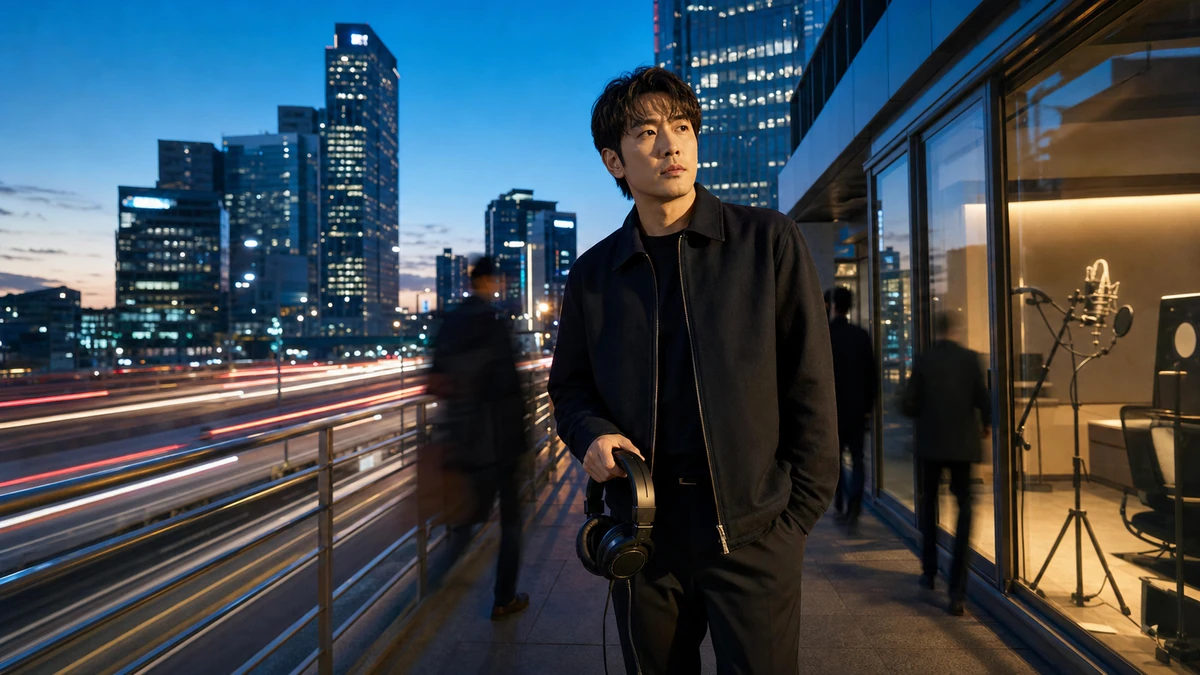
A veteran Korean R&B voice returns with a question, not just a comeback
South Korean singer Bumkey is set to release a new single, “SPEEED,” on July 27, marking his first new song in about nine months and kicking off the rollout for a new full-length album due next month. In the machinery of modern pop, that might sound routine: a pre-release single arrives, fans dissect it online, and an album follows. But for listeners who have tracked Bumkey’s career over the years, the release carries a little more weight. He is not simply returning with another digital track. He is returning with what appears to be a thesis statement.
According to details released around the song, “SPEEED” is a pre-release single for Bumkey’s upcoming album “On My Way.” That distinction matters. In both the Korean and American music industries, an advance single often serves as a first glimpse of the larger project’s mood and message. Think of it as the trailer before the full feature: not the whole story, but a carefully chosen piece meant to tell audiences how to approach what comes next. If “On My Way” is meant to explore ideas of direction, movement and identity, “SPEEED” appears designed to pose the central question early: In a life that keeps moving faster, how does a person know where they are actually headed?
That theme gives the release a resonance that extends beyond Korea’s music scene. The song is said to focus on the speed of urban life, the repetition of daily routines and the private uncertainty that can build underneath a polished, productive exterior. That is not a niche concern. It is the kind of emotional premise that can travel well, whether the listener is riding the Seoul subway, driving through Los Angeles traffic, commuting into Manhattan or doomscrolling after midnight in Chicago. The specifics may be Korean, but the feeling is broadly contemporary.
For American readers less familiar with Bumkey, he occupies an interesting lane in Korean popular music: not exactly the glossy idol-pop world that many U.S. audiences associate first with K-pop, but a more vocalist-centered space shaped by R&B, hip-hop and emotional storytelling. His return, then, is also a reminder that the Korean music industry is much wider than synchronized choreography and arena-ready hooks. It includes singer-songwriters, soul vocalists, rappers, producers and collaborators who move fluidly across genres. “SPEEED” looks positioned to land in that broader, musically textured tradition.
More than a song title, “SPEEED” frames a modern anxiety
The stylized title itself stands out. “SPEEED” is not the standard spelling of “speed”; it adds an extra “E,” a small visual choice that gives the word a stretched, accelerated look. In a digital marketplace crowded with titles competing for instant recognition, that kind of stylization can work like branding. It catches the eye on a streaming platform, hints at intensity and invites interpretation before a listener hears a note.
But the more interesting part is the tension built into the concept. On paper, “speed” suggests motion, ambition and urgency — the values modern cities often reward. Yet the reported subject of the song does not celebrate acceleration for its own sake. Instead, it examines what gets lost in that pace. Faster is not always clearer. A person can move quickly through the workweek, through social obligations, through algorithm-driven routines and still have very little sense of purpose. The title promises momentum; the theme asks whether momentum without direction means much at all.
That framing should feel familiar to American audiences, especially in an era when burnout has become a mainstream cultural term. In the United States, discussions about hustle culture, work-life balance, productivity apps and emotional exhaustion have become common in both workplace reporting and entertainment commentary. “SPEEED,” at least based on the song’s stated concept, seems to be tapping into a parallel anxiety from within Korea’s urban environment. Seoul is one of the most technologically connected, densely populated and fast-moving cities in the world. It is a place often admired internationally for efficiency and energy, but those same qualities can also create emotional pressure. A song that asks listeners to pause and question the direction of their lives makes sense in that context.
That is one reason the release may land well beyond Bumkey’s core fan base. Even without understanding Korean fluently, global listeners often connect first through concept, tone and performance. A song about repetition, fatigue and the search for direction does not require extensive cultural translation to be felt. The emotional architecture is already legible. If anything, the Korean context adds another layer, because South Korea’s hypercompetitive education, work and entertainment environments have long shaped both public conversation and popular art. Songs about longing, pressure, identity and resilience are not unusual there, but each artist approaches those themes differently.
In this case, Bumkey’s reputation as an expressive vocalist could be central. The promise of the song is not just that it says something relatable, but that it might convey that internal conflict in a particularly human, textured way — the kind of singing that makes even an everyday thought sound intimate.
Who is Bumkey, and why his return matters outside the K-pop mainstream
For readers who know Korean music mostly through global blockbuster groups, Bumkey is part of a different but equally important lineage. He first drew attention in the mid-2000s, including through work connected to Dynamic Duo, one of South Korea’s best-known hip-hop acts. Over time, he built his own identity with songs including “Attraction” and “Bad Girl,” tracks that helped establish him as a notable voice in Korean R&B and hip-hop-adjacent pop.
That background matters because Korean music is often flattened in international coverage. In the American imagination, “K-pop” can become shorthand for the entire Korean industry, much the way some casual listeners once treated “Latin music” as a single genre despite the enormous differences between reggaeton, regional Mexican music, salsa, bachata and Latin pop. Korea’s scene is similarly layered. Idol groups may dominate export narratives, but artists like Bumkey represent a different current — one rooted less in spectacle and more in vocal color, mood and collaboration.
Bumkey’s career also spans enough time that a new release carries the feel of artistic continuation rather than debut-era discovery. He is not being introduced to the public as the next shiny thing. He is re-entering the conversation as an established artist with a catalog and an audience that has been waiting to hear what his next full-length statement sounds like. The nine-month gap since his last song, “I’m Missing You,” is not a dramatic absence by pop standards, but in the fast-cycling digital music economy, it is long enough to build anticipation — especially when the follow-up is connected to a studio album.
And full-length albums still matter, even in the age of playlists. In Korean pop, as in the U.S., singles drive visibility, but albums remain one of the clearest ways artists define a broader narrative. The title “On My Way” suggests travel, progress and self-definition. Paired with “SPEEED,” it creates an intriguing contrast between velocity and direction. One asks how fast life moves; the other implies ownership of a path. That pairing is strong enough to shape expectations before the album’s full track list is even revealed.
A three-voice collaboration points to a wider Korean and Korean American musical conversation
“SPEEED” also arrives with a notable guest lineup: Korean rapper JUSTHIS and Korean American R&B artist Justin Park are featured on the track. On a practical level, guest features help widen a song’s reach. But artistically, this particular combination suggests the song may be built as more than a solo meditation. Instead of one person narrating urban fatigue from a single angle, the track may open the theme up across different voices and textures.
JUSTHIS is a significant name in Korean hip-hop, known for technical rapping and intensity. His presence could bring grit, urgency or confrontation to a song otherwise anchored in reflective R&B. Justin Park, meanwhile, represents another increasingly visible piece of the global Korean music story: artists of Korean heritage working in English-language or cross-cultural R&B spaces shaped partly by the U.S. music industry. His participation suggests the song is not only a Korean domestic release, but part of a wider transpacific soundscape where Seoul, Los Angeles and streaming-era genre fluidity are all in conversation.
That dynamic has become more common in recent years. The Korean Wave, or “Hallyu,” originally referred to the international spread of Korean entertainment, especially TV dramas and pop music. But the story is now more complex than simple export. It increasingly involves two-way exchange: Korean artists drawing from Black American music traditions such as hip-hop and R&B; Korean American artists shaping sounds that move between markets; and producers, engineers and songwriters collaborating across borders with far more ease than in earlier decades. A track like “SPEEED,” with Korean and Korean American contributors in distinct roles, fits neatly into that reality.
For American listeners, one helpful reference point might be the way contemporary R&B and rap collaborations often create emotional contrast: a singer delivers the interior feeling, a rapper sharpens the edges or supplies narrative tension, and another vocalist broadens the atmosphere. That formula is hardly exclusive to any one market, but the way it plays out in Korean music can feel distinct because of the industry’s own lyrical traditions, vocal styles and hybrid production choices. The result, when it works, is not imitation of U.S. music but a localized interpretation of globally familiar forms.
In that sense, “SPEEED” may be especially interesting for listeners who care about the craftsmanship of collaboration rather than blockbuster promotion alone. The appeal here is not giant choreography teasers or stadium spectacle. It is the possibility that three different performers will take the same emotional problem — life moving too fast to understand — and interpret it through different musical languages.
The production credit that hints at polish and cross-border ambition
Another notable detail is the involvement of Youngin, a Korean American engineer with Grammy-winning credentials, who handled mixing for the track. For casual listeners, engineering credits can feel invisible next to singers and rappers. But in a song built around contrasting voices, mixing is not a minor technical footnote. It is the process that determines how all those elements coexist in the final record — how the vocal sits over the instrumental, how the rap cuts through without overwhelming the melody, how textures support emotion rather than muddy it.
In other words, mixing helps shape what listeners experience as mood. A song about urban speed could be mixed for clarity and forward motion, or for heaviness and emotional fatigue, or for sleek nighttime atmosphere. Those choices matter. They influence whether a track feels intimate in headphones, cinematic in a car or spacious on speakers.
The broader significance of that credit is symbolic as well as sonic. Korean and Korean American creatives have long moved between the U.S. and South Korean music industries, but their work is becoming more visible to mainstream audiences as cross-border collaborations become standard rather than novel. Engineers, producers and songwriters often serve as the connective tissue in that system. They are the people translating between artistic instincts, market expectations and recording cultures. When a Korean release highlights participation from a Korean American engineer with a notable resume, it underscores how internationalized the Korean music production pipeline has become.
For American readers, that can help explain why so much Korean popular music feels both locally distinctive and globally fluent. It is not simply that Korean artists are aiming abroad. It is that the creative process itself increasingly includes people shaped by multiple musical ecosystems. “SPEEED” appears to sit in exactly that overlap: a Korean song with a specifically Korean urban and emotional framing, but made through a collaborative structure that many international listeners will find sonically accessible.
Why the song’s message may resonate in Seoul, New York and everywhere in between
The most compelling part of this release may ultimately be its universality. Songs about city life are as old as recorded popular music itself. From soul and jazz to hip-hop, rock and electronic music, artists have long used the city as a symbol of ambition, anonymity, loneliness and reinvention. What changes across eras is the texture of that experience. In 2024, city speed is not just traffic and schedules. It is notifications, gig work, branding, side hustles, image management and the sense that everyone else may be moving ahead faster than you are.
South Korea offers a particularly intense version of that experience. Seoul is famous for its speed — fast internet, late-night delivery culture, dense public transit, constant consumption, constant visibility. For many young Koreans, as for many young Americans, modern life can feel less like a journey than an ongoing test of whether you are keeping up. That makes the distinction between speed and direction especially meaningful. One is externally measurable. The other is deeply personal.
That distinction also aligns neatly with the upcoming album title, “On My Way.” In plain English, the phrase suggests confidence and momentum. It is the kind of line people text when they are headed somewhere, but it also carries a broader emotional meaning: I am in motion; I have a path. By contrast, “SPEEED” hints that motion itself may not be enough. Put together, the titles almost sound like a conversation. If you are on your way, where are you going? And if you are moving fast, did you choose the road?
American audiences have shown increasing appetite for international music that feels emotionally legible even when some lyrics remain untranslated in the first listen. That is part of what helped K-pop, Latin music and Afrobeats expand in the U.S. market. Hooks matter, of course, but so does theme. A listener does not need a footnote to understand yearning, confidence, heartbreak or doubt. “SPEEED,” as described, seems positioned in that emotional-accessibility lane. It may be rooted in Korean daily life, but it is not trapped there.
There is also an appealing maturity to the premise. Many pop songs use speed as metaphor for desire, freedom or danger. Bumkey’s single appears to use it as a lens on adult uncertainty. That gives the track the potential to speak not just to teenagers and trend-watchers but to older listeners who know what it feels like to build a life and still wonder whether they are building the right one.
What to watch for as “SPEEED” sets the stage for “On My Way”
Because “SPEEED” is a pre-release single rather than a standalone announcement, it invites a second layer of listening: not just what the song is, but what it signals. Will the album “On My Way” continue the same thematic concerns? Will it expand from urban fatigue into self-definition, resilience or reinvention? Will the sound lean more heavily into R&B, hip-hop, pop or some combination of all three? At this point, those questions remain open. But that is exactly what a good advance single is supposed to do — give enough shape to provoke curiosity without revealing the whole architecture.
There are a few clues already. First, the emphasis on collaboration suggests Bumkey is thinking in terms of musical dialogue, not just personal showcase. Second, the conceptual pairing of “SPEEED” and “On My Way” hints that the album may be organized around journey-based themes rather than a random assortment of tracks. Third, the care around personnel — from featured artists to mixing — implies an effort to present the project as polished and intentional, not merely a quick content drop in a crowded streaming cycle.
That kind of rollout reflects a larger shift in how Korean artists are often introduced to international audiences. Increasingly, it is not enough for a release to exist; it must also be legible across markets. Titles in English, recognizable genre cues, strategic collaborations and strong visual branding all help. But the artists who tend to last are those who pair that accessibility with something more grounded — a voice, a perspective or a mood that feels specific to them. Bumkey’s advantage has long been that kind of specificity. He does not need to become an idol star to matter. He simply needs to sound like himself, clearly enough that listeners can follow where he is going.
For English-speaking readers and listeners, “SPEEED” may be one of those releases that works best when approached without assumptions. It is not necessarily K-pop in the narrowest American sense of the term, and it does not need to be. It is part of the broader Korean music ecosystem that has quietly influenced global listening habits for years: emotionally direct, collaborative, genre-fluid and increasingly international in both sound and staffing.
If the song delivers on its premise, it could become more than a comeback marker. It could serve as a compact statement about where Korean R&B sits right now — connected to hip-hop, open to diasporic collaboration and attuned to the emotional contradictions of contemporary city life. In a musical era obsessed with acceleration, that is a timely place to start.
And that may be the sharpest irony embedded in the title. “SPEEED” sounds like a rush. But the song’s real invitation may be to stop, listen closely and ask the question that busy lives are designed to postpone: What is all this movement for?
Comments
Post a Comment