In Korean TV, the ‘Cameo’ Is No Longer a Cameo: Why Special Appearances Are Becoming Essential to the Story
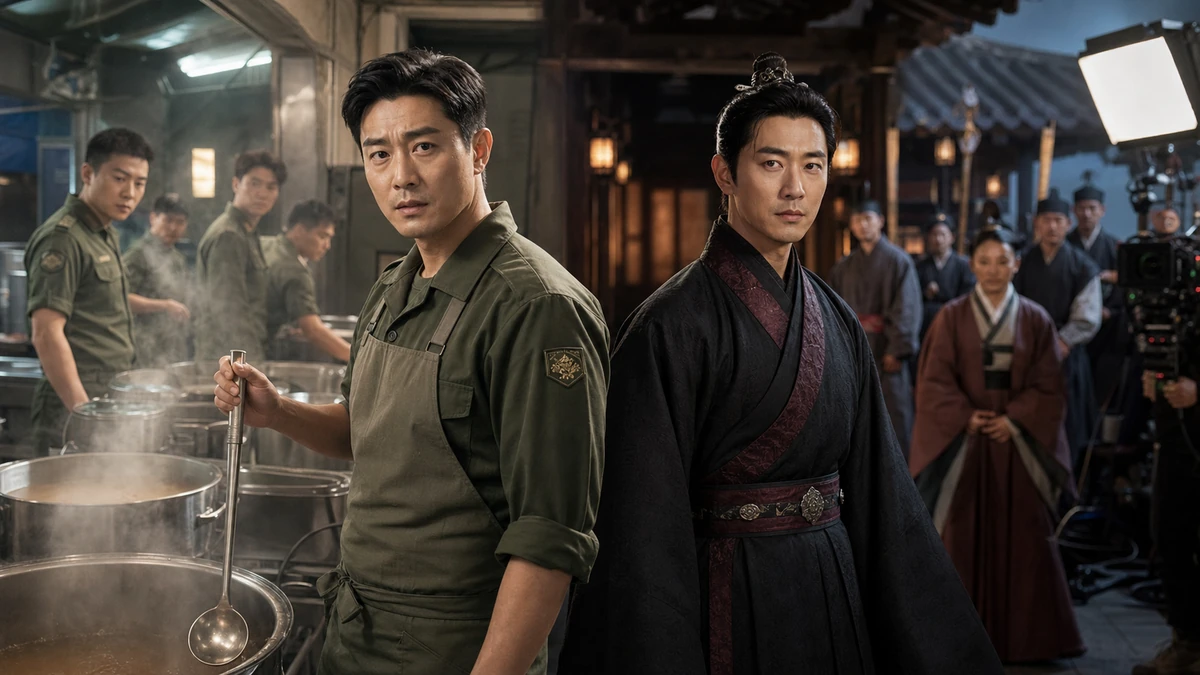
A familiar TV label is changing in South Korea
For American viewers, the idea of a cameo is easy to recognize. Think of a movie star popping up for a quick laugh in a sitcom, or a famous actor appearing for one memorable scene in a prestige drama. The point is usually surprise, novelty or a wink to the audience. In South Korea’s television industry, there has long been a similar category known as “special appearance,” a credit generally understood to mean a brief but striking role by a notable actor.
That understanding is now shifting.
In a growing number of Korean dramas, actors introduced as special appearances or cameos are no longer just dropping in for a scene or two. Instead, they are becoming structurally important to the series itself — shaping the lead character’s choices, driving key plot turns and, in some cases, becoming central to the show’s public image. The billing may still suggest a limited role, but the viewer’s actual experience increasingly says otherwise.
That change has become a talking point in the Korean entertainment business, particularly after two recent examples drew attention: actor Lee Sang-yi in the Tving original series “The Art of Negotiation for a Military Cook” — known in Korean as “Legendary Cook Soldier,” based on the Korean summary provided — and actor Kwak Dong-yeon in Netflix’s “Donggung,” which was released worldwide on July 17. Though the projects differ in tone and platform, both illustrate the same larger trend: the line between cameo and core cast is getting harder to see.
For international audiences, especially those discovering Korean dramas through Netflix and other streaming services, the distinction may seem semantic. But in Korea, billing categories carry industry meaning. They can signal expectations about status, pay structure, scheduling and promotional duties. When a performer officially classified as a special guest ends up functioning like a major supporting player, it reveals something important about how Korean dramas are being made — and how global streaming is changing the way audiences judge a character’s importance.
In other words, this is not just a story about screen time. It is a story about narrative power.
What “special appearance” means in Korean dramas
To understand why this shift matters, it helps to know how Korean television has traditionally used the term. In Korean credits, “special appearance” often refers to an actor who appears briefly but memorably, sometimes because of a personal connection to the director, writer or lead actors. The appearance might be a one-scene surprise, a punch line, a flashback or a scene-setting turn that gives the drama extra flair.
American television has its own comparable traditions. A well-known actor might stop by “Friends,” “The Office” or “Only Murders in the Building” and leave a lasting impression without becoming essential to the season’s overall architecture. The stunt casting is part of the fun. In Korean dramas, the conventional special appearance has often worked in a similar way: concise, recognizable and designed to add energy.
But the newer version goes well beyond that formula. These actors are not merely adornments. They can become emotional anchors, catalysts for the lead’s transformation or recurring forces who shape a series episode after episode. That means the label “special appearance” no longer reliably tells viewers how important the role will feel once they start watching.
This matters because Korean television, perhaps more than many American network shows, is often tightly plotted around character relationships. A recurring superior, rival, mentor or villain can dramatically alter the rhythm of a series. If that person enters under the banner of a “special appearance” but winds up doing the work of a central supporting role, then the credit label is no longer describing the audience’s lived experience of the story.
It also suggests a broader evolution inside Korean production culture. Casting is no longer just about assigning a fixed amount of material to a performer and sticking with it. Instead, some roles are growing as filming progresses, especially when an actor’s chemistry, comic timing or dramatic intensity proves too valuable to use only sparingly.
Lee Sang-yi’s role shows how a “guest” can become the face of a show
One of the clearest examples comes from Lee Sang-yi, a versatile actor known to many K-drama fans for balancing warmth, wit and emotional precision. In “Legendary Cook Soldier,” he played Hwang Seok-ho, the commander of the Fourth Company and a superior officer to the main character Kang Sung-jae, played by Park Ji-hoon.
On paper, Lee joined the project as a special appearance. In practice, Hwang Seok-ho did not behave like a conventional cameo at all.
Rather than showing up briefly and vanishing, the character repeatedly appeared throughout the series and developed a strong presence within its world. His relationship with the protagonist gave him a natural reason to remain in the orbit of the story. In military-themed dramas, rank structure itself can create recurring narrative logic: a superior officer is not random background color but someone who can influence discipline, morale, conflict and growth. Once such a character clicks, there is every reason for writers and directors to keep using him.
Lee himself underscored that dynamic at the series’ production presentation, a standard promotional event in South Korea where cast and creators introduce a drama to reporters before or during release. He said he had initially been told his role was not especially large and that filming would wrap relatively quickly, but that his portion grew as production continued. He even joked with the director, asking whether the role was “a little too special,” a remark that landed because it captured the absurdity of the situation: the special appearance no longer felt all that special in the traditional, short-term sense. It had become substantial.
That anecdote points to a core reality of drama production. Scripts may outline a character’s function, but performances can change the equation. If an actor brings unexpected comic force or memorable presence, the creative team may expand the role to preserve what is working. That appears to be what happened here. Lee’s comic performance and the character’s distinct personality reportedly made Hwang Seok-ho too useful — and too enjoyable — to confine.
Just as significant, Lee’s involvement extended beyond the episodes themselves. He attended the show’s production presentation alongside the principal cast, an indication that the industry itself recognized his practical importance to the project. Later, his contribution expanded into extra-program content, including a special stage on a music broadcast. That kind of crossover matters in the Korean entertainment ecosystem, where dramas frequently live beyond the TV screen through promotional appearances, online clips, soundtrack performances and social media virality.
In the American context, it would be a little like a supposedly one-off guest star not only becoming indispensable to the storyline but also joining the show’s press junket, fronting marketing material and appearing in franchise-adjacent content after audiences latched on. At that point, the title “guest star” starts to feel more like a technicality than a description.
Kwak Dong-yeon’s villain role points to a darker version of the same trend
If Lee’s example shows how a comic character can evolve into a drama’s emotional engine, Kwak Dong-yeon demonstrates the same phenomenon from the opposite direction: menace instead of humor, tension instead of levity.
In Netflix’s “Donggung,” released globally on July 17, Kwak delivered a powerful villain performance that has been cited in Korea as another case of the cameo-main-role boundary blurring. The specifics differ from Lee’s role, but the broader point is the same. A special appearance is no longer defined solely by brevity. It may instead be measured by what the character does to the story.
That is especially true for villains. A single antagonist can organize an entire narrative, even without dominating every minute of screen time. If a character raises the stakes, sharpens the hero’s choices and embodies the conflict that viewers remember most, then that character occupies major narrative real estate whether or not the billing says so.
For global viewers watching on Netflix, the industry category may barely register. Most international audiences do not track Korean credit conventions with the same care as local entertainment reporters or fan communities. They are more likely to decide instinctively: Which characters mattered? Who left the biggest mark? Whose actions shaped the series? In that environment, a formally “special” appearance can easily become, in the minds of viewers, one of the defining roles of the show.
That difference between official classification and audience perception is one of the most interesting features of Korea’s streaming era. In a domestic broadcast environment, industry labels may still carry traditional weight. In a global streaming environment, however, viewers encounter the finished product all at once or in rapid succession. They are less concerned with contract categories than with character function. If the villain becomes one of the show’s most memorable images, then the global audience will treat that actor accordingly.
Kwak’s case matters for another reason as well. It shows that this trend is not confined to one genre or mood. A role can become unexpectedly central whether it is comedic, bureaucratic, romantic, tragic or sinister. The common denominator is not tone. It is narrative necessity.
Why the label matters less than the character’s job
This shift reflects a basic change in how viewers evaluate importance. In the past, cameo value was tied heavily to recognition: the pleasure of spotting a familiar face, the surprise of an unexpected entrance, the extra sparkle that a famous actor lends to a scene. The appearance itself was the event.
Now, increasingly, the function of the role matters more than the novelty of the casting. Does the character reveal who the protagonist really is? Does that character alter the story’s direction? Does the performance shape the tone of the series? Can the plot still fully work if that role disappears?
Those questions are a better measure of importance than the number of scenes alone. A character may appear intermittently but still tie together the drama’s emotional logic. In “Legendary Cook Soldier,” the superior-subordinate relationship between Hwang Seok-ho and Kang Sung-jae reportedly created repeated interaction that helped define the story’s rhythm. In “Donggung,” a forceful villain can serve as the gravitational center of conflict, clarifying what the protagonist is up against.
This is one reason viewers may now find traditional billing categories less useful. The title “special appearance” implies something limited and perhaps ornamental. But the actual work being performed by these characters is often structural. They are not merely there to be noticed. They are there to make the drama operate.
That change also reflects a broader truth about prestige television in general, whether in Seoul, Los Angeles or London: audiences have become more sophisticated about ensemble storytelling. They notice who carries emotional weight. They remember who triggered turning points. They discuss the characters who changed the energy in the room whenever they appeared. The old distinction between lead, supporting player and cameo still exists, but it does not always map neatly onto the experience of watching a modern serialized drama.
In that sense, Korean television may simply be making visible a development that many entertainment industries already feel. Credits are fixed. Stories are alive.
How Korean productions can reshape roles during filming
Another reason this trend is gaining attention is that it reveals something about how Korean dramas are made behind the scenes. Unlike the most rigid production models, where episodes are completed far in advance and cast roles remain relatively locked, Korean series have historically allowed for a degree of flexibility. Scripts can be revised, reactions can be measured and performances can influence emphasis as production moves forward.
That does not mean every special appearance will balloon into a major role. Far from it. The classic short-form cameo still exists, and there are many cases where a famous face is used precisely for a brief surprise. But the recent examples suggest that “special appearance” may increasingly describe the entry point of a role rather than its final shape.
Lee Sang-yi’s account of his growing screen time is revealing because it illustrates how directors and producers may respond in real time when something works. If a character’s humor lands, if the chemistry with the lead feels stronger than anticipated, or if the role helps unify the tone of a drama, then the production may choose to expand it. This is less about celebrity vanity than about storytelling pragmatism. Television tends to keep what is effective.
For viewers, this can create a fresh kind of suspense. Instead of assuming that billing tells the whole truth, audiences may now watch with greater curiosity about which characters will matter more than expected. A name introduced as a guest can turn out to be one of the most important presences in the series. That uncertainty becomes part of the viewing experience.
It also creates opportunities for actors. A performer joining a drama for what appears to be a limited role can still make a deep impression — and, if circumstances align, become one of the show’s breakout elements. In a competitive entertainment market where attention is fragmented and audience loyalty is hard-won, that kind of elasticity can be valuable for both talent and producers.
At the same time, it complicates the language used to market a show. If audiences repeatedly encounter “special appearances” that feel anything but minor, the term itself may start to lose precision. Korea’s entertainment industry may eventually need a more nuanced way to describe roles that begin as guest parts but evolve into major narrative functions. Until then, viewers are left to decode significance by watching, not by reading credits.
The promotional machine is evolving, too
One of the most notable aspects of the Lee Sang-yi case is that his expanded importance was not confined to the drama’s internal story mechanics. It spilled into promotion and fan culture, areas that are especially important in South Korea’s highly integrated entertainment industry.
In Korea, a drama does not simply air and vanish into weekly recaps. It exists within a broad ecosystem that includes press conferences, fan events, variety-show mentions, soundtrack releases, short-form video clips and, increasingly, cross-platform appearances that help a character live on beyond the original episodes. If a supposedly minor actor is participating in those activities, it tells the public that the person is no longer peripheral in practical terms.
Lee’s attendance at the production presentation and his participation in a special music-broadcast stage suggest exactly that. The drama’s world expanded outward, and his character expanded with it. That kind of promotional presence can deepen fan investment by giving viewers additional ways to connect with a series outside its official runtime.
For American audiences, this may resemble how streaming hits now generate companion interviews, viral social media moments and soundtrack tie-ins — except in Korea, the system is often even more coordinated and character-driven. A role that catches on can migrate quickly into adjacent content. When that happens, the actor ceases to be a simple surprise cameo and becomes part of the show’s brand identity.
This shift also hints at a more strategic use of casting. A well-chosen special appearance can serve as a storytelling tool, a marketing asset and a fan-engagement engine all at once. If the role is strong enough, it can draw media attention before release, sustain viewer interest during the run and continue generating content afterward. That is far more valuable than a one-scene gimmick.
In an era when Korean dramas compete not only domestically but globally for time, headlines and algorithmic visibility, that added value matters. The most successful characters are no longer confined to the edge of the frame. They become part of the conversation surrounding the show itself.
What this says about the future of K-drama storytelling
The blurring of cameo and core role may seem like a niche industry detail, but it points to a larger transformation in Korean entertainment. As K-dramas reach broader international audiences, the standards by which characters are judged are shifting from formal hierarchy to felt impact. Viewers in Seoul, Seattle and Singapore alike are asking the same basic question: Who made this story move?
That question favors actors whose characters perform crucial narrative labor, regardless of whether they were introduced as leads, supporting players or special appearances. It also favors production teams willing to adapt when they find unexpected magic. In a drama landscape famous for emotional intensity and meticulous plotting, the ability to elevate a role midstream can be a creative advantage.
For Korean studios and streamers, the lesson may be that flexibility pays. For actors, it is a reminder that a role’s size on paper is not always its size on screen. For viewers, it is an invitation to look past billing categories and pay attention to what actually happens in the story.
And for the rest of the world, it offers one more example of how South Korea’s entertainment industries continue to evolve in ways that are both locally distinctive and globally legible. The credit may still say “special appearance.” But if the character shapes the plot, defines the tone and follows the audience out of the episode and into the larger culture, that role is no cameo in the way most Americans would understand the term.
It is something more consequential: a sign that modern K-drama storytelling is becoming increasingly fluid, responsive and willing to let the most compelling characters rise, no matter what the opening billing promised.
Comments
Post a Comment