A Seoul Return That Functions as More Than a Victory Lap
Jay Park, the Korean American singer, rapper and entrepreneur who has spent more than a decade moving between K-pop, hip-hop and R&B, is returning to Seoul this week for a pair of encore concerts that appear to do more than revisit a familiar show. On July 29 and 30, Park will perform at Jamsil Indoor Stadium in Seoul, presenting “2026 Jay Park World Tour Serenades & Body Rolls in Seoul: The Replay,” according to South Korea’s Yonhap News Agency and his agency, More Vision.
For American readers, the word “encore” might suggest a bonus run of a successful show — something like a Broadway revival stop or an arena artist adding dates after strong ticket sales. But in the Korean pop industry, and especially for an artist with Park’s cross-market appeal, an encore concert can carry a more strategic meaning. It can serve as a checkpoint, a recalibration and, sometimes, a statement about where an artist stands at home before heading back out to the rest of the world.
That appears to be the case here. Park’s upcoming two-night stand is his first solo concert in South Korea in roughly a year and three months, dating back to his previous Seoul performance in May of last year. The gap matters. In the fast-moving ecosystem of Korean pop, where idol groups, soloists and independent labels all compete for attention in a nonstop cycle of releases, television appearances, festival sets and global tours, more than a year between domestic solo concerts can make a return feel significant, even for an artist with an established fan base.
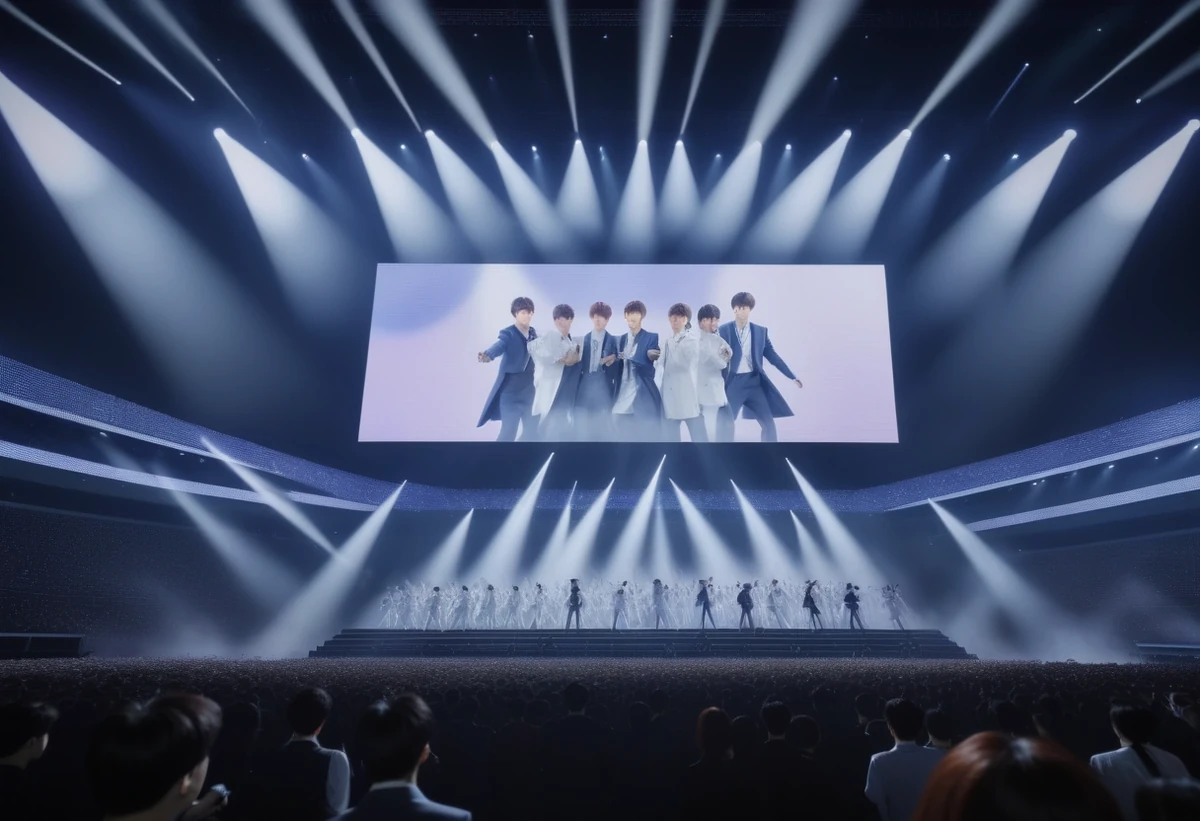
Just as important, this is not being framed as a simple rerun. While “The Replay” deliberately evokes the memory of Park’s earlier Seoul concert, his company has said the production will feature a newly arranged stage and a different live band setup. That distinction suggests the show is not meant to function as a nostalgia exercise but as a redesigned version of a tour that first launched in Seoul and is now circling back to the city with a changed shape.
In practical terms, that means fans who attended the earlier Seoul stop are being offered a reason to come back beyond loyalty alone. And for newcomers — whether Korean fans, international visitors in Seoul or global followers watching how the tour evolves — the concerts become a kind of compressed introduction to where Park’s live show stands now, rather than where it stood a year ago.
For a performer whose career has often centered on reinvention, genre blending and self-definition outside the most rigid K-pop formulas, that distinction fits the larger story he has been telling for years.
Why Jay Park Still Occupies a Distinct Place in Korean Pop Culture
To understand why this Seoul stop matters, it helps to understand who Jay Park is in the broader landscape of Korean entertainment. Born and raised in the Seattle area, Park first became widely known in South Korea as the leader of the boy band 2PM before departing the group in a highly public and scrutinized episode in the late 2000s. In the years since, he has built one of the more unusual second acts in modern Korean pop: not just as a singer, but as a rapper, label founder, talent executive and cultural bridge between South Korea and the United States.
In America, artists often build careers by moving gradually between scenes — from underground credibility to mainstream radio, from independent imprint to major-label distribution, from niche fandom to festival headliner. Park’s path has had some of that shape, but in a Korean context that can be more structurally rigid. He became one of the best-known examples of a performer who could succeed outside the traditional idol system while still benefiting from its scale and visibility.
Over the years, Park has released music that draws heavily from R&B, hip-hop and dance-pop, often with a level of sensuality and swagger that sets him apart from more tightly managed idol acts. He has also played a major role in elevating Korean hip-hop and R&B as commercial forces, first through AOMG and later through H1GHR MUSIC, labels that helped create a pathway for artists who were not built in the classic K-pop mold. More recently, his agency More Vision has expanded his role as both performer and curator.
That history gives his Seoul concerts a resonance that goes beyond simple hometown sentiment. Although Park is Korean American, Seoul has long functioned as the center of his professional identity. In the global Korean Wave, or hallyu — the term used to describe the international spread of South Korean pop culture, from K-dramas and movies to music, fashion and food — artists often become symbols of export power. Park, by contrast, has always also been a symbol of circulation. He moves between Korea and the broader world, between Korean-language performance and Western musical vocabulary, between polished pop spectacle and club-ready improvisation.
So when a world tour returns to Seoul, the city is not just another stop. It is the place where audience expectations are sharpest, industry scrutiny is strongest and artistic choices are likely to be read most closely. A Seoul encore is therefore not merely a homecoming. It is also a test case.
What “The Replay” Suggests About the Tour’s New Direction
The title “The Replay” might sound, at first glance, like a straightforward callback to a successful earlier show. But the more interesting part of the announcement is the insistence that the stage itself will be different. More Vision has said the concerts will feature a newly configured production and a changed band arrangement, which may seem like a technical footnote but is actually one of the clearest signals of intent.
Anyone who has seen multiple versions of the same major tour in the United States knows that seemingly small changes — a revised song order, a more prominent live band, alternate transitions, new visual pacing — can meaningfully reshape a concert’s emotional arc. A pop star who leans harder into live instrumentation can make a show feel warmer, riskier and more musically immediate. A different sequencing of songs can turn a set from a greatest-hits sprint into something closer to a narrative.
That appears to be the opportunity Park is pursuing here. Rather than treat the Seoul encore as a replay in the literal sense, he seems to be using it as a redesign. That makes the event notable not because it is bigger than what came before, but because it is more interpretive. It asks what happens when a familiar tour is heard again through a different musical lens.
For Park, that choice is especially meaningful. He has long traded on a performance identity that depends not just on songs but on texture — rhythm, charisma, groove and the line between tightly produced pop and more fluid stagecraft. A stronger emphasis on band arrangement could allow his catalog to breathe differently in concert, giving songs new tonal weight or stripping them of some of their studio polish in favor of something more tactile.
It also offers a useful reminder that in South Korea’s concert market, fans are often highly attuned to specifics. This is not a casual audience that passively consumes a repeat product. Korean fan culture is famously detail-oriented, from set lists and costume changes to fanchants, staging cues and the symbolic significance of a venue or date. In that environment, promising a materially altered show is not marketing fluff. It is a concrete invitation to compare, interpret and participate.
That dynamic is part of what makes K-pop touring distinct from many Western pop campaigns. Fans are not just buying tickets; they are tracking eras, narratives and artistic evolution in real time. “The Replay,” in that sense, sounds less like an encore appended to the end of a tour than a fresh chapter inserted into the middle of one.
Why a Seoul Encore Matters Before the Tour Heads West Again
After the Seoul concerts, Park is scheduled to continue the world tour in September across South America, North America and Europe. That sequencing gives this week’s shows an added layer of importance. Rather than concluding a global run, the Seoul dates appear to serve as a launch point for its next international phase.
For American audiences, it may help to think of this as the equivalent of an artist road-testing a revised arena show in a key market before bringing that version overseas — except that in Park’s case, the “key market” is also the cultural capital of the industry that shaped him. The concerts are both local and global at once. They are for domestic fans, but they are also a preview of what international audiences may soon see.
That matters because K-pop and adjacent Korean music scenes have changed how touring works. A decade ago, international expansion might have looked like a handful of showcase performances in Los Angeles, New York or Paris. Today, global touring is central to the business model. North American audiences are no longer fringe participants in the Korean Wave; they are a major constituency, especially for artists who can move across genres and language boundaries.
Park is particularly well positioned for that kind of expansion. Unlike some idol acts whose appeal abroad depends heavily on fandom infrastructure, Park has a musical style that more easily overlaps with mainstream American tastes in R&B and hip-hop, even when the songs are bilingual or culturally rooted in Korea. His persona — flirtatious, self-assured, club-literate and often more overtly adult than the image projected by many idol performers — also translates differently in the West. He occupies a lane that feels adjacent to American pop and urban radio traditions without fully belonging to them.
As a result, the Seoul encore becomes a kind of reference point for overseas fans. Those who remember last year’s Seoul concert can measure the changes. Those waiting for dates in the United States, Canada or Europe can treat these performances as an early indicator of the tour’s updated mood, musical emphasis and production philosophy.
There is also symbolic value in beginning that next stretch from Seoul. In the Korean entertainment industry, “returning to Seoul” before moving outward can signal legitimacy and continuity. It says the global tour is not detached from the home market but anchored in it. For artists whose careers increasingly depend on worldwide revenue, that balance can be delicate. Park’s encore suggests an effort to keep the domestic and international narratives connected rather than allowing them to drift into separate tracks.
The Venue, the Audience and the Meaning of a Domestic Solo Stage
The concerts will take place at Jamsil Indoor Stadium in Seoul’s Songpa district, a venue long associated with major sports and entertainment events. For readers unfamiliar with Seoul geography, Jamsil is one of the city’s best-known event hubs, home to large-scale arenas and significant traffic in both literal and cultural terms. Performing there situates a concert within a recognizable mainstream circuit rather than on the margins of the live scene.
Venue choice matters in South Korea, where concert spaces are often read as indicators of an artist’s status, audience size and market positioning. A domestic solo concert at a prominent Seoul arena is not just another date on a routing schedule. It is a public measure of staying power.
That may be especially relevant for Park because he occupies a somewhat hybrid place in the industry. He is not a rookie idol chasing validation, nor is he a legacy act simply cashing in on recognition. He remains a current-working performer with executive responsibilities, business ventures and a catalog that spans different phases of Korean music’s international rise. A solo concert in Seoul, after more than a year away from that format at home, allows him to reassert himself in a space where audience response is immediate and hard to fake.
For Korean fans, the time gap since his last domestic solo concert likely adds a sense of pent-up anticipation. In fan communities, waiting is part of the culture. But so is memory. The earlier Seoul concert is not disappearing into the past; it is being actively recalled, compared and reframed by the title of this week’s event. That makes the encore emotionally dense in a way that many American arena shows are not. It is designed to connect elapsed time with present performance.
For international fans, especially those who travel to South Korea for concerts, the appeal is different but related. Seoul shows often carry a prestige factor because they are perceived as closer to an artist’s original audience and cultural core. In K-pop tourism, attending a Seoul concert can feel like seeing a Broadway show on opening week rather than on a later touring stop. Whether or not that perception is entirely fair, it remains powerful. Park’s new Seoul dates therefore function as both a local event and a global magnet.
A Broader Sign of How Korean Pop Tours Are Evolving
Park’s encore also points to a broader shift in how Korean artists think about touring. As K-pop has globalized, the tour itself has become more than a sequence of performances. It has turned into a storytelling engine, with cities, versions, encore runs and revised arrangements all contributing to the public narrative of an era.
That is one reason the language around this show is so revealing. The emphasis is not simply on return, but on reconfiguration. In other words, the value lies not in faithfully reproducing what audiences already saw, but in proving that a live production can keep evolving as it travels. That approach is increasingly common among top-tier global acts, and Korean performers are adapting it in ways shaped by their own fan cultures and industry rhythms.
In the United States, the live business has become increasingly reliant on eventization: deluxe editions, surprise guests, alternate set lists, social-media-ready visual reveals and city-specific moments. Korean pop has embraced many of the same instincts, but often with an even stronger narrative overlay. Fans are invited to track not just the show, but the version of the show. Park’s Seoul encore seems designed with exactly that in mind.
There is another layer here as well. Park has spent years helping define what post-idol adulthood can look like in Korean entertainment. He has navigated controversy, reinvention and the challenge of staying culturally relevant after the initial shock of fame wears off. For artists in that position, a concert is not only an entertainment product; it is evidence of continued authorship. It shows whether a performer still has something new to say with the materials audiences already know.
By presenting “The Replay” as a fresh arrangement rather than a rerun, Park is effectively arguing that revisiting a successful stage does not have to mean looking backward. It can mean taking stock, editing the blueprint and preparing it for a wider audience. That is a particularly modern kind of encore — less curtain call than reset button.
What American Fans Should Watch For Next
As Park moves from Seoul to South America, North America and Europe beginning in September, the biggest question may not be whether the tour expands geographically, but how much of this newly reworked Seoul production travels with it. Will the revised band emphasis remain central? Will the set list shift to reflect different regional audiences? Will the emotional logic of the show — the balance between sleek pop spectacle and looser live-musician energy — become the defining feature of the tour’s second phase?
For American fans, those questions matter because Park has long occupied a unique place in the broader Asian pop conversation. He is not always grouped with the most globally dominant K-pop acts, yet his influence has been substantial and unusually durable. He has helped normalize Korean artists who are less bound by idol conventions, more openly rooted in Black American musical forms and more willing to build careers through entrepreneurship as much as through chart performance.
That does not make his path uncomplicated; questions of musical influence and cultural borrowing have long hovered around Korean hip-hop and R&B as genres. But it does make Park an important figure in understanding how the Korean Wave has diversified. Not all globally visible Korean music looks or sounds like a polished idol group. Some of it looks like Jay Park: multilingual, transpacific, image-conscious, genre-fluid and constantly renegotiating where “home” is onstage.
That is why these two nights in Seoul matter beyond the city itself. They represent a return, but not a retreat. They revisit an earlier concert, but not to duplicate it. And they come at a moment when global audiences for Korean music are more sophisticated than ever, increasingly interested not just in who is touring, but in how those tours evolve from market to market.
If Park succeeds in making “The Replay” feel genuinely new, the Seoul encore may end up serving as exactly what its structure suggests: not the afterglow of a completed run, but the opening cue for the next leg of a tour still in motion.
Comments
Post a Comment