K-beauty’s Next Big Market Is Europe, as Korean Cosmetics Move From Online Buzz to Department Store Shelves
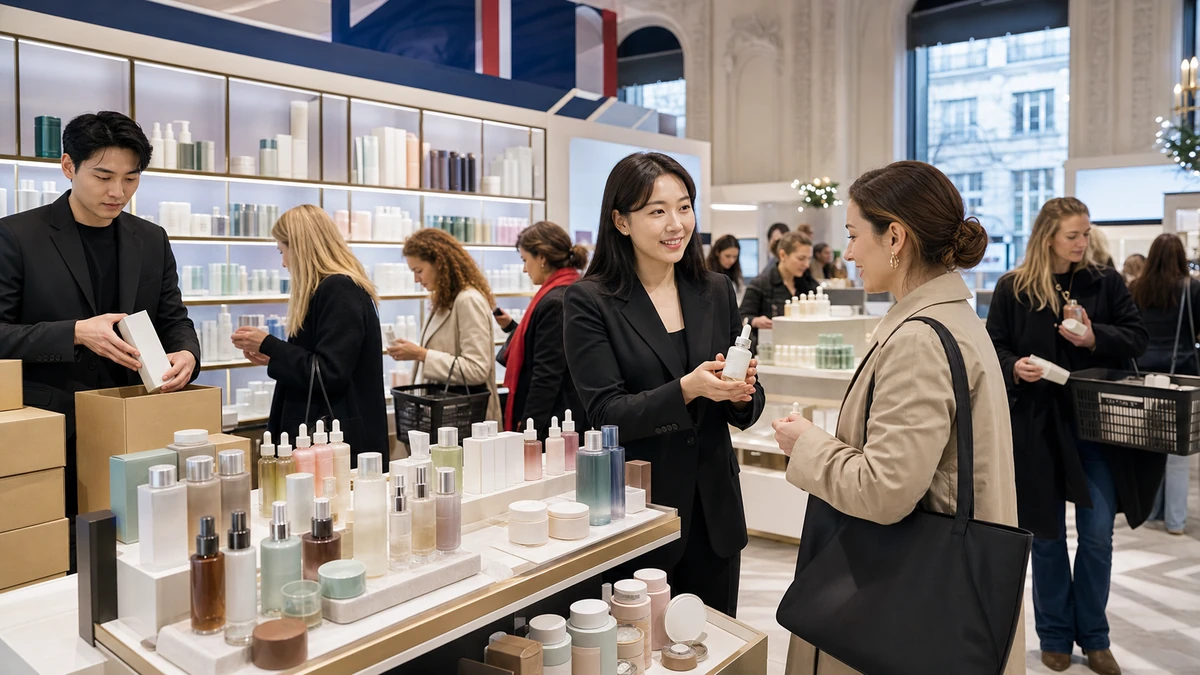
K-beauty pushes deeper into Europe
Korean beauty products, long a fixture in Asian markets and increasingly familiar to shoppers in the United States and Canada, are gaining ground across Europe in a way that suggests something larger than a passing trend. South Korea’s cosmetics exports to 58 European countries reached 2.3113 trillion won in the first half of this year, according to an MBC report citing industry figures, nearly doubling from two years earlier. For American readers, that is roughly the kind of jump that signals not just a hot product on TikTok, but a category becoming part of the mainstream beauty conversation.
That matters because Europe is not an easy market to crack in cosmetics. It is home to some of the world’s most established beauty capitals, from Paris and Milan to London, with generations of consumers accustomed to navigating crowded shelves of premium skin care, pharmacy staples and luxury makeup. If Korean brands are winning space there, industry watchers say, it is a sign that K-beauty — shorthand for South Korean beauty and skin care products, routines and aesthetics — is no longer being judged simply as a novelty imported from Seoul. It is increasingly being treated as a serious option alongside legacy Western brands.
For years, K-beauty’s growth story abroad was often framed around China, where Korean products built a major following, and North America, where younger consumers embraced sheet masks, essences and the now-common vocabulary of “glass skin,” a term used to describe smooth, luminous, intensely hydrated skin. But the latest export numbers suggest the map is widening again. The European expansion points to a second phase for Korean cosmetics: moving beyond digitally driven bursts of attention and into the slower, more durable business of retail distribution, repeat purchasing and consumer trust.
In practical terms, that means shoppers are no longer discovering Korean products only through social media hauls, Amazon listings or the skin-care obsessions of beauty influencers. They are increasingly seeing them in familiar retail settings, including department stores and curated beauty shops, where products can be tested, compared and explained. In the beauty business, that kind of visibility often marks the difference between a trend and a lasting category.
From internet curiosity to retail reality
One of the clearest signs of that shift is in Britain. John Lewis, the well-known U.K. department store chain that occupies a place in British retail culture somewhat akin to a blend of Nordstrom and Macy’s for American shoppers, began selling Korean beauty products in April after seeing a rise in searches for them on its online platform over the past year, according to the report. Brands including Beauty of Joseon, Medicube and Anua were among roughly 20 Korean labels added to its offerings.
The significance is not just that a major retailer stocked new brands. It is the path those brands took to get there. Consumer interest showed up first in online searches, then migrated into traditional retail buying decisions. That sequence mirrors the way modern beauty consumption increasingly works: customers browse online, watch reviews, compare ingredients and packaging, and then want the reassurance of seeing products in a trusted retail environment before committing. Department stores, which once acted mainly as gatekeepers deciding what customers should want, are now also acting as translators of digital demand.
For K-beauty, that is a valuable development. Online marketplaces can create sudden visibility, but they also produce intense competition. On a platform like Amazon, where many Korean brands first built overseas audiences, the challenge is not just listing products; it is staying visible in a crowded search environment where advertising costs can mount quickly. A serum can go viral one week and disappear beneath sponsored results the next. Brick-and-mortar expansion helps solve part of that problem by reducing dependence on algorithmic discovery and giving brands physical shelf presence.
It also allows consumers to evaluate the qualities that beauty shoppers still care about in person: texture, finish, packaging and, in makeup, color payoff. Those details are especially important in K-beauty, where formulas are often marketed around sensory appeal — lightweight textures, dewy finishes, calming ingredients and routines layered in steps. A cleanser or sunscreen can look interchangeable on a web page, but feel very different in a shopper’s hand.
That tactile element helps explain why established European retailers appear willing to carve out dedicated space for Korean cosmetics. It suggests merchants believe these brands can hold attention not just on novelty value, but on product performance and the kind of browsing experience beauty consumers enjoy in stores.
Why Europe matters in the beauty business
Europe is sometimes described in Korean coverage as the heartland of the beauty industry, and while that phrase can sound promotional, it is not entirely misplaced. For generations, European companies have shaped global standards in fragrance, cosmetics and skin care. French pharmacy products became staples in American medicine cabinets long before “skin-care routine” was common everyday language. Italian and French makeup brands helped define prestige beauty. British department stores and continental perfumeries developed sophisticated retail cultures around beauty long before social media turned everyone into their own product reviewer.
That is what makes the Korean industry’s growth there noteworthy. Winning in Europe means entering a mature market where consumers already have plenty of choices and often have strong brand loyalties. It is different from entering a newer or less saturated market where curiosity alone can drive sales. In Europe, Korean brands are competing in a region where the consumer is not just open to beauty experimentation but also well trained in beauty consumption.
Industry analysts increasingly see that as evidence that K-beauty’s appeal is broadening. Early waves of global interest often focused on singular hero products: snail mucin, cushion foundations, sheet masks or lip tints with unusual finishes. Those items generated excitement, but they also risked trapping Korean cosmetics in a cycle of trend-chasing, where each export success is tied to the next viral product. What the recent figures suggest instead is that more consumers are accepting Korean-style skin care and makeup as an ongoing option within their regular routines.
That distinction matters. A trend product can create a spike in sales. A routine creates a category. Korean beauty’s biggest cultural export may not be any one cream or cleanser, but the idea of skin care as a layered, personalized practice rather than a single step. Americans have seen versions of this already, as ingredients such as centella asiatica, fermented extracts and gentle chemical exfoliants have migrated from niche corners of the internet into mainstream retailers like Sephora, Ulta and Target. Europe now appears to be moving further along a similar curve.
There is also an image component. K-beauty has become associated globally with a particular beauty standard: healthy-looking, hydrated skin that emphasizes brightness and clarity over heavy coverage. That aesthetic does not replace local preferences, but it gives consumers another reference point. In the same way Korean pop music and streaming dramas helped normalize Korean fashion, food and language for international audiences, Korean beauty has become one more channel through which South Korean lifestyle cues travel abroad.
Indie brands, not just conglomerates, are driving the moment
Another important part of this story is who is leading it. The Korean cosmetics industry includes powerful conglomerates, but recent overseas momentum has often come from smaller, more agile independent brands. The MBC report highlighted companies and labels that have gained traction through quick product development, sharp branding and an ability to respond fast to changing tastes. In a global market where trend cycles can be compressed into months, that speed matters.
For American consumers, the comparison might be the way indie beauty brands in the U.S. once used Instagram and direct-to-consumer sales to challenge larger legacy companies. The Korean version of that phenomenon appears particularly well suited to export because it pairs nimble marketing with a high-volume product ecosystem. South Korea’s beauty market is known for rapid iteration: new ingredients, packaging updates, texture tweaks and category hybrids arrive quickly, giving brands multiple ways to test what resonates.
That ecosystem has helped brands such as Beauty of Joseon, Medicube and Anua gain attention well beyond Korea. Beauty of Joseon, for example, has found an audience by blending minimalist branding with references to Korean history. The name invokes the Joseon Dynasty, which ruled the Korean Peninsula for more than five centuries, and helps position the brand within a broader fascination international consumers have developed with Korean heritage imagery through historical dramas and cultural exports. For audiences unfamiliar with Korea, that kind of branding can make products feel distinct without requiring deep background knowledge.
But the real driver is rarely branding alone. It is whether the products feel tailored to what consumers want right now: lighter textures, ingredient transparency, multifunctionality and price points that do not require luxury-level commitment. Korean indie brands have often been strong at identifying those preferences early and packaging them in ways that feel polished but accessible.
The Amazon model helped accelerate that growth, especially in North America. Yet it came with trade-offs. Digital shelves are open to almost anyone, but visibility can be expensive and unstable. Brands may need to keep buying ads just to remain in front of consumers. Physical distribution, especially through established local retailers, changes that equation. It can lower some discovery costs, support warehousing and logistics, and give smaller brands credibility they might struggle to build alone in a foreign market.
That may be why the expansion of local offline platforms in North America and Europe is being watched so closely. It hints at a structural shift: from each Korean brand trying to break into each overseas market on its own, toward a model where distribution partners introduce multiple brands together. That is a good fit for K-beauty, which thrives on abundance, fast product turnover and variety.
Selling more than products: the K-beauty experience
If Korean beauty were only about exporting face creams and lip products, its growth would still be notable. But part of the industry’s staying power comes from how it sells an experience as much as an item. That experience centers on diagnosis, customization and sequence — the idea that your skin condition, preferences and goals should shape what you use, in what order, and why.
The MBC report pointed to a Korean beauty multibrand retail shop in California that opened with more than 400 brands and over 5,000 products, more than 80 percent of them Korean. At launch, shoppers reportedly lined up around the shopping complex, with the queue stretching about 400 meters, a vivid sign that interest in K-beauty remains intense in at least some U.S. markets. But what stood out was not just the product volume. The store’s strategy involved assessing a customer’s current skin condition and then recommending Korean products tailored to that individual.
That is a distinctly Korean approach to beauty retailing, though versions of it are becoming more familiar in the West. Instead of presenting skin care as one-size-fits-all, it frames the process as guided discovery. Consumers are encouraged to think in terms of hydration levels, skin sensitivity, barrier support, texture preferences and layering order. In American retail terms, it is less like grabbing a face wash off a shelf at a drugstore and more like combining the advisory feel of a makeup counter with the ingredient education of an online beauty forum.
This matters because K-beauty’s most exportable idea may be that better skin care is not about buying the most expensive cream, but about finding the right combination of products for your skin and using them consistently. For consumers drawn to the look often associated with Korean beauty — luminous, fresh, “your skin but better” finishes — the appeal lies in being guided through a system rather than simply being sold a star product.
That experience also helps explain why multibrand stores can be so powerful. A curated shop lets consumers compare Korean brands side by side, learn how they differ and understand where each fits within a routine. For an industry with countless labels and rapid product turnover, those stores function almost like interpreters. They help newcomers make sense of a crowded landscape without needing to spend hours researching online.
As K-beauty grows in Europe, that retail model could become increasingly influential. It offers a way to convert curiosity into confidence, especially among consumers who may have heard of Korean skin care but still feel unsure about how to start.
The broader cultural backdrop behind K-beauty’s rise
K-beauty’s success abroad does not exist in isolation. It is part of the larger Korean Wave, or “Hallyu,” the term used to describe the international spread of South Korean popular culture. American audiences first encountered that wave in scattered moments — perhaps through Psy’s “Gangnam Style,” then through the Oscar-winning film “Parasite,” the global breakout of BTS and Blackpink, and the huge reach of Netflix series such as “Squid Game” and “Crash Landing on You.” Beauty followed a similar path, moving from niche interest to wider recognition as Korean culture became more visible and legible overseas.
That cultural familiarity lowers barriers. Consumers who discover Korean entertainment often become more open to Korean food, fashion and lifestyle products. A viewer who trusts Korean drama styling or is curious about the skin of K-pop performers may be more inclined to try Korean sunscreen or toner. None of that guarantees long-term loyalty, but it creates a warmer entry point than an unfamiliar foreign brand might otherwise have.
At the same time, K-beauty’s rise should not be reduced to fandom. Consumers may arrive through cultural curiosity, but they stay only if the products perform. The European expansion suggests many do. In a region with no shortage of premium and mass-market options, Korean brands appear to be convincing shoppers that they offer something distinct: formulas that prioritize feel, routines built around skin condition and a broad menu of products spanning both skin care and makeup.
There is also a price-to-value story. K-beauty is not uniformly inexpensive, but many products have competed effectively by offering sophisticated textures and ingredient stories at prices lower than prestige Western rivals. In an era when consumers in the U.S. and Europe are paying close attention to inflation and discretionary spending, accessible quality can be a powerful advantage.
That does not mean the path ahead will be easy. Beauty markets can turn quickly, and regulatory, logistics and brand-recognition hurdles differ from country to country. Europe is not one market but many, with distinct languages, retail cultures and consumer expectations. Still, the export surge and the growing presence of Korean cosmetics in recognized retail channels suggest K-beauty is building something more durable than a social media spike.
What comes next for Korean cosmetics abroad
The next test for K-beauty is whether it can turn fast-growing interest into long-term habit. That will depend in part on how effectively brands and retailers connect individual consumers to products that match their needs. The challenge is no longer simply making Korean cosmetics visible outside Korea. It is helping shoppers navigate a huge range of options and convincing them to keep coming back.
For the industry, that means the future may be less about a single blockbuster product and more about retail education, smarter curation and localized service. Brands that can explain ingredients clearly, adapt to local tastes and build reliable distribution will be best positioned to thrive. Retailers, meanwhile, may find that carrying Korean beauty is most successful when they treat it not as a novelty corner but as a meaningful category with its own logic and loyal customer base.
For American readers, the European story is also a reminder of how far Korean beauty has come. What once seemed like a specialized niche — ten-step routines, essence layers, cushion compacts and skin-first makeup — is now influencing mainstream beauty shopping on both sides of the Atlantic. The products are easier to find, the terminology is less foreign, and the appeal is broader than the devoted internet communities that first championed them.
Europe’s embrace of K-beauty does not mean Korean brands will displace French pharmacy staples, American prestige labels or long-established local favorites. Beauty rarely works that way. What it does mean is that Korean cosmetics are increasingly earning a permanent seat at the table. In a crowded global market, that may be the clearest sign yet that K-beauty has moved beyond buzz and into staying power.
And for shoppers in the U.S., where Korean beauty has already become part of the retail landscape, the European expansion offers another clue about where the industry is headed. Expect more physical stores, more curated cross-brand shopping experiences and more efforts to match products to skin concerns rather than simply chase the next online sensation. In other words, the future of K-beauty may look less like an impulse buy and more like a fully developed consumer ecosystem — one that South Korea built at home and is now exporting, successfully, to the world.
Comments
Post a Comment