Korean TV Reboots a Hit Ghost Romance, Signaling a Broader Shift in How Seoul Recycles Screen Stories
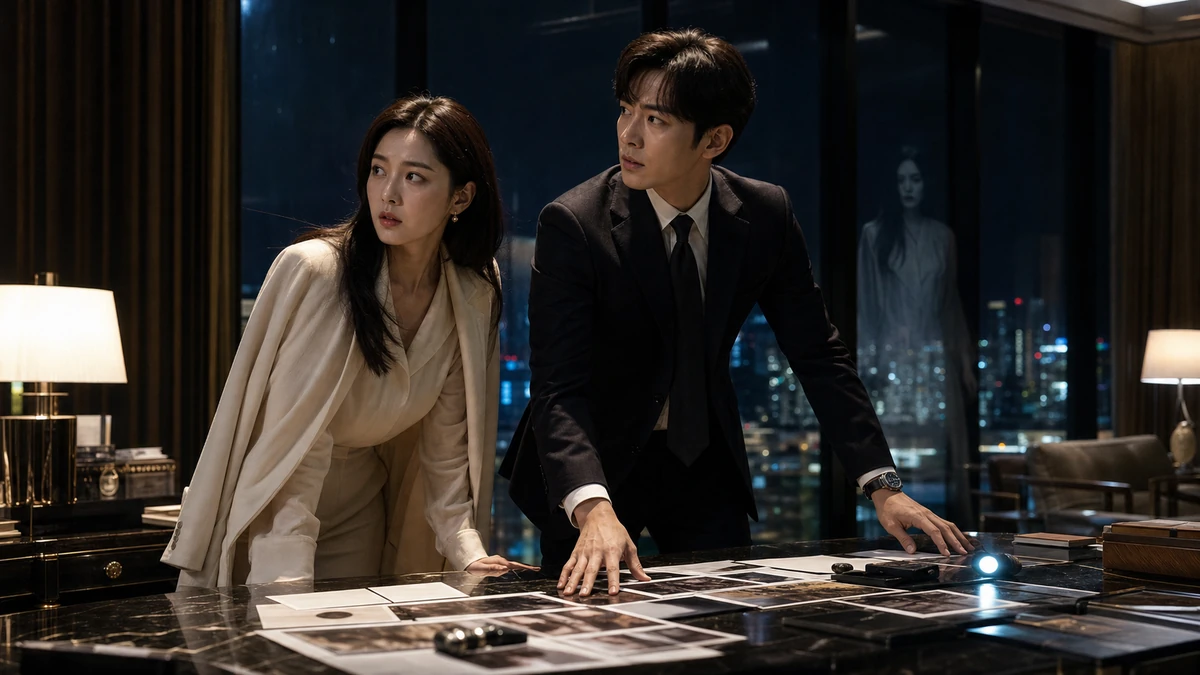
A familiar title returns, but almost everything underneath it has changed
South Korea’s television industry has made a habit of reworking successful source material, but the newest example shows just how far that strategy has evolved. The new tvN weekend drama “Chilling Romance,” which premiered July 18, takes its title and one core supernatural premise from a 2011 Korean film of the same name, then rebuilds nearly everything else from the ground up for a 12-episode run. In place of a modest big-screen romance about a lonely woman who sees ghosts and a street magician who enters her life, the drama introduces a chaebol heiress, a hard-charging prosecutor, an unsolved case and a newly created romantic rival.
That may sound like an aggressive rewrite, and that is precisely the point. In South Korea, where entertainment companies increasingly treat stories as expandable intellectual property rather than one-time productions, a recognizable title is no longer a promise of faithful adaptation. It is often a launchpad. The new “Chilling Romance” arrives at a moment when Korean studios are looking beyond the webtoons and web novels that have supplied so many recent series and are turning to older films as libraries of reusable ideas. The result is less a remake in the traditional Hollywood sense than a strategic reimagining for a different medium, audience rhythm and global distribution landscape.
For American viewers, the closest comparison may be a studio taking the premise of a well-liked romantic fantasy film, keeping its brand recognition and emotional hook, then rebuilding it into a streaming-era limited series with a murder investigation, family power politics and a love triangle. Think less shot-for-shot redo, more franchise-minded reconstruction. That approach is becoming increasingly common in Korea, where broadcasters and production companies are under pressure to stand out in a crowded market while also delivering concepts that can travel internationally.
The stars at the center of this reboot are Park Eun-bin and Yang Se-jong, two actors whose names carry weight with Korean drama audiences. Their casting alone signals that the project is not simply a nostalgia play aimed at fans of the original movie. It is meant to stand on its own as a contemporary prime-time series. And as the show’s creators have made clear, independence from the original is built into the design.
What remains from the 2011 film is mainly the title and the idea of a woman who can see ghosts. Everything around that idea, from class status to occupation to the engine of the plot, has been altered. In an era when Korean entertainment companies are constantly asking how one story can live across formats, “Chilling Romance” offers an unusually clear answer: by preserving only the most marketable DNA and reinventing the body around it.
From a small-scale movie romance to a serialized supernatural mystery
The original 2011 film, starring Son Ye-jin and Lee Min-ki, blended romance with spooky elements in a relatively intimate way. Its appeal came from the contrast between ordinary emotional vulnerability and sudden brushes with the paranormal. The female lead lived in isolation because she could see ghosts, and the male lead, a street magician, brought a whimsical, slightly offbeat energy to the story. The movie’s tone depended on that unusual mix: sweet, eerie and accessible.
The new drama keeps the ghost-seeing heroine but changes her social world dramatically. Park plays Cheon Yeo-ri, no longer a socially withdrawn ordinary woman but a lonely heiress from a chaebol family. For readers in the United States unfamiliar with the term, chaebol refers to the giant, family-controlled business conglomerates that have long shaped South Korea’s economy, politics and pop culture. Companies such as Samsung, Hyundai and LG are the most famous real-world examples of the system. In Korean fiction, a chaebol heir or heiress is a recognizable character type, often carrying associations of wealth, pressure, family duty and isolation beneath privilege. It is a little like combining old-money dynasty drama with corporate succession intrigue.
That shift matters because it immediately expands the scale of the story. A heroine haunted by ghosts is one thing; a heroine haunted by ghosts while trapped inside a powerful business family is another. The drama can now draw tension not only from supernatural fear but also from inheritance politics, public image, family surveillance and the loneliness of being rich in a highly stratified society. That is a much broader canvas than the original movie required.
The male lead has been overhauled just as thoroughly. Yang plays Ma Kang-wook, a prosecutor pursuing unsolved cases. In South Korea, prosecutors have an outsized presence in the public imagination, partly because the prosecution service has historically held powerful investigative authority and has often been central to political scandals, corruption probes and major crime stories. Korean dramas frequently use prosecutors as symbols of state power, moral conflict or institutional ambition. Replacing a street magician with a prosecutor changes not just the hero’s job description but the entire storytelling mechanism.
Instead of a romance built largely on emotional proximity, the drama now has a procedural spine. Ghost sightings can intersect with unresolved crimes. The heroine’s supernatural ability is no longer just a private burden or romantic obstacle; it can become a narrative tool in the investigation of buried truths. That makes the series structurally suited to television, where viewers expect each episode to move both relationships and plot. The romance remains important, but it now shares space with a mystery engine that can sustain cliffhangers, suspects and reveals over a dozen installments.
This kind of genre layering is one reason Korean television travels so well internationally. Many of the most successful shows do not sit neatly in one box. They are romance and thriller, family drama and fantasy, social critique and procedural. “Chilling Romance” appears designed with exactly that hybrid appeal in mind.
Why a 12-episode drama cannot simply stretch a two-hour movie
One of the clearest insights from this adaptation is something that applies well beyond Korea: expanding a movie into a series is not just a matter of adding scenes. A feature film compresses character arcs, emotional shifts and plot revelations into roughly two hours. A 12-episode television drama, even by the relatively concise standards of modern Korean series, needs multiple waves of conflict. It has to justify pauses, reversals, secondary characters and midseason escalations. Without that architecture, it can feel thin very quickly.
That seems to be why the creators of “Chilling Romance” opted for what is essentially a total redesign. Park has said publicly that aside from the character’s name and the ghost-seeing premise, the drama contains new material. Her comment underscores how the Korean industry increasingly thinks about adaptation in practical rather than reverential terms. If the story needs “at least six times” more setup, conflict and development to work on television, then the adaptation will generate that material, even if it means departing sharply from what audiences remember.
For American readers, that may call to mind the difference between a self-contained romantic fantasy movie and a prestige streaming series that must keep viewers returning each week. A series needs room for backstory, subplots and thematic layering. Why is the heiress isolated? How has her ability shaped her childhood and family relationships? What cases is the prosecutor chasing, and how do those investigations connect to the supernatural world? What private motives do supporting characters hide? How does trust grow between leads when one is burdened by ghosts and the other by institutional duty? Those are television questions, not movie questions.
Korean television has become particularly skilled at this kind of recalibration. Unlike the sprawling 16-to-24-episode dramas that once dominated network schedules, many newer Korean series run shorter and faster, often in the 10-to-12-episode range, making them more legible to global viewers used to streaming seasons. But that shorter season length also places a premium on efficient storytelling. Every episode still needs its own hook and emotional beat. Rebuilding the leads’ professions, class positions and stakes is one way to ensure that each installment has enough fuel.
There is also a platform logic at work. A theatrical movie is designed to deliver a single, continuous experience. A weekend drama airing on a major Korean cable network and reaching audiences through online video services must work in fragments. Each episode must land, circulate on social media and generate anticipation for the next. That makes the adaptation process less about loyalty to scenes than about loyalty to momentum.
In that sense, “Chilling Romance” reflects a broader truth about today’s screen business: recognizable IP is valuable, but only if it can be reshaped to fit new viewing habits. The title gets attention. The premise provides identity. The rest must serve the format.
The new love triangle adds a classic K-drama engine
Another major change is the addition of Kang Min-hwan, a hotel executive played by Ong Seong-wu, a character who did not exist in the original film. His presence introduces one of the most familiar devices in Korean drama storytelling: the triangular romance. To some American viewers, love triangles can sound like soap-opera shorthand, but in Korean television they often function as much more than jealousy machines. They can expose class differences, competing value systems, emotional timing and social obligation.
Here, the setup appears particularly strategic. If Cheon Yeo-ri is a chaebol heiress and Kang Min-hwan is a hotel executive, their connection can operate on both personal and class levels. He may represent a world adjacent to her own, one that understands elite pressure, family expectation and the language of status. By contrast, the prosecutor Ma Kang-wook stands for a different kind of authority: state power, legal pursuit, truth-seeking and perhaps a more grounded moral seriousness. That creates a potentially rich contrast in what each man offers the heroine.
For the drama’s writers, this third point of tension does more than expand the romance. It makes the story less predictable for viewers familiar with the original film. If a remake keeps the same title but changes the relationship geometry, then knowing the source material no longer gives away the ending. That may be especially important in an adaptation of a movie that already had public exposure. Familiarity sells the project; unpredictability keeps audiences watching.
The addition of a hotel executive also fits neatly into the glamorous visual language that Korean dramas often deploy so effectively. Luxury hotels, corporate spaces and upper-class interiors are not just settings but shorthand for hierarchy and emotional distance. They allow Korean dramas to stage deeply personal conflicts inside polished worlds of money and performance. American viewers who have seen succession dramas or upper-crust melodramas will recognize the appeal: beautiful rooms, rigid expectations and characters whose privilege does not protect them from loneliness.
At the same time, the paranormal and investigative dimensions keep the series from becoming a simple romance among the wealthy. The likely interplay between ghosts, criminal cases and emotional competition could give “Chilling Romance” a dual-track rhythm: one track asking who loves whom, the other asking what hidden truth is still haunting the living. That pairing of intimacy and mystery is a longstanding strength of Korean storytelling, where personal relationships often unlock broader secrets rather than sitting beside them.
In practical terms, the love triangle also helps fill the structural needs of a 12-episode series. It can delay confessions, complicate loyalties and create intermediate turning points without feeling purely artificial. That is particularly useful in a story where the central pair’s bond may otherwise form too quickly through shared encounters with the supernatural.
Why Park Eun-bin and Yang Se-jong matter to this project
Any adaptation lives or dies by casting, and “Chilling Romance” has placed two recognizable stars at its center for a reason. Park Eun-bin, in particular, has become one of the more closely watched performers in Korean television thanks to a run of roles that have showcased both emotional intelligence and strong screen presence. Yang Se-jong, meanwhile, brings his own following and a profile that fits a romantic lead with a more serious, restrained edge.
The importance of their casting goes beyond celebrity. Because the series departs so far from the original film, it cannot rely on nostalgia alone. It needs actors who can create fresh characters rather than inviting direct comparison to Son Ye-jin and Lee Min-ki’s movie performances. By changing the leads’ occupations and social settings so dramatically, the show effectively gives Park and Yang permission to build from scratch.
That is a smart move in remake culture. One of the common traps of reboots, in Hollywood and elsewhere, is forcing new actors to perform in the shadow of beloved earlier versions. “Chilling Romance” seems to avoid that by making comparison less literal. Park is not being asked to replay the exact emotional rhythms of the film’s heroine, because this heroine is a chaebol heiress navigating a much larger social web. Yang is not repeating a magician’s quirky charm; he is embodying a prosecutor whose work ties romance to unresolved crime.
This matters for audiences, too. Original film fans can still recognize the emotional lineage of the concept, but first-time viewers do not need prior knowledge to enter the story. In effect, the show is trying to satisfy both groups at once: those attracted by the familiar title and those drawn by the cast and premise on their own terms.
There is also an industrial dimension to star casting in Korea that American audiences may not always see. In a market where dramas compete domestically and internationally almost at the same time, actors become part of the export strategy. A known star can help a show cut through the noise on global platforms, drive online discussion and reassure distributors that a series has cross-border appeal. When the underlying property is already known inside Korea, attaching bankable actors can help translate local recognition into broader interest.
If the series succeeds, it will not be because audiences wanted a museum-quality restoration of a 2011 film. It will be because Park and Yang persuade viewers that this new world, however loosely linked to the original, is emotionally worth investing in.
Korea’s adaptation machine is widening beyond webtoons and web novels
For much of the past decade, conversations about Korean source material have centered on webtoons and web novels, the mobile-first storytelling formats that have fed an enormous number of television and streaming adaptations. Their advantages are obvious: built-in fandoms, serialized plot structure and visual or narrative templates that are easy to pitch. But “Chilling Romance” points to an adjacent trend that deserves attention: the mining of older film catalogs for concepts that can be repurposed for contemporary television.
That shift makes sense. A theatrical hit or well-remembered genre film already comes with name recognition. It has tested its core concept with audiences. And unlike some webtoon adaptations that are expected to closely mirror the original art or plot, a movie-to-drama adaptation may grant producers more flexibility, especially if the new version keeps only the essential hook. The title works like a signal flare, while the series itself can be tuned for present-day tastes.
In Korea, this strategy is also shaped by the global success of Hallyu, or the Korean Wave, the term used to describe the international spread of Korean popular culture, from K-pop and films to TV dramas, fashion and beauty products. As Korean content has become a more export-driven business, producers are increasingly motivated to create stories with multiformat potential. A film can inspire a series. A series can revive interest in a film. Both can circulate on streaming services to viewers who encounter them in reverse order.
American audiences are familiar with franchises, cinematic universes and IP-driven development, but the Korean version has its own texture. It often blends the commercial logic of recognizable properties with a greater willingness to overhaul tone, character and even genre emphasis. The goal is not always continuity in the Marvel sense. Sometimes it is more like preserving a seed and growing a different tree.
That flexibility may be especially useful in a television ecosystem where broadcasters, cable networks and streaming platforms all compete for attention. A movie that once reached theatergoers in a single two-hour experience can be reintroduced to younger audiences who may never have seen it, while also giving older viewers a reason to return out of curiosity. The adaptation becomes a bridge across generations and formats.
There is a risk, of course. Lean too heavily on brand recognition and audiences may feel misled. Change too little and the project can feel redundant. The balancing act for “Chilling Romance” is to honor what made the original memorable, the eerie-romantic identity, while proving that its reassembled version belongs to a new era of Korean television.
What this reboot says about the future of Korean screen storytelling
The significance of “Chilling Romance” lies not only in whether it becomes a ratings success, but in what it reveals about where Korean drama production is headed. This is an industry that has become highly sophisticated at treating stories as modular assets. A premise can be detached from its first form, upgraded with new genre machinery, cast with new stars and redistributed through a different platform strategy. In business terms, that is efficient. In creative terms, it can be either liberating or cynical, depending on the execution.
At its best, this model allows creators to revisit strong concepts that may have been constrained by the limits of their original format. A two-hour movie can hint at character depth that a series can fully explore. A quirky supernatural romance can become a richer blend of class drama, legal mystery and emotional suspense. A familiar title can open the door for a story that feels genuinely contemporary.
At its worst, IP recycling can flatten storytelling into endless repackaging. That is the challenge now facing not just Hollywood but Seoul as well. The real question is whether adaptations like “Chilling Romance” are using existing properties as shortcuts or as springboards. Based on the available details, this one appears to be attempting the latter. By changing the heroine into a chaebol heiress, transforming the hero into a prosecutor, adding an unsolved-case framework and introducing a new romantic rival, the series is not merely stretching old material. It is testing how much can be reinvented while still benefiting from a known name.
That experiment is likely to matter beyond this single show. If it works, other Korean producers may feel emboldened to revisit older films with similarly radical freedom, treating cinema catalogs as idea banks for premium television. That could diversify the kinds of source material feeding Korean drama, which has in recent years leaned heavily on digital comics and online fiction. It could also further blur the boundaries between film, television and streaming content in Korea’s entertainment economy.
For international viewers, especially those in the United States who have come to Korean entertainment through recent streaming hits, “Chilling Romance” offers a useful window into how the Korean Wave is evolving. The export success of Korean content is no longer just about bold original concepts. It is also about industrial agility: the ability to repackage, reinterpret and relaunch stories for different formats and audiences without losing their local flavor.
Whether “Chilling Romance” ultimately lands as a compelling drama will depend on execution, chemistry and narrative discipline. But as a case study in how Korean television now thinks about adaptation, it is already noteworthy. The ghosts may be fictional, but the trend haunting the industry is very real: in today’s Korean screen business, no successful idea is ever truly finished. It may simply be waiting for its next form.
Comments
Post a Comment