A midseason game that felt bigger than one night
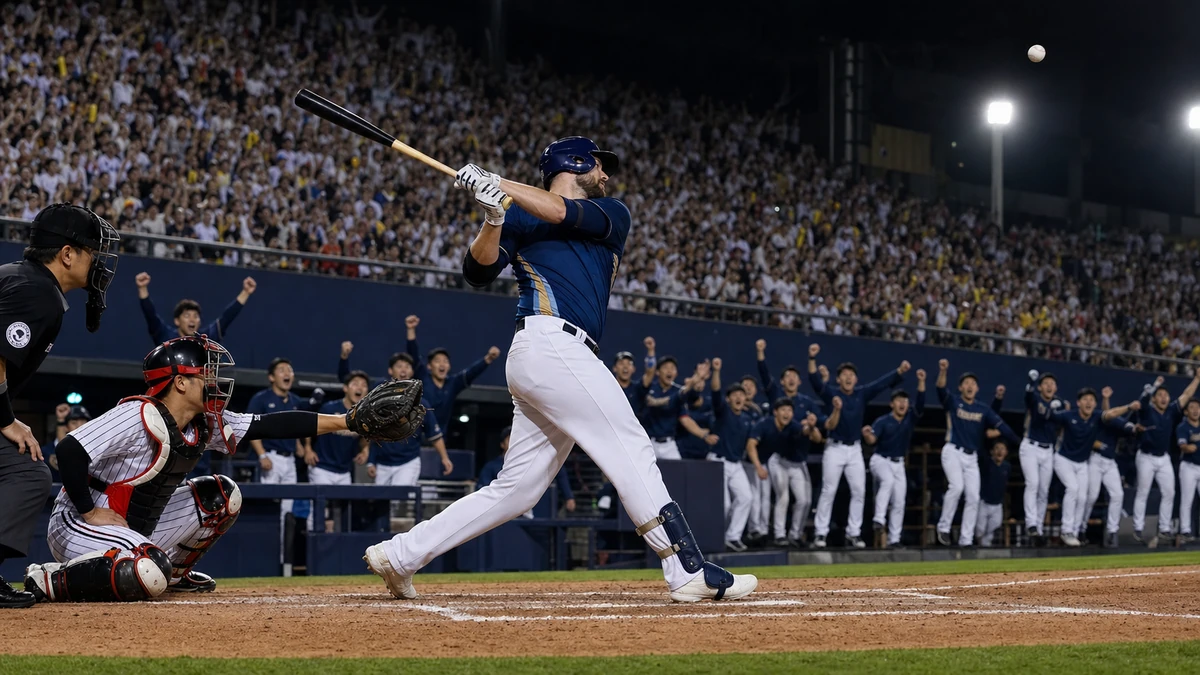
In the long grind of a baseball season, not every July game carries the same emotional weight. This one did. The NC Dinos, a club trying to claw its way back into South Korea’s postseason picture, beat the LG Twins 7-5 in Seoul on July 23 behind a breakout showing from newly added foreign hitter Blaine Crim, who drove in four runs and delivered the kind of power swing that can instantly change a team’s mood.
On paper, it counts as one regular-season win in the KBO League, South Korea’s top professional baseball circuit. In context, it looked like something more important for both teams. For NC, which entered the game buried in the middle of the standings and chasing the final playoff spots, the victory kept alive what Korean fans often call “fall baseball,” a phrase used to describe postseason play. For American readers, think of it as the baseball equivalent of staying alive in the wild-card hunt after the All-Star break: no champagne, no clinching, but a result that keeps the clubhouse believing there is still a road forward.
For LG, one of the league’s marquee franchises and a team that still sits near the top of the standings, the loss deepened a troubling skid. The Twins remained in third place, but their losing streak stretched to seven games, an uncomfortable contrast with the confidence that comes from spending much of the season as a contender. In a sport where narratives can swing quickly, NC walked out of Jamsil Baseball Stadium feeling revived, while LG left with more questions than answers.
That tension is part of what makes the KBO compelling to a broader global audience. The league, which gained many American viewers during the early months of the COVID-19 pandemic when ESPN aired games live, is often associated abroad with energetic fan culture, organized cheering and bat flips that can feel more expressive than what many fans are used to in Major League Baseball. But the game itself still turns on familiar fundamentals: timely hitting, momentum, bullpen management and whether a new middle-of-the-order bat can make a pennant race feel real.
On Wednesday night in Seoul, Crim looked like that kind of bat.
Who is Blaine Crim, and why this mattered
Crim’s name may be new to many casual American readers, but his role is immediately recognizable. Every baseball team in contention wants impact from the heart of its lineup, and in the KBO, newly signed foreign players are often brought in with especially clear expectations. They are usually expected to provide middle-order production, extra-base power and a degree of day-to-day stability that can lift the entire offense. When a team is chasing the standings, those expectations become even heavier.
That is what made Crim’s performance stand out. He did not simply hit one dramatic home run and disappear. He reached base early, helped spark NC’s first run of the game and later delivered the biggest blow of the night, a three-run homer that underscored why the Dinos brought him in. By the end of the evening, he had accounted for four RBIs, more than half of NC’s seven runs.
For American fans, the easiest analogy is a team calling up or acquiring a right-handed power bat in July and immediately watching him change the texture of the lineup. Not just because he homers, but because pitchers now have to navigate the order differently. A credible run producer in the middle can change pitch selection, force more stressful innings and create better opportunities for the hitters around him.
That effect was visible here. NC did not win solely because of one swing, even if Crim’s home run became the signature moment. The offense functioned in layers. He opened the scoring sequence by getting on base. His teammates extended innings and moved runners. Later, when the game reached a point where one swing could create separation, he delivered exactly that. It was the kind of all-around offensive contribution that teams hope for from a newly arrived import player and the kind that fans remember when a playoff push begins to feel possible.
In the KBO, the term “foreign hitter” is common and refers to non-Korean players signed to strengthen a roster. To American ears, it can sound unusually direct, but in South Korean baseball it is a standard roster category, similar to how fans in the United States might talk about an international signing or a veteran import in basketball leagues overseas. The key point is not nationality alone. It is expectation. Those players are often expected to make an immediate difference. Crim did.
How the game turned: early punch, counterpunch and a swing back
The game’s shape was dramatic enough to hold attention even without the standings attached. NC struck first in the top of the second inning, and Crim was at the center of it from the start. He singled to left to begin the rally, giving the Dinos an early baserunner and putting pressure on LG before the inning fully developed. Park Kun-woo followed with a double, pushing the attack into scoring position, and Lee Woo-sung then brought home the game’s first run on an infield grounder.
The box score credits the RBI elsewhere, but the inning’s real ignition point was Crim reaching base. That may sound subtle, yet it matters in understanding how NC’s offense worked. He was not only the finisher. He was also a starter, the first domino in a sequence that combined contact hitting, situational baseball and productive outs.
LG answered immediately in the bottom half of the inning, the sort of response that made it look for a moment as if the home team might finally shake its slump. Shin Min-jae delivered a two-run hit, flipping a 1-0 deficit into a 2-1 LG lead. At Jamsil, one of the most recognizable venues in Korean baseball and home to both the LG Twins and Doosan Bears, that kind of quick response can energize a crowd fast. If you are an American reader looking for a point of comparison, think of a team in a big shared urban venue, closer in atmosphere to a crosstown baseball institution than to a small-market park. Games there tend to feel bigger, even in the middle of summer.
But NC did not fold after surrendering the lead. That resilience may have been the most meaningful sign of the night. Teams stuck below the playoff line often reveal themselves in moments like that. They either play with the nervousness of a club aware of the standings, or they show the steadiness required to keep chasing. In the fifth inning, the Dinos looked like the latter.
With runners on second and third and one out, Kim Ju-won lined a single to right, cashing in the chance and giving NC life. Then Park Min-woo added another run on a ground ball, and the Dinos had turned a 2-1 deficit into a 3-2 lead. Once again, the offense was notable for its variety. This was not a lineup waiting around for a three-run homer. It was a lineup capable of manufacturing pressure, stringing together at-bats and taking advantage of scoring chances when they came.
That matters over the course of a season, especially in the KBO, where offensive games can turn quickly and where teams often place heavy value on contact, baserunning and inning-to-inning momentum. NC showed all of that, then got the thunderous swing it needed on top of it.
The home run that changed the feel of the night
Baseball games often have one moment that reorganizes everybody’s emotions. This one was Crim’s three-run shot. By the time he connected, the game had already moved through multiple turns: NC scored first, LG answered, NC regrouped and took the lead back. The homer was not the first important play of the night, but it was the one that made the result feel tangible.
A three-run homer does more than add three to the scoreboard. It changes dugout posture, forces bullpen urgency and can make a comeback feel steeper than the raw score alone suggests. For NC, it provided separation. For LG, it was another body blow during a stretch when very little has gone right.
Crim’s final line — including the home run and four RBIs overall — told the story numerically. But the larger significance was symbolic. NC signed him to bring middle-order impact, and here was a game in late July with real playoff implications in which he looked every bit like the lineup anchor the club needed. That kind of instant return can be energizing in any league. In the KBO, where roster construction around a limited number of foreign players is often scrutinized closely, it can be especially meaningful.
American audiences unfamiliar with the KBO should understand that stars and foreign additions can become central to fan conversation very quickly. The league is intensely followed, and because every team plays a packed schedule in front of highly engaged supporters, there is little patience for players who fail to produce in key roster spots. The flip side is that a performance like Crim’s can generate immediate excitement. If NC fans were looking for a reason to believe their team’s offense might have found a new pulse, this was it.
And he did not produce in a vacuum. His performance landed because it arrived inside a game NC had to have. The Dinos entered still outside the top five in the standings, and while there is time left in the season, the margin for drifting is small. A flashy debut stretch or headline home run means more when it directly affects a crowded race. Crim’s did.
What it means in the KBO playoff race
As of July 24, the victory left NC at 42-45-1, a .483 winning percentage and seventh place in the league table. That may not sound especially threatening to outsiders used to larger playoff fields in North American sports, but the context matters. The Dinos trimmed the gap to the fifth-place Doosan Bears to four games after Doosan’s contest was canceled. Sixth-place Hanwha Eagles still stand between them and the final postseason position, so NC has not leaped over anyone yet. But the team remains within striking distance.
In South Korean baseball, “fall baseball” is more than a scheduling note. It is a cultural shorthand for relevance, ambition and a season that gets to continue when the weather cools. Just as American fans talk about making October, Korean fans talk about reaching fall baseball. For clubs on the edge of contention, every game that preserves that possibility carries extra emotional value.
That is why this win resonated beyond the scoreboard. NC’s two-game winning streak does not erase a middling season. It does, however, keep the team connected to the race. In July, that connection can be enough to change the tone around a franchise. A club that feels stuck one week can look dangerous the next if the lineup stabilizes and a new run producer settles in.
The standings around LG tell a different story, but an equally revealing one. The Twins, despite the loss, remained in third place at 52-39. Yet the number attached to them now is not their position but the seven straight defeats. Ahead of them, Samsung sat in first at 55-34-2, while KT Wiz, riding a seven-game winning streak of its own, occupied second place at 51-35-2. So while LG still holds a strong spot, the trend line is unmistakably heading the wrong way.
For Americans, this is the kind of standings tension that will feel familiar. A team can still be safely in the playoff bracket while at the same time worrying that a bad two-week stretch is beginning to redefine its season. That is where LG appears to be. Third place offers a cushion. Seven straight losses erase any sense of comfort.
NC, meanwhile, does not have the luxury of comfort at all. Its route upward is narrower, which makes performances like Crim’s especially valuable. Teams on the fringe usually need some combination of an unexpected bullpen surge, a hot month from a veteran hitter or an immediate lift from a midseason addition. The Dinos may be hoping Crim becomes that catalyst.
LG’s losing streak and the pressure of expectations in Seoul
If NC left Jamsil feeling renewed, LG left facing the sort of scrutiny that only big-market teams really know. The Twins remain one of the KBO’s flagship clubs, and with that comes the expectation that prolonged slumps should be temporary, not defining. Seven losses in a row invite anxiety anywhere. In Seoul, with standings, media attention and fan expectations all magnified, it becomes a story of urgency.
That does not mean LG’s season is suddenly in crisis. A single regular-season game, or even a rough week, does not wipe out months of strong play. The Twins are still above fourth-place KIA and still positioned in the upper tier of the league. But losing streaks can create their own pressure. Hitters start chasing. Bullpens begin to feel every late-inning lead as something fragile. Managers are questioned not only on results, but on sequencing, substitutions and whether the emotional state of the club still feels under control.
That dynamic is not unique to Korea. It is as old as baseball itself. But in the KBO, where fan engagement can be extraordinarily visible and every game is threaded into a season-long collective mood, a skid like this can feel loud. The league’s crowds are famous for coordinated songs and relentless energy, and when a home team is scuffling, that environment can amplify both support and frustration.
LG did show enough offense to suggest it is not a lifeless club. Shin Min-jae’s early two-run hit demonstrated that the Twins were capable of punching back. The final score, 7-5, also showed they stayed within reach. But close losses count the same as any other, and for a team trying to stop a slide, moral victories have limited shelf life.
The challenge now is straightforward, even if the fix is not. LG must recover its rhythm before the gap above it grows more serious and before the teams below begin to sense vulnerability. That is the pressure that accompanies being a contender. Staying near the top is not only about talent. It is about arresting bad momentum before it becomes identity.
A reminder of what makes Korean baseball worth watching
For international readers, especially those who may only casually know the KBO, this game offered a compact lesson in why the league has earned growing attention outside South Korea. It had swings in momentum, playoff implications, star pressure, a productive new foreign hitter, a heavily scrutinized contender in a slump and the kind of offensive bursts that keep games feeling alive deep into the late innings.
NC’s pitching also deserves part of the credit. Taylor was credited with the win, moving to 7-4 on the season, while Lim Ji-min closed it out for his fifth save, preserving a two-run lead in the game’s final stretch. That detail matters because even in a story led by offense, baseball remains collaborative at its core. NC did not win on Crim’s bat alone. It won because the lineup created chances, because the new slugger cashed them in and because the pitching staff held the margin when it mattered.
There is also a broader lesson here about how baseball travels across cultures. The details differ — terminology, chants, postseason formats, roster rules and the style of crowd interaction — but the emotional logic is the same whether you are in Seoul, New York, Los Angeles or St. Louis. A team trying to stay alive gets a huge game from a new hitter. A favorite stumbles again. The standings tighten. Fans begin to imagine two very different futures depending on what happens next.
NC now has reason to believe its future can still include fall baseball. LG has reason to believe this skid must end soon if it wants to remain a serious title threat. And Crim, in one of those performances that can define an early chapter with a new club, gave the Dinos exactly what teams crave from a midseason addition: not just numbers, but conviction.
That is what made this 7-5 game feel larger than the line score. It was a reminder that in baseball, a single night can shift the emotional geometry of a season. In the KBO, where every run is folded into a bigger race and every streak seems to gather a personality of its own, that shift can be felt immediately. On this night, NC felt hope. LG felt pressure. And a new slugger at the center of it all announced himself in a way that even readers far from Seoul can understand.
Comments
Post a Comment