South Korea Finds Narcotics in Most Tested Overseas ‘Cannabis’ Foods, Underscoring Risks of Online Supplement Shopping
South Korea’s warning shot on cross-border online food sales
South Korean regulators say they found narcotic-related substances in 22 of 32 food products purchased from overseas online sellers, a striking result that is likely to sharpen public concerns about the safety of cross-border e-commerce in supplements, snacks and other ingestible products marketed with cannabis-themed language.
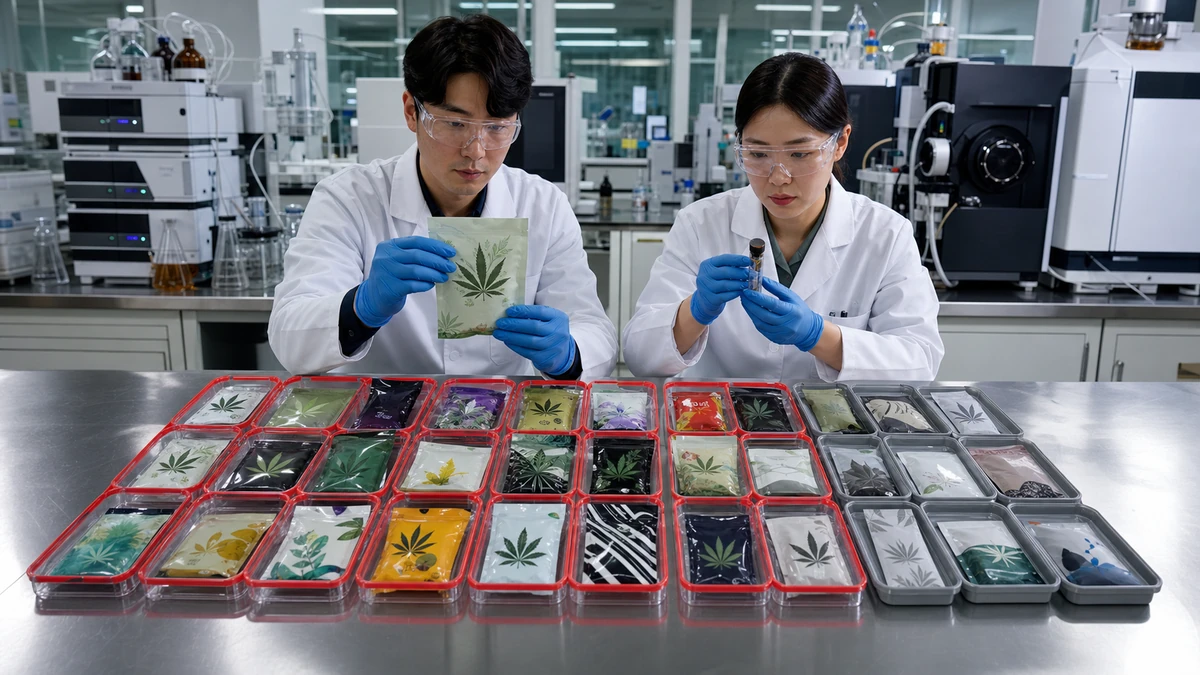
The announcement came from South Korea’s Ministry of Food and Drug Safety, or MFDS, the country’s top food and drug regulator. According to the agency, the products it examined were sold as foods through overseas direct-purchase channels — a shopping practice known in Korea as “haeoe jikgu,” or buying products directly from foreign sellers online and having them shipped into the country. The products were flagged because they used words such as “Cannabis,” “Hemp” or “Kanna” in English, or included imagery and design cues suggesting a connection to cannabis or other controlled ingredients.
Of those 32 tested items, 22 were found to contain narcotic-related ingredients, with regulators identifying 11 different controlled substances across the products. In plain terms, roughly 7 in 10 products singled out for suspicion turned out to contain ingredients that South Korea treats as narcotics. That does not mean every imported product using hemp-like branding is illegal or dangerous. But it does suggest that eye-catching marketing language and botanical imagery were, in many cases, not just decorative branding.
For American readers, the case may sound familiar in broad outline even if the legal backdrop is different. In the United States, consumers have grown used to buying wellness gummies, herbal drinks, mushroom products and hemp-derived supplements online, often from companies operating across state lines and sometimes with limited oversight. South Korea’s new findings highlight a similar digital marketplace problem: Consumers can easily mistake the label “food” or “supplement” for a guarantee of safety, even when a product’s actual contents may be far murkier.
The Korean regulator’s message was blunt. Do not assume that a product is safe just because it is advertised online as a snack, health food or personal-use item. Do not rely on a seller’s promotional language, product photos or customer reviews. And do not assume that because a product appears to be lawfully sold overseas, it can legally be imported into South Korea or consumed there.
That warning carries added weight because this was the first investigation of its kind since a revision to South Korean law gave MFDS clearer authority to directly purchase suspicious overseas food products and test them, rather than merely monitor online listings. In other words, the government did not simply look at screenshots and make inferences. It bought the items, analyzed them and found controlled substances in a majority of them.
The results reflect a broader dilemma facing regulators around the world: In the age of global online shopping, the package that arrives at a customer’s doorstep may have traveled farther and passed through fewer familiar gatekeepers than many buyers realize.
What the regulator found and why it matters
The core finding is straightforward. South Korea’s food safety agency selected 32 overseas direct-purchase food products for investigation because they appeared, from their English wording or packaging design, likely to contain narcotic-related substances. These were not random pantry staples. They were products that, by name or appearance, raised red flags.
When the products were tested, 22 were found to contain narcotic-related ingredients. In all, regulators said they detected 11 different narcotic substances across those products. The government did not frame the result as a comprehensive survey of the entire global online food market, and it is important not to overstate what the data show. The sample was targeted, not representative. Officials looked for products that already seemed suspicious. Even so, the fact that such a large share of those items tested positive gives regulators strong support for their claim that consumers should treat this category with caution.
That distinction matters. Some of the 32 products tested did not contain narcotic ingredients. But that does not make similarly branded products safe by default. A few clean test results in a narrow inspection do not validate an entire online marketplace. If anything, the findings underscore how difficult it is for consumers to judge risk from marketing alone. Two packages may look similar; one may be benign while another contains ingredients that trigger health concerns and possible criminal liability.
For readers in the U.S., the term “hemp” may also create confusion. In America, hemp has become a mainstream commercial category since the 2018 Farm Bill legalized hemp under federal law if it contains no more than 0.3% delta-9 THC by dry weight. That has helped normalize hemp branding in everything from lotions to sparkling drinks. But the Korean regulatory and legal context is not the same. A product that uses hemp or cannabis language in one country may face a very different legal interpretation in another, especially if it contains substances that exceed local limits or include other controlled compounds.
The inclusion of “Kanna” is also notable. Kanna, a plant associated with mood-altering effects and sold in some international wellness markets, is far less familiar to most Americans than cannabis or hemp. But its presence alongside cannabis-related labeling shows regulators are not just concerned with one ingredient or one trend. They are responding to a wider online ecosystem of products marketed as natural, exotic or plant-based, sometimes in ways that blur the line between food, supplement and psychoactive substance.
That blurred line is part of what makes the case so significant. In everyday life, most consumers hear the word “food” and think low risk. They might worry about sugar, calories or allergens — not narcotic substances. South Korean officials are now arguing that, in cross-border online shopping, the category label itself may be misleading. A product sold in gummy, tea, candy or capsule form may look tame, but appearance does not resolve what is actually inside.
Why “food” does not necessarily mean safe
One of the clearest takeaways from the Korean investigation is that the commercial label “food” can create a false sense of security. That is not just a Korean problem. American consumers, too, are accustomed to a marketplace in which products labeled “natural,” “herbal,” “plant-based” or “wellness” can seem inherently safer than pharmaceuticals or recreational drugs. In reality, those words are marketing language first. They are not a substitute for transparent ingredient verification or regulatory approval.
South Korea’s food safety ministry emphasized that many of the products in question were presented to consumers in the form of foods purchased directly from overseas sellers. That matters because consumers often lower their guard when buying edible products. If something is sold like a candy, cookie, drink mix or supplement chew, buyers may assume the worst-case scenario is that it does not work as advertised. The Korean findings suggest the stakes can be much higher.
It is also easy to see how shoppers could make mistakes. Online product listings may be written in English or another foreign language. Ingredient panels may be incomplete, vague or difficult to interpret. Product pages often rely heavily on images, symbols and lifestyle marketing rather than clear chemistry. A cannabis leaf icon, earthy packaging and phrases about relaxation or botanical support may all signal a trendy wellness product to some buyers. To regulators, those same signals may point to the possibility of controlled substances.
In the U.S., consumers have already seen versions of this problem with loosely regulated cannabinoid products, including some delta-8 THC items sold in gas stations, smoke shops and online stores. While those products operate in a different legal environment, the consumer lesson is similar: Packaging can make a psychoactive or legally questionable product look routine, casual or even health-oriented.
South Korean officials said they did not rely only on text when selecting products for testing. They also considered illustrations and design elements that suggested a link to cannabis-related ingredients. That detail is especially revealing. It recognizes how modern online marketing works. Sellers do not always say everything explicitly. Sometimes the branding does the talking — a leaf motif here, a green palette there, a coded phrase about calm, elevation or herbal bliss. A savvy consumer may catch the reference; an inexperienced one may not.
For Korean buyers, especially younger shoppers accustomed to buying from global platforms, this creates an information gap. A seller overseas may describe a product in terms that make sense under the norms of its own market. But once that product crosses into South Korea, Korean law and Korean health standards apply. The result is a mismatch between what the seller communicates and what the buyer actually needs to know.
That mismatch is central to the MFDS warning. The agency is effectively telling consumers that a product’s online presentation is not evidence of its legality, its safety or its compatibility with domestic standards. If a listing hints at cannabis, hemp or related substances, the safest response is not to “try just a little” or trust that other buyers had no problem. The safest response is to stop before purchasing.
The Korean shopping habit behind the crackdown: “Direct purchase” culture
To understand why this issue resonates in South Korea, it helps to understand the culture of overseas direct buying. For years, Korean consumers have turned to foreign e-commerce platforms to buy everything from vitamins and baby products to fashion, electronics and specialty foods. The practice grew in part because imported items could sometimes be cheaper online, harder to find domestically, or marketed as more premium or more innovative than local alternatives.
The Korean term “haeoe jikgu” refers to this do-it-yourself form of global shopping: Consumers place orders directly with overseas retailers rather than buying through a domestic importer or store. To an American audience, it may sound like a cross between shopping on Amazon, ordering niche supplements from a brand’s own website and using an international package-forwarding service. The appeal is convenience, choice and price. The downside is that consumers often operate with less protection and less reliable information.
In many cases, that model works without incident. But the very features that make direct purchase attractive also create vulnerability. A shopper may have little idea who the seller really is, what regulatory standards apply in the country of origin, whether the ingredient list is complete, or how the product would be evaluated by authorities at home. If the item is a shirt or a lamp, that uncertainty may be frustrating. If the item is something you eat, drink or swallow, it becomes a public health issue.
South Korean authorities have long monitored online imports and problem products, but the revised law gave regulators a more proactive tool: They can now directly buy suspicious overseas food items and test them. That shift may sound procedural, but it is important. Monitoring websites is useful, yet it has limits. Sellers can change descriptions, hide ingredients behind vague language, or use misleading images. A laboratory test is far harder to argue with.
The government is presenting this first round of direct purchasing and testing as a meaningful expansion of enforcement. It is one thing for a regulator to warn, based on suspicious branding, that a product might be risky. It is another to say that it purchased the product and found narcotic substances in the lab. That move gives the agency more credibility and likely puts overseas sellers on notice that Korea is not just screening webpages but analyzing actual shipments.
There is also a larger policy point here that will sound familiar in the United States: E-commerce has outpaced traditional regulatory models. Agencies were built around importers, distributors and brick-and-mortar retail channels. But now individual consumers can order a psychoactive product from halfway around the world with a few taps on a phone. Governments are trying to catch up to a marketplace that is borderless in practice even when laws remain national.
Legal risk, not just health risk
South Korean regulators stressed that the issue is not limited to potential health harm. Importing or consuming overseas direct-purchase foods containing cannabis-related or other narcotic substances can also expose consumers to legal penalties under Korean law, officials said. That means the danger is twofold: People may unknowingly ingest problematic ingredients, and they may also run afoul of the law.
This is a particularly important point for American readers because legal assumptions about cannabis can vary dramatically by country. In parts of the United States, marijuana is legal for recreational use. In many more states, it is legal medically. Hemp-derived products are widespread, and mainstream retail culture has increasingly absorbed cannabis-adjacent branding. A consumer who lives in California, Colorado or New York might be surprised to learn how different the legal landscape can be elsewhere.
South Korea maintains some of the stricter drug controls in the developed world. Even where public attitudes have evolved on some global lifestyle trends, narcotics laws remain firm. That means products casually marketed in one country can become serious legal liabilities in another. A Korean consumer ordering what appears to be a trendy imported edible is not navigating the same legal environment as an American buying a CBD seltzer at a local shop.
The agency’s warning that even products intended for personal consumption are not exempt is also significant. Regulators are not talking only about commercial trafficking or resale. They are saying that individual use does not erase the underlying risk. In American terms, it is a reminder that “for personal use” is not a magic phrase. If the product itself contains prohibited ingredients, the buyer may still face consequences.
That may be uncomfortable news for consumers who view direct overseas shopping as a private matter — just another form of personal choice in a global marketplace. But South Korean authorities are clearly trying to push back on that assumption. Their position is that personal autonomy does not override domestic safety rules or narcotics controls, especially when edible products are involved.
Regulators also urged consumers not to experiment with suspicious products after purchase. If a buyer notices cannabis-related terms or imagery only after the item arrives, the agency’s reasoning suggests that tasting it “just to see” would be the wrong response. Consumers cannot determine the presence or absence of controlled substances by appearance, smell or a small sample. The Korean investigation offers no basis for believing that casual testing by the user can substitute for laboratory analysis.
Nor, officials imply, is there a safe workaround in sharing the product with others or treating it like a novelty item. If the product poses a potential health and legal risk to one person, passing it along does not solve the problem. That warning lands especially hard in a social media era when unusual imported snacks and drinks are often treated as content, conversation pieces or group experiences.
What consumers should look for before buying
South Korean officials pointed to a few practical warning signs that consumers should check before ordering overseas food products. The first is straightforward: Look closely for English words such as “Cannabis,” “Hemp” or “Kanna” on the product name or packaging. In the Korean investigation, products using those terms were among the items selected for testing. Officials’ advice is simple — if you see those terms, do not dismiss them as harmless lifestyle branding.
The second warning sign is visual. A product may not explicitly state a suspicious ingredient, but its graphics can suggest one. Leaf imagery, related plant illustrations and branding that heavily implies cannabis-like content should be treated cautiously. In a digital marketplace, sellers know that images can communicate what words avoid. Consumers need to read those signals the way regulators do.
The third issue is consistency — or inconsistency — between promotional claims and actual ingredient information. South Korean authorities acknowledged that ordinary shoppers may not be able to fully verify this on their own, especially when product information is in a foreign language or translated automatically. That point is worth underscoring. Consumers often overestimate how much protection translation apps or online reviews really provide. A smooth product description in English does not certify legal compliance in Korea. A five-star review does not prove the contents are safe.
For many U.S. readers, this may sound like common sense. But in practice, e-commerce trains consumers to trust cues that are only weak indicators of safety: polished branding, repeat buyers, influencer endorsements and easy shipping. South Korea’s new findings challenge that trust directly. The regulator is saying that even when a product appears professionally packaged and widely available online, it may still contain substances that trigger serious concern.
The broader lesson applies beyond Korea and beyond cannabis-related foods. Whether the product is a nootropic gummy, a libido booster, a sleep aid, a mushroom chew or an herbal “wellness” shot, the same principle holds: The more a product trades on buzzwords and exotic appeal, the more important skepticism becomes. If the seller’s language and design hint at a psychoactive effect, consumers should pause — not because every such product is illegal, but because marketing increasingly outpaces meaningful disclosure.
A first test case with wider implications
There is a reason this Korean investigation is drawing notice beyond the immediate products involved. It marks the first use of newly strengthened authority allowing regulators to directly purchase and test overseas direct-purchase foods suspected of containing narcotic-related ingredients. As a policy milestone, that matters almost as much as the test results themselves.
Governments everywhere struggle with the same enforcement problem: It is easier than ever for products to move across borders one parcel at a time, while the systems designed to police imports were largely built for larger, more formal channels. Korea’s move reflects a practical adaptation to that reality. Rather than relying solely on customs declarations or online monitoring, the regulator is behaving more like an investigator in a digital marketplace — identifying suspicious goods, buying them and examining what is actually inside.
That approach may become increasingly common as online sales continue to blur the boundaries between food, supplement and controlled substance. It is also likely to influence how consumers think about international shopping. A flashy overseas product page may promise something new, rare or culturally trendy. But regulators are reminding buyers that novelty is not the same as safety and that legal rules do not vanish just because a product can be shipped discreetly.
For South Korea, the announcement serves as both a public health alert and a consumer education campaign. It tells shoppers that the global internet marketplace is not a neutral space. It is full of information asymmetry — a formal way of saying that the seller often knows far more than the buyer, and the buyer may not even realize what they do not know. That imbalance is especially dangerous when the product is edible and the consequences may include both physical harm and legal trouble.
The message is unlikely to end with this one round of testing. If anything, the findings give authorities a strong case for more targeted investigations, more public warnings and potentially tougher scrutiny of overseas products sold into Korea under the guise of ordinary foods. It may also encourage broader cooperation among customs officials, marketplace operators and health regulators.
For an American audience, the Korean case offers a useful reminder that the internet has globalized shopping faster than it has globalized consumer protections. A product can feel familiar because the branding borrows from trends Americans see every day — cannabis chic, herbal wellness, functional foods. But once that product crosses into another legal system, familiar branding can quickly become a liability.
South Korea’s regulators are effectively asking consumers to reverse a habit built by online retail: Don’t start from desire and work backward toward justification. Start from caution. If a product hints at cannabis, hemp or related psychoactive branding and is being sold from overseas as a food, the safest choice may be the simplest one — do not click “buy.”
Comments
Post a Comment