South Korea urges citizens to leave parts of the Middle East as tensions rise, signaling a broader shift from warning to action
South Korea moves beyond routine travel warnings
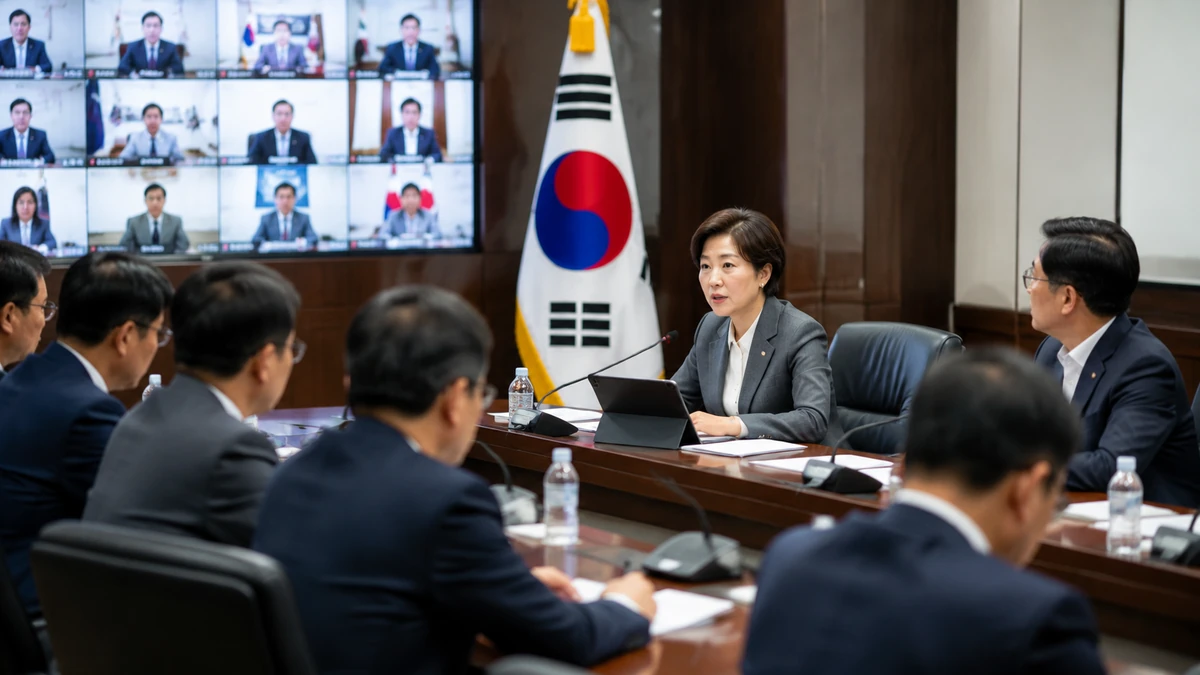
South Korea is urging some of its citizens in the Middle East to leave while they still can, a sign that Seoul is treating the region’s escalating security crisis as more than a temporary flare-up. At an emergency government meeting led by Vice Foreign Minister Kim Jina, officials told 17 South Korean diplomatic missions across the Middle East to advise short-term Korean visitors with no urgent reason to remain to depart as soon as possible.
For American readers, the distinction matters. This is not the equivalent of a generic “exercise increased caution” advisory that travelers often scroll past. It is closer to the moment when a government decides that a conflict may become prolonged, transportation routes may tighten and waiting too long could leave ordinary civilians with fewer safe options. In Washington, similar shifts often show up when the State Department moves from broad cautionary language to more pointed guidance urging Americans to reconsider travel or make plans to leave.
South Korea’s Foreign Ministry convened a joint situation review with headquarters in Seoul and 17 embassies and consulates in the Middle East, including its missions in Iran and Israel. That structure suggests the government is not viewing the latest tensions as a problem confined to a single country or border. Instead, Seoul appears to be preparing for a regional crisis that could affect air travel, shipping lanes, embassy operations and the safety of thousands of citizens spread across multiple countries.
The timing is significant. As of Friday, the government’s message appears aimed not simply at informing travelers but at activating a protective system for overseas Koreans before conditions deteriorate further. Officials said renewed U.S.-Iran military confrontation tied to the Strait of Hormuz has continued for more than a week, with attacks on civilian facilities and multiple casualties increasing the sense of urgency.
In practical terms, South Korea’s response centers on three steps: keep embassy emergency contact networks current, send safety alerts frequently and encourage short-term visitors to reduce unnecessary stays. It is a bureaucratic formula, but also a revealing one. Crisis diplomacy is often imagined as summit calls, military posturing or public statements from senior officials. For many citizens abroad, however, it comes down to something far more basic: whether the embassy can reach you, whether the information is current and whether someone tells you to leave before flights disappear.
Why short-term travelers are being singled out
South Korea did not issue a blanket order for every citizen in the region to get out immediately. Instead, officials focused on people staying temporarily and those without urgent business. That narrower instruction reflects a practical calculation that governments around the world often make during volatile overseas crises: tourists, business travelers on brief assignments and other short-term visitors are usually more exposed than long-term residents.
They may not speak the local language. They may not know where shelters, hospitals or alternate transit hubs are located. They may be relying on hotel staff, tour operators or commercial airlines for information, all of which can become unreliable in a fast-moving conflict. Unlike expatriates who have lived in a country for years, short-term visitors often have thinner support networks and fewer contingency plans.
There is also a hard logistical truth behind these advisories. Leaving early is almost always safer and easier than leaving late. Once a conflict intensifies, commercial flight schedules can be cut, border crossings can become unpredictable and insurance, communication and banking services can all become more difficult to navigate. Anyone who watched the chaotic rush to leave Afghanistan in 2021, or the scramble by foreign nationals to depart Israel and neighboring areas during previous rounds of regional unrest, has seen how quickly ordinary travel plans can collapse.
South Korea’s use of conditional language — urging departure for those without urgent reasons to stay — also carries a diplomatic nuance. It acknowledges that not every Korean in the Middle East is there by choice or can leave immediately. Some are students, employees under contract, family members of local residents or workers in industries tied to energy, shipping and construction. Rather than presenting the issue as a one-size-fits-all emergency, Seoul is signaling that people should weigh necessity against rising danger, with the government making clear which side of that calculation it believes is becoming more compelling.
Officials also linked the latest guidance to the fact that many Middle Eastern countries have already been under a relatively high-level travel alert from South Korea since March. In that sense, the new message is less a sudden reversal than an escalation from warning to behavior. Governments issue travel advisories all the time; what matters is when they start telling people to act on them. Seoul has now reached that point for at least some of its citizens in the region.
A regional strategy, not a country-by-country response
One of the most important details in the South Korean response is organizational rather than rhetorical: 17 diplomatic missions across the Middle East joined the joint emergency review. That suggests Seoul believes the present risk cannot be managed through isolated embassy decisions alone. In a region where a shipping disruption in one waterway, a missile strike in another country or an airspace closure hundreds of miles away can cascade across multiple borders, consistency matters almost as much as speed.
For Americans, a useful comparison might be the way U.S. embassies coordinate during a large regional crisis, whether in Europe during the early days of Russia’s invasion of Ukraine or across the Middle East after a major security incident. If one embassy tells citizens to shelter in place while another urges quick departure, confusion spreads quickly. Travelers may not know which guidance applies to them, especially if they are moving between countries for work, tourism or transit.
By connecting embassies and consulates with officials in Seoul, South Korea is trying to avoid that kind of mixed messaging. The inclusion of the South Korean embassies in both Iran and Israel is particularly notable because those posts sit close to the center of the current risk picture. That means frontline assessments are not being filtered entirely through secondary channels or public reports; they are being fed directly into the ministry’s central review process.
There is another layer here as well. A regional meeting allows governments to track not just direct threats but secondary effects: rerouted flights, overwhelmed airports, maritime insurance problems, cyber disruptions, fuel concerns and possible ripple effects into neighboring states. In modern crises, the danger is rarely limited to the place where the first strike occurs. The broad diplomatic turnout suggests South Korea is trying to build a shared picture of that wider map before the situation becomes more fragmented.
That approach also reflects how consular protection has evolved. Embassies are no longer merely symbolic outposts issuing passports and ceremonial statements. In emergencies, they become operational hubs tasked with locating citizens, pushing out alerts, answering panicked calls and sometimes helping arrange exits under difficult conditions. The more synchronized those hubs are, the more likely the system works when it matters most.
What changed: attacks on civilian areas and a longer conflict horizon
The South Korean government’s assessment appears to rest heavily on two related developments: the fighting has lasted more than a week, and the violence has reportedly struck civilian facilities as well as military-related targets. Those details matter because they fundamentally change how governments judge risk for ordinary people.
When clashes are brief or geographically limited, officials may advise vigilance while assuming most civilians can reduce risk by avoiding obvious flashpoints. But when civilian infrastructure comes under attack, that distinction begins to erode. A business district, residential block, transportation hub or energy facility can become part of the danger zone with little warning. The question is no longer whether a traveler can simply stay away from a military installation. It becomes whether daily life itself has become too unpredictable to justify a nonessential stay.
That is why the Foreign Ministry emphasized frequent safety messaging rather than one-time advisories. In a sustained crisis, information goes stale fast. Roads that were open in the morning may be closed by afternoon. An airport operating on a reduced schedule one day may suspend service the next. Shelter guidance, curfews, communications outages and local restrictions can all shift within hours. For citizens abroad, especially those who do not follow local media in the local language, regular embassy updates can be the difference between taking precautionary action early and being caught off guard later.
The push to update emergency contact lists points to another basic but critical reality of crisis response: a government cannot protect people it cannot find. Embassies often depend on voluntary registrations, local contact numbers, workplace details and travel itineraries that may be incomplete or out of date. If someone has changed hotels, crossed into another country, switched to a local SIM card or extended a trip without updating the embassy, even the best advisory system can miss them.
For South Korea, which has a sizable global diaspora and significant overseas business presence, consular readiness is not an abstract issue. Korean companies operate in shipping, energy, construction and electronics across the Middle East, and Korean citizens travel there for commerce, religious tourism and professional assignments. In that environment, maintaining accurate communication channels is not just paperwork. It is the backbone of whether emergency guidance reaches the right people at the right time.
The Strait of Hormuz raises the stakes beyond travelers
South Korean officials did not limit their review to civilians on land. They also examined safety measures involving ships, underscoring how deeply the Strait of Hormuz shapes the strategic picture. For U.S. readers, the waterway may be familiar as a recurring geopolitical flashpoint, but its relevance is worth restating: it is one of the world’s most important oil transit chokepoints, and disruptions there can send consequences far beyond the Gulf.
South Korea, like many industrial economies, is heavily dependent on imported energy. That means instability tied to Hormuz is not only a foreign affairs problem but also a national economic concern. Korean-linked vessels, crews and cargoes moving through or near the region can become exposed to security risks even if they are far from the land-based focal points of a conflict.
The Foreign Ministry did not publicly announce specific changes to shipping routes or maritime operating procedures. Still, the fact that ship safety was reviewed alongside citizen protection suggests the government sees the current tensions as a multi-lane crisis: one that affects air travel, land-based residents, temporary visitors and sea traffic simultaneously.
That broader framing mirrors how many governments now handle overseas emergencies. The threat is not measured solely by explosions or troop movements but by the resilience of the systems people depend on: ports, airports, fuel supplies, communications networks and evacuation routes. If any of those begin to fail, even people far from the immediate site of violence can suddenly face serious danger.
For Americans, this may recall the way U.S. officials think about the Persian Gulf not just as a battlefield but as a corridor through which energy markets, naval operations and civilian movement all intersect. South Korea’s response shows that middle powers with major trade exposure are increasingly building crisis management around those same interconnected risks.
What this says about South Korea’s diplomacy
There is an important political subtext to this episode. South Korea is often discussed internationally through the lens of its domestic politics, its rivalry with North Korea, its alliance with the United States or its booming cultural exports, from K-pop to Oscar-winning films. Less visible to global audiences is the quiet, administrative side of diplomacy: the systems that protect citizens abroad when events turn dangerous.
In South Korea, the phrase often used for overseas citizen protection carries a practical meaning. It is not simply about national pride or symbolic state presence. It refers to the expectation that the government should actively monitor risks, communicate clearly and intervene early when nationals abroad may be in danger. That expectation has grown alongside South Korea’s global footprint. As more Koreans live, study, travel and do business overseas, consular protection has become a more prominent measure of government competence.
This latest move suggests Seoul wants to be seen as proactive rather than reactive. Instead of waiting for a mass-casualty event, a sudden airport shutdown or a high-profile rescue operation, the government is signaling that prevention matters more than drama. It is a less visible form of crisis management, but in many cases it is the more effective one.
The emphasis on aligning instructions across embassies also reflects a mature understanding of how public trust works during emergencies. Citizens are more likely to follow advice when it is clear, repeated and consistent. Mixed signals breed delay; delay can turn manageable risk into crisis. By framing the issue in operational terms — contact networks, repeated alerts, early departure for nonessential short-term stays — South Korea is leaning into the unglamorous mechanics that often determine whether a government response succeeds.
That matters domestically too. When Korean citizens evaluate their government’s handling of an overseas emergency, they are not only judging foreign policy in the abstract. They are asking whether officials kept ahead of events, whether families received timely information and whether embassies were reachable. In that sense, the ministry’s latest guidance is also a test of execution.
The hardest part comes after the meeting
The meeting in Seoul may have set the direction, but the more difficult work lies ahead at the embassy level. Telling missions to keep contact lists current and send regular alerts is one thing. Doing it well, day after day, across a volatile region is another.
Embassy staff must identify which citizens are short-term visitors, determine who can realistically leave, track local conditions in real time and make sure guidance is not only issued but received. Some travelers may be moving between countries. Others may not be registered. Some may believe the risks are overstated until commercial options begin to disappear. Crisis response at this stage is often as much about persuasion and persistence as formal authority.
The challenge grows when a conflict stretches beyond a few days. A single high-level review can sharpen focus, but sustained management requires repeated coordination between Seoul and posts on the ground. Information has to move quickly upward from embassies and outward to citizens. Advice has to stay aligned even as local circumstances differ. And officials must be careful not to sound either alarmist or complacent — a balance every government struggles to strike.
For Korean citizens in the region, the message is increasingly clear: monitor embassy notices closely, make sure contact information is accurate and do not assume that today’s travel options will remain available tomorrow. For families back home, the government’s latest move may offer some reassurance that Seoul is trying to stay ahead of the crisis rather than chase it.
For the broader public, the episode is a reminder that diplomacy is often judged by its most human tasks. In moments of international tension, lofty statements and strategic analysis matter. But so do the quieter questions: Did the embassy call? Did the alert arrive? Did people have time to leave before the window closed? South Korea’s new advisory posture suggests its government believes that window is still open for some of its citizens in the Middle East — but perhaps not indefinitely.
Comments
Post a Comment