South Korean Women Sleep Less and Wake More Often at Night Than American Women, Large Smartwatch Study Finds
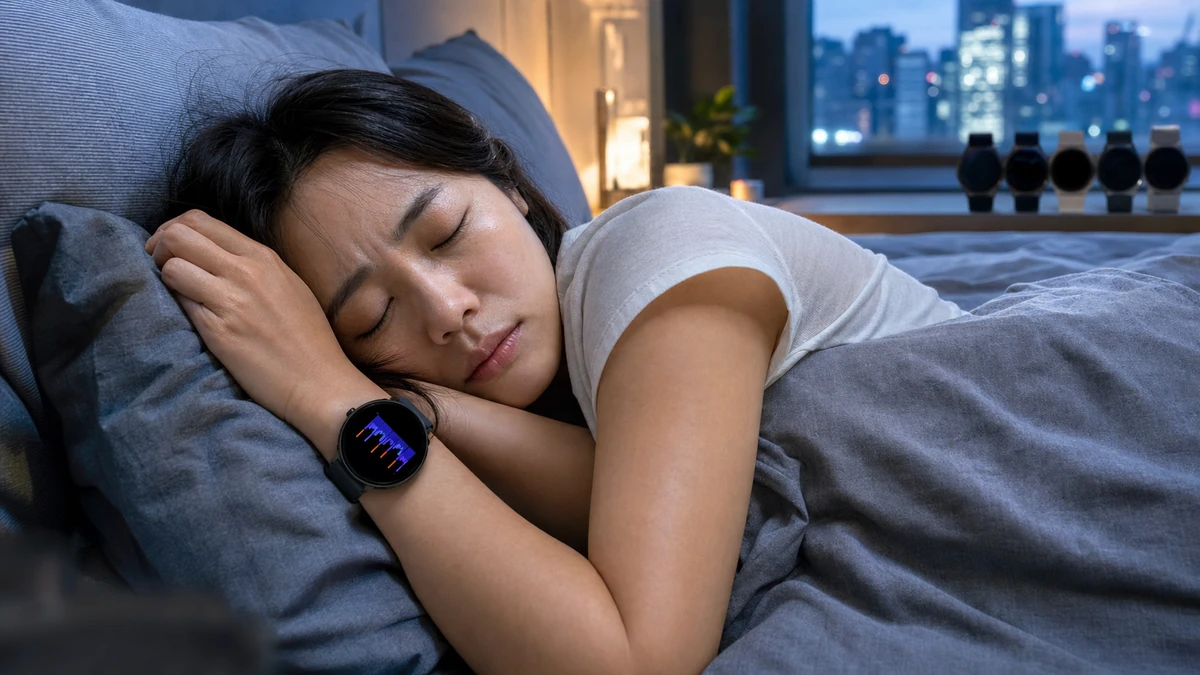
A vast pool of smartwatch data points to a persistent sleep gap
A large international study based on smartwatch records has found that women in South Korea sleep less — and experience more disrupted sleep — than women in the United States, offering one of the clearest device-based snapshots yet of how women’s sleep patterns differ across countries.
The research, conducted by Samsung Electronics and a joint team of U.S. and Canadian researchers, analyzed roughly 3.8 million nights of sleep data collected from 192,500 women ages 20 to 65 in five countries: South Korea, the United States, Britain, France and Germany. The sleep records came from Galaxy Watch devices, allowing researchers to compare long-term patterns captured in daily life rather than relying only on people’s memories or one-time sleep surveys.
According to the findings, South Korean women had an average total sleep period — the span from falling asleep to final morning awakening — that was 27.1 minutes shorter than that of American women. Their actual sleep time, which excludes periods of wakefulness during the night, was 24.7 minutes shorter on average.
That distinction matters. It means the gap is not simply that South Korean women spend less time in bed. They also spend less time actually asleep. In addition, the study found they were more likely to wake repeatedly during the night, a pattern suggesting that sleep continuity, not just sleep quantity, may be part of the problem.
The findings were published in the journal Sleep, a widely recognized academic publication in the field of sleep medicine and research.
For American readers, the result may sound modest at first glance: about 25 minutes less sleep. But sleep experts have long argued that small nightly differences can add up, especially when they are paired with fragmented sleep. Over the course of a week, that shortfall approaches three hours. Over months or years, chronic sleep disruption can shape how rested a person feels, how well she functions during the day, and potentially how her long-term health fares.
The study does not claim that every woman in South Korea sleeps poorly or that every American woman sleeps better. It reports averages across large populations, not a rule for any one individual. Still, because the dataset is so large and covers repeated nights in everyday settings, the findings stand out as more than an anecdotal impression or a culturally familiar complaint about modern exhaustion.
Instead, the results suggest that what many women describe in ordinary conversation — going to bed tired, waking up unrefreshed, or feeling as though they slept enough but still not well — may reflect patterns visible at a population level.
Why “how long you slept” is not the same as “how well you slept”
One of the most useful parts of the study is that it highlights a point often lost in casual discussions about sleep: bedtime and wake-up time alone do not tell the whole story.
Many people think about sleep in the simplest possible terms: “I got seven hours,” or “I slept from 11 p.m. to 6 a.m.” But sleep researchers tend to break the night into more precise categories. The total sleep period refers to the overall window between sleep onset and final waking. Actual sleep time strips out the minutes spent awake in the middle of the night.
That gap between the two numbers can be revealing. A person may technically spend a long enough stretch in bed but still wake frequently, toss and turn, or remain awake long enough that the sleep does not feel restorative. In other words, a seemingly adequate night on the clock can still amount to a fragmented night biologically.
That is especially relevant for women approaching midlife. In the years leading up to menopause and during menopause itself, many women report new sleep difficulties, including early waking, repeated nighttime awakenings, body temperature changes, and the frustrating sense that rest no longer feels as deep as it once did. In the United States, that experience is often discussed in the language of hot flashes, hormone shifts and “brain fog.” In South Korea, as in many places, women may describe it more broadly as persistent fatigue or as a mismatch between time spent sleeping and how they feel in the morning.
The new study gives a more objective framework for understanding that mismatch. If someone feels she “slept enough” because she was in bed for a reasonable number of hours but her device shows frequent awakenings and a shorter actual sleep time, the discrepancy begins to make more sense.
In that way, the research speaks to a common modern problem in both East and West: people increasingly monitor sleep with watches and phone apps, yet many are still unsure what the numbers mean. A total sleep period can look acceptable at first glance, while a closer look at awakenings and net sleep time may tell a different story.
The South Korean findings underline that both measures matter. Shorter total sleep periods suggest less time devoted to sleep overall. Shorter actual sleep time suggests that whatever sleep window exists may also be less efficient and less continuous.
What may be different about life in South Korea
The study did not set out to prove why South Korean women slept less than their American or European counterparts, and the researchers were careful to present the results as observed patterns rather than a definitive explanation. Still, the findings fit into broader conversations about modern South Korean life, especially the demands placed on women.
South Korea is a highly industrialized, hyperconnected society where long work hours, intense academic pressure, late-night digital habits and a competitive urban culture have long shaped daily routines. Americans may understand some of this through familiar comparisons to burnout culture in big cities like New York, Los Angeles or Washington. But in South Korea, those pressures often intersect with a social environment where long hours at work or school have historically been normalized and where sleep can be treated as something to cut back on rather than protect.
Women often carry an additional burden. Like women in the United States, many South Korean women juggle paid work, caregiving, household labor and family expectations. But gender inequality in domestic labor remains a frequent subject of debate in South Korea, where women have often reported doing a disproportionate share of housework and child care even when employed full time.
That means a typical day may not end when the workday ends. It can extend into late-night chores, family planning for children’s education, elder care responsibilities or digital “catch-up” time after the home is finally quiet. Those factors are not unique to Korea, but the pace and social intensity of daily life there can sharpen them.
There is also a broader cultural factor around endurance. In both the United States and South Korea, people sometimes wear exhaustion as a badge of commitment. But South Korea’s fast-paced work and education culture has for decades been associated with the idea that sleep is secondary to performance. Students may stay up late studying. Office workers may remain accessible well into the evening. Even leisure time can be scheduled tightly in urban environments where commutes, social obligations and screen exposure eat into the night.
For women in midlife, biological changes may hit on top of those structural pressures. If the study’s finding is that sleep quality appears to decline earlier among South Korean women than among women in some Western countries, that could reflect a combination of physiology and lifestyle rather than either factor alone.
None of this means American women have solved the sleep problem. Far from it. Sleep deprivation is routine in the United States, where long commutes, shift work, child care demands, stress, anxiety and ubiquitous screens also interfere with rest. But comparative data like this can show where certain populations may be facing a sharper or earlier drop-off.
Why wearable data matters more than another survey
Health stories often rely on surveys asking people how they feel or what they remember. Those are useful, but they come with obvious limitations. People misremember. They round up. They guess. They may say they slept “fine” because they do not recall every waking moment, or say they slept “terribly” because they feel exhausted for reasons that go beyond sleep.
That is what makes this study notable. Instead of depending mainly on self-reports, researchers drew on data recorded night after night by consumer wearables in ordinary life. That approach does not replace clinical sleep testing, and smartwatch data is not perfect. But it does offer a more consistent, longer-term view of patterns that might otherwise be blurred by memory and mood.
For Americans who have grown used to seeing Apple Watches, Fitbits, Oura rings and other devices turned into personal health dashboards, the concept is familiar: consumer technology is increasingly becoming a health data tool. What is new is the scale at which those data can be used to compare populations.
In this case, 3.8 million nights of records make it easier to see repeated tendencies rather than one-off bad nights. A single stressful week can distort anyone’s sleep. But when hundreds of thousands of people in multiple countries generate data over time, broader patterns begin to emerge.
The study also suggests a future in which wearable data may become an important early-warning system. Not a diagnosis, but a signal. If certain groups consistently show shorter sleep, more fragmented nights or earlier age-related declines in sleep quality, public health experts may be able to ask better questions about work patterns, caregiving, mental health, hormonal changes and access to treatment.
That matters because women’s health concerns, especially around menopause and sleep, have often been under-discussed or dismissed. In the United States, that is beginning to change as menopause becomes a more visible topic in medicine, media and workplace policy. South Korea has seen similar conversations emerge, though public discussion of women’s midlife health still carries different social dynamics and, in some cases, more stigma.
By putting hard numbers behind a familiar complaint — “I’m tired even when I think I slept” — the smartwatch data may help move the conversation away from anecdote and toward measurable trends.
What the findings do — and do not — prove
As striking as the results are, the study has limits, and they are important to understand.
First, these are population averages. The finding that South Korean women slept 27.1 minutes less in total and 24.7 minutes less in actual sleep time than American women does not mean every South Korean woman is losing roughly half an hour a night, nor that every American woman is sleeping well. Individuals vary widely.
Second, wearable devices estimate sleep using motion and other physiological signals, but they are not the same as an overnight sleep study in a laboratory. Smartwatches can be highly useful for spotting patterns, yet they are not the final word on sleep disorders, hormone-related changes or medical causes of fatigue.
Third, the study identifies differences between countries, not the direct causes of those differences. It does not prove that work culture, stress, menopause timing, family roles, diet, screen use or urban living alone explain the gap. Most likely, no single factor does. Sleep is shaped by a web of biology, behavior and environment.
There is also the issue of who uses smartwatches. People who wear health-tracking devices may differ from those who do not in age, income, health awareness, exercise habits or comfort with technology. That does not erase the study’s value, but it is part of the context.
Even with those caveats, the scale and consistency of the data make the findings difficult to dismiss. This is not a tiny sample or a one-country study. It is a broad comparison across five nations, based on millions of nights of real-world observation.
In journalism terms, the research is best understood not as a final verdict but as a strong signal. It points to an issue worth closer attention: South Korean women, as a group, appear to be getting shorter and less continuous sleep than Western peers, and that pattern may begin to worsen earlier than many assume.
What women can learn from the numbers on their wrists
For readers tempted to treat the study as an abstract international comparison, there is also a practical takeaway. If you wear a smartwatch or sleep tracker, the most useful question may not be simply, “How many hours did I get?” It may be, “How much of that time was I actually asleep, and how often am I waking up?”
That shift in perspective could be especially valuable for women in their 40s and 50s, when sleep often changes in ways that are easy to minimize and hard to describe. A person may blame herself for poor habits, assume she is imagining the problem, or think fatigue is just part of getting older. Repeated data showing shorter actual sleep and frequent nighttime awakenings can help turn a vague feeling into something more concrete.
It can also help frame conversations with doctors. If someone notices a widening gap between total time in bed and actual sleep time, or sees repeated nighttime awakenings over weeks and months, that record can be a starting point for discussing sleep hygiene, stress, menopause, sleep apnea, anxiety, medication effects or other health concerns.
The study’s broader message is not that technology alone can solve sleep. A watch cannot tell the whole story of a life under pressure. But it can reveal patterns that people might otherwise ignore, normalize or misinterpret.
For South Korea, the findings may add urgency to conversations about women’s health, overwork and the social cost of chronic fatigue. For the United States, the lesson is more universal. Sleep is not just about duration. It is also about continuity, quality and whether the body is allowed to stay asleep long enough to recover.
That may sound obvious, but modern life keeps proving otherwise. In an age when millions of people go to bed with a device on their wrist and a phone by their pillow, sleep can feel quantified yet still misunderstood. Studies like this one help close that gap.
And if they prompt more women to look beyond a single headline number on a sleep app and pay attention to the structure of the night — how long they were asleep, how often they woke, how rested they actually felt — they may do something else as well: turn personal fatigue into a public health conversation grounded in data rather than guesswork.
A global health clue hidden in ordinary nights
There is a reason this study resonates beyond the specifics of South Korea. It shows how ordinary, routine health data — nights logged quietly on a wristwatch while people sleep — can reveal cross-cultural patterns that would have been much harder to see a decade ago.
That has implications far beyond sleep. Consumer health devices are turning everyday life into a stream of measurable information: steps, heart rate, exercise, menstrual cycles, blood oxygen trends and stress indicators. Used carefully, those records may help researchers identify patterns across age groups, countries and social conditions long before those trends show up in traditional public health systems.
In this case, the pattern is a warning light. The women in South Korea included in the study were not simply going to bed later or rising earlier. On average, they were also sleeping less soundly. For policymakers, employers, clinicians and families, that distinction matters because fragmented sleep can carry consequences that pure “time in bed” measures miss.
For American readers, the story may feel at once foreign and familiar. The social setting is different. The work culture is different. The family expectations and public conversations around women’s health are different. But the underlying challenge — too little uninterrupted rest in a high-pressure, always-on world — is instantly recognizable.
That may be the strongest takeaway of all. The study is about South Korean women, but it also reflects a broader modern dilemma. Across wealthy, connected societies, sleep is increasingly treated as flexible, expendable and negotiable. Biology keeps insisting otherwise.
What this research offers is not panic, and not a simplistic international ranking of who sleeps best. It offers evidence that quality matters as much as quantity, that women’s sleep deserves closer attention across the life span, and that large-scale wearable data can illuminate health patterns hiding in plain sight.
For many women, the problem has never been finding the words to say they are tired. The problem has been getting the world to take that tiredness seriously. Studies like this one may help do exactly that.
Comments
Post a Comment