South Korea’s Nongshim to Raise Prices on 43 Instant Noodle, Snack and Drink Brands, Putting Everyday Favorites Further Out of Reach
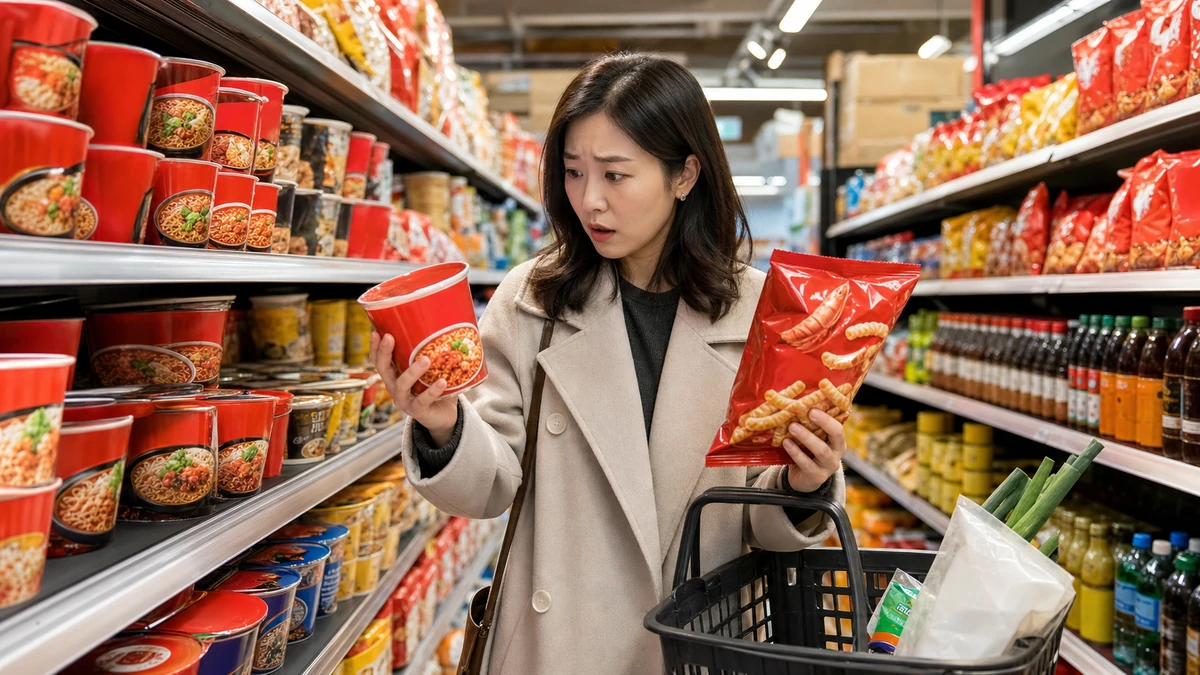
A familiar pantry staple in South Korea is getting more expensive
One of South Korea’s best-known food companies, Nongshim, said it will raise factory prices on 43 brands of instant noodles, snacks and beverages starting Aug. 1, a move likely to be felt quickly by shoppers in a country where convenience foods are woven deeply into daily life. According to South Korean broadcaster MBC, the average increase across the affected brands will be 5.8%, with cup noodles rising an average of 6.0%, snacks 5.5% and beverages 7.7%.
For readers in the United States, it may help to think of Nongshim as a company with the kind of household recognition that brands such as Campbell’s, Frito-Lay or Kraft enjoy in American grocery aisles — except concentrated in categories that Koreans buy constantly, from instant ramen cups grabbed at convenience stores to shrimp-flavored chips eaten as an everyday snack. When prices move on products this common, the change does not stay abstract for long. It shows up in lunch breaks, after-school snacks, late-night convenience store runs and small household budgets that are already under pressure.
The company’s decision is not limited to one marquee item. Instead, it covers a broad swath of products across multiple categories: 18 cup noodle brands, 23 snack brands and two beverage brands. That breadth is part of what makes the increase notable. Consumers are not just seeing a price change in one corner of the store; they are seeing it across several kinds of low-cost foods that many people treat as affordable everyday purchases.
Nongshim cited prolonged pressure from a strong dollar, elevated oil prices and rising packaging and materials costs tied to global conditions. In other words, the company is arguing that the economics behind getting a relatively cheap food item onto store shelves have shifted enough that it can no longer absorb the costs without passing some of them on.
In South Korea, where inflation is often measured not just through headline economic data but through the price of quick meals and familiar snacks, that explanation may sound recognizable. American consumers have heard a similar story from food makers over the past several years: higher transport costs, pricier inputs, packaging inflation and volatile foreign exchange markets all eventually work their way to the cash register. What makes this case stand out is how clearly it touches products that are everyday symbols of Korean food culture.
Why these products matter beyond the grocery shelf
Two of the best-known examples in the price hike are Yukgaejang Sabalmyeon, a cup noodle product, and Saewookkang, the shrimp cracker snack that generations of Koreans have grown up eating. Their expected retail prices, according to the report, are set to rise by 100 won each: Yukgaejang Sabalmyeon from 1,100 won to 1,200 won, and Saewookkang from 1,500 won to 1,600 won.
That may sound modest when converted into U.S. dollars. But nominal currency conversion does not tell the whole story. What matters more is how these items function in Korea. Cup noodles are not specialty imports or occasional treats. They are a routine convenience food sold nearly everywhere, including the ubiquitous convenience stores that serve, in many neighborhoods, as a cross between a bodega, a quick lunch counter and a late-night pantry. A cup noodle can be a stopgap meal for an office worker, a college student or someone commuting home late. A snack like Saewookkang is similarly familiar — something bought casually, shared easily and recognized instantly.
For American readers unfamiliar with the Korean terms, “sabalmyeon” refers to bowl or cup noodles designed to be prepared simply by adding hot water. Yukgaejang, meanwhile, is the name of a spicy beef soup in Korean cuisine, and the noodle product borrows that flavor profile. Saewookkang is one of Korea’s classic crunchy snacks, known for its shrimp flavor and strong nostalgia factor. It occupies a cultural space somewhat comparable to an iconic legacy snack brand in the U.S., though the flavor profile is distinctly Korean.
The importance of these foods also reflects a broader truth about the Korean Wave, or Hallyu, that international audiences sometimes miss. K-food is not only about trendy restaurant dishes, social media-friendly desserts or exported instant ramen challenges. It is also about the ordinary, repeat-purchase foods that shape daily routines inside South Korea. When companies raise prices on those products, the story is not just corporate. It is social. It says something about how global cost pressures are hitting ordinary life.
That is especially true because the increases are spread across several categories that serve different moments of consumption. Cup noodles are a quick meal. Snacks are an impulse buy, a break-room staple or a casual companion to hanging out with friends. Beverages occupy still another part of the everyday food economy. A price increase across all three suggests a wider cost squeeze than if only one product family had been affected.
The numbers are simple, but the consumer impact is not
The headline number in the announcement is the average increase of 5.8%. But averages can blur more than they reveal. The company’s own breakdown shows that price changes vary by category: cup noodles will rise an average of 6.0%, snacks 5.5% and beverages 7.7%. That means a consumer’s experience will depend heavily on what they actually buy.
This distinction matters because shoppers do not purchase “the average.” They buy specific items. Someone who frequently picks up cup noodles may feel the increase differently from a household that mainly buys snacks. Beverage buyers, though only two brands are affected in that category, may face the highest proportional increase of the three groups.
There is also a second distinction that deserves emphasis: the difference between a factory price and a retail shelf price. Nongshim said it is raising its “shipment” price, meaning the price at which it sells products into the distribution chain. The retail prices cited in local reporting for products such as Yukgaejang Sabalmyeon and Saewookkang are expected prices at stores, not necessarily fixed prices in every outlet. That is an important detail for readers outside Korea, where retail structures may differ from what they are used to. Manufacturers can set the supply-side price, but the amount a customer sees in a convenience store or supermarket can still vary depending on the retailer.
Still, concrete examples matter because they make policy and pricing decisions legible. In this case, the expected 100-won increase on both items gives consumers an immediate mental benchmark. Even though the absolute increase is the same, the percentage increase feels different because the starting prices are different. That is one reason consumer reactions to food inflation are often shaped less by economic theory than by habit and perception. Shoppers know what a snack or a noodle cup “should” cost, and any change in that familiar figure can feel outsized.
For lower-cost, high-frequency purchases, even small increments can alter behavior. People may buy fewer items at once, switch brands, wait for promotions or absorb the increase while cutting back elsewhere. In a market where convenience store culture is strong and food purchases are often made one item at a time, a 100-won jump can become visible almost immediately.
How global pressures reach a convenience store shelf in Seoul
Nongshim attributed the increases to prolonged pressure from exchange rates and oil prices, along with surging costs for packaging and other materials. That explanation fits a broader pattern seen across global food manufacturing. A weaker local currency against the U.S. dollar can make imported raw materials and inputs more expensive. High oil prices can affect transportation, production and the petrochemical materials used in packaging. Once packaging costs rise, even foods made from relatively inexpensive ingredients can become costlier to produce and distribute.
This matters for products like instant noodles and packaged snacks because the packaging is not incidental; it is part of the product’s convenience. A cup noodle depends on a durable, insulated container that can hold boiling water. Snacks depend on packaging that protects freshness and allows for mass distribution. Beverages, of course, come with their own packaging and logistics demands. If packaging material costs rise sharply, the pressure is likely to hit several categories at once, which may help explain why Nongshim’s increase extends beyond noodles alone.
American readers will recognize the pattern. U.S. grocery shoppers have spent the past few years hearing companies cite freight costs, commodity volatility and packaging inflation as reasons for higher shelf prices. In many cases, those explanations have overlapped with public skepticism about whether brands were also using inflation as cover to widen margins. The Korean report summarized here does not provide detailed cost breakdowns for each brand, so it is not possible to judge the precise burden on each product line. But the company’s stated rationale is familiar: global instability has raised input costs across the board.
There is also a geopolitical undercurrent to this kind of price story. South Korea is deeply integrated into global trade and depends heavily on imported energy. That makes it particularly exposed to currency and oil shocks. When oil stays expensive and the exchange rate remains unfavorable for a long period, the impact can travel far beyond fuel bills and into the prices of packaged foods, restaurant meals and household staples.
In that sense, this is not just a story about noodles and chips. It is a reminder that everyday foods are connected to the same international economic forces that shape shipping lanes, currency markets and energy policy. Consumers may experience the issue as a slightly pricier cup of noodles, but the pressures begin much farther upstream.
What the price hike says about Korean consumer life
To understand why this announcement may resonate in South Korea, it helps to understand how these products function socially. Instant noodles in Korea are not merely emergency food. They are a routine part of modern life — sold in train stations, small markets, office neighborhoods and all-night convenience stores. They appear in workplace lunches, dorm rooms and road trips. The same goes for snacks such as Saewookkang, which carry both convenience and nostalgia. They are inexpensive enough to feel casual, but familiar enough to feel personal.
That is one reason price moves on these products often generate outsized public interest. In the U.S., rising prices for eggs or fast-food combo meals can become shorthand for economic frustration because they affect daily routines. In Korea, the same can happen with ramen, snacks and convenience foods. They are small purchases that act as a real-time indicator of how expensive ordinary life is becoming.
The Korean Wave has made some of these products recognizable far beyond South Korea. International shoppers may know Nongshim through export products such as Shin Ramyun, which has become one of the most widely distributed Korean instant noodle brands in American supermarkets and Asian grocery stores. Even consumers who have never been to Seoul may have seen Korean instant noodles featured in mukbang videos, K-dramas or social media food trends. But the domestic significance of Nongshim goes further. The company is not just an export success story; it is a major player in the routine food economy of South Korea.
That helps explain why a multi-category price increase is worth attention even if each individual item rises only modestly. The cumulative effect on consumer psychology can be significant. Price changes on staple convenience goods often shape how people talk about inflation at home, at work and online. They can also feed into broader debates about corporate responsibility, purchasing power and the affordability of daily life.
It is also notable that the affected products cut across different use cases. A student relying on quick meals, a worker buying a snack during a commute and a family picking up beverages all encounter different parts of the same pricing shift. That breadth may make the increase feel more widespread than a hike limited to a single specialty product.
For overseas fans of K-food, the story is a reality check
For American and other English-speaking audiences who encounter Korean food mainly through pop culture, the Nongshim announcement offers a useful corrective to the glossy image of K-food as a purely lifestyle-driven trend. Korean food exports have boomed as Korean dramas, movies and music have drawn global audiences. Ramen challenges on TikTok, Korean snacks in subscription boxes and expanding Korean grocery aisles at U.S. retailers have all turned once-niche products into more mainstream purchases.
But behind that global enthusiasm is a domestic market dealing with the same pressures many other countries face: high input costs, exchange-rate pressure and sensitivity around grocery prices. That matters because it shows how the Korean Wave is rooted in ordinary economic realities, not just soft power. The foods that travel abroad as cultural ambassadors are the same foods people inside Korea buy every day — and now they are getting more expensive.
For overseas consumers, the direct effect may be limited at first. The reported changes concern domestic shipment prices in South Korea, not necessarily export prices in the United States or elsewhere. Distribution agreements, import timelines, local promotions and retailer markups all shape what Americans ultimately pay for Korean snacks and noodles. But over time, broad cost pressure on manufacturers can work its way through international channels too, especially if packaging, transport and energy remain expensive.
There is also a symbolic dimension for global fans of Korean culture. A bowl of instant noodles or a bag of chips may look like a small thing, but these products carry cultural familiarity in ways that restaurant meals often do not. They are the kinds of foods people grew up with, ate in school-age years or picked up after long days. When their prices rise, it can feel like one more sign that the cost of everyday comfort is going up.
That is a universal story, and perhaps one reason it translates so easily across borders. Americans do not need to know the Korean language to understand what it means when the price of a go-to convenience meal rises. They have seen versions of that story at home, whether in the snack aisle, the frozen food case or the drive-thru lane.
What to watch next
The immediate question is how fully the shipment-price increase will show up in stores and how quickly consumers adjust. Retail pricing can vary, and promotions may soften the initial impact for some items. But the expected price points reported for Yukgaejang Sabalmyeon and Saewookkang suggest shoppers will notice the change soon after it takes effect.
Another question is whether competitors follow with similar moves. In consumer packaged goods, price hikes by one major player can create room for others to make comparable adjustments, especially when the underlying cost pressures affect the whole industry. If packaging, oil and exchange-rate burdens remain elevated, South Korean consumers may see more food companies trying to recalibrate prices.
It will also be worth watching whether the public conversation focuses mainly on macroeconomic causes or shifts toward concerns about affordability and corporate pricing power. That tension is familiar in many countries: companies point to real cost increases, while consumers ask why everyday items keep getting harder to afford. Both things can be true at once, and the public response often depends on how long the pressure lasts.
For now, the significance of Nongshim’s announcement lies in its scale and symbolism. Forty-three brands across cup noodles, snacks and beverages represent a broad slice of ordinary Korean eating habits. The average increase may be 5.8%, but the story is really about what happens when global economic stress arrives in the form of slightly pricier comfort foods.
In South Korea, as in the United States, inflation becomes most real not when economists discuss it in percentage points but when consumers encounter it in familiar products they buy without much thought — until the price tag changes. Nongshim’s latest move is one more example of how far-reaching economic forces can land in the most ordinary places: a convenience store shelf, a lunch break and a snack people have known for years.
Comments
Post a Comment