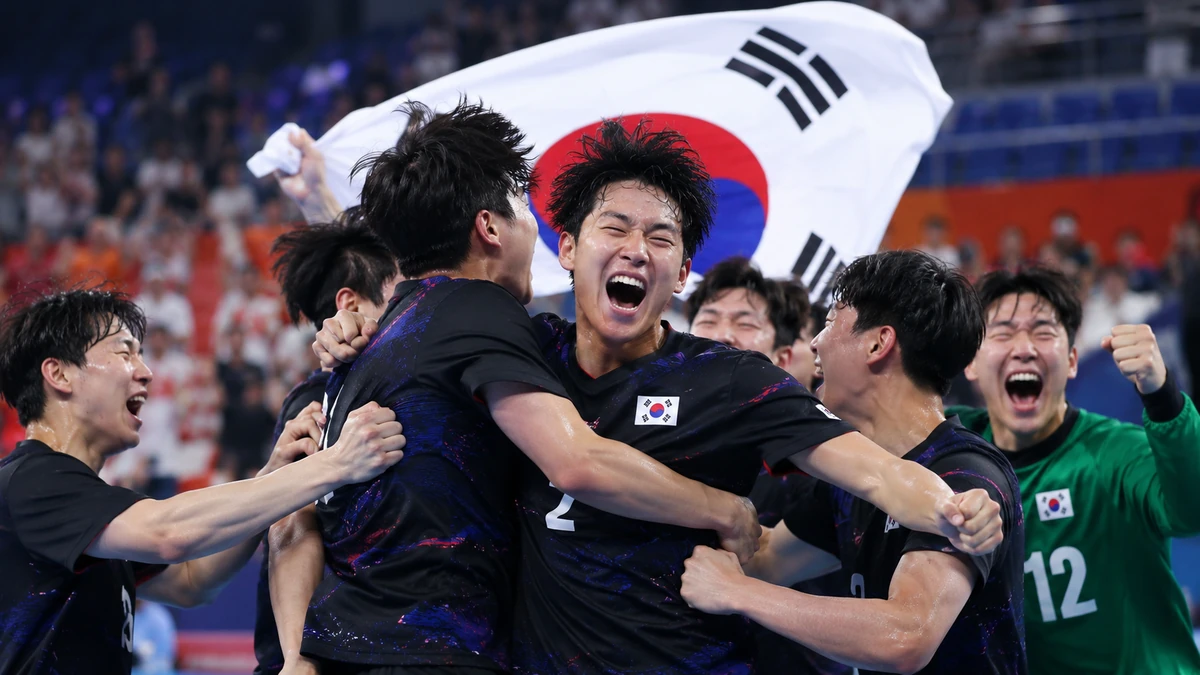
A comeback title that resonates beyond the final score
South Korea’s under-20 men’s handball team pulled off the kind of comeback that instantly becomes part of a program’s lore, rallying from a five-goal halftime deficit to defeat the United Arab Emirates 25-24 in the final of the Asian Men’s Junior Handball Championship in Chuzhou, China. The victory gave South Korea its first title in the tournament since 2018 and its fourth overall, adding a fresh chapter to a program that has repeatedly found its way back to the top across generations.
For American sports fans, the easiest comparison may be a college basketball team erasing a double-digit hole in the second half of a conference championship game, or a soccer side clawing back after being thoroughly outplayed early. In handball, where pace shifts quickly and goals can come in bursts, a five-goal deficit is not mathematically overwhelming. But in a championship setting, against a team you know is good enough to match you possession for possession, it can feel enormous. That was the situation South Korea faced after falling behind 13-8 at halftime.
What followed was a composed and increasingly forceful second half. South Korea scored 17 goals after the break while holding the UAE to 11, flipping the match with a combination of discipline, stamina and the kind of late-game nerve that championship teams tend to remember for years. The final margin was only one goal, but the turnaround reflected a broader shift in control. South Korea did not simply steal a result on a lucky bounce; it changed the tempo and the terms of the match when the pressure was highest.
The result also carried symbolic weight. This was not just a youth trophy added to a federation’s record book. It was a statement about continuity in a country that has long taken international team sports seriously, even in disciplines that sit outside the global spotlight commanded by soccer, baseball or Olympic archery. South Korea’s junior handball title is the kind of win that may not dominate headlines in the United States, but in the ecosystem of Asian sports development, it matters. It signals that a talent pipeline remains alive, that coaching structures are delivering, and that a new generation can handle moments that test not only skill but belief.
Why handball matters, even if many Americans rarely see it
Team handball occupies an unusual place for American readers. It is one of the world’s most popular indoor sports, especially in Europe, but remains a niche event in the United States, usually surfacing during the Olympics when viewers stumble onto a fast, physical game and wonder why it is not shown more often. Played on a court with seven players per side including the goalkeeper, handball combines elements that can feel familiar to Americans: the spacing and set plays of basketball, the shot velocity of hockey, the transition game of lacrosse and the contact tolerance of water polo brought onto dry land.
That matters when considering the scale of South Korea’s achievement. While a casual American fan may not track the Asian Men’s Junior Handball Championship, within the sport it is an important proving ground. Youth and junior tournaments are where federations test the next wave of national-team players, where coaching philosophies are stressed under tournament conditions and where nations measure themselves against rivals they may face again at senior level. Winning such an event suggests more than a single good weekend. It usually reflects years of training, national coordination and successful player development.
In South Korea, handball has a deeper cultural footprint than it does in the U.S. The sport has enjoyed moments of national recognition, especially through the women’s program, which has a stronger international profile and is remembered for Olympic success. Older fans in Korea still associate handball with national resilience and gritty tournament performances. The sport may not command the week-to-week celebrity of the Korean baseball league, English Premier League fandom or global K-pop exports, but it occupies a respected place in the country’s sports tradition.
That context helps explain why this junior title resonates. In the American system, youth national teams often live in the shadow of college recruiting and professional drafts. In South Korea, as in many countries with centralized sports pathways, junior national teams can carry a different symbolic importance. They represent not just future promise but national continuity. A title at this level becomes a sign that the country can still produce athletes capable of thriving under international pressure, even as sporting tastes evolve and public attention shifts elsewhere.
The final turned on poise after a rough first half
The scoreboard told one story at halftime: UAE 13, South Korea 8. In a sport built on quick transitions, that deficit suggested the Emirates had found a way to disrupt South Korea’s rhythm early, either by finishing more cleanly in attack, forcing mistakes in possession, or winning the psychological battle in a game where confidence can spread quickly from one side to the other. Finals often tighten into emotional contests, and a team chasing from behind can begin to rush, forcing shots and compounding the problem.
Instead, South Korea responded with the kind of collective reset coaches dream about but do not always get. Under coach Park Hyun-jong, the team gradually reversed the tone of the match. Rather than collapsing under the urgency of the moment, South Korea appears to have leaned into a more disciplined second-half approach, outscoring the UAE by six after the break. That swing erased the five-goal gap and created the one-goal margin that mattered when the final whistle arrived.
Because the available summary emphasizes the team result over individual stat lines, the match is notable for what it says about structure rather than star power. In American coverage, the instinct is often to center the hero: the quarterback who engineers the comeback, the scorer who hits the winner, the goalie who stands on his head. Here, the bigger point is that South Korea won as a unit. The defining image is not a single standout but a group that stayed intact when the game was threatening to tilt away.
That kind of win can be especially meaningful in youth sports. Talent at the under-20 level can be uneven from one cycle to the next. Teams sometimes ride one physically dominant player, only to discover that approach fails when opponents adjust. South Korea’s comeback suggests something more sustainable: a team capable of recalibrating midgame, staying within itself and executing over 60 minutes. Those are traits federations hope will carry forward as players age into senior competition, where the margins are even thinner and the mental demands only intensify.
The one-goal finish also sharpened the drama. This was not a comfortable late surge padded by empty possessions. It was a game in which every stop and every conversion mattered, a final decided on a knife edge. For neutral fans, these are the matches that elevate a tournament. For the winning side, they become proof of character.
A rivalry shaped by narrow margins
Part of what made the final so compelling is that South Korea and the UAE had already shown how closely matched they were earlier in the tournament. The two teams met in group play and played to a 30-30 draw, a result that now looks like a preview of the championship’s razor-thin balance. Neither side entered the final with illusions about the other. There were no surprises about quality, no easy assumptions that one team would break the other simply by reputation.
That familiarity cuts both ways in tournament sports. On one hand, it can help a coaching staff make sharper adjustments because tendencies are fresh in memory. On the other, it can produce a game of incremental moves rather than dramatic tactical shocks. Every advantage must be earned, often through composure, conditioning and the ability to execute under mounting pressure. By that measure, South Korea’s victory becomes even more impressive. It was not achieved against an opponent it had solved comfortably before. It was earned against a team that had already proven it could go toe to toe.
For the UAE, the tournament still represents a significant achievement, even in defeat. Reaching the final and pushing South Korea to the brink underscores the growth of handball across parts of Asia where investment in sports infrastructure has accelerated. American audiences are often most familiar with Gulf sports development through soccer, Formula One or high-profile event hosting. But regional ambition extends far beyond those marquee properties. Competitive youth handball is one example of how that broader sports ecosystem is developing.
From a storytelling standpoint, the two meetings between South Korea and the UAE gave the championship a satisfying arc. The first encounter ended unresolved, with neither side able to separate itself. The second carried the stakes of a title and again came down to the finest of margins. Sports fans everywhere understand the appeal of that structure: a draw in the preliminary round, then a winner-take-all rematch in the final. It is the kind of script television producers would happily claim if they had written it.
And yet the decisive detail was not just the rematch itself. It was the way South Korea won it — by surviving a first-half punch, answering over the final 30 minutes, and protecting a one-goal lead at the end. That sequence transforms a close final into a comeback final, which is always more memorable.
An eighth-year return to the top speaks to staying power
South Korea’s title was its first in the tournament since 2018, ending an eight-year wait and giving the program its fourth championship overall after previous wins in 1988, 1992 and 2018. The spacing of those titles is noteworthy. This is not a case of one era of dominance inflating the total. Instead, the victories are spread across decades, suggesting a program that has repeatedly regenerated rather than one that flashed brightly and faded.
That is especially important in youth competition, where turnover is absolute. Every cycle brings a new roster, new leaders and new anxieties. A junior title won in one era does not guarantee anything for the next. The ability to return to the summit after long intervals indicates that the underlying machinery — coaching education, school and club development, federation support and competitive culture — continues to produce viable teams even as individual players age out.
For Americans accustomed to thinking about pipelines through college athletics or professional academies, South Korea’s sustained presence in Asian junior handball offers a reminder that sports ecosystems can remain healthy without constant global attention. Not every successful development model is visible through U.S. television deals or social media virality. Some of them show up in tournament brackets, in consistent youth results and in the quiet accumulation of international credibility.
The timing of this title also matters because South Korea had finished runner-up in the previous edition, losing the final to Japan. That near miss created a clear emotional backdrop to this year’s result. Rather than settling into a pattern of “close but not enough,” the team took the next step. In sports terms, that progression is often more revealing than a single breakthrough from nowhere. It suggests a program that learned from disappointment and converted it into sharper execution when the opportunity returned.
For Korean handball, the title is therefore both a celebration and a signal. It celebrates the current squad’s resolve, but it also signals that the country remains a serious player in the region’s youth game. In a crowded sports culture where public attention can be dominated by soccer exports to Europe, the Korean baseball season or the latest K-pop tour, that kind of achievement helps preserve visibility for a sport that still occupies an important place in the nation’s athletic identity.
What this win means in Korean sports culture
To understand why a junior handball championship can carry emotional weight in South Korea, it helps to appreciate how national-team success functions in Korean public life. International competition often punches above its weight culturally. Medals, titles and dramatic upsets are not seen only as sporting outcomes; they can be framed as evidence of discipline, preparation and collective will. That is especially true in sports where Korea has built a reputation for punching above its population or market size.
There is also a specifically Korean appreciation for endurance under pressure, sometimes described through the broader cultural value placed on grit, patience and collective sacrifice. While outsiders should be cautious about reducing any nation’s sports identity to a cliché, comeback stories tend to resonate strongly in Korea because they fit a familiar narrative structure: stay organized, do not panic, trust the group and fight until the end. South Korea’s second-half reversal against the UAE checks every one of those boxes.
That does not mean the win will dominate front pages the way a World Cup upset or an Olympic gold medal might. Youth handball is still a specialized beat. But within Korean sports circles, this is exactly the kind of result that can reverberate. It validates a coach. It boosts the credibility of developmental programs. It gives younger players a standard to chase. And it offers a reminder that Korean teams remain capable of producing drama and titles even outside the sports most familiar to global audiences.
For American readers, there is a useful parallel in how countries celebrate achievements that reinforce a broader sporting self-image. Think of how U.S. fans respond when an under-19 basketball team wins a world event, or when a women’s hockey development squad confirms the depth of the national pipeline. The immediate audience may be smaller than for a Super Bowl or Final Four, but the underlying message is significant: the next generation is coming, and it knows how to win.
The broader takeaway for international sports fans
In the end, South Korea’s 25-24 victory over the UAE offers something universal. It is a reminder that some of the best sports stories unfold far from the brightest commercial spotlight. A junior handball final in China may not trend globally the way a Champions League match does, but the essentials are instantly recognizable: a favored tradition tested by a determined opponent, a halftime deficit that threatens to define the night, a second-half surge, and a championship decided by a single goal.
Those are the ingredients of a gripping sports narrative in any country. They also underscore why international youth tournaments deserve more attention than they often receive in English-language media. These events reveal not only who is winning now but who may shape the sport’s next decade. They show how nations build, adapt and sustain competitive standards. And occasionally, as South Korea just did, they produce a finish dramatic enough to speak well beyond the sport’s usual audience.
For South Korea, this title marks a return to the top after eight years, a successful response to the disappointment of finishing second in the last edition, and a testament to the team’s refusal to fold when the final seemed to be slipping away. For the UAE, the tournament still confirms its legitimacy as a rising force capable of pushing one of Asia’s established programs to the very limit. For everyone else, the final is a clean example of why comeback victories remain one of sport’s most enduring forms of theater.
South Korea did not just win a championship. It authored a finish that distilled the appeal of tournament sports into a single evening: pressure, adjustment, resilience and one last goal that meant everything.
Comments
Post a Comment